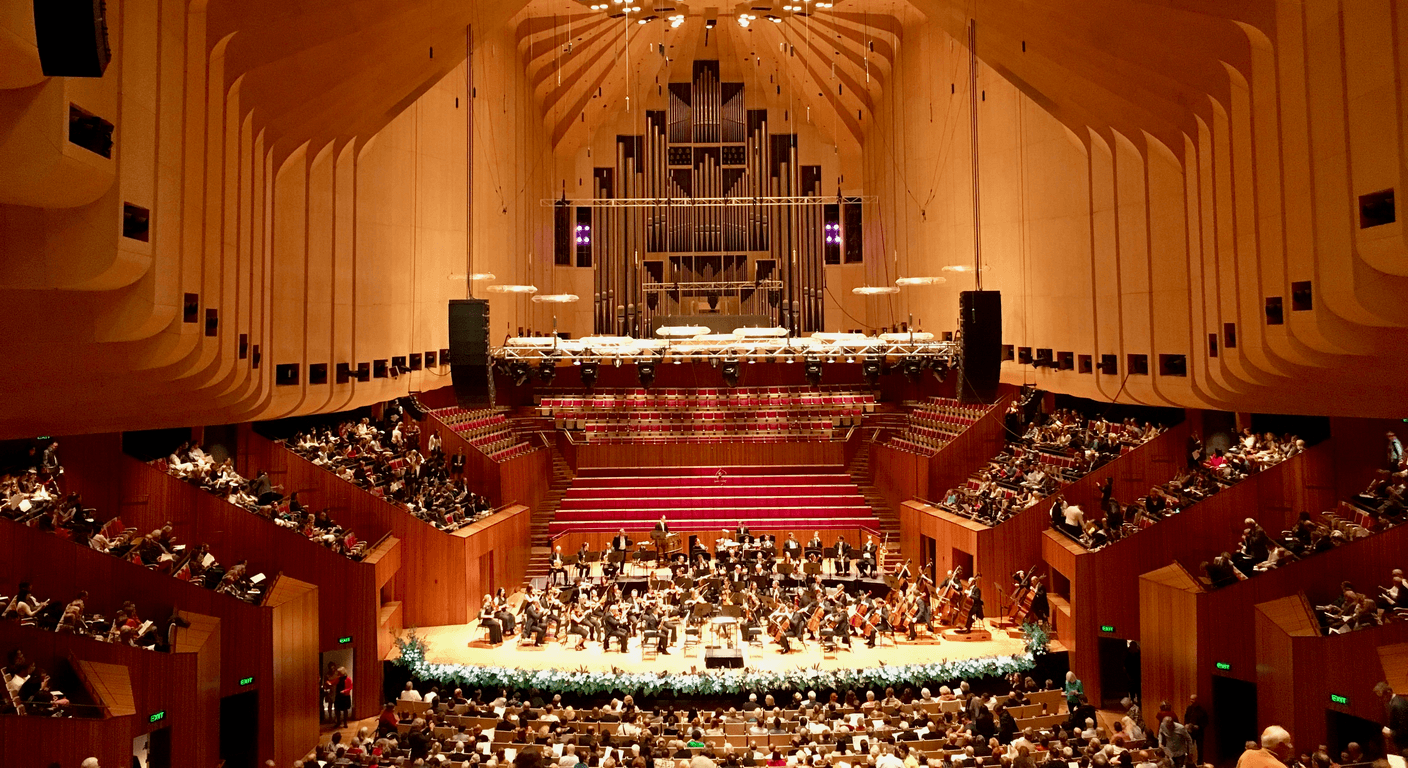
Hearing loops use the telecoil (T-coil) setting in a hearing aid or cochlear implant to deliver clear, direct audio at Australian theatres, galleries and cinemas, while Auslan-interpreted sessions—usually scheduled once or twice per season—serve Deaf audience members. Travellers should confirm telecoil function with their audiologist and phone the venue's box office directly before booking to check a specific session is loop-activated.
What Is a Hearing Loop, and How Does It Actually Work?
A hearing loop — formally called an audio induction loop — is a system of wire installed around the perimeter of a room or seating area. It carries an electrical signal that generates a magnetic field. A hearing aid or cochlear implant processor with a telecoil (T-coil) picks up that field and converts it directly into sound, cutting out the ambient noise of a crowded theatre or echoing gallery hall. The result, when the system is working well, is clean, direct audio — the actor's voice, the guide's commentary, the pianist's touch — delivered straight to the ear.
The telecoil itself is a small copper coil inside many hearing aids and cochlear implant processors. It's sometimes called the T-setting or T-program. Not all hearing aids include one — older or very small in-canal devices sometimes don't — so it's worth checking with your audiologist before you travel. Switching to T-mode is usually a matter of pressing a button or cycling through programs on your device. Some newer aids switch automatically when they detect a loop signal.
Loops vary in quality. A well-installed, well-maintained loop in a major concert hall delivers a noticeably different experience from a portable loop placed on a service counter. When a venue says it has a loop, it's reasonable to ask whether it covers the full auditorium or only the front rows, and whether it was tested recently. That's not being difficult — it's being a well-informed audience member.
What Is an Auslan-Interpreted Session?
Auslan — Australian Sign Language — is the primary language of many Deaf Australians. An Auslan-interpreted performance places one or two qualified interpreters in sightline of the audience, typically near the stage, where they translate the spoken and sung content of the show into sign language in real time. These sessions serve Deaf audience members who use Auslan as their first language, and they're distinct from hearing loops, which serve people with hearing aids or cochlear implants.
For a traveller with hearing loss, it helps to understand this distinction. If you use hearing aids or a cochlear implant, a hearing loop is likely what you need. If you are Deaf and use Auslan, an interpreted session is what to look for. Some venues also offer captioned performances — open captions displayed on a screen beside the stage — which suit a broader range of hearing loss and don't require any device at all.
Auslan-interpreted sessions are typically scheduled once or twice per season for major productions, often on a Saturday matinee or a designated weeknight. They are not always listed prominently on the main ticketing page. Searching the venue's accessibility page, or ringing the box office directly, remains the most reliable way to find them.
Where Can You Find Loop-Equipped and Auslan-Interpreted Venues in Australia?
Most major performing arts centres in Australian capital cities have hearing loops installed in at least their main auditorium. The Arts Centre Melbourne, Sydney Opera House, Queensland Performing Arts Centre (QPAC), Adelaide Festival Centre and Perth's State Theatre Centre all indicate hearing loop availability on their accessibility pages — though coverage within each building varies by space. Always check the specific room you'll be sitting in, not just the precinct overall.
Galleries and museums are increasingly loop-equipped in their main entry, ticketing and information areas, though loop coverage during gallery talks or guided tours is less consistent. The National Gallery of Victoria (ngv.vic.gov.au), the Australian War Memorial and major state museums publish accessibility information online, and most will arrange accommodations if contacted ahead of time. For travelling exhibitions with guided talks, it's especially worth ringing ahead.
Cinema chains have been slower than live venues, but the situation is improving. Some Event Cinemas, Hoyts and Palace Cinemas locations have loops installed, and several screen open-captioned sessions on a regular schedule. Village Cinemas also offers some captioned screenings. The specific day and session varies by location, so checking each cinema's accessibility page or phoning the venue is the only reliable method. Arts Access Australia (artsaccess.com.au) maintains guidance on accessible cinema and is a useful starting point.
How to Request Accessibility Features Before You Book
The most effective step is also the simplest: contact the venue directly before purchasing tickets. Ask two specific questions — whether the session you want is loop-activated, and whether accessible seating in the loop zone is available on that date. Many venues reserve a block of seats in the optimal loop-coverage area; these may not appear as a separate category on the ticketing website, but the box office can allocate them manually.
For Auslan-interpreted or captioned sessions, ask the box office to add you to a notification list. Several major venues — including QPAC and Arts Centre Melbourne — maintain mailing lists specifically for accessible performances. Subscribing means you hear about these sessions as soon as they're scheduled, rather than discovering them after tickets have sold through.
If you use the National Relay Service (nrschat.nrsa.gov.au) for phone calls, Australian venues are required to accept relay calls under the Telecommunications (Consumer Protection and Service Standards) Act. Don't hesitate to use it. For written enquiries, most venues now respond to accessibility questions via email within a business day or two, which gives you a record of what was confirmed.
Concessions, Companion Cards and Fair Pricing
Accessibility and fair pricing often go together, and they're both worth pursuing. Most major Australian cultural venues offer a pensioner or senior concession on tickets — typically a discount of 10 to 30 per cent off the full adult price, though this varies. Always ask at the point of booking, even if the concession isn't visible on the website. Some venues require a Seniors Card (issued free by each state and territory government) or a pension card as proof.
The Companion Card program (companioncard.gov.au) is worth knowing about if you travel with a carer or support person. Accepted at a growing number of Australian venues, it entitles a companion to a free or heavily discounted ticket when accompanying a person with disability. Eligibility criteria and acceptance vary by state and venue — the national website lists participating organisations. If your regular companion is your partner, and they happen to also have a hearing impairment, two separate hearing-loop seats in the accessible zone may be the more practical request.
Some venues offer what they call 'relaxed' or 'sensory-friendly' performances — lower sound levels, adjusted lighting, a more flexible atmosphere. These aren't specifically designed for hearing-aid users, but they can be more comfortable for some travellers. Ask whether the loop is active during relaxed sessions; the answer is not always obvious.
Practical Tips for Loop Use While Travelling
Before any interstate or regional trip, it's sensible to confirm your hearing aid is in T-mode-ready condition. If your audiologist hasn't recently checked the telecoil function, a quick appointment before departure is time well spent. Carry spare batteries or ensure your charger is packed — a hearing aid that dies mid-performance is a preventable disappointment.
When you arrive at a venue, let the front-of-house staff know you use a hearing loop. Good venues will direct you to the best seats in the loop zone and confirm the system is active. If the loop isn't working on the night, this gives staff the chance to offer alternatives — a different seat, a captioning device, or a partial refund — before the performance begins rather than after.
Regional and country venues present a different picture. Smaller theatres, community halls and regional galleries often lack installed loops, though some have portable loop systems available on request. When planning a cultural stop in a regional town — say, a heritage gallery in Ballarat or a performance at a regional arts centre — it's especially worth ringing ahead. The National Trust of Australia (nationaltrust.org.au) and state tourism bodies can sometimes advise on accessibility at heritage sites, though their information should always be verified directly with the site.
Travelling as a Couple When One Partner Has Hearing Loss
When one partner uses a hearing aid and the other doesn't, seating logistics matter more than most couples realise. Loop coverage is often strongest in certain rows or sections — sometimes the front stalls, sometimes a designated side block — and the partner without a hearing aid may find those seats slightly closer to the stage or slightly off-centre. That's usually a fair trade, and in practice most accessible seating zones are well-positioned.
It's also worth having an honest conversation with the box office about what you need. A request like 'we need two adjacent seats in your hearing-loop zone, one of which should have good sightlines for an Auslan interpreter' is entirely reasonable at a well-run venue. The more specific you are, the more likely you'll get seating that actually works for both of you.
Travelling as a couple with one partner navigating hearing loss can quietly shape how you choose your cultural activities — favouring gallery visits with audio guides over crowded lecture halls, or selecting captioned film sessions over subtitled-only screenings. That's not a limitation; it's curation. Australia's major cultural institutions have invested significantly in accessibility, and knowing how to navigate those features means more of the country opens up, not less.
Quick planning guide
| Who it's for | Travellers with hearing aids or cochlear implants needing a hearing loop, and Deaf travellers who use Auslan or rely on open captions. |
|---|---|
| How to start | Contact the venue box office directly before purchasing tickets to ask whether the specific session is loop-activated and whether loop-zone seating is available. |
| Typical cost | Standard ticket price; many venues offer a pensioner or Seniors Card concession of roughly 10 to 30 per cent off, and a Companion Card can provide a free or discounted ticket for an accompanying carer. |
| Time required | A phone call or email to the box office before booking, plus a quick pre-trip check of telecoil function with an audiologist. |
| Where to get help | The venue's own accessibility page and box office, Arts Access Australia (artsaccess.com.au), and the National Relay Service (nrschat.nrsa.gov.au) for phone enquiries. |
| Key documents needed | A Seniors Card or pension card for ticket concessions, and a Companion Card if travelling with a carer or support person. |
| Main planning consideration | Loop coverage and Auslan or captioned sessions vary by venue, by room and by specific performance date, so the exact session must be confirmed directly with the venue rather than assumed from general venue listings. |
| Renewal or review | Not applicable — best practice is to reconfirm loop activation and telecoil readiness before each trip or booking, as availability can change per session. |
Key takeaways
- A hearing loop works via the telecoil (T-coil) setting in your hearing aid — confirm your device has this feature with your audiologist before you travel.
- Not every session at a loop-equipped venue is loop-activated; always contact the box office directly to confirm before booking.
- Auslan-interpreted performances are typically scheduled once or twice per season — subscribe to venue accessibility mailing lists to hear about them early.
- Open-captioned sessions at theatres and cinemas suit a broad range of hearing loss and require no device.
- The Companion Card program entitles a carer or companion to free or discounted entry at many Australian cultural venues.
- Regional venues may offer portable hearing loops on request — but only if you ask ahead.
Recommended partners and links
Indicative prices only — always confirm with the operator before booking.
Frequently asked questions
How do I know if my hearing aid works with a hearing loop?
Ask your audiologist whether your hearing aid includes a telecoil (T-coil). If it does, your audiologist can activate or demonstrate the T-mode setting. Not all hearing aids — particularly very small or older in-canal models — include a telecoil, so it's worth confirming before you rely on loop access at a venue.
Are hearing loops available at all major Australian theatres?
Most major performing arts centres in Australian capital cities have hearing loops installed in their main auditoria, including Arts Centre Melbourne, the Sydney Opera House and QPAC in Brisbane. However, loop coverage varies by room within each venue, and not every session activates the loop. Always confirm with the venue's box office before booking.
How do I find Auslan-interpreted performances in Australia?
Check the accessibility page of each venue's website, or phone the box office directly. Major venues including Arts Centre Melbourne and QPAC schedule Auslan-interpreted sessions for selected productions each season, typically once or twice per run. Subscribing to a venue's accessibility mailing list is the most reliable way to be notified when these sessions are announced.
Can I get a concession price if I'm a senior with hearing loss?
Yes, most major Australian cultural venues offer senior or pensioner concessions on tickets, typically requiring a Seniors Card or pension card as proof. The Companion Card program (companioncard.gov.au) may also entitle your companion or carer to free or discounted admission. Confirm pricing and eligibility directly with each venue, as policies vary.
What if a venue's hearing loop isn't working when I arrive?
Tell front-of-house staff immediately — before the performance begins. A well-run venue will attempt to fix the issue, offer an alternative seat, provide a captioning device if available, or discuss a partial refund. Alerting staff at arrival, rather than waiting until after the show, gives you and the venue the best chance of a workable solution.