Australind, on the Leschenault Estuary north of Bunbury, suits a relaxed half-day stop, best in spring (September–November) or autumn (March–May) for mild temperatures and active birdlife. The flat, sealed foreshore path and tiny 1848 St Nicholas Church are the free highlights, easy underfoot. Mobility demands are low. The Transwa train reaches Bunbury from Perth in about two and a quarter hours, but a taxi or hire car is needed for the final leg to the foreshore.
What makes Australind worth a stop?
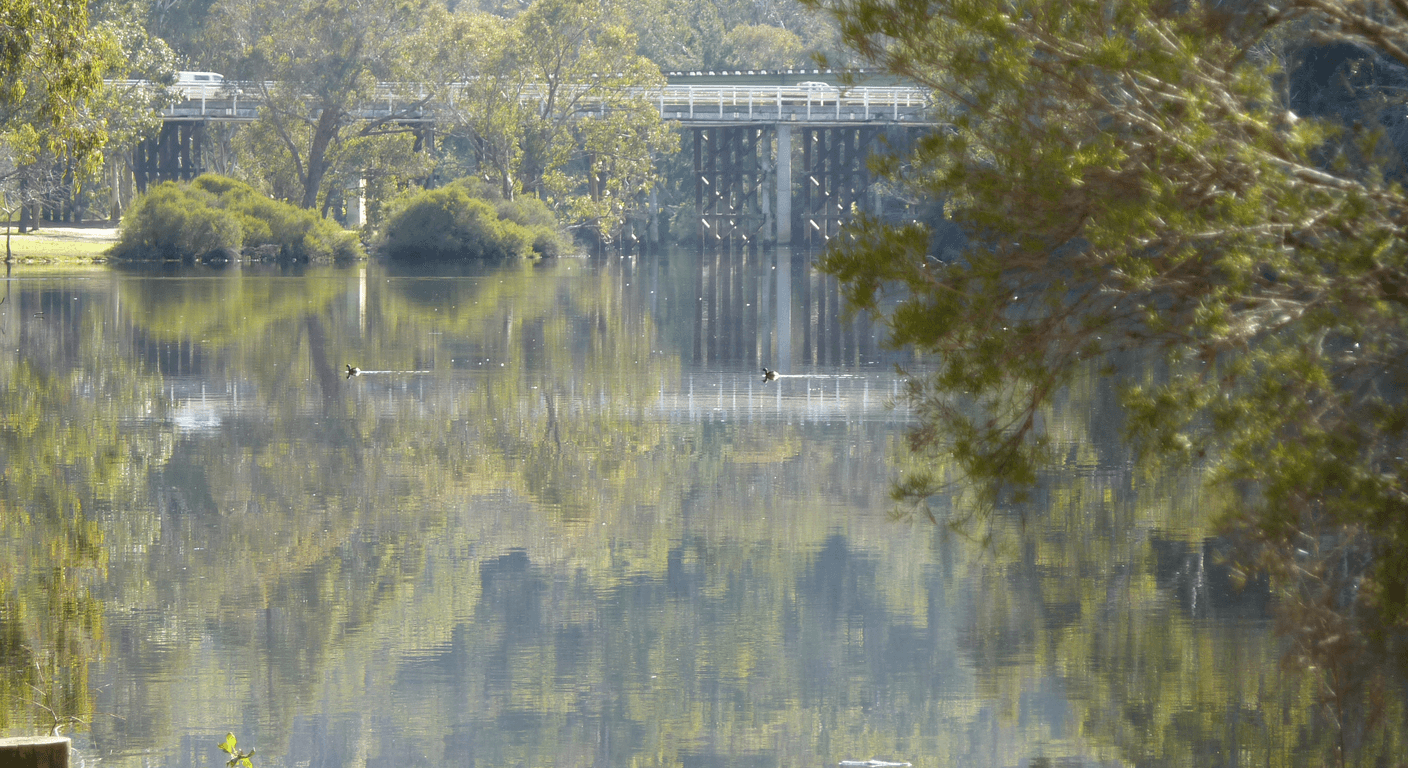
Australind is the kind of place that doesn't announce itself loudly. It sits at the northern edge of Bunbury, separated from the city by the long, sheltered waters of the Leschenault Estuary — a brackish inlet where black swans drift past paperbarks and the light on the water shifts from silver to gold depending on the hour. For a group of women who've driven or trained down from further east, or who are working their way through the South West, it offers a gentle landing: flat ground, open sky, and no pressure to be anywhere in particular.
The town itself has a modest colonial history — it was the site of an ambitious 1840s settlement scheme that largely didn't take hold, leaving behind a handful of heritage buildings and a name that still puzzles newcomers. That history is light on the ground now, but it gives the place a quiet character. There's nothing performative about Australind. You walk, you look at the birds, you find the little church, and you feel pleasantly sorted for the afternoon.
The Leschenault Estuary path: what to expect on the walk
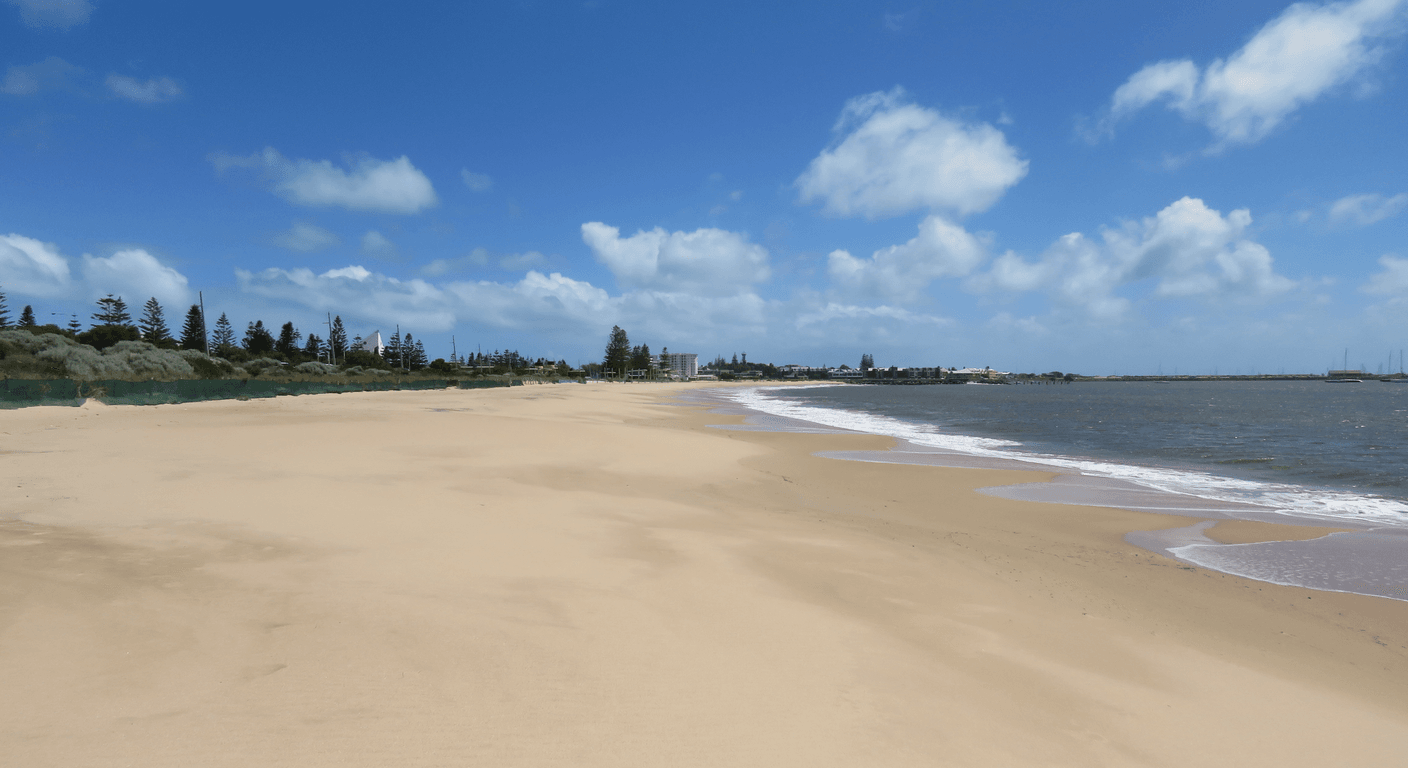
The shared path along the estuary foreshore is the centrepiece of any visit. It runs along the waterfront through Australind, mostly flat and mostly sealed or well-compacted, making it accessible for walkers of varied fitness levels. You don't need hiking boots — a comfortable pair of walking shoes does the job. The path is shared with cyclists, so a little awareness is sensible, but traffic is light on most days.
Birdlife is the real draw. The estuary is home to black swans in considerable numbers, along with pelicans, cormorants, herons, and a rotating cast of wading birds depending on the season. Bring binoculars if you have them — they're worth it. The water's edge is close, and the birds are often unconcerned by human presence at a respectful distance.
Shade is the honest caveat here. The path along the foreshore is largely open, and in the summer months — December through February — the Western Australian sun is not forgiving by mid-morning. An early start, before 9 am, or an evening stroll after 4 pm makes the experience considerably more pleasant. Spring and autumn visits sidestep the issue almost entirely, and those are the months when the South West is at its most agreeable anyway.
St Nicholas Church: one of Australia's smallest
St Nicholas Church on Paris Road is a small stone and timber building that dates to 1848, making it one of the oldest surviving churches in Western Australia. It's frequently described as one of the smallest churches in Australia — a claim that's difficult to verify with precision, but standing in front of it, you'd find it easy to believe. The building seats perhaps a dozen people comfortably, and its proportions are almost domestic.
The exterior can be viewed freely at any time, and the setting — a modest garden, old trees, the estuary nearby — is genuinely lovely. Whether the interior is open varies; it's an Anglican church still in occasional use, so opening times are not always predictable. The National Trust of Australia (WA) has an interest in heritage sites of this era, and local signage provides some historical context. Confirm opening access before you go if you're hoping to step inside.
For a group of friends with an interest in history and heritage — and many over-50 travellers have exactly that — the church is a satisfying fifteen minutes. It doesn't need to be more than that. The pleasure is in its scale, its age, and the fact that it's still standing at all.
Getting to Australind from Perth, Bunbury, and regional Victoria
From Perth, the Transwa Australind train service runs to Bunbury — a journey of roughly two and a quarter hours, one of the more civilised regional rail trips in Western Australia. Australind township is a short drive north of Bunbury city centre; there's no direct public transport connection between Bunbury station and the Australind foreshore, so a taxi, rideshare, or hire car is the practical solution for the last leg. Confirm current Transwa timetables and fares at transwa.wa.gov.au.
For travellers coming from regional Victoria — say, making a broader Australian road or fly-drive journey — Australind fits naturally into a South West WA itinerary. Fly into Perth, collect a hire car, and work your way south through the Swan Valley and Peel region, arriving in the Bunbury–Australind area after a comfortable two-hour drive. Those driving the coast in a caravan or motorhome will find the region well set up for grey nomads, with powered sites available in and around Bunbury.
South America–born Australians based in regional Victoria often have a particular appreciation for places that feel unhurried and generous with their landscape. The Leschenault Estuary has that quality. The light is different on the west coast — broader, more insistent — and the estuary in the early morning has a stillness that rewards anyone who's made the effort to get there.
When to visit: seasons and timing for over-50 travellers
The South West of Western Australia runs on a Mediterranean-style climate — warm, dry summers and mild, wetter winters. For over-50 walkers, spring (September to November) and autumn (March to May) are the most comfortable windows. Temperatures are moderate, the light is lovely, and the birdlife on the estuary is active. Spring also brings wildflowers to the broader South West region, which makes the timing doubly worthwhile if you're building a longer itinerary.
Winter visits (June to August) are mild by Australian standards — rarely cold enough to be unpleasant — but wetter, and the estuary path can be muddy at the edges after rain. Summer is manageable with early starts, but the heat is real and the lack of shade on the foreshore path is a genuine consideration, not a minor footnote. Anyone with a sensitivity to heat, or who simply prefers not to work harder than necessary on a leisure day, will find spring and autumn far more rewarding.
Practical tips for the day: comfort, cost, and what to bring
The walk along the estuary path and the visit to St Nicholas Church cost nothing. That's not nothing — a free half-day in a beautiful setting is exactly the kind of thing a well-planned itinerary should include. Bring water, sunscreen, and a hat regardless of the season; a light layer for early mornings in autumn or winter. Binoculars for the birds. A charged phone for photos, because the swans on the estuary are reliably cooperative subjects.
There are cafes and a small shopping strip in Australind township, and Bunbury city centre — a short drive south — has a full range of dining, accommodation, and services. If you're making a full day of it, the Bunbury waterfront precinct is worth a look in its own right, with flat walking access and several cafes with estuary or ocean views. Indicative cafe costs in the area run to around $15–$25 for breakfast or lunch; confirm current prices locally.
Accessibility along the foreshore path is generally good for those who walk steadily on flat ground. There's no requirement to cover any particular distance — the path invites you to go as far as feels right and turn back. For anyone using a walking aid, the sealed sections are manageable; the compacted gravel sections near the waterline may be less so after rain. Parking is available near the foreshore if you're driving.
Combining Australind with a broader South West itinerary
Australind works best as part of a longer South West journey rather than a standalone destination from Perth — though it's entirely possible to do it as a day trip on the Transwa train if you're Perth-based. The more satisfying approach is to combine it with two or three nights in Bunbury, then continue south through Busselton, Margaret River, and the Cape to Cape region. That circuit suits a group of friends who want variety without relentless driving.
The Leschenault Estuary is actually a large body of water that extends well south of Australind into Bunbury itself, and there are walking and cycling paths on the Bunbury side as well. Treating the estuary as a connecting thread through the two towns — walking a section in Australind in the morning, then exploring the Bunbury waterfront in the afternoon — gives the day a satisfying coherence. It's a proper sense of place, not just a list of stops.
Quick planning guide
| Ideal pace | Slow-paced, unhurried half-day |
|---|---|
| Best months | September–November and March–May (spring and autumn) |
| Suggested stay | Half-day |
| Mobility level | Easy — flat, mostly sealed foreshore path |
| Cost level | Free (walk and church exterior), budget-friendly overall |
| Comfort level | Comfortable, but shade is limited on the path in summer |
| Best for | Over-50 walkers, birdwatchers, and heritage-interested travellers |
| Main planning consideration | Time visits for early morning or evening in summer, and arrange a taxi or hire car for the short leg from Bunbury station to the Australind foreshore |
Key takeaways
- The Leschenault Estuary foreshore path in Australind is flat, largely sealed, and free — ideal for over-50 walkers of most fitness levels.
- St Nicholas Church on Paris Road dates to 1848 and is among the smallest heritage churches in Australia; the exterior is viewable at any time at no cost.
- Summer visits require an early start — before 9 am — as shade is scarce along the estuary path and the Western Australian sun is intense by mid-morning.
- Spring (September–November) and autumn (March–May) are the most comfortable seasons for walking the estuary, with moderate temperatures and active birdlife.
- The Transwa Australind train connects Perth to Bunbury in around two and a quarter hours; Australind township is a short taxi or hire car ride from Bunbury station.
- A half-day in Australind costs very little — the walk and church visit are free — making it an efficient and rewarding stop within a broader South West WA itinerary.
Recommended partners and links
Indicative prices only — always confirm with the operator before booking.
Frequently asked questions
Is the Leschenault Estuary walk suitable for over-50 travellers with limited mobility?
Yes. The shared path along the Australind foreshore is flat and largely sealed, making it accessible for over-50 walkers who are steady on their feet but not looking for challenging terrain. Those using a walking aid should note that some sections near the water's edge use compacted gravel, which may be uneven after rain. There is no requirement to walk any set distance — the path can be enjoyed for as short or long a stretch as suits the group.
Is St Nicholas Church in Australind open to visitors?
The exterior of St Nicholas Church on Paris Road can be viewed freely at any time. Interior access varies, as the church is still occasionally used for services. It's advisable to confirm opening times before visiting if you want to see inside. The National Trust of Australia (WA) can provide further heritage context; check nationaltrust.org.au for information on WA heritage sites.
How do you get from Perth to Australind by public transport?
The Transwa Australind train service runs from Perth to Bunbury in approximately two and a quarter hours. From Bunbury station, Australind township is a short taxi or rideshare journey north — there is no direct bus connection between the station and the Australind foreshore. Confirm current timetables and fares at transwa.wa.gov.au before booking.
What is the best time of year to visit Australind and the Leschenault Estuary?
Spring (September to November) and autumn (March to May) are the most comfortable times for over-50 visitors. Temperatures are moderate, the birdlife is active, and spring coincides with the South West's wildflower season. Summer visits are possible but require an early start — before 9 am — as shade is limited along the estuary path and midday heat can be significant. Winter is mild but wetter.
What wildlife can you see on the Leschenault Estuary?
The estuary is reliably home to black swans, pelicans, cormorants, and various herons and wading birds. Birdlife is present year-round, with seasonal variation in species. Binoculars are recommended for the best experience. The birds are often close to the path and accustomed to quiet human presence at a respectful distance.