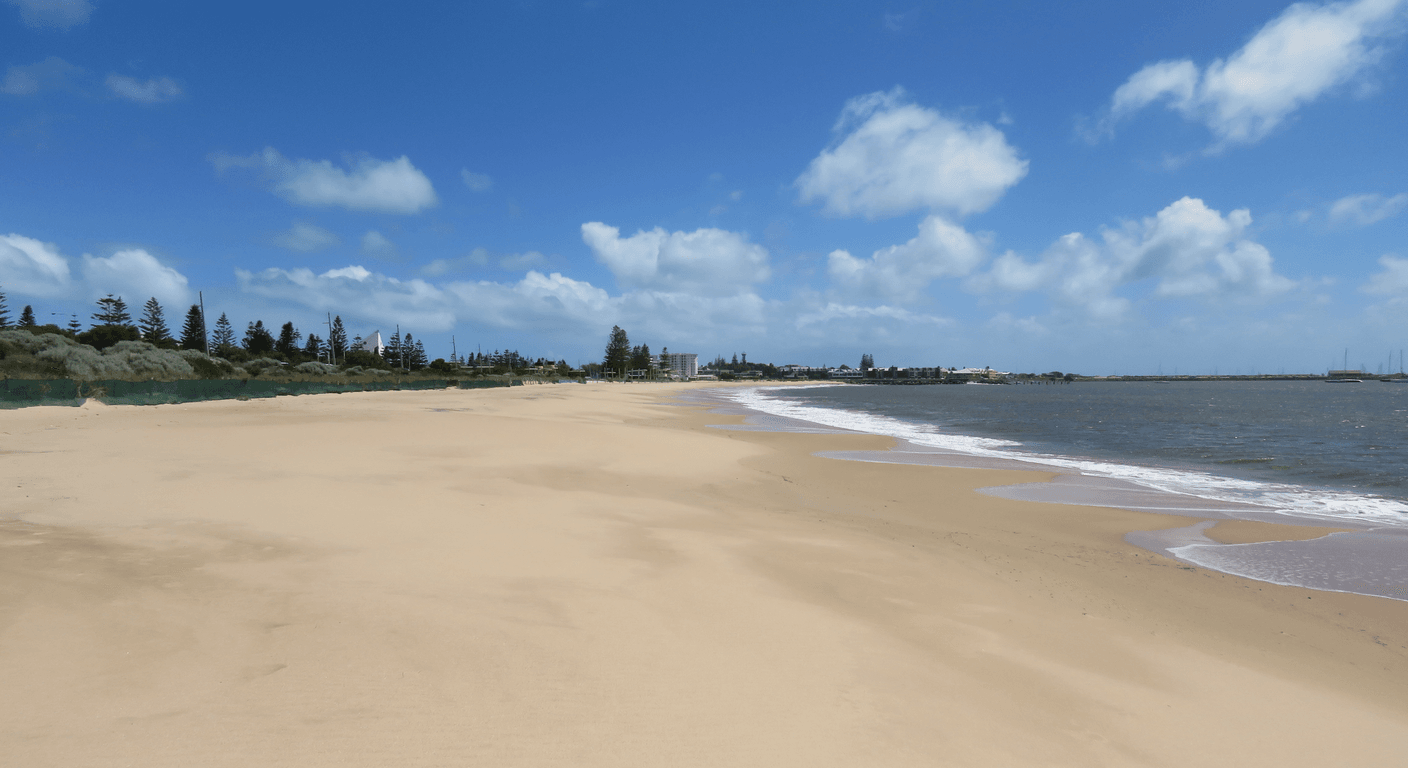
Bunbury's Dolphin Discovery Centre, on Koombana Bay about two hours south of Perth by train or coach, offers one of Australia's most accessible wild dolphin encounters. Mornings are best, when the local pod is most likely to visit the shallows, though sightings are never guaranteed. A full, unhurried day suits the site, combining the interpretive museum, beach interaction zone and an optional eco cruise. Most mobility levels are catered for, though the sandy beach and boat boarding require care, and no car is needed for the trip from Perth.
Why Bunbury Works as a Day Trip for Older Travellers
Bunbury sits roughly 180 kilometres south of Perth, and the journey by train or coach takes around two hours — a manageable stretch for a day trip. The city is flat, the waterfront precinct is compact, and the Dolphin Discovery Centre is within easy walking distance of the Bunbury train station if you are reasonably mobile. For a solo traveller who prefers not to drive in unfamiliar territory, this is one of the more straightforward regional day trips Western Australia offers.
The appeal is specific and honest: you come for wild dolphins in a natural bay setting, with the option to learn something about them in a well-presented indoor space. There is no theme-park energy here. Koombana Bay is calm and sheltered, the pace is unhurried, and the centre attracts a mix of families and independent travellers rather than large tour groups. That suits many over-60 travellers rather well.
If you are visiting from Victoria — Melbourne to Perth is a short flight, and many Victorians use Perth as a base for a few days before heading south — Bunbury makes a logical addition to the itinerary. You do not need to rent a car, and you do not need to plan far in advance.
What Is the Dolphin Discovery Centre, Exactly?
The Dolphin Discovery Centre is a non-profit organisation based on Koombana Bay in Bunbury. It has operated for several decades with a focus on research, education and responsible wildlife tourism. The centre includes an interpretive museum with displays on bottlenose dolphin behaviour, biology and the local Koombana Bay pod, as well as a beachside interaction zone — a shallow, roped area on the beach where wild dolphins sometimes come in close to the shoreline.
Entry to the interpretive centre is modest, falling into the under-$30 category for most adults — though you should confirm current pricing directly with the centre, as fees are reviewed periodically. The indoor space is air-conditioned, which matters in summer, and the displays are genuinely informative rather than superficial. There are seating areas, which is worth noting for anyone who needs to pace their visit.
The centre also runs eco cruises out into Koombana Bay and the surrounding waters, and these are sold separately. The cruises are the more reliable way to encounter dolphins, for reasons explained further below. Staff are accustomed to answering questions from visitors of all ages and are generally helpful about what to realistically expect on any given day.
The Interaction Zone: What Actually Happens on the Beach?
The beachside interaction zone is the feature that draws most visitors. Wild bottlenose dolphins from the local pod visit the shallow water near the shore — sometimes coming very close to people standing in the shallows. This is not a feeding program in the traditional sense; the centre has strict protocols about how visitors may behave in the water, and staff are present to guide you. You do not feed the dolphins yourself.
Visits happen most commonly in the morning, typically between around 8am and midday, though the dolphins follow no schedule and cannot be called in. On some days they arrive reliably; on others they do not appear at all. This is the honest reality of any wild animal experience, and the centre is transparent about it. If you travel specifically to stand in the shallows with a dolphin and nothing appears, you may be disappointed — so it helps to approach this as a pleasant possibility rather than a certainty.
Accessibility at the interaction zone is limited by the nature of the beach itself. The sand is soft in places, and entering the water requires walking on an uneven surface. If mobility is a consideration, you can still observe from the beach without entering the water, and the interpretive centre provides a meaningful experience regardless of what happens outside.
Are the Eco Cruises Worth It for Over-60 Travellers?
For most travellers who want a genuine dolphin encounter, the eco cruise is the more dependable option. The vessel heads out into Koombana Bay and the wider waters, where the dolphins range more freely, and the encounter rate on cruises is significantly higher than at the interaction zone on any given day. Cruises run to a schedule — check the centre's website for current departure times — and typically last around 90 minutes to two hours.
The cost is higher than centre entry, falling roughly in the $50–$70 range per adult at the time of writing, though you should confirm current pricing directly with the Dolphin Discovery Centre before travelling. For a solo traveller, this is a meaningful spend, but it is comparable to a standard wildlife tour in most Australian destinations. The vessel is relatively small, which means you are close to the water and the experience feels personal rather than commercial.
From an accessibility standpoint, boarding a small vessel involves stepping down and managing some movement on a boat deck. If balance or mobility is a genuine concern, it is worth calling the centre ahead of time to ask about the specific vessel and boarding arrangements. Staff are generally accommodating and will give you an honest answer about whether it suits your situation.
Getting There from Perth Without a Car
The Australind is a passenger train service operated by Transwa that runs between Perth (East Perth terminal) and Bunbury. The journey takes around two hours and the service runs daily, though the timetable is limited — there are typically two return services on weekdays and one or two on weekends, so you need to plan around departure times. Check the current timetable on the Transwa website before you travel, as schedules can vary seasonally.
Transwa also operates coach services between Perth and Bunbury on the same route, which can be useful if the train times do not suit. Fares are indicative in the $30–$45 range one-way for an adult, though seniors concessions may apply depending on your card status — confirm eligibility with Transwa directly. The Bunbury train station is in the city centre, and from there the waterfront and Dolphin Discovery Centre are reachable on foot if you are comfortable walking around 1.5 to 2 kilometres, or by a short taxi or rideshare.
If walking that distance does not suit, local taxis are available from the station. Bunbury is a modest-sized regional city rather than a major metropolitan centre, so rideshare availability can be variable — it is worth having a backup plan. The Tourism Bunbury Geographe website has practical visitor information that can help with local transport options once you arrive.
Timing Your Visit and Pacing the Day
Arriving early is the consistent advice for dolphin sightings at the interaction zone. The pod tends to visit in the morning, and the centre itself opens early to accommodate this. If you are catching the Australind, check whether the morning departure from Perth gets you to Bunbury in time for the peak interaction window — this is worth confirming before you book your train ticket, as timetables shift.
A well-paced day might look like this: arrive at the centre mid-morning, spend an hour in the interpretive museum, spend time at the interaction zone watching the beach regardless of whether dolphins appear, then take an afternoon eco cruise before heading back to the station. That gives you a full but unhurried day without covering large distances or being on your feet constantly. There are cafe and food options in the Bunbury waterfront precinct if you need lunch or a rest between activities.
In summer, Koombana Bay can be warm and the sun is strong. Bring a hat, sunscreen and water — the beach interaction zone offers limited shade. The indoor museum space provides a good retreat during the hottest part of the day. Winter visits are cooler and the crowds are smaller, which suits some travellers who prefer a quieter experience.
Practical Notes on Accessibility and Comfort
The interpretive centre building is accessible for most mobility levels, with flat flooring and seating available. The beach interaction zone involves soft sand and is less straightforward for anyone using a walking aid or with significant balance issues — it is worth flagging this when you arrive and asking staff what is feasible. The centre's team are experienced at working with visitors of varying mobility and will give you a realistic picture.
Toilets are available at the centre. The surrounding Koombana Bay foreshore has some seating and sheltered areas. If you are travelling solo and want to feel oriented before you arrive, the Dolphin Discovery Centre website has clear visitor information including a map of the site. It is worth reading through before the day so you know what to expect and can plan your time.
For Victorian travellers visiting Western Australia, it is worth noting that most standard seniors concession cards issued in Victoria are not automatically valid for discounts in WA — check with specific providers about what concessions they honour. Some operators accept the Commonwealth Seniors Health Card for discounts; others do not. Always ask at the point of purchase rather than assuming.
Quick planning guide
| Ideal pace | Slow-paced and unhurried |
|---|---|
| Best months | Year-round; winter brings cooler weather and smaller crowds, mornings are essential for dolphin sightings regardless of season |
| Suggested stay | A full day trip from Perth |
| Mobility level | Moderate — interpretive centre is flat and accessible, but the beach interaction zone has soft sand and cruise boarding requires some steadiness |
| Cost level | Budget-friendly (centre entry under $30; eco cruise roughly $50–$70) |
| Comfort level | Comfortable, with shade and seating indoors; limited shade at the beach in summer |
| Best for | Independent or solo senior travellers wanting a relaxed, car-free wildlife day trip |
| Main planning consideration | Dolphin sightings at the beach are never guaranteed — arrive early and consider the eco cruise for a more reliable encounter |
Key takeaways
- Wild dolphins visit Koombana Bay most mornings but sightings are never guaranteed — treat the eco cruise as the more reliable encounter.
- Centre entry is modest and falls under $30 for most adults; eco cruises cost roughly $50–$70 — confirm current prices with the centre before travelling.
- The Australind train from Perth East to Bunbury takes around two hours and runs daily, making this a genuine car-free day trip.
- Arrive early — the dolphin pod tends to visit the interaction zone in the morning, not the afternoon.
- The interpretive centre is accessible for most mobility levels; the beach interaction zone involves soft sand and is less suitable for those with significant mobility limitations.
- Victorian seniors concession cards are not automatically valid in WA — check with individual providers about what they accept.
Recommended partners and links
Indicative prices only — always confirm with the operator before booking.
Frequently asked questions
Is it guaranteed you will see dolphins at the Dolphin Discovery Centre?
No. Wild dolphin sightings at the interaction zone are never guaranteed. The local pod visits most mornings but follows no schedule. Taking an eco cruise significantly improves your chances of an encounter, as the boat heads into the wider bay where the dolphins range freely.
How do you get from Perth to Bunbury without driving?
Transwa operates the Australind passenger train between Perth (East Perth terminal) and Bunbury, with the journey taking around two hours. Transwa also runs coach services on the same route. Check the current timetable at transwa.wa.gov.au before travelling, as services are limited and schedules vary.
How much does the Dolphin Discovery Centre cost?
Centre entry is modest — roughly in the under-$30 range for adults at the time of writing. Eco cruises are sold separately and cost roughly $50–$70 per adult. Prices are indicative only; confirm current fees directly with the Dolphin Discovery Centre at dolphindiscovery.com.au before your visit.
Is the Dolphin Discovery Centre suitable for travellers with limited mobility?
The interpretive centre building is generally accessible, with flat flooring and seating areas. The beachside interaction zone involves soft sand and uneven footing, which is less suitable for anyone using a walking aid or with significant balance concerns. Contact the centre ahead of your visit to discuss what is feasible for your situation.
What is the best time of day to visit for dolphin sightings at the beach?
The local pod tends to visit the shallow interaction zone in the morning, most commonly between around 8am and midday. Arriving early gives you the best chance of a sighting at the beach. Afternoon visits are less likely to coincide with dolphin activity at the shoreline.