Cabramatta is a 45-minute direct train ride from Sydney's Central Station on the T2 South line, best visited on a spring or autumn weekday. The flat, accessible streets around Freedom Plaza make it an Easy outing for most mobility levels, and three to four hours is enough to enjoy the defining highlight: genuinely authentic Vietnamese pho, bánh mì and bakery treats at prices that remain remarkably affordable.
Why Cabramatta Deserves a Day of Your Time
There's a particular pleasure in arriving somewhere by train and stepping out into a world that feels genuinely different from where you started. Cabramatta Station deposits you directly into the heart of one of Australia's most cohesive Vietnamese communities — one that has been feeding Sydney for decades and has absolutely no interest in performing for tourists. That's precisely what makes it worth the journey.
For a traveller who grew up eating simply and well, who understands that the best food rarely announces itself with a glossy fitout, Cabramatta reads immediately. The roast duck hanging in the window, the hand-written specials on butcher's paper, the bakery counter piled with pandan cake and bánh mì — these are familiar signals. The language on the signs is different, but the hospitality is not.
The precinct is also genuinely easy on the body. Streets fan out from Freedom Plaza on flat ground, footpaths are wide, and the distances involved are modest. You can cover the main food strip, browse a fabric shop, sit for a proper lunch and still catch a mid-afternoon train back to Central without rushing. That's a good day.
Getting There: The T2 South Line from Central
From Sydney's Central Station, take the T2 South line direct to Cabramatta. The journey runs roughly 45 minutes and requires no changes. Trains run frequently throughout the day — check the Transport for NSW trip planner at transportnsw.info for current timetables, as services vary by day and time. Tap on and off with an Opal card; the fare is around $5–6 each way, though confirm current prices before you travel.
For visitors staying in the CBD, the logistics are straightforward: walk or take a short train hop to Central, board the T2, and you're there. The station itself has lifts and is accessible. Cabramatta Station is a short, flat walk from Freedom Plaza — you'll see the red friendship gate from the platform exit.
A weekday visit is worth planning for. Cabramatta on a Saturday can feel quite compressed, especially around the market stalls. On a Tuesday or Wednesday, the food shops are fully stocked, queues are shorter, and you can actually linger at a table rather than hover waiting for one. The restaurants are open regardless — it's the elbow room that changes.
Freedom Plaza and the Art of Pointing at a Menu
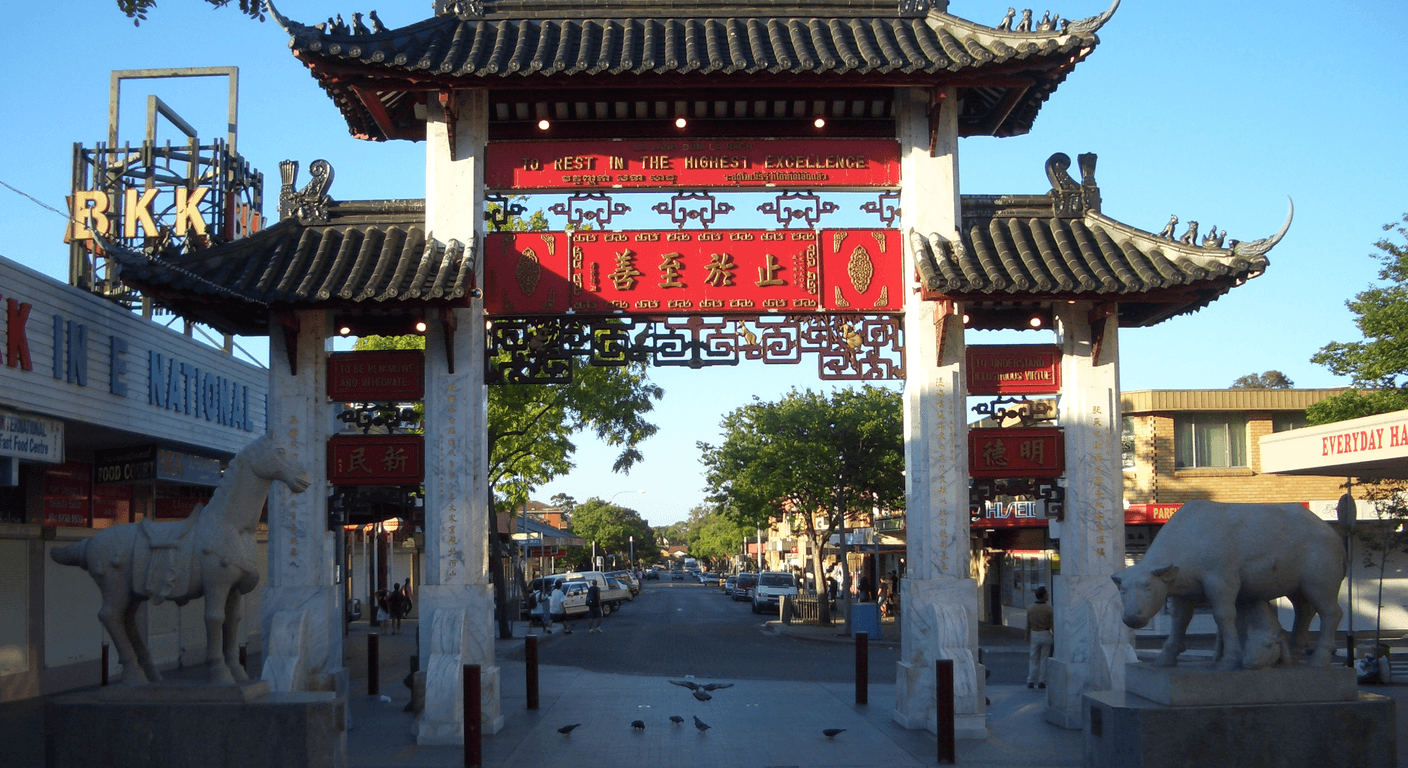
The Friendship Gate at Freedom Plaza — a formal Vietnamese-style archway in red and gold — is the unofficial centre of the precinct and a useful landmark for orienting yourself. From here, John Street and the surrounding blocks hold the highest concentration of restaurants, bakeries, grocery stores and the occasional fabric shop selling ao dai silk by the metre.
Ordering in Cabramatta is not an exercise that requires fluency in Vietnamese. Most menus have photographs, many have English translations, and the staff at long-standing restaurants are entirely accustomed to visitors who point, nod, and hold up fingers to indicate quantity. A smile and a willingness to accept what arrives — which will almost certainly be excellent — is the only skill required.
Solo diners are common and unremarkable here. Many of the restaurants have communal tables or small two-tops that suit a single traveller perfectly. There's no sense of being rushed or out of place. Order a bowl of pho, sit with it, and watch the street. That's the experience.
What to Eat and Where to Look
Pho is the obvious starting point — a proper bowl of beef broth that's been simmering since before you woke up, served with thin rice noodles, slices of beef, and a plate of fresh herbs, bean sprouts, lime and chilli on the side. In Cabramatta, a large bowl runs around $15–18 at most restaurants (indicative; confirm when you arrive). It's a meal, not a starter. Bún bò Huế, the spicier central Vietnamese noodle soup, is worth seeking out if you see it on the board.
Bánh mì is the other non-negotiable. The Vietnamese baguette — a legacy of French colonial influence — is filled here with combinations of pâté, cold cuts, pickled vegetables, fresh coriander and chilli. A good one costs around $7–10 (indicative). Several bakeries on John Street and the surrounding blocks sell them, and the best approach is simply to join the queue at whichever shop has one forming. Freshness is everything, and it's always fresh.
Beyond the headline dishes, look for the bakery counters selling bánh cuốn (steamed rice rolls with pork and mushroom), chè (sweet dessert soups in little cups, often with coconut milk and pandan), and the French-influenced patisserie that sits alongside everything else — buttery pineapple cakes, egg tarts, and coconut buns that are hard to walk past. Budget around $15–20 for a generous lunch, less if you're grazing. Bring cash; smaller stalls and some bakeries still prefer it, though many places now accept card.
Beyond the Food: Fabric, Groceries and Slow Browsing
Cabramatta rewards the kind of traveller who doesn't need an agenda. Between meals, the Asian grocery stores are worth an unhurried wander — shelves stocked with fresh herbs you may not find at home, dried goods, sauces, and produce that prompts the thought of cooking something new when you get back. A small bag of kaffir lime leaves or a jar of good fish sauce makes a practical, weightless souvenir.
The fabric shops deserve a mention. Several stores in the precinct stock Vietnamese and Chinese silk, cotton and synthetic ao dai fabric, as well as haberdashery. For anyone who sews or appreciates cloth, these are genuinely interesting. Prices are reasonable and the range is specific to this community — you won't find the same selection at a mainstream fabric chain.
There's also the simple pleasure of sitting in Freedom Plaza with a cup of Vietnamese iced coffee — cà phê sữa đá, strong drip coffee over condensed milk and ice — and watching the suburb go about its Tuesday. No particular schedule required.
Practical Comfort: What to Know Before You Go
Cabramatta's summer (December to February) can be humid and warm, which is worth factoring in if you're sensitive to heat. The food precinct is entirely outdoors and on-street, with air-conditioned restaurant interiors as the obvious refuge. Spring and autumn are particularly pleasant for walking. There's no bad time to visit, but January midday is the one moment that calls for shade and a cool drink.
Footwear matters. The streets are flat and paved, but you'll be on your feet for several hours if you give the day the attention it deserves. Comfortable walking shoes — not heels, not thongs — are the right call. Accessibility is generally good: kerb cuts are present on main streets, and the key restaurant strips don't involve steps. If you rely on a walking stick or have mobility considerations, the precinct is manageable.
The suburb is safe and well-frequented. Solo female travellers are very much at home here — the community is family-oriented and the daytime atmosphere is calm. Keep your bag close as you would anywhere, but there's no particular concern. Phone signal is reliable throughout if you need to check transport times or look up a restaurant name.
A Suggested Shape for the Day
Leave Sydney CBD mid-morning — around 9:30 or 10am — to arrive in Cabramatta before the lunch rush. Start with a walk through Freedom Plaza to get your bearings, then head to one of the bakeries for a bánh mì and a Vietnamese iced coffee. This costs very little and sets the tone without filling you entirely.
Take your time browsing the grocery stores and, if fabric interests you, the cloth shops. By noon or 12:30pm, find a restaurant and sit down for the main event — pho, bún bò Huế, or whatever looks compelling on the board. Order slowly. There's no hurry. A bowl of chè or a pandan cake from a bakery counter handles dessert.
The return train to Central runs through the afternoon and evening, so the timing is flexible. Most travellers find that three to four hours on the ground is satisfying without becoming tiring — enough to eat well, browse a little, and sit with a coffee before heading back. If energy permits, a second coffee and another pass down John Street never goes astray.
Quick planning guide
| Ideal pace | Slow-paced and unhurried |
|---|---|
| Best months | Spring and autumn for cooler walking weather; summer (Dec–Feb) can be humid |
| Suggested stay | Three to four hours, ideally as a half-day trip from the CBD |
| Mobility level | Easy — flat streets, wide footpaths and kerb cuts around Freedom Plaza |
| Cost level | Budget-friendly — a generous lunch runs around $15–20 |
| Comfort level | Casual and outdoor, with air-conditioned restaurant interiors as a refuge from heat |
| Best for | Food lovers, solo travellers and seniors seeking an authentic, low-effort cultural outing |
| Main planning consideration | Go on a weekday rather than Saturday for shorter queues and more room to linger |
Key takeaways
- Cabramatta is a 45-minute direct train ride from Central Station on the T2 South line, with no changes required.
- A generous Vietnamese lunch — pho, bánh mì and a sweet — costs around $15–20 (indicative; confirm on arrival).
- Streets around Freedom Plaza are flat and accessible, making the precinct genuinely Easy for most mobility levels.
- Pointing at a menu photograph is completely normal and works perfectly well in Cabramatta's restaurants and bakeries.
- Weekday visits offer more space, shorter queues and a more relaxed atmosphere than weekend market days.
- Bring cash for smaller stalls and bakeries; card is increasingly accepted but not universal.
Recommended partners and links
Indicative prices only — always confirm with the operator before booking.
Frequently asked questions
How do I get to Cabramatta from Sydney CBD by public transport?
Take the T2 South line from Central Station direct to Cabramatta Station — no changes required. The journey takes around 45 minutes. Use an Opal card to tap on and off. Check current timetables and fares at transportnsw.info before you travel.
Is Cabramatta suitable for a solo traveller, particularly a woman travelling alone?
Yes. Cabramatta is a family-oriented, community-focused suburb and solo female visitors are common and unremarkable. The daytime atmosphere is calm, restaurants are accustomed to single diners, and the main food strips are well-frequented throughout the day.
Do I need to speak Vietnamese to order food in Cabramatta?
No. Most restaurants have photo menus or English translations, and staff are experienced with visitors who point and gesture. A willingness to accept what arrives — which will almost certainly be good — is the only requirement.
Is Cabramatta accessible for older travellers with mobility considerations?
Generally yes. The streets around Freedom Plaza and John Street are flat, footpaths are wide, and kerb cuts are present on the main strips. Cabramatta Station has lift access. If you use a walking stick or have specific mobility needs, the precinct is manageable, though it's worth confirming station accessibility at transportnsw.info.
What is the best time of year to visit Cabramatta?
Cabramatta can be visited year-round. Spring (September to November) and autumn (March to May) offer the most comfortable walking temperatures. January can be hot and humid in western Sydney, which is worth considering if you're sensitive to heat — the restaurant interiors are air-conditioned, but the food streets are open-air.