Canberra suits a relaxed two-night weekend for over-50 travellers, best visited in autumn (April to early May) when the city's avenues turn gold and crowds are thinner than during spring's Floriade. The defining highlight is a day of free, fully accessible national galleries paired with a Murrumbateman cool-climate wine day, best done with a private driver. Mobility is easy, though a hire car or rideshare is essential since light rail doesn't reach the lakeside precinct.
Why Canberra works so well for over-50 travellers
Canberra is a planned city, which means distances between precincts are real — you will want a car, a rideshare, or a driver for at least part of the weekend. But that same planning also means wide footpaths, purpose-built cultural precincts, and a pace of life that does not hustle you. There are no cruise-ship crowds at the National Gallery on a Tuesday morning, no queues snaking around the block at the War Memorial. For travellers who have graduated past the need to tick every box, that breathing room is the whole point.
For a group of women travelling from regional Victoria, the journey itself is part of the pleasure. The drive up the Hume Highway or Barton Highway takes roughly three and a half to four hours from Melbourne's north-eastern fringe, with a comfortable stop at Goulburn or Yass. Alternatively, Rex Airlines and Qantas Link both operate services into Canberra Airport from regional hubs — worth comparing against the drive cost for your group. Once in Canberra, a hire car shared between four keeps the weekend flexible without being expensive.
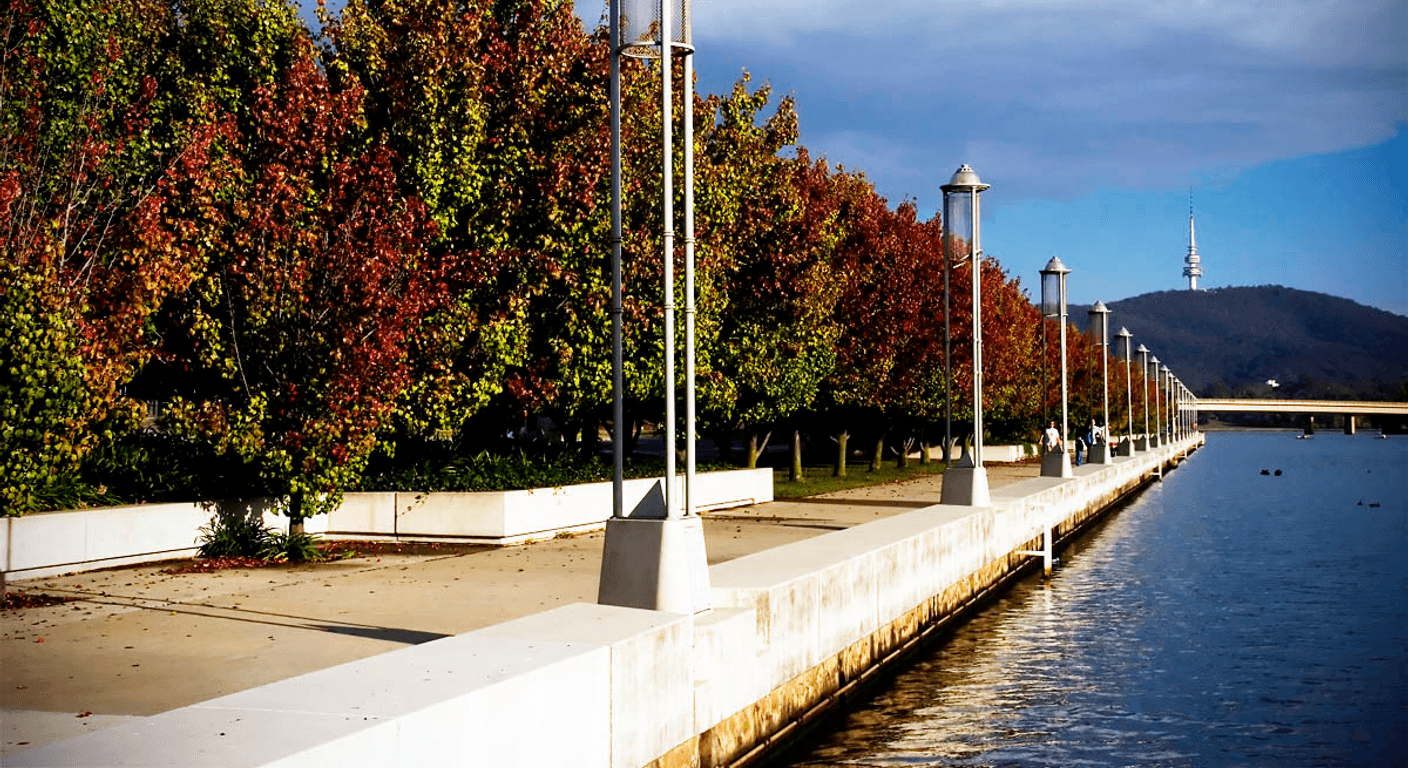
Autumn — broadly April through early May — is the season most Canberrans will tell you is their favourite, and it is easy to understand why. The ornamental trees planted along Commonwealth Avenue, Anzac Parade, and through the suburbs of Forrest and Yarralumla turn every shade between amber and deep burgundy. The light is soft, the air is crisp but manageable, and the crowds are noticeably thinner than during Floriade in spring. If your group prefers tulips to turning leaves, the spring Floriade festival runs September through October in Commonwealth Park and is worth planning around — but for a quieter, more reflective experience, autumn wins.
Getting there from regional Victoria: what are the practical options?
Driving remains the most flexible option for a group. From the north-east Victorian corridor — think Wangaratta, Albury-Wodonga — Canberra is roughly four hours via the Hume and Barton Highways, with Yass as a natural halfway stop for coffee and a stretch. From central or western Victoria the drive is longer, and flying becomes worth comparing. Canberra Airport sits very close to the city centre — around ten minutes by taxi or rideshare — which removes the transfer headache common at larger airports.
V/Line connects regional Victoria to Melbourne Southern Cross, from where coaches to Canberra operate, but this option adds significant travel time and transfers, and is generally less practical for a group wanting to carry luggage comfortably. If mobility or fatigue is a consideration for any member of the group, flying is the more sensible choice. Check current schedules and fares at canberraairport.com.au and the individual airline sites.
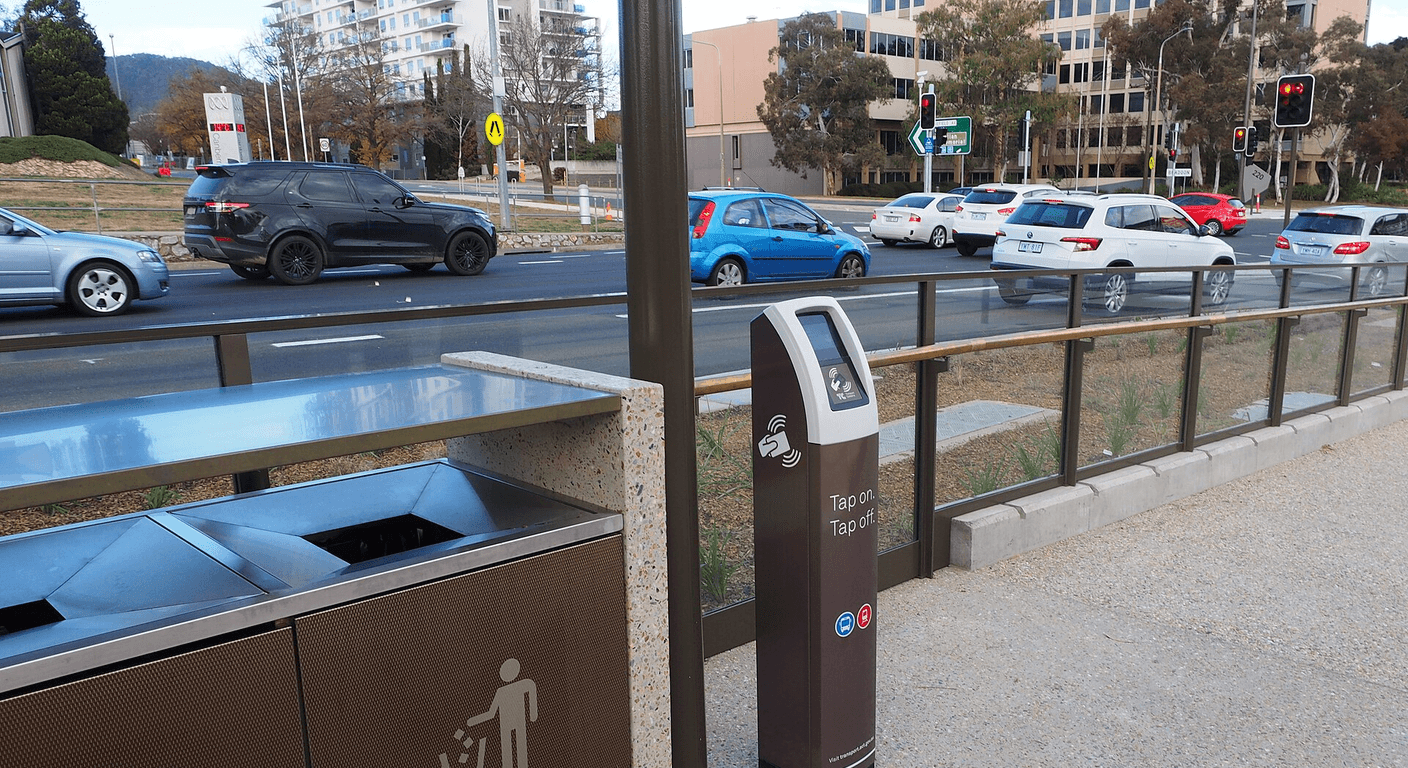
Within Canberra, the city's light rail (Canberra Metro) links Gungahlin in the north to the City bus interchange and is fully accessible with level boarding. However, most of the cultural precinct around Lake Burley Griffin is not on the light rail route, so a hire car, taxis, or rideshare services (Uber operates reliably in Canberra) will cover the gaps. Parking at the national institutions is generally available and often free, which matters if you are driving between galleries.
Day one: the national institutions and a lakeside lunch
A sensible first day centres on the Parliamentary Triangle — the cluster of national institutions along the southern shore of Lake Burley Griffin. The National Gallery of Australia on Parkes Place is the anchor. Its permanent collection, spanning Australian Indigenous art, Asian art, and international works, is free to enter and genuinely world-class. Allow two to three hours for a relaxed walk through; the building itself is fully accessible with lifts and wide gallery corridors. Ticketed special exhibitions run alongside the permanent collection — check nga.gov.au for what is showing during your visit and whether advance booking is recommended.
A short walk or five-minute drive brings you to the National Portrait Gallery, also free for the permanent collection, and considerably less tiring than the NGA's scale. It is a good afternoon choice — smaller rooms, portrait-scale works, and the kind of gallery where you can sit comfortably in front of a painting and actually look at it. The adjacent Questacon science centre suits travelling grandchildren but is not the focus here. For lunch, the NGA's cafe overlooks a sculpture garden, or the nearby Kingston Foreshore precinct (a ten-minute drive) offers a wider range of cafes with lake views and flat, easy footpaths.
Dinner on night one suits the Braddon precinct — Canberra's compact inner-north dining and bar strip along Lonsdale Street. It is walkable within the suburb, lively without being loud, and offers a good range of options from shared-plate modern Australian to casual Italian. Indicative dinner costs for two with a glass of wine sit roughly in the $80–$120 range at mid-tier venues, but confirm current menus and prices directly. Braddon is also where you will find most of Canberra's independent coffee roasters if a morning start is planned.
Day two: a Murrumbateman wine day — how to do it properly
The Murrumbateman wine region sits roughly 40 kilometres north of Canberra city, a 35-minute drive through rolling pastoral country. This is cool-climate viticulture at its most distinctive — Riesling, Shiraz, Tempranillo, and Pinot Noir that reflect the altitude and diurnal temperature range in ways that genuinely differ from warmer Australian regions. For a group of women who enjoy wine without wanting to rush, this is a day best done with a dedicated driver or a small-group wine tour so that everyone can taste freely.
Booking a private driver or a small-group tour through a Canberra-based operator is the practical solution. Several operators run half-day and full-day Murrumbateman cellar-door tours; check current offerings via visitcanberra.com.au or visityassvalley.com.au. Indicatively, private driver hire for a half-day might run from around $300–$400 for the vehicle — shared across four, this is reasonable. Cellar-door tasting fees at most Murrumbateman properties run roughly $10–$20 per person and are often redeemable against purchases. Confirm all current fees and availability directly with operators.
Three cellar doors in a day is a comfortable number for a relaxed group — more becomes tiring and the wines blur together. Clonakilla is among the best-known names in the region and worth visiting for context, though its Shiraz Viognier commands premium prices. Smaller producers such as Helm Wines and Eden Road Wines (the latter based at Murrumbateman) offer a more intimate tasting experience. Many cellar doors have outdoor terrace seating suited to a picnic lunch — some sell cheese boards or allow BYO food. Accessibility varies by property: most have gravel paths and some steps, so it is worth phoning ahead if mobility is a consideration for anyone in the group.
Autumn colour and Floriade: what to expect from each season
Canberra's autumn colour is not accidental. The National Capital Authority planted tens of thousands of deciduous exotic trees across the city's avenues and suburbs from the mid-twentieth century onward, specifically for the seasonal effect. The result, in April and early May, is a city that looks as if someone has turned up the warmth on a photograph. Anzac Parade's liquid ambers, the oaks and elms of Forrest and Yarralumla, and the avenues around Old Parliament House are the most photographed, but the residential streets of Red Hill and Deakin hold their own.
Floriade, Canberra's spring bulb and flower festival, runs through September and October in Commonwealth Park on the northern shore of Lake Burley Griffin. It draws large crowds — families, school groups, coach tours — and the park becomes genuinely busy on weekends. For a group that prefers quiet, a weekday visit or the satellite NightFest evening events (held in the later weeks of the festival) offer a different atmosphere. Check the current Floriade program at visitcanberra.com.au as dates and features vary year to year.
The honest answer is that autumn suits the unhurried traveller better than spring for this particular weekend. The crowds are lighter, the accommodation is generally easier to secure, and the combination of wine country, galleries, and golden avenues feels more coherent. That said, if spring timing works better for your group, Floriade provides a genuine spectacle and is worth planning around — just book accommodation earlier and expect the precinct to be busy.
Where to eat dinner: Canberra's best precincts for over-50s
Canberra has matured considerably as a dining city over the past decade, and for a group wanting good food without a nightclub soundtrack, the options are genuinely solid. Kingston Foreshore, on the southern shore of the lake, is the most relaxed option — flat waterfront footpaths, a mix of casual and mid-range restaurants, and good natural light in the early evening. It suits a group that wants to linger over a shared plate dinner without feeling rushed.
Manuka Village, a few kilometres south of Kingston, is Canberra's longer-established dining strip and skews slightly older in its clientele without being staid. It has reliable Italian, Thai, and modern Australian options along with a small cinema if the group wants to extend the evening. New Acton, the arts and hospitality precinct near the city centre, suits those who want a more design-conscious setting — the Nishi building houses several good restaurants and the Ovolo Hotel bar, and it is adjacent to the Canberra Museum and Gallery.
Budget sensibly: a sit-down dinner for two with a shared starter, main course each, and a glass of wine will run roughly $100–$160 at a mid-range Canberra restaurant. Fine dining pushes higher. Confirm current menus and prices directly with restaurants, as these figures are indicative only. Most of Canberra's popular restaurants take bookings, and for a Friday or Saturday night in autumn, booking ahead is a sensible habit.
Indicative weekend costs and practical packing notes
For two people sharing a room, a two-night Canberra weekend is achievable for roughly $800–$1,200 all up, depending on accommodation standard, dining choices, and whether you fly or drive. This is an indicative range only — confirm current accommodation rates directly. Mid-range hotels near the city centre or Barton precinct generally run from around $180–$280 per room per night. Serviced apartments offer more space for a group and can work out better value if four people are travelling together.
Gallery entry to the national institutions (NGA, National Portrait Gallery, Australian War Memorial permanent collection) is free, which materially reduces the cost of the cultural day. The wine day costs are the main variable — cellar-door fees, a shared driver, and any purchases you make. Budget roughly $150–$250 per person for the wine day including transport, tastings, and lunch. Fuel and parking for the weekend, if driving, add a modest amount shared across the group.
Pack for temperature swings. Canberra in autumn means warm afternoons (often 16–20°C) and cold mornings and evenings (sometimes dipping to 3–5°C overnight). Layers are essential, and comfortable flat shoes are non-negotiable for a day that includes gallery walking on hard floors. A light packable rain jacket covers the occasional April shower. Most Canberra restaurants and cellar doors are smart casual in dress code — there is no need to overpack for formality.
Quick planning guide
| Ideal pace | Slow-paced and unhurried |
|---|---|
| Best months | April to early May (autumn colour, fewer crowds) |
| Suggested stay | Two nights |
| Mobility level | Easy overall — accessible galleries and light rail, though some Murrumbateman cellar doors have gravel paths and steps |
| Cost level | Mid-range, roughly $800–$1,200 for two including accommodation, dining and the wine day |
| Comfort level | High — free gallery entry, smart-casual dining, level footpaths at key precincts |
| Best for | Small groups of over-50 travellers who prefer culture, wine and conversation over ticking off sights |
| Main planning consideration | A hire car, driver, or small-group tour is needed to link precincts and reach Murrumbateman, as the light rail doesn't cover the lakeside cultural triangle |
Key takeaways
- Canberra's national galleries — including the NGA and National Portrait Gallery — are free to enter for the permanent collection, making the cultural day genuinely affordable for over-50 travellers.
- The Murrumbateman wine region is 35 minutes from central Canberra and produces distinctive cool-climate Riesling, Shiraz, and Tempranillo best tasted with a dedicated driver so the whole group can participate.
- Autumn (April to early May) offers Canberra's most celebrated seasonal colour with noticeably lighter crowds than the spring Floriade festival period.
- A two-night stay for two people, including accommodation, meals, gallery visits, and a wine day with shared transport, is indicatively achievable for around $800–$1,200 — confirm all current prices with operators.
- Most national institutions in Canberra are fully accessible with lifts and wide corridors, though Murrumbateman cellar doors vary — phoning ahead is recommended if mobility is a consideration.
- Canberra rewards a slow pace: three cellar doors, one major gallery, and two good dinners across a weekend is a satisfying amount, not a compromise.
Recommended partners and links
Indicative prices only — always confirm with the operator before booking.
Frequently asked questions
Is Canberra worth visiting in autumn rather than during Floriade?
For travellers who prefer quieter experiences, autumn (April to early May) is arguably the better season. The city's ornamental trees along Anzac Parade and through the inner suburbs turn gold and red, crowds at galleries and restaurants are lighter, and accommodation is generally easier to secure than during the Floriade spring festival in September and October.
How do you get to Murrumbateman from Canberra without driving yourself?
Several Canberra-based tour operators offer small-group and private cellar-door tours to the Murrumbateman region. Alternatively, hiring a private driver for the day and splitting the cost across a group of four is a practical option. Check current operators and availability via visitcanberra.com.au or visityassvalley.com.au, as services and pricing change.
Are Canberra's national galleries accessible for older travellers with mobility considerations?
The major national institutions — the National Gallery of Australia, the National Portrait Gallery, and the Australian War Memorial — are all purpose-built with full wheelchair and mobility-aid access, including lifts, level entries, and accessible amenities. Murrumbateman cellar doors vary considerably, with some having gravel paths or steps; it is worth contacting individual properties in advance if accessibility is a concern.
What is an indicative cost for a two-night Canberra weekend for two people?
As an indicative guide only, a two-night weekend for two people — including mid-range accommodation, gallery visits (permanent collections are free), a shared wine day with transport, and two restaurant dinners — might run roughly $800–$1,200 in total. This figure varies with accommodation standard, dining choices, and travel method. Confirm all current prices directly with operators and accommodation providers before booking.
What is the best dinner precinct in Canberra for a group of women over 50?
Kingston Foreshore suits a relaxed group dinner with flat waterfront footpaths and a mix of casual and mid-range restaurants. Manuka Village offers a slightly more established dining strip with reliable options and a quieter atmosphere. New Acton suits those who prefer a more contemporary, arts-adjacent setting. Bookings are recommended for Friday and Saturday evenings at most popular venues.
- National Gallery of Australia — visit information and exhibitions
- Visit Canberra — official tourism site for the ACT
- Visit Yass Valley — Murrumbateman wine region and cellar doors
- National Portrait Gallery of Australia
- Canberra Airport — airlines and ground transport
- Transport Canberra — light rail and bus network