The David Roche Foundation House Museum in North Adelaide showcases one of Australia's finest private collections of European decorative arts, including Fabergé pieces, French furniture and English silver, through 90-minute guided tours of the collector's own home. Comfortable to visit year-round, it suits a half-day itinerary and requires advance booking, as walk-ins aren't accepted. Mobility is moderate, with sustained standing and narrow Victorian-era doorways. The museum sits a 15-minute walk or short bus ride from Adelaide's CBD.
What is the David Roche Foundation House Museum?
The David Roche Foundation House Museum sits in a handsome Victorian terrace on Jeffcott Street in North Adelaide, roughly a fifteen-minute walk or short bus ride from the city centre. The building was the home of David Roche, a South Australian businessman and passionate collector who spent decades assembling a collection of European decorative arts that is now regarded as among the finest in private hands anywhere in Australia.
Roche's collecting focus was specific and disciplined: French furniture, English silver, portrait miniatures, objets de vertu, and pieces associated with the Russian Imperial court, including works by Fabergé. The collection is not a miscellany — it has a clear aesthetic intelligence behind it, and that coherence is part of what makes the guided tour so satisfying. You are walking through the considered world of one collector, not a survey of everything.
After Roche's death, the Foundation was established to preserve the collection and open it to the public in a meaningful way. A purpose-built gallery wing was added alongside the original house, and the whole site now operates as a combined house museum and exhibition space. The house itself remains the centrepiece: furnished as it was, with objects displayed as Roche lived with them, rather than behind glass in rows.
Why does this suit a solo traveller visiting from Victoria?
For a solo traveller who enjoys culture at his own pace, a guided house museum is a particularly good format. The group is small — typically capped at around ten or twelve people — which means there is genuine conversation with the guide rather than a lecture delivered to a crowd. Questions are welcomed and the pace is set by the group, not by a timed audio wand.
The collection itself will resonate with anyone who has spent time in European museums or who has a background interest in antiques, silver, or the decorative arts. The Fabergé pieces alone are worth the trip: seeing them in a domestic setting, rather than in a national museum vitrine, gives them a different quality. You understand more readily why someone would want to live with these objects.
North Adelaide is also a genuinely pleasant neighbourhood to spend a morning in. The streets around Jeffcott Street are lined with sandstone terraces and mature plane trees. There are good cafes within easy walking distance for before or after the tour, and the area has a settled, unhurried character that suits a solo day out rather than a group itinerary.
How do you book a tour, and what does it cost?
House tours at the David Roche Foundation are not walk-in — they require a booking, and that is worth noting before you plan your day. The Foundation's website at davidrochefoundation.com.au is the right starting point: tour times, availability, and current pricing are all listed there, and bookings can be made online. It is worth checking well ahead if you are planning around a specific travel date, as popular sessions can fill.
Indicative pricing at time of writing is roughly $15 to $25 per person for a guided house tour, with concession rates available for seniors and pensioners. The gallery wing has a separate, lower entry arrangement. These are indicative figures only — confirm current pricing directly with the Foundation before your visit, as these things do change.
The Foundation also offers some specialist and evening tour formats from time to time, which are worth checking if your travel dates allow flexibility. These tend to have a different focus — perhaps a particular part of the collection or a thematic angle — and can offer a second layer of engagement if you find yourself wanting to return.
What should you expect physically on the tour?
The guided house tour runs for approximately 90 minutes and involves moving through the rooms of the original terrace as well as the gallery wing. The pace is slow and deliberate — this is not a brisk walk-through — but the 90 minutes does involve sustained standing and gentle movement rather than seated rest. There are no long distances involved, but there is also no opportunity to sit down for extended periods during the house portion.
For a traveller with reasonable mobility, this is entirely manageable. The house has standard Victorian-era internal proportions, which means doorways and corridors are not wide, and some areas may be tight for those using a walking frame or wheelchair. It is worth contacting the Foundation directly before booking if you have specific mobility requirements, as they will be able to advise honestly on what is and is not accessible.
Footwear that is comfortable for standing on polished or carpeted floors is sensible. The house is maintained at a comfortable temperature, but layering is always a reasonable idea for older travellers who find temperature regulation variable. Photography policies vary by area, so it is worth asking the guide at the start of the tour rather than assuming.
Getting there from the Adelaide CBD or interstate
For a Victorian traveller arriving by air, Adelaide Airport is well connected to the city by the Skylink bus service. From the CBD, North Adelaide is accessible by bus — several services cross the O'Bahn or run along King William Road and connect to the North Adelaide area. The Adelaide Metro website at adelaidemetro.com.au has a journey planner and current fare information. A Metrocard reduces the cost of bus travel; a single indicative fare is around $3 to $4, though confirm current fares before travelling.
Taxis and rideshare services are straightforward from central Adelaide and the fare to North Adelaide is modest. If you are staying in the CBD, the walk across the Adelaide parklands to North Adelaide takes around 20 to 25 minutes on flat ground and is a pleasant way to approach the neighbourhood, particularly on a mild morning.
There is street parking available in the area for those who have hired a car or are travelling with a companion who drives. The Foundation's website will have any updated parking notes. For a solo traveller, public transport or a short taxi ride is generally the easier option and avoids the need to navigate an unfamiliar city's parking arrangements.
What else is worth seeing nearby?
North Adelaide has enough to justify spending the better part of a day in the area rather than just the tour itself. The neighbourhood's main street, O'Connell Street, has a good range of cafes and small restaurants suited to a relaxed solo lunch. It is the kind of street where you can sit at a pavement table with a coffee and a newspaper without feeling out of place.
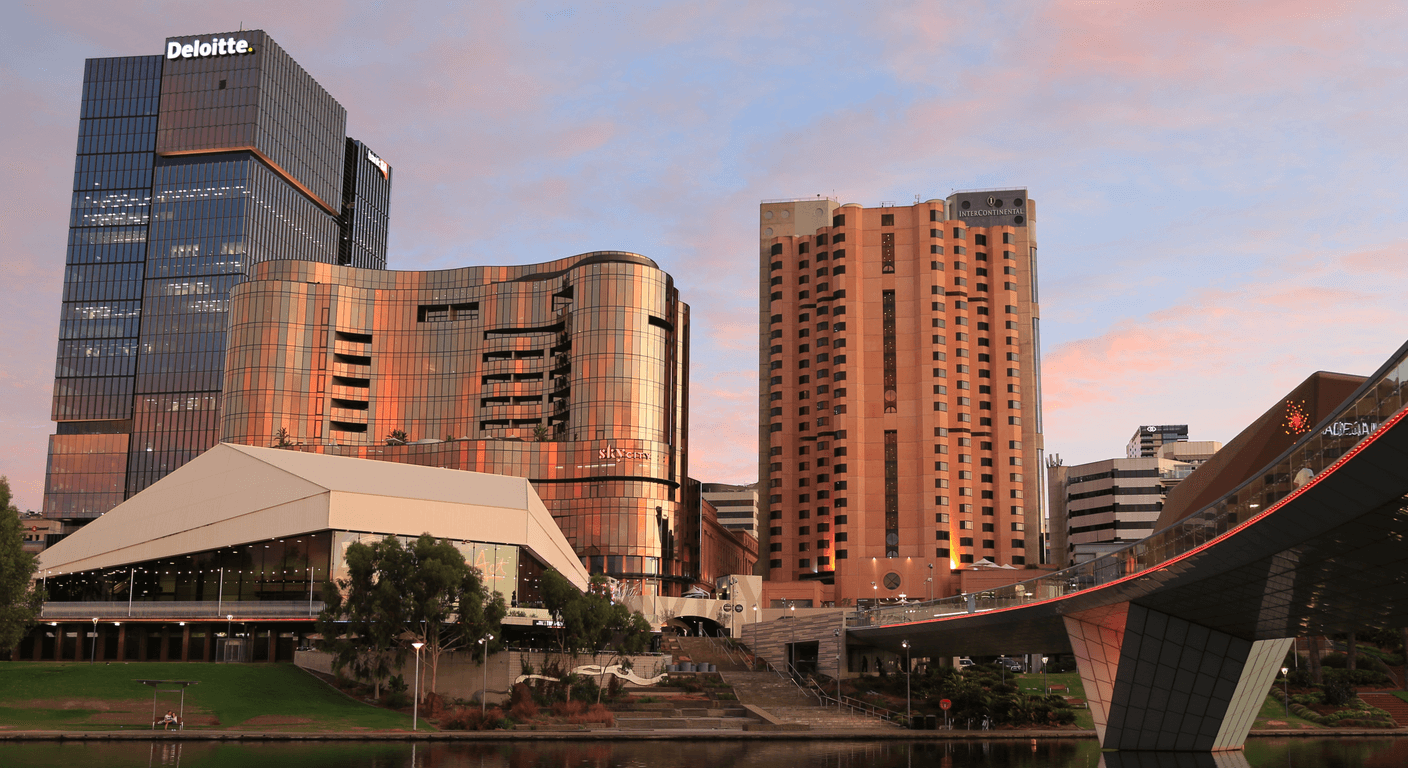
The Adelaide Oval is a short walk away and, for a traveller who appreciates sport alongside culture, is worth a look in its own right — the stadium precinct has changed significantly in recent years and the river precinct around it is well maintained and easy walking. The River Torrens Linear Park path connects back toward the CBD along the river, which is a low-effort and agreeable way to spend an hour before or after the museum.
For those wanting to extend their cultural itinerary, the Art Gallery of South Australia and the South Australian Museum are both in the CBD on North Terrace, accessible by a short bus ride or walk from North Adelaide. The Art Gallery in particular has strong holdings in Australian and European works and is free to enter for the permanent collection, making it a practical complement to the paid Roche Foundation tour on the same day.
Is the David Roche Foundation worth it for a serious collector or cultural traveller?
For anyone with a genuine interest in the decorative arts, the honest answer is yes. The collection is not a dilettante's gathering — it reflects decades of focused acquisition by someone who knew the field and bought accordingly. The quality of individual pieces is high, and the guides are knowledgeable rather than merely scripted. You are likely to leave with a clearer understanding of a period and a collecting sensibility, rather than just a pleasant memory of a pretty house.
The intimacy of the format is also something that larger institutions cannot replicate. At a major national gallery, a Fabergé piece sits in a case among hundreds of other objects and you observe it in passing. Here, the same category of object is encountered in a room, with a guide who can explain its provenance and its relationship to the collector's broader vision. That contextual layer changes the experience meaningfully.
At roughly $15 to $25 for a 90-minute guided experience of this calibre, the value is difficult to argue with. It sits comfortably in the range of what a solo traveller might spend on a good lunch, but the experience is more durable. This is the kind of place that stays with you — not because it is grand or famous, but because it is specific and genuine.
Quick planning guide
| Ideal pace | Slow and deliberate, guide-led |
|---|---|
| Best months | Comfortable year-round |
| Suggested stay | Half a day, including nearby North Adelaide |
| Mobility level | Moderate — 90 minutes of standing and walking through tight Victorian-era doorways |
| Cost level | Budget-friendly, roughly $15 to $25 with concessions |
| Comfort level | Climate-controlled house, though layering is sensible |
| Best for | Solo travellers and those with an interest in antiques or decorative arts |
| Main planning consideration | Book ahead, as tours are guided-only with no walk-in access |
Key takeaways
- The David Roche Foundation House Museum holds one of Australia's finest private collections of European decorative arts, shown through the rooms of the collector's own home in North Adelaide.
- Guided house tours run for around 90 minutes, involve sustained standing and slow walking, and require a booking — walk-ins are not accommodated.
- Indicative tour pricing is roughly $15 to $25 per person with concessions available; confirm current pricing at davidrochefoundation.com.au before visiting.
- Tour groups are small — typically around ten to twelve people — which makes for a genuinely conversational experience rather than a passive walk-through.
- The collection's focus on Fabergé, French furniture, portrait miniatures, and English silver gives it a coherence that rewards visitors with a background interest in antiques or European decorative arts.
- North Adelaide is a comfortable neighbourhood for a solo half-day, with good cafes on O'Connell Street and easy connections back to the CBD by bus or on foot.
Recommended partners and links
Indicative prices only — always confirm with the operator before booking.
Frequently asked questions
Do you need to book in advance for the David Roche Foundation House Museum?
Yes. Guided house tours at the David Roche Foundation require a booking and are not available as walk-ins. Bookings can be made through the Foundation's website at davidrochefoundation.com.au. It is advisable to book ahead, particularly if your travel dates are fixed, as sessions can fill.
How much does a guided tour at the David Roche Foundation cost?
Indicative pricing for a guided house tour is roughly $15 to $25 per person, with concession rates available for seniors and pensioners. The gallery wing has a separate, generally lower entry cost. These figures are indicative only — confirm current pricing directly with the Foundation before your visit.
Is the David Roche Foundation suitable for visitors with limited mobility?
The tour involves approximately 90 minutes of standing and slow walking through a Victorian-era terrace and gallery wing. There is no extended seating during the house portion. The building's original proportions mean some areas may be tight for wheelchairs or walking frames. Contact the Foundation directly before booking to discuss specific accessibility needs.
How do you get to the David Roche Foundation from Adelaide's CBD?
The Foundation is located on Jeffcott Street in North Adelaide, roughly 15 to 20 minutes from the CBD on foot across the parklands, or a short bus or taxi ride. Adelaide Metro bus services connect the city to North Adelaide; check adelaidemetro.com.au for current routes and fares. A Metrocard reduces the cost of bus travel.
What makes the David Roche collection different from a standard museum?
The collection was assembled by one person — David Roche — with a specific focus on European decorative arts including Fabergé, French furniture, English silver, and portrait miniatures. It is displayed in the rooms where Roche actually lived with these objects, giving the experience a domestic intimacy that a national museum cannot replicate. The guided format means context and provenance are explained as you move through the house.