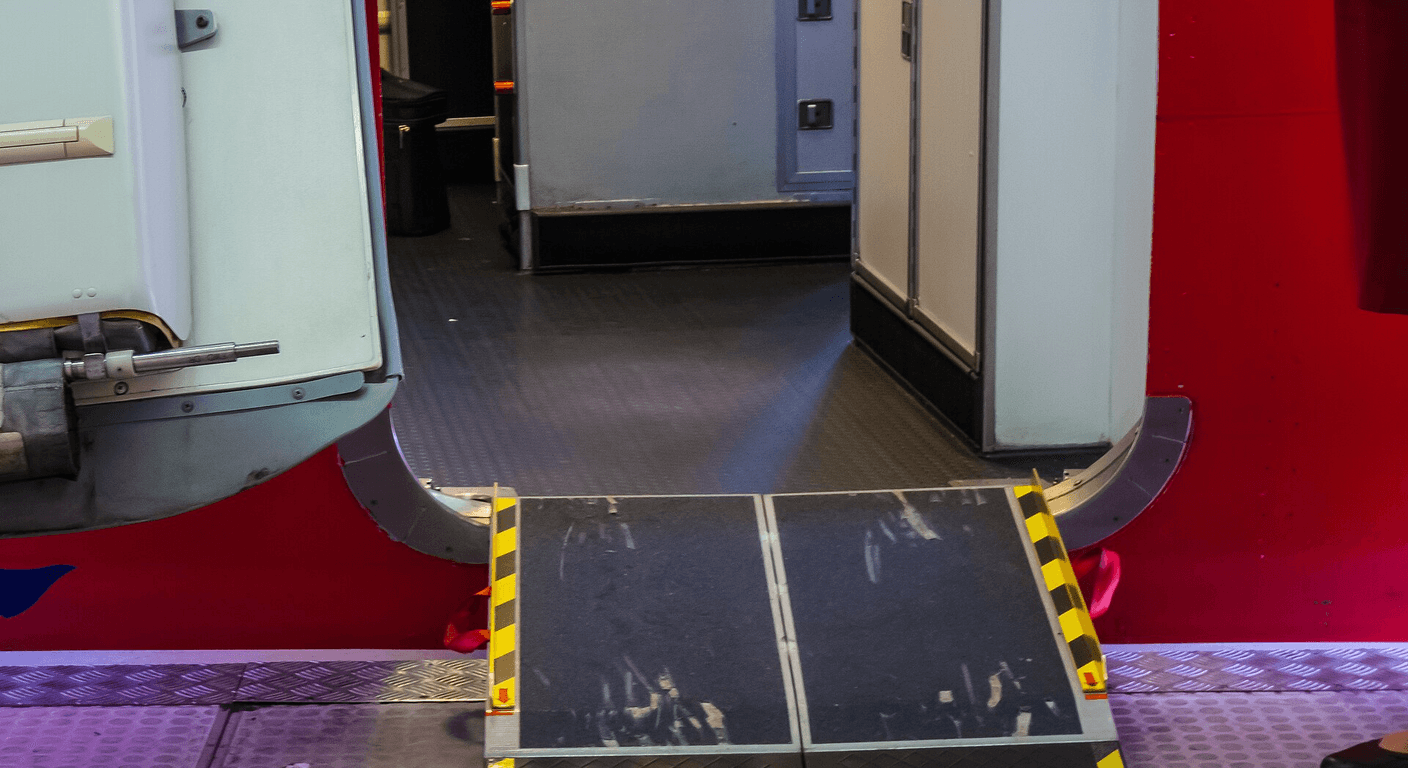
Australian airlines and rail operators must accommodate wheelchair and walker users, but most airlines require 48 to 72 hours' advance notice for wheelchair assistance or powered mobility devices, and booking a flight does not count as notifying special assistance. This applies to travellers using manual or powered mobility aids on domestic transport. Confirm battery specifications and assistance arrangements in writing with the airline's special assistance team, and check casa.gov.au or humanrights.gov.au for authoritative rules.
Why This Matters More Than You Might Expect
There's a version of this story that plays out at airports across Australia every week. A traveller arrives with a motorised wheelchair, having mentioned it at booking but not confirmed the battery specifications in writing. The airline's ground crew aren't sure whether the lithium battery complies. There's a long conversation. The flight departs. The traveller does not.
This isn't a scare story — it's a planning story. The rules governing mobility aids on Australian transport are real, enforceable and, in many cases, genuinely protective. But they require the traveller to do some work upfront. Airlines and rail operators are not always consistent in how they apply their own policies, and 'I was told it would be fine' is not a position that gets you on the plane.
The good news: for a traveller in regional Victoria or anywhere else in Australia, the system can work well. Hundreds of thousands of Australians with mobility aids travel domestically and internationally every year without incident. What separates smooth journeys from difficult ones is almost always preparation — and knowing, in advance, exactly what to ask for.
What Are Your Legal Rights as a Mobility Aid User in Australia?
Australian airlines operating domestic routes are bound by the Disability Discrimination Act 1992 (DDA), administered by the Australian Human Rights Commission. The DDA makes it unlawful to refuse a person with a disability a service that is offered to the public, unless the carrier can demonstrate unjustifiable hardship. In practice, this means airlines cannot simply refuse to carry your wheelchair — but they can impose reasonable conditions related to safety.
The Disability Standards for Accessible Public Transport 2002, updated periodically, set minimum requirements for trains, buses and ferries operated under Commonwealth jurisdiction. State-based rail networks — including V/Line in Victoria and NSW TrainLink — operate under a combination of Commonwealth and state frameworks. If you believe you've been treated unfairly, the Australian Human Rights Commission accepts complaints at humanrights.gov.au, and most state equal opportunity commissions have parallel processes.
What the law does not do is guarantee a seamless experience. Rights exist on paper; exercising them sometimes requires a formal complaint after the fact. The more practical protection is knowing each carrier's specific policy in detail before you travel — and having it in writing. If a gate agent tells you something contradicts what you received by email from the accessibility team, the written confirmation carries more weight.
Advance Notice: What to Request, and When
Most Australian airlines require at least 48 hours' advance notice for passengers needing wheelchair assistance or travelling with a powered mobility device. Some carriers ask for 72 hours for complex requirements — for example, a motorised wheelchair with a non-spillable wet cell battery, or a scooter that needs to be disassembled for stowage. Booking the flight is not the same as notifying the airline. A separate request through the carrier's special assistance team is usually required.
When you contact the airline's accessibility or special assistance team, be specific. Give the make and model of your wheelchair or scooter, the battery type (lithium-ion, lithium metal, non-spillable wet cell or dry cell), the battery's watt-hour or milliampere-hour rating, the weight and dimensions of the device, and whether it can be disassembled. Get the airline's response in writing — a confirmation email is far more useful at the gate than a phone reference number.
For rail travel, the process differs by operator. V/Line, for instance, asks passengers with wheelchairs to contact them before travelling to confirm that wheelchair spaces are available on the specific service — some regional routes use older rolling stock with limited accessible capacity. NSW TrainLink has a similar requirement for overnight services. Check directly with the operator's accessibility contact line, not the general bookings line, and again confirm in writing.
Battery Rules for Powered Wheelchairs and Scooters: The Detail That Catches People Out
Powered mobility devices — motorised wheelchairs and scooters — fall under aviation dangerous goods regulations because of their batteries. The rules are set by the Civil Aviation Safety Authority (CASA) in alignment with International Air Transport Association (IATA) guidelines, but individual airlines may apply stricter standards. This is where travellers most often encounter unexpected problems.
Lithium-ion batteries in mobility devices are generally permitted in the aircraft hold, but with conditions: the battery must often be removed and carried in the cabin if it exceeds certain watt-hour thresholds (typically 300Wh per battery, with airline discretion above 160Wh). Non-spillable sealed lead-acid batteries are generally permitted in the hold if the device is in an upright position and the battery terminals are protected. Spillable wet cell batteries face the most restrictions and may require the battery to be removed and packed separately in specific containers. Each airline's policy differs in the detail, and CASA publishes guidance at casa.gov.au — but the airline's own dangerous goods team has the final say.
The practical advice: contact the airline's special assistance or dangerous goods team at least two weeks before travel. Ask for written confirmation of exactly how your device will be handled, who is responsible for disassembling and reassembling it, and what happens if it's damaged in transit. Damage to mobility aids during air travel is a known issue — photograph your device thoroughly before check-in and retain all documentation. Qantas, Virgin Australia and Rex all have specific mobility aid policies on their websites; read them, then call to confirm.
Priority Boarding, Assistance at the Gate, and What to Actually Expect
Priority boarding for passengers with mobility aids is standard policy across Australian domestic airlines. In practice, it means being invited to board before general boarding begins — typically after business or frequent flyer groups on some carriers, which is worth querying if you'd prefer to board first. Arrive at the gate early and identify yourself to gate staff. Don't assume they've been briefed; even with a confirmed special assistance request on your booking, handover between teams isn't always reliable.
At the gate, a manual or powered wheelchair will be tagged and taken from you at the jetway or aircraft door. You'll be transferred to an aisle chair — a narrow chair designed to fit aircraft aisles — by ground staff if you cannot walk to your seat. Your own chair will be stowed in the hold. On arrival, the process reverses: your chair should be returned to the aircraft door, not the baggage carousel, though this doesn't always happen. If your chair is sent to the carousel instead, it's inconvenient and worth raising with the airline afterward as a service failure.
Walkers and fold-flat frames are generally treated as cabin baggage if they fit in the overhead locker, or as gate-checked items if they don't. A standard aluminium walker usually fits; a wheeled walker (rollator) may need to be gate-checked. Confirm with your airline at booking. On trains, walkers can typically be kept with you in the accessible seating area — there's no equivalent of a hold — but confirm with the rail operator if your service has specific accessible car configurations.
When Things Go Wrong: Your Options
Damage to a wheelchair or scooter during air travel is, unfortunately, not rare. A 2023 US Department of Transportation report found that US carriers mishandled hundreds of mobility devices per month — Australian carriers are not immune to similar problems, though comparable public data is harder to find here. If your device is damaged, report it immediately at the airport, before leaving the terminal. Complete the airline's Property Irregularity Report (PIR). Photograph the damage. Keep all repair quotes and receipts.
Airlines are generally liable for damage to mobility aids under their conditions of carriage, and under the Montreal Convention for international travel. The Montreal Convention sets a liability limit expressed in Special Drawing Rights — confirm the current AUD equivalent with your airline or insurer, as exchange rates shift. Travel insurance that explicitly covers mobility aids and pre-existing conditions is worth having; standard policies often exclude one or both. Read the Product Disclosure Statement carefully before purchasing.
If you feel you've been discriminated against — refused boarding, denied assistance that was confirmed in writing, or treated in a way that made the journey impossible — the Australian Human Rights Commission is the primary avenue for a formal complaint. Most airlines also have internal complaints processes; exhaust those first, in writing, with a clear timeline. State ombudsman offices and the Airline Customer Advocate (airlinecustomeradvocate.com.au) are additional options for domestic travel complaints.
Practical Planning Checklist for Mobility Aid Travellers
Preparation is the most reliable form of self-advocacy. When booking, note your mobility requirements on the booking itself and then follow up with the carrier's special assistance team separately — don't rely on the booking note alone. Confirm the battery type and specifications of any powered device in writing with the airline at least two weeks before departure. For rail travel, call the operator's accessibility line and confirm wheelchair space availability on your specific service.
Pack a laminated card with your device's make, model, battery type and watt-hour rating — ground staff are dealing with many passengers and a clear reference saves time. Carry the airline's written confirmation on your phone or printed. Photograph your device before check-in. If you use a powered device, know how to explain the disassembly procedure to ground staff, or carry the manufacturer's instructions.
Travel insurance deserves a separate conversation. Policies vary enormously in how they treat pre-existing conditions and mobility equipment. Compare policies through a licensed broker or comparison site, read the PDS, and phone the insurer to confirm your specific situation is covered before purchasing. This is not the place to assume. A group of friends travelling together — each potentially with different health profiles — may need different policies, and it's worth each person checking individually.
Quick planning guide
| Who it's for | Travellers using wheelchairs, walkers, rollators or powered mobility devices on Australian domestic flights and trains, including regional rail services like V/Line and NSW TrainLink. |
|---|---|
| How to start | Book the trip, then separately contact the airline's or rail operator's special assistance or accessibility team to notify them of your mobility aid — the booking note alone is not sufficient. |
| Typical cost | See guide — no set fee is stated; the article notes travel insurance covering mobility aids varies by policy and should be checked via the PDS. |
| Time required | At least 48 to 72 hours' notice for wheelchair assistance; airlines recommend contacting the dangerous goods team at least two weeks ahead for powered devices with batteries. |
| Where to get help | The airline's special assistance or dangerous goods team, the rail operator's accessibility contact line, CASA (casa.gov.au), the Australian Human Rights Commission (humanrights.gov.au), and the Airline Customer Advocate. |
| Key documents needed | Written confirmation of assistance and battery specifications (make, model, battery type, watt-hour rating), photographs of the device before check-in, and a Property Irregularity Report if damage occurs. |
| Main planning consideration | Getting battery type, watt-hour rating and assistance arrangements confirmed in writing with the airline before travel, since verbal assurances at the gate carry less weight than written confirmation. |
| Renewal or review | No formal renewal cycle; reconfirm assistance requests, battery details and wheelchair space availability in writing before each individual trip. |
Key takeaways
- Most Australian airlines require 48 to 72 hours' advance notice for wheelchair assistance and powered mobility devices — booking the flight is not the same as notifying special assistance.
- Lithium battery rules for powered wheelchairs vary by airline and watt-hour rating; confirm in writing with the carrier's dangerous goods team before travel.
- Your wheelchair should be returned to the aircraft door on arrival, not the baggage carousel — if it isn't, report this as a service failure.
- Damage to a mobility device must be reported at the airport before you leave the terminal, with a Property Irregularity Report completed on the spot.
- The Disability Discrimination Act 1992 protects mobility aid users on Australian domestic transport, but exercising those rights often requires a formal complaint after the fact.
- Travel insurance for mobility aid users must explicitly cover the device and any relevant pre-existing conditions — read the PDS and phone the insurer to confirm before purchasing.
Recommended partners and links
Indicative prices only — always confirm with the operator before booking.
Frequently asked questions
Do Australian airlines charge extra to carry a wheelchair or mobility scooter?
On domestic Australian flights, most airlines carry one mobility aid at no additional charge as part of the passenger's fare. Surcharges can apply in some international itineraries or for very large or heavy devices. Confirm the current policy with your specific airline before booking, as conditions of carriage change.
How far in advance do I need to notify my airline about my wheelchair?
Most Australian airlines require at least 48 hours' advance notice for wheelchair assistance, and up to 72 hours for powered devices with battery requirements. Contact the airline's special assistance team directly after booking — a note on the booking record alone is not sufficient — and get confirmation in writing.
Can I take my motorised scooter or powered wheelchair on a V/Line or NSW TrainLink train?
Generally yes, but wheelchair space on some regional services is limited and must be confirmed in advance. Contact V/Line's accessibility team at vline.com.au or NSW TrainLink's accessibility line before booking to confirm your specific service has appropriate space and access. Powered devices that are too large for the accessible area may not be accommodated.
What happens if my wheelchair is damaged during a flight?
Report the damage immediately at the airport before leaving the terminal, complete a Property Irregularity Report with the airline, and photograph all damage. Airlines are generally liable under their conditions of carriage and, for international travel, under the Montreal Convention. Keep all repair quotes and receipts, and contact the airline's complaints team in writing.
Where can I make a formal complaint if an airline or rail operator denies me assistance I'm entitled to?
For domestic air travel, the Airline Customer Advocate (airlinecustomeradvocate.com.au) handles unresolved complaints against major Australian carriers. Discrimination complaints can be lodged with the Australian Human Rights Commission at humanrights.gov.au. State-based equal opportunity commissions handle rail and other transport complaints at the state level. Always exhaust the carrier's internal complaints process first, in writing.
- Australian Human Rights Commission — Disability Discrimination
- Civil Aviation Safety Authority — Dangerous Goods (Mobility Aids)
- Qantas — Mobility Assistance
- Virgin Australia — Special Requirements
- V/Line — Accessibility
- Airline Customer Advocate
- Disability Standards for Accessible Public Transport 2002 — Australian Government