For over-50 Australians choosing between France and Italy, Italy wins on cultural immersion and food passion but comes with more cobblestones, busier crowds and steeper hills. France offers slightly smoother logistics, calmer shoulder-season pacing and a more forgiving rail network for first-timers. Both countries reward three to four weeks. Mobility rating: Moderate. Best months are April–May and September–October. Both are long-haul from Australia (roughly 22–26 hours with a stopover), so building in a recovery night on arrival is non-negotiable.
The flight reality: getting there from Australia
From Sydney or Melbourne, a direct or one-stop flight to Paris Charles de Gaulle or Rome Fiumicino runs roughly 22 to 26 hours gate-to-gate depending on the routing. Perth travellers can sometimes find a slightly more direct path to Europe via Dubai or Singapore. Brisbane adds a leg. None of these are easy, and anyone who tells you jet lag doesn't apply after 60 is selling something.
The honest advice: land, check in somewhere quiet, and do nothing useful for at least 24 hours. Paris has the slight edge here — the RER B train from CDG to central Paris is straightforward and cheap (around €12, roughly AUD $20), and a good mid-range hotel near the Marais or Saint-Germain will have a lift and a decent breakfast included. Rome's Fiumicino airport is well-connected by the Leonardo Express train to Termini station (around €14, roughly AUD $23), but Termini itself is chaotic and can feel overwhelming on arrival with heavy bags.
For travellers with pre-existing medical conditions — and that's most of us by our late 60s, frankly — comprehensive travel insurance is essential. Confirm that your policy covers Italy and France, that it includes emergency evacuation, and that pre-existing conditions are declared and covered. Check Smartraveller (smartraveller.gov.au) for the latest advisories before booking, and register your trip there too.
Walkability and cobblestones: which country is kinder to your knees?
Here's the honest answer: both countries will challenge you if you have knee, hip or balance issues, and neither one will tell you that upfront. Italy's historic centres — Rome, Florence, Venice, Siena, Cinque Terre — involve cobblestones, uneven pavements, steep hills and, in Venice's case, bridge steps every hundred metres. Siena's Piazza del Campo is beautiful and brutally sloped. Cinque Terre's famous clifftop paths are not for anyone with dodgy ankles, whatever the travel brochures imply.
France has its own challenges — Montmartre's steps, the old town in Eze, Lyon's Vieux-Lyon quarter — but Paris itself is genuinely more walkable than Rome. The footpaths are wider, the gradient is flatter in the central arrondissements, and the métro, for all its staircase-heavy stations, has a growing number of accessible lines. Versailles involves a lot of walking but the paths are paved. The Loire Valley is almost entirely flat.
For a traveller managing mild arthritis or recovering from a joint replacement, France's regional towns — Annecy, Colmar, Arles, Aix-en-Provence — offer historic charm with considerably more forgiving terrain than their Italian equivalents. That said, if your heart is set on Italy and you're willing to pace yourself, choose accommodation inside the historic centre (so you're not hauling luggage across cobblestones from a car park), book a room with a lift, and accept that some of the most famous sights — the Spanish Steps, the Trevi Fountain — involve standing in a crowd on uneven ground. Worth it for many. Not for everyone.
Rail travel: booking ease, comfort and the practical differences
France's TGV network is one of Europe's best, and for Australian travellers used to patchy domestic rail, it's a genuine pleasure. Paris to Lyon in two hours. Lyon to Marseille in 1 hour 40 minutes. Trains are punctual, seats are wide enough, and the booking system via SNCF Connect or Rail Europe (raileurope.com/en-au) — while not without its quirks — is manageable if you book a few weeks out. Seat reservations are mandatory on TGV services, so don't assume a Eurail pass alone gets you a seat without one.
Italy's high-speed Frecciarossa trains (Rome to Florence in 1 hour 30 minutes, Rome to Milan in under three hours) are comfortable and genuinely impressive. The Trenitalia booking system is functional; Italo is a competing operator worth checking for competitive fares on major routes. The complication is Italy's regional rail, which can be slow, crowded and not always air-conditioned in summer. For a trip that stays on the main spine — Rome, Florence, Venice, Milan — you'll barely need regional trains. Venture to the Amalfi Coast or Puglia, and you're into a different kind of logistics.
Both countries offer senior rail discounts that Australians routinely miss. In France, the SNCF Carte Avantage Senior (for travellers 60 and over) gives discounts on most TGV bookings — check sncf-connect.com for current pricing and eligibility. In Italy, Trenitalia's Carta Argento offers similar benefits for travellers 60 and over. Neither card is automatically available to non-EU residents, so confirm eligibility and the application process before you travel. Even without the cards, booking at least three weeks in advance on both networks will usually get you a fare considerably cheaper than the walk-up price.
What does a day actually look like? A real shape-of-the-day comparison
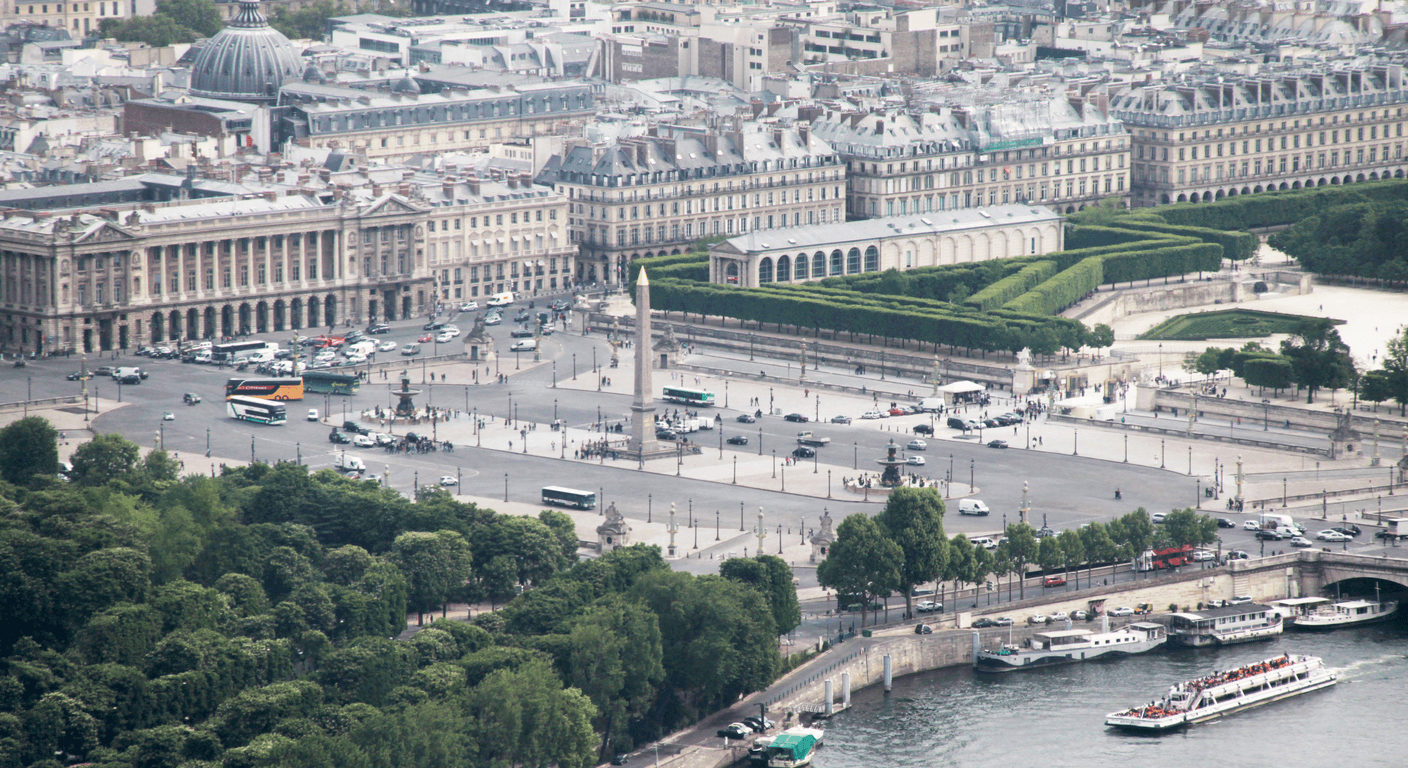
Take a structured day in Paris versus a structured day in Rome — because the rhythm of each city is genuinely different, and knowing that in advance changes how you plan. In Paris on a guided day tour, the coach or metro typically departs your hotel at around 9:00 am. You're at the Louvre or Musée d'Orsay by 9:30 am, with a timed-entry ticket already sorted (critical — queue at the door without one and you'll lose an hour). A docent-led tour runs two to two-and-a-half hours; there are benches inside both museums, and the Orsay in particular has a café on the upper level where you can sit by around 11:30 am. Lunch is available from around noon — a brasserie near Saint-Germain will do a two-course formule for roughly €22 to €30 (around AUD $36 to $50). Afternoon is genuinely skippable if you're tired: the Tuileries Garden is five minutes' walk from the Louvre, entirely flat, full of chairs, and free. Back to your hotel by 4:30 pm, which leaves a full evening for dinner at your own pace.
A structured day in Rome looks different. Most guided tours depart at 8:00 am — the Colosseum is best before 10:00 am, when the heat and the crowd both intensify. You're inside by 8:30 am if your guide has skip-the-line access (confirm this before booking the tour; it matters enormously). The Colosseum and Roman Forum together take around two to three hours, and there are limited shaded sit-down points — the Forum especially is exposed and uneven underfoot. Lunch is typically 12:30 to 2:00 pm, and a trattoria near the Testaccio neighbourhood will do a proper two-course lunch with house wine for around €25 to €35 (roughly AUD $42 to $58). The afternoon session — Vatican, Borghese Gallery, or simply the Piazzas — depends on your energy. The Vatican alone is another two-plus hours on your feet. Be honest with yourself about that. If you skip the afternoon Vatican visit, the Borghese Gallery (timed entry, smaller groups, air-conditioned, exquisite) is a far more relaxed alternative — but book it months in advance, not the day before.
The gap between scheduled time and useful time is wider in Rome than in Paris. Rome's distances between major sites are manageable but not small, and the city's taxi and rideshare supply at peak afternoon hours is unreliable. In Paris, the métro — even with its staircases — is so frequent that a 15-minute wait is unusual. Factor that into your energy budget.
Language friction, food culture and daily costs in real dollars
France has a reputation for frostiness toward English speakers, and it's not entirely undeserved — though it's softened considerably in tourist-heavy areas and among younger Parisians. The reliable approach: open any interaction with 'Bonjour' and a genuine attempt at French, even just a phrase or two, and the temperature changes. Regional France — the Dordogne, Provence, Brittany — is warmer in manner and less likely to assume you speak French at all, which paradoxically makes things easier. Menus in tourist areas are almost always available in English.
Italy is more forgiving on language, partly because Italians are more likely to meet you halfway with enthusiasm and hand gestures, and partly because — let's be direct — for an Italian Australian traveller, there may be some residual dialect comprehension that smooths the edges in ways that are hard to quantify but genuinely real. Even without that background, Italian pronunciation is phonetic and the goodwill extended to travellers who try is considerable. The complication is regional dialect, which can be strong in Sicily, Naples and Puglia, and bears little resemblance to the Italian taught in evening classes.
Daily costs in both countries are broadly comparable for a comfortable but not extravagant trip. In France, expect to spend around AUD $180 to $280 a night for a well-located mid-range hotel with a lift in Paris; roughly AUD $140 to $220 in regional cities like Lyon or Bordeaux. A two-course lunch with a glass of wine runs AUD $35 to $55; dinner at a decent bistro, AUD $65 to $100 per person. In Italy, Rome and Florence hotel rates are similar to Paris; Venice is a category of its own — budget at least AUD $220 to $350 a night for anything decent inside the historic centre, and yes, Venice's tourist entry fee (currently €5 on peak days for day visitors, though the rules have shifted — confirm before travel at comune.venezia.it) adds a small but real cost. Food in Italy is generally slightly cheaper than France for the equivalent quality, and a proper trattoria lunch in Rome or Florence for AUD $35 to $50 all-in is realistic. All figures are indicative; confirm current rates with accommodation providers and check your bank's exchange rate and card fees before relying on these numbers.
A solo traveller's perspective vs a couple's perspective
Solo female travellers. France, particularly Paris and the larger regional cities, has a well-established solo female travel culture — women dining alone in a brasserie is unremarkable, solo hotel check-ins are routine, and the city's café culture means there's always somewhere to sit, read, observe and feel part of things without needing a companion. The single supplement on guided tours is a genuine issue: most operators charge 30 to 60 per cent extra for sole occupancy, which on a 12-day guided France tour priced at AUD $5,000 per person twin-share can add AUD $1,500 to $3,000 to your total. Operators like Insight Vacations and Scenic offer share-match programmes — ask specifically about these when enquiring, and ask what happens if no match is found. Some operators absorb the supplement on select solo departures; others don't budge. Call it out when you're comparing quotes.
Italy for solo women is broadly safe and culturally animated, but unwanted attention — particularly in Naples, Rome and smaller southern towns — can be more frequent than in France, and is worth acknowledging rather than dismissing. Practical strategies: dress modestly near churches (required for entry regardless), stay in areas with good foot traffic after dark, and choose accommodation in central, well-lit neighbourhoods. None of this should deter a solo female traveller — millions do it every year without incident — but eyes-open is better than surprised.
For couples, both countries offer a natural rhythm of shared discovery that's hard to beat. The difference is in pacing: France's regional routes — Loire Valley, Burgundy, Provence — lend themselves to slow, self-drive or rail-based travel where two people can easily split the logistics and agree on rest days without a tour group schedule. Italy's highlights are more concentrated and arguably more intense, which suits couples who want a shared emotional experience (and yes, that first view across the Grand Canal or into the Roman Forum does something to most people). For couples where one partner has higher mobility and the other doesn't, France's flatter regional options give the more active traveller more to do independently without leaving the other stranded.
So which country should you choose first?
The honest answer depends on what you're actually after. If you want to feel immediately at ease, move slowly through beautiful countryside, eat well without effort and find your rail legs before tackling a more complex rail network — start with France. The Loire Valley or Provence as a base gives you two weeks of genuine richness without a single exhausting overnight train or a cobblestone emergency.
If food, family history, cultural density and a sense of arriving somewhere you've always half-known are more important to you than logistical smoothness — start with Italy. Accept the cobblestones. Book the lift. Choose fewer cities and stay longer in each. Rome alone, given three proper days, reveals itself in layers that a two-night rush never will. And for an Italian Australian traveller, there's a particular kind of homecoming quality to Italy — the smell of a morning market, a dialect word overheard on a bus — that France, for all its beauty, simply can't replicate.
Both countries can absolutely be combined in a single trip, and many over-50 Australians do exactly that. But combining them well requires at least four weeks and a genuine willingness to slow down at the midpoint — a few days in Nice or the French Riviera between the two countries works beautifully as a decompression zone. The mistake is trying to do Paris, Tuscany, the Amalfi Coast and Provence in 16 days. That's a highlights reel, not a trip. Choose one country first, do it properly, and come back for the other. You almost certainly will.
Quick planning guide
| Ideal pace | Slow — no more than two or three destinations per week |
|---|---|
| Best months | April–May and September–October for cooler temperatures and thinner crowds |
| Suggested stay | Minimum three weeks per country; four weeks if combining both |
| Mobility level | Moderate — cobblestones, steps and hills are real in both countries |
| Cost level | Around AUD $250–$400 per person per day all-in (accommodation, meals, transport, entry fees), depending on city vs regional mix; confirm current rates with operators and banks |
| Comfort level | High, if accommodation is chosen carefully — both countries have excellent mid-range and boutique options with lifts |
| Best for | Culturally curious couples, solo female travellers, grey nomads, empty nesters on a first big Europe trip |
| Main planning consideration | Long-haul flight fatigue from Australian cities; build in a full recovery day on arrival before any sightseeing or rail travel |
Key takeaways
- France offers smoother logistics and flatter terrain for first-time Europe travellers; Italy offers greater cultural intensity and food depth.
- Both countries involve cobblestones, steps and hills — research your specific cities and book accommodation with a lift.
- Solo travellers should ask every operator directly about single supplements, share-match programmes and solo-departure options before comparing prices.
- The SNCF Carte Avantage Senior (France) and Trenitalia Carta Argento (Italy) offer rail discounts for travellers aged 60-plus — confirm eligibility before travel.
- Building in a full recovery day on arrival in Europe is non-negotiable after a 22-to-26-hour journey from Australian cities.
- A combined France-Italy trip works best over at least four weeks; rushing both into under three weeks is the most common and most regrettable planning mistake.
Recommended partners and links
Indicative prices only — always confirm with the operator before booking.
Frequently asked questions
Is France or Italy easier for over-50 Australians to travel independently?
France is generally easier for independent travel, with a more straightforward high-speed rail network, wider footpaths in major cities and slightly more predictable logistics. Italy rewards independent travellers who plan carefully and choose fewer destinations, but its regional rail network and city-centre access can be more complex, particularly in Venice and along the Amalfi Coast.
What is the single supplement situation for solo travellers on France and Italy tours?
Most guided tours to France and Italy charge a single supplement of roughly 30 to 60 per cent above the twin-share price for sole occupancy. On a tour priced at AUD $5,000 per person twin-share, that can add AUD $1,500 to $3,000. Ask operators specifically about share-match programmes, where you're paired with another solo traveller, and about solo-departure tours where the supplement is waived or reduced. Not all operators offer these — and some penalise solo travellers significantly — so compare carefully.
When is the best time for over-50 Australians to visit France or Italy?
April to May and September to October are the best months for both countries. Temperatures are comfortable for walking, crowds are thinner than July and August, and accommodation is easier to book. July and August in both countries are hot, crowded and expensive. Winter (December to February) is quieter and cheaper, but some regional attractions and restaurants close, particularly in rural France and southern Italy.
How much should over-50 Australians budget per day for France or Italy?
A comfortable but not extravagant day in either country — mid-range hotel, two meals, transport and one or two paid attractions — typically runs around AUD $250 to $400 per person, depending on the city and the season. Paris and Venice are at the upper end; regional France and southern Italy can come in lower. All figures are indicative; confirm current rates with accommodation providers and check your bank's exchange rate before relying on estimates.
Do I need travel insurance for France and Italy, and does it cover pre-existing conditions?
Comprehensive travel insurance is essential for both countries. Many standard policies exclude pre-existing medical conditions unless specifically declared and covered at the time of purchase. Read the product disclosure statement carefully, declare all conditions honestly, and confirm that emergency medical evacuation is included. Check the Australian Government's Smartraveller website (smartraveller.gov.au) for current advisories for both France and Italy before booking.