Fremantle is best visited on a weekday or Friday morning, starting around 9am before the heat and market crowds build, and suits a single full day of self-guided walking covering roughly four to five kilometres. The defining highlight is the convict-built limestone West End and the quiet laneways behind the Cappuccino Strip. Terrain is flat, shaded and well-supplied with benches and toilets, making it an easy outing for over-50s, reached by a direct 30-minute train from Perth Station with concession fares available.
Why Fremantle Works So Well as a Free Day Out
There's a particular satisfaction in arriving somewhere by train, stepping onto a platform and realising the day's entire programme costs nothing. Fremantle offers exactly that. The Fremantle line runs direct from Perth Station, takes roughly 30 minutes, and off-peak concession fares apply for eligible seniors — currently indicative figures sit around $1.30 to $2.60 each way, though you should confirm current pricing on the Transperth website before you travel.
What you find when you arrive isn't a sanitised tourist precinct. Fremantle has texture — sun-bleached limestone, salt air off the harbour, streets that have been argued over and lived in for nearly two centuries. For someone who appreciates history without needing it narrated at them, that's the right kind of place. The free walking routes described in this guide are genuinely self-directed: no ticket booth, no timed entry, no tour group to keep pace with.
The terrain is notably forgiving. Fremantle's central streets and laneways are largely flat, many are shaded by heritage verandahs or mature street trees, and the City of Fremantle has been steadily improving footpath surfaces. Public toilets are available near the train station, at the Fremantle Markets building, in the Fishing Boat Harbour precinct and at various points through the West End. Bench seating is plentiful. None of this needs to be mentioned apologetically — it's simply good urban design, and it makes the walk more enjoyable for everyone.
Getting There: The Train Is the Right Choice
Driving to Fremantle from Perth means contending with parking costs and the mild stress of unfamiliar one-way streets. The train removes all of that. Fremantle Station sits right in the heart of town — step off and you're already in the historic precinct. Services run frequently throughout the day from Perth Station, and the journey itself passes through some interesting inner suburbs if you're seated on the right side.
For visitors coming from interstate — say, Melbourne or Adelaide — Fremantle is best treated as a day trip built into a broader Perth stay rather than a standalone destination. Perth is roughly a three-and-a-half to four-hour flight from Melbourne, and a direct flight exists from Adelaide in around two and a half hours. If you're already in Perth, Fremantle is an obvious and easy day out. If you're planning the trip specifically around Fremantle, build at least three nights in Perth to settle in properly.
A SmartRider card (Transperth's reloadable card) gives a small discount over single tickets and removes the need to carry exact change. Concession eligibility in Western Australia follows specific criteria — confirm yours on the Transperth website. The station itself has lifts and step-free access to the platform.
The Laneways Behind the Cappuccino Strip: What Most Visitors Miss
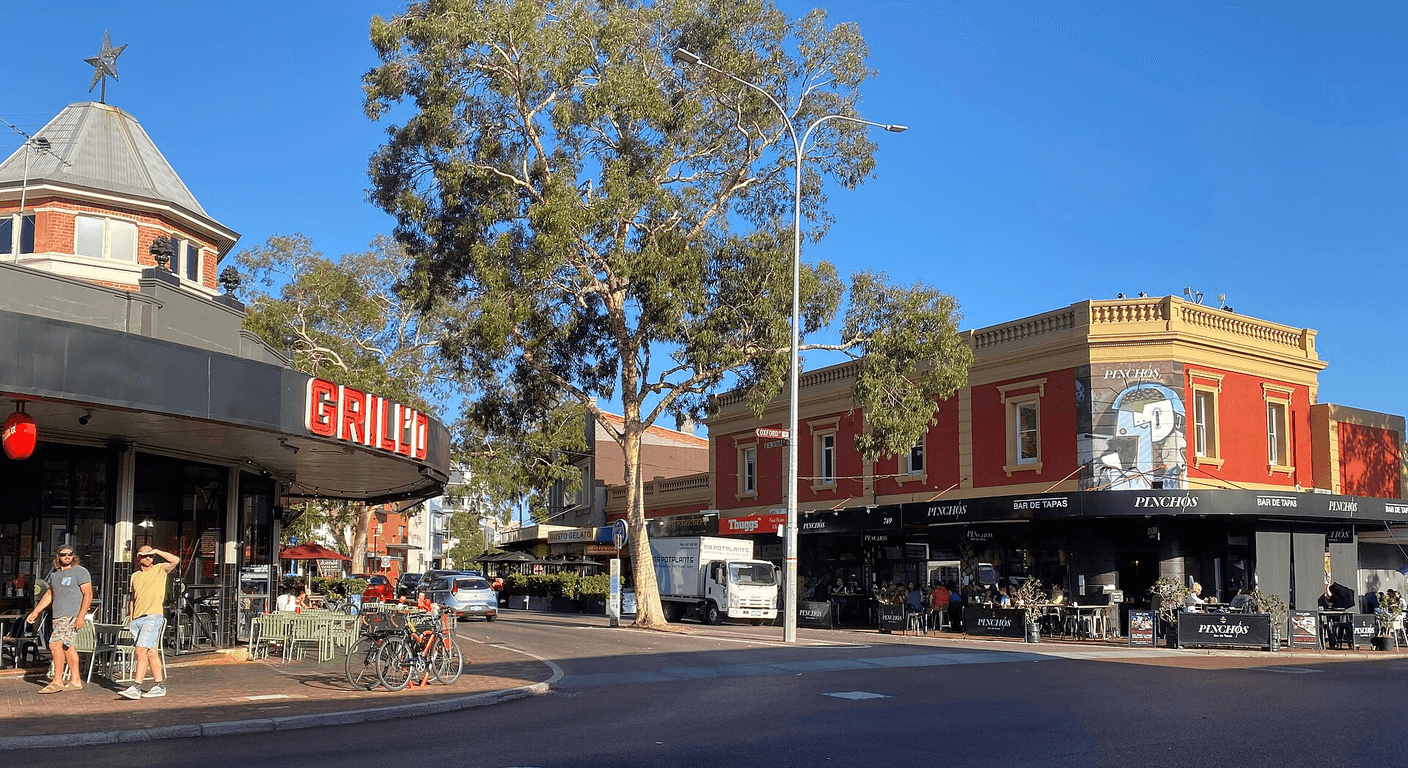
South Terrace — known affectionately as the Cappuccino Strip — is where most visitors spend their time, and it earns its reputation. But the real Fremantle starts when you turn off it. The laneways running parallel to and between South Terrace and High Street form a tight grid of nineteenth-century passages, service lanes and repurposed industrial spaces that reward a slower look.
Collie Street, Pakenham Street and the narrow connectors between them are the place to start. Here you'll find limestone walls that predate Federation, painted shutters faded to exactly the right degree of charm, and small courtyards that were once storage yards for the port trade. The buildings along these blocks include former bond stores, merchants' offices and workers' cottages — many still in commercial use, which keeps them alive rather than museumified. Look up at the upper-storey facades rather than just the shopfronts.
The laneways are generally quiet on weekday mornings, which is the best time to walk them. Foot traffic from the main café strip doesn't tend to spill this far. Shade varies — some lanes are sheltered by adjacent buildings, others catch the full afternoon sun — so starting your laneway exploration in the morning, before temperatures climb, is sensible planning rather than excessive caution. There are bench seats at several of the wider laneway junctions, and the short distances involved mean you're never far from South Terrace if you need to rest with a coffee.
The Heritage Architecture Walk: Convict-Built Limestone and the West End
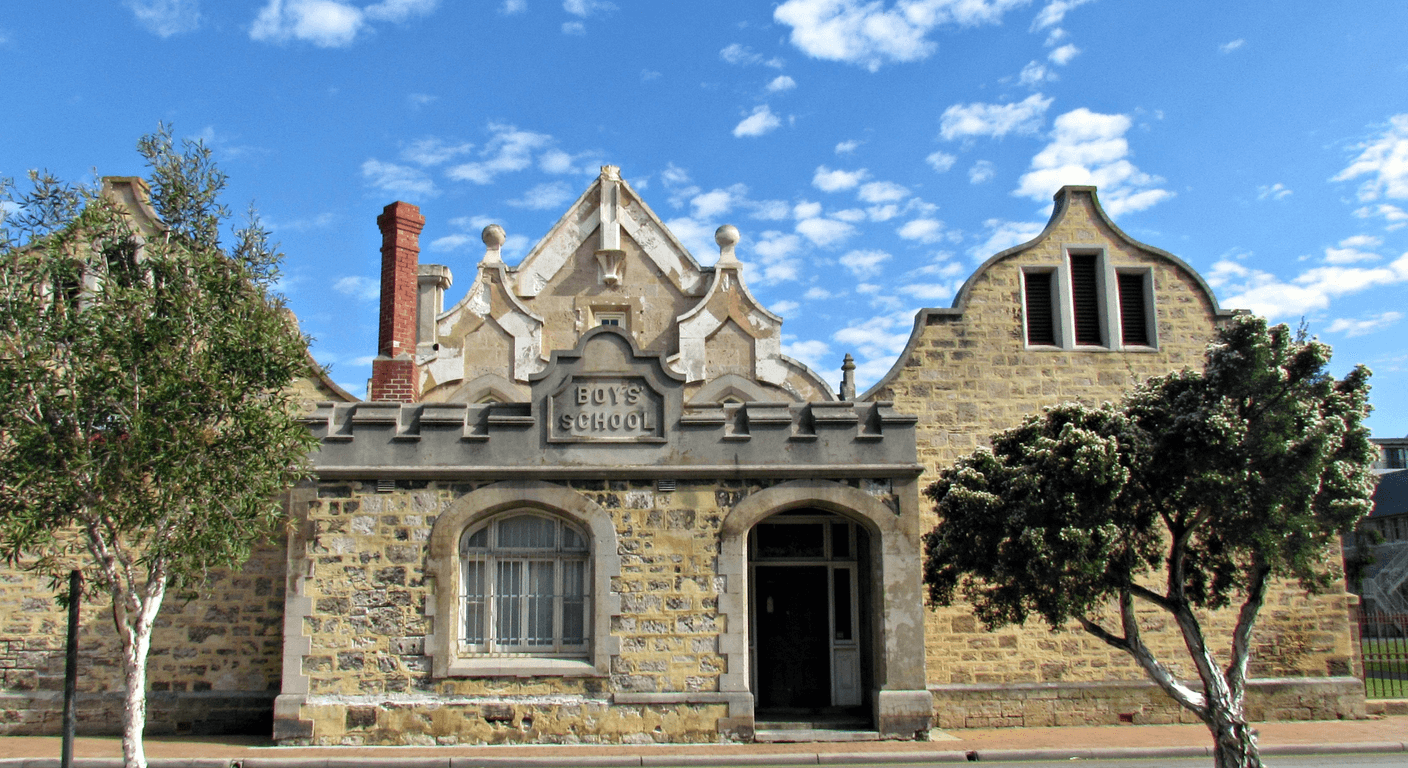
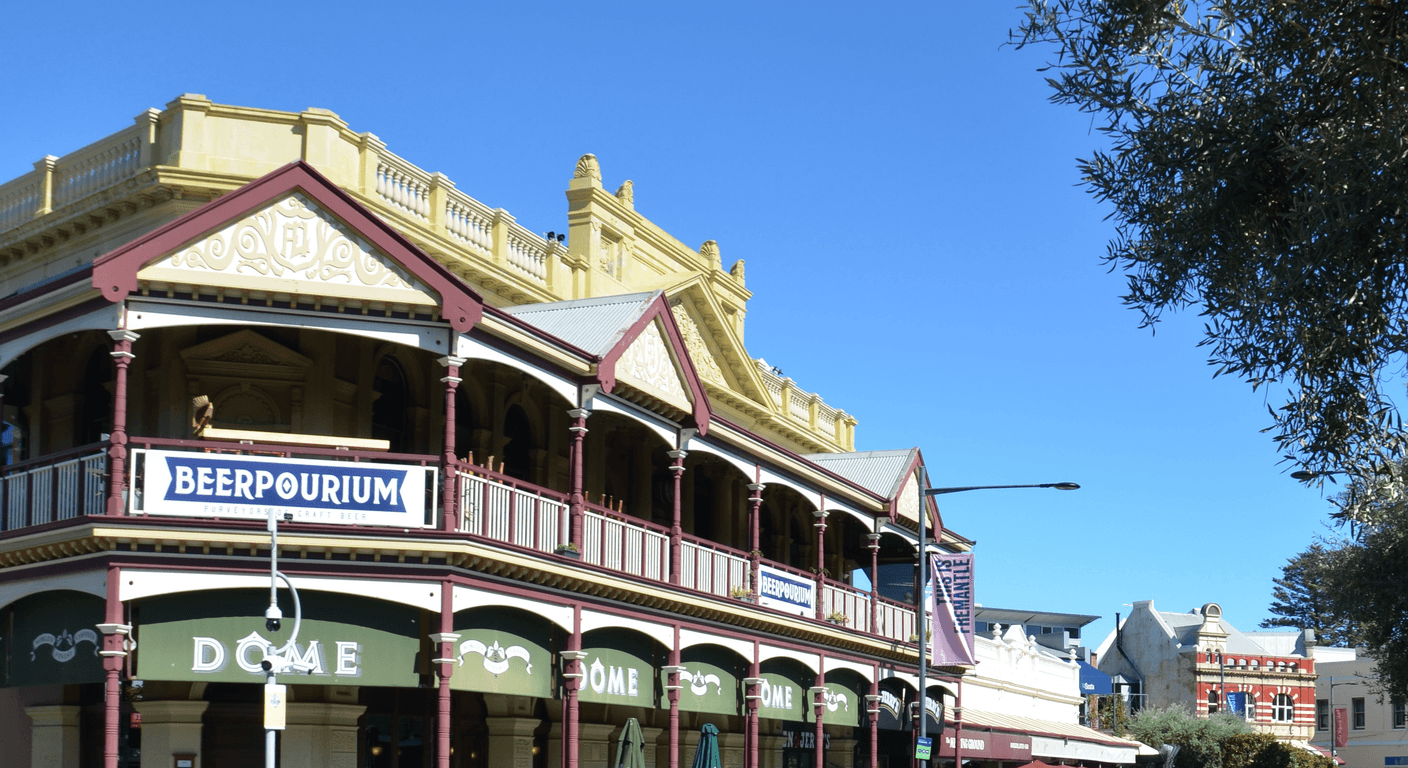
Fremantle's West End precinct is one of the most intact Victorian-era streetscapes in Australia. That's not a marketing line — it reflects the fact that Fremantle's economic decline in the mid-twentieth century, while difficult for locals, inadvertently preserved buildings that elsewhere were demolished for development. The result is a coherent streetscape of limestone and brick from the 1850s through to the 1890s, most of it still standing and in use.
The convict connection is real and visible. Between 1850 and 1868, roughly 9,700 male convicts were transported to Western Australia, and many were put to work quarrying and building in Fremantle. The limestone they cut from the local coastal dunes — a soft, cream-coloured rock that hardens on exposure to air — forms the walls of buildings you pass on almost every street in the West End. The Fremantle Prison (a short walk from the centre) is the most dramatic example, though tours there carry an entry fee. The free walk sticks to what's visible from the street.
A good self-guided route runs along High Street from the train station westward, then south down Phillimore Street, across to Marine Terrace and back via Essex Street. Key buildings to look for include the former Customs House, the Fremantle Town Hall, the old Colonial Hospital building on Finnerty Street, and the series of limestone warehouses along Cliff Street near the water. The City of Fremantle publishes a free heritage trail map — available at the visitor centre on Kings Square or downloadable from the city website — that adds context to each building without requiring a guided tour.
West End Street Art: The Works Most Visitors Don't Find
Fremantle has had a street art culture since at least the 1990s, but the past few years have brought a more considered wave of large-scale murals and laneway installations, particularly in the blocks between the West End and the Fishing Boat Harbour. These aren't the tagging-over-tagging variety — several are substantial commissions by established Western Australian artists, and the imagery tends to reflect Fremantle's maritime history, its Noongar heritage and its working-class character.
The concentration of work around Henderson Street, Mouat Street and the rear walls of the Market Street precinct is worth a specific detour. Some pieces are on buildings that face away from the main pedestrian flow, which is precisely why most visitors miss them. Walking the back lanes rather than the main streets is the only technique required. If you have a smartphone, the City of Fremantle's online maps occasionally note public art locations — worth checking before you go.
The art changes. Some pieces are painted over, new ones appear. That's the nature of the form, and part of its appeal — a return visit even six months later can yield something entirely different on a wall you thought you knew. For a traveller who has been to Fremantle before and found it familiar, the street art circuit offers a genuinely fresh way to see the same streets.
Fremantle Markets: Free to Browse, Worth the Time
The Fremantle Markets building on South Terrace is heritage-listed and worth entering for the architecture alone — a late Victorian market hall with original ironwork and timber stalls that has been operating continuously in various forms since 1897. Entry is free. There's no obligation to buy anything, and no one will make you feel otherwise.
The markets operate on Fridays, Saturdays and Sundays. On a Saturday the produce hall is at full capacity and the crowd is lively; a Friday morning is considerably quieter and easier to navigate at a slower pace. The food stalls are individually priced — expect café-level pricing for prepared food, and reasonable prices for fresh produce. A coffee and a pastry here makes for an easy mid-morning break without committing to a full café sit-down.
The indoor hall is largely flat and accessible, with wide central aisles. The outdoor section on weekends can be more crowded and the ground surface less even — worth noting for anyone who prefers a firmer footing. Public toilets are located in the Markets building and are well-maintained. If the day is warm, the interior of the hall stays noticeably cooler than the street outside.
Pacing the Day: A Suggested Order and Where to Rest
A practical sequence for the day: arrive at Fremantle Station by 9 to 9.30am, when the streets are calm and the light on the limestone is at its best. Walk west along High Street to begin the heritage architecture loop, then cut south through the West End laneways before the midday heat builds. The Fremantle Markets work well as a mid-morning pause — coffee, a look around, a sit-down — before heading toward the street art circuit in the Mouat and Henderson Street area.
Lunch is the one optional cost in the day. South Terrace has no shortage of cafés at various price points; the streets immediately behind it tend to be slightly quieter and occasionally cheaper. A full meal with drinks at a mid-range Fremantle café runs roughly $30 to $50 per person — indicative only, confirm on the day. The Fishing Boat Harbour precinct, a short walk south-west, has fish and chips options at a range of prices and plenty of outdoor seating facing the water.
After lunch, the afternoon is best spent slowly rather than adding more ground. The WA Museum Shipwreck Galleries on Cliff Street offer free entry and a genuinely interesting collection in an air-conditioned space — ideal for the warmest part of the afternoon. Allow an hour. Then a return walk to the station via whichever streets you haven't yet covered, and the train back to Perth. The whole day involves perhaps four to five kilometres of walking in total, depending on the route — modest enough to leave you comfortable rather than worn out.
Quick planning guide
| Ideal pace | Slow, self-guided walking with regular rest stops |
|---|---|
| Best months | No single season specified; comfortable most of the year if you start early to avoid midday heat |
| Suggested stay | One full day trip from Perth |
| Mobility level | Easy — flat, largely shaded streets and laneways, with less even ground in the markets' outdoor section |
| Cost level | Budget-friendly — free beyond train fare and lunch |
| Comfort level | High — plentiful bench seating, shade, lifts at the station and well-maintained public toilets |
| Best for | Over-50s who enjoy history, architecture and street art at an unhurried pace |
| Main planning consideration | Start early (around 9am) to beat the heat and crowds, and confirm current Transperth concession fares before travelling |
Key takeaways
- The train from Perth to Fremantle takes roughly 30 minutes, and off-peak concession fares apply — confirm current pricing on the Transperth website.
- Fremantle's West End is one of Australia's most intact Victorian-era streetscapes, built largely with convict-quarried limestone between the 1850s and 1890s.
- The laneways behind the Cappuccino Strip — particularly around Collie and Pakenham Streets — offer the most atmospheric walking and are largely missed by visitors who stay on South Terrace.
- Fremantle Markets entry is free; individual food and produce stalls are priced separately, and Friday mornings are quieter than weekends.
- The terrain is flat and largely shaded, with public toilets near the station, at the Markets building and in the Fishing Boat Harbour precinct.
- Apart from the train fare, the only realistic cost in a full day is lunch — making this one of the most genuinely free day trips available from any Australian capital city.
Recommended partners and links
Indicative prices only — always confirm with the operator before booking.
Frequently asked questions
How long does it take to get from Perth to Fremantle by train?
The Fremantle line runs direct from Perth Station and takes roughly 30 minutes. Services run frequently throughout the day. Confirm current timetables on the Transperth website at transperth.wa.gov.au.
Is Fremantle suitable for older walkers or those who need a slower pace?
Yes. Fremantle's central streets and laneways are largely flat, many are shaded, and bench seating is plentiful throughout the West End and along South Terrace. Public toilets are available near the train station, at Fremantle Markets and in the Fishing Boat Harbour precinct. The City of Fremantle has also been upgrading footpath surfaces in heritage areas.
Is entry to Fremantle Markets free?
Yes, entry to the Fremantle Markets building is free. Individual food, produce and craft stalls are priced separately. The markets operate on Fridays, Saturdays and Sundays — Friday mornings are notably quieter than weekends.
What is the best time of year to visit Fremantle?
April to November offers the most comfortable conditions for walking, with mild temperatures and lower humidity. December through March can be very hot, particularly in the afternoon, which makes extended outdoor walking less comfortable for older travellers.
Do I need to book anything in advance for this Fremantle walking day?
No bookings are required for the self-guided walking route, the laneways, the heritage streetscape or the Fremantle Markets. The WA Museum Shipwreck Galleries also offer free walk-in entry — confirm current hours and any changed conditions at museum.wa.gov.au before you go.