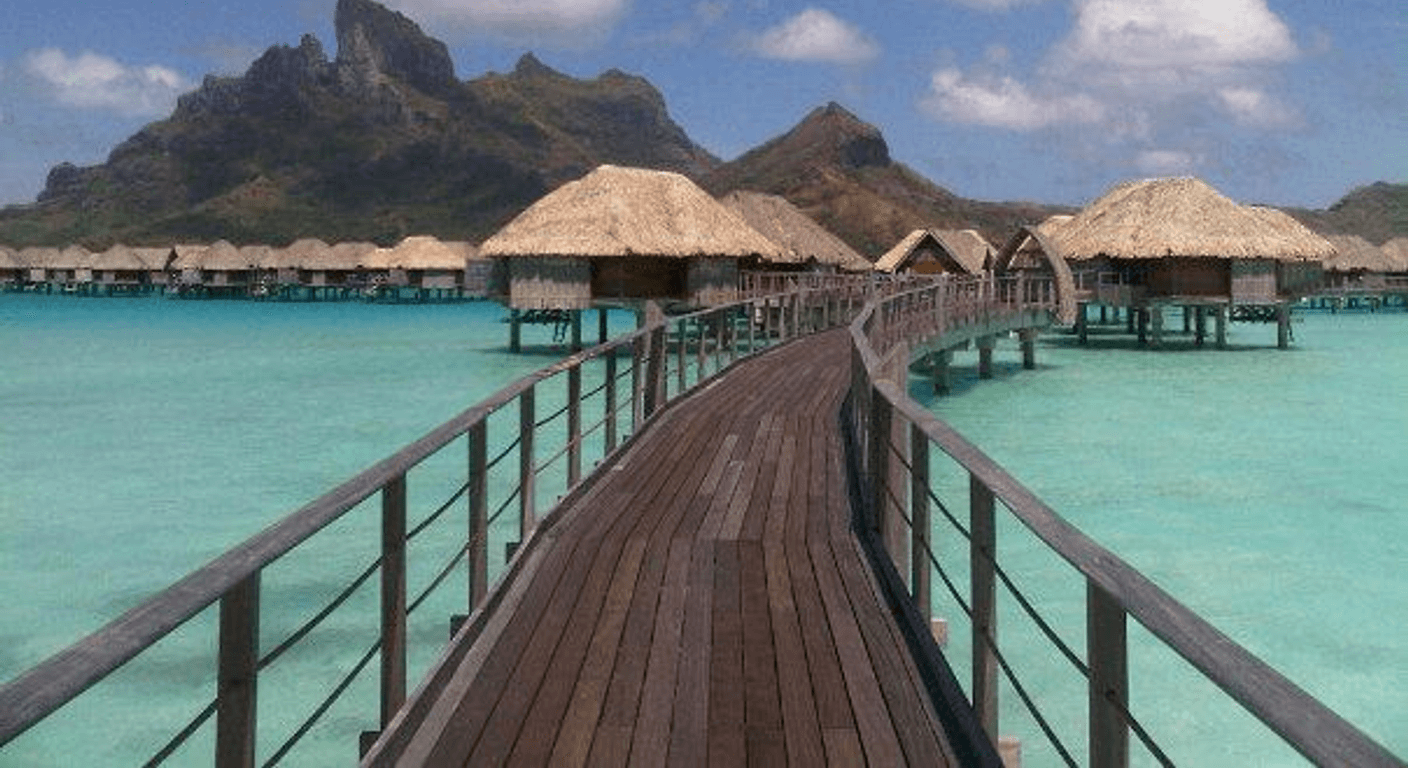
French Polynesia by small ship suits over-50 Australians best between May and October, when trade winds are steady and humidity is lower. A 7-to-10-night cruise covering Tahiti, Moorea, Bora Bora and the Tuamotus is the sweet spot. The defining highlight is waking up anchored inside a lagoon that looks photoshopped. Mobility rating: Moderate — zodiac and tender transfers require a step down and some balance. Flights from Sydney take roughly 9-10 hours direct; from Melbourne, Brisbane or Perth expect connections via Sydney or Auckland, with total travel time commonly 11-14 hours.
Why a small ship changes everything in French Polynesia
A large cruise ship anchors off Bora Bora and dispatches 2,000 passengers into a village of 10,000. The motu (small coral islet) you wanted to reach is already crowded by the time the tender queue clears. A small ship — 30 to 200 passengers — anchors closer, launches a zodiac with 12 people in it, and has you on that same motu while the coffee is still warm. That's the essential arithmetic of small-ship cruising in French Polynesia, and it's why the format has quietly become the preferred choice for travellers who've done the big ships and want something that actually resembles the brochure.
The pacing is different too. Most small-ship itineraries in this region run 7 to 11 nights, with roughly two to three port or lagoon days for every one sea day. You're not grinding across the Pacific — you're moving between islands that are sometimes only 30 nautical miles apart. Overnight passages are common, so you don't lose a day at sea watching open water. You go to sleep in Raiatea and wake up in Bora Bora. That rhythm suits travellers who want to feel they've actually arrived somewhere, not merely transited.
Getting there from Australia: the flight reality, honestly stated
Air Tahiti Nui operates direct flights from Sydney to Papeete (Faa'a International Airport) in around 9 to 10 hours — a long day flight or an overnight, depending on the schedule. That's the good news. From Melbourne, Brisbane or Perth, there's no direct option: you'll connect through Sydney or Auckland, which adds 3 to 5 hours and a layover to the total. From Perth in particular, the routing can push total door-to-airport-in-Papeete time past 14 hours. That's not a deterrent, but it is a reason to build in a recovery night. Book at least one night in Papeete before the ship departs — ideally two — and don't schedule anything ambitious on arrival day.
Jet lag in French Polynesia is peculiar. The islands sit 3 hours behind Sydney in Australian Eastern Standard Time, which sounds manageable, but the combination of crossing the International Date Line (depending on your routing), a long overnight flight, and the physical humidity on arrival can leave you genuinely flat for 24 to 36 hours. An early embarkation day after a red-eye is not the day to do a four-hour snorkelling excursion. Plan around it. Most experienced travellers on this route recommend arriving two nights before embarkation, spending a night at a hotel near the port in Papeete, and doing nothing more demanding than a waterfront dinner on day one.
Confirm visa and entry requirements for French Polynesia before booking — requirements can change, and while Australian passport holders have historically had straightforward entry, it's worth checking with the French Consulate or your travel agent. Smartraveller (smartraveller.gov.au) maintains the current advisory for French Polynesia.
What the day actually looks like: a typical small-ship port day in the Tuamotus
The ship anchors inside the lagoon at Rangiroa or Fakarava at around 7:00 am. Breakfast is served from 6:30; most passengers are on deck watching the atoll come into focus by 7:15. The briefing for the first zodiac group is at 7:45 — usually 10 to 12 people, and the zodiacs run continuously so there's no strict queue. To board the zodiac, you step down a short gangway or ladder (3 to 5 steps, with a crew member holding your hand or arm — non-negotiable, they insist on it), then step into the rubber inflatable, which is moving slightly. It's not difficult, but if you have significant knee or hip issues, do a dry run at the dock the previous day and speak to the expedition team. They will tell you honestly whether it's manageable.
By 8:30 you're on the motu. Guided snorkelling in the pass runs from roughly 9:00 to 10:30 — those who prefer to stay on the beach do so, and there's always a crew member ashore. No one is pressured into the water. At 10:45 there's a short walk to a pearl farm (flat sand path, easy footing) and a talk from the operator that runs about 25 minutes. Back to the zodiac by 11:30, aboard for lunch at noon. Lunch on most small ships is a sit-down affair in the dining room — 60 to 90 minutes. Afternoon excursion is optional: a second snorkel in the lagoon or a kayak around the motu. Those who pass on the afternoon activity typically read on the sun deck or join the naturalist for an informal talk. The ship weighs anchor at 5:00 pm and moves to the next destination overnight. Dinner at 7:00 pm. That's the day. It's genuinely unhurried.
The one gap people don't anticipate: zodiac transfers to the motu take about 10 minutes each way, and the timing can drift by 20 to 30 minutes depending on conditions and how many groups are running. Build that into your expectations. Toilets on the motu are basic (a composting facility or a tent). On the ship they're excellent. If that matters to you — and it reasonably might — plan your morning accordingly.
Which operators sail these waters, and what are the real differences?
Paul Gauguin Cruises operates the m/s Paul Gauguin, a 332-passenger vessel (large for this category but purpose-built for French Polynesia's shallow lagoons) with a retractable marina at the stern for direct water access — no zodiac required for swimming and kayaking. It's the most accessible option for those who find tender transfers difficult. Itineraries typically cover Tahiti, Moorea, Huahine, Bora Bora and Raiatea over 7 nights. Indicative twin-share pricing starts around $5,500 per person for a standard cabin, rising to $9,000 and beyond for suite categories. The single supplement is a real issue here — confirm directly with the operator, as it has varied between 50% and 100% of the twin-share rate depending on the sailing.
Ponant brings its French-flagged small ships (Le Soléal, Le Bougainville and others carry 184 to 270 passengers) to French Polynesia with expedition-style itineraries that push further into the Tuamotus. The ships are newer, the fit-out is genuinely elegant, and the crew-to-passenger ratio is higher than most. Indicative pricing runs from roughly $7,000 to $12,000 per person twin-share for 7 to 10 nights. Ponant has historically been frank about the solo supplement — it's steep — but the operator has occasionally offered single-cabin inventory on select departures. Ask specifically, and ask in writing.
For something smaller still, several boutique operators charter vessels of 8 to 20 cabins in French Polynesia under the French liveaboard and charter licensing system. These are closer to the private charter experience, with more flexible routing and the ability to anchor in spots the larger small ships can't reach. Pricing per person can be comparable to the mid-tier small ships when the vessel is at capacity, but the experience is considerably more intimate. The trade-off is that fewer berths means a higher chance of cancellation if bookings don't fill — confirm cancellation terms carefully.
The private crewed charter option: is it worth considering?
A fully crewed private yacht charter in French Polynesia means hiring the entire vessel — typically a catamaran of 12 to 18 metres carrying 4 to 8 guests — with a professional skipper and usually a cook or second crew member. You don't sail it. You don't make navigation decisions. You sit on the trampoline net between the hulls with a cold Hinano and decide whether you'd like to anchor at the next motu or stay where you are. The crew handles everything else. For a group of four to six friends or two or three couples, the per-person cost can actually approach that of a boutique small ship while delivering something the small ships can't: genuine flexibility and near-total privacy.
Indicative weekly charter costs for a crewed catamaran in French Polynesia run roughly $25,000 to $60,000 for the vessel (not per person), depending on the boat's age, size and specification. That figure typically covers the crew but not provisioning (food and drink), which adds roughly $150 to $300 per person per day. So for four people sharing a quality crewed catamaran for seven nights, the all-in cost might sit between $8,000 and $12,000 per person — confirm every component with the charter company before signing anything. Tahiti Yacht Charter (tahitiyachtcharter.com) is one established operator to approach for indicative quotes; others can be found through the Moorings or Dream Yacht Charter networks.
For a solo traveller, a private charter is only practical if you're joining a group or chartering the boat solo — the latter being genuinely extravagant. The more realistic solo option remains a small-ship cruise, ideally with an operator who offers a single cabin or a share-match programme. The charter option is worth raising if you have a group of like-minded friends who'd split the cost — it's a genuinely different kind of trip, and the itinerary flexibility is hard to replicate on any scheduled cruise.
Healthcare access and travel insurance: the non-negotiable conversation
The main hospital facilities in French Polynesia are in Papeete — Centre Hospitalier de la Polynésie Française. On the outer islands and remote atolls of the Tuamotus, medical support is limited to small infirmaries or, in some cases, nothing meaningful at all. If something goes seriously wrong on a zodiac transfer at Fakarava, the pathway to proper care involves a medical evacuation flight back to Papeete, and then potentially an onward transfer to New Zealand or Australia for specialist treatment. That is not a hypothetical — it happens, and it is expensive.
Travel insurance with medical evacuation cover is not optional on this itinerary. It's the price of going. For Australians over 50 with pre-existing conditions, the policy must declare those conditions and cover them — read the Product Disclosure Statement before you buy, not after. Some underwriters exclude cardiac conditions, recent joint replacements or cancer history unless specifically declared and accepted. Cover-More, Allianz and NIB Travel are among the established Australian providers with over-50 and pre-existing condition policies, but compare carefully. The Australian Government's Smartraveller site (smartraveller.gov.au) has a clear primer on travel insurance that's worth reading before you compare policies.
The ships themselves carry basic medical facilities and, on expedition-style operators like Ponant, a physician or nurse is often part of the crew. Confirm this directly with your operator — it varies by vessel and itinerary. It's not a substitute for evacuation insurance, but it does mean a cardiac event or a bad fall on the gangway isn't met with nothing.
A solo traveller's perspective — and the supplement reality
Solo travellers — particularly solo women — often find French Polynesia by small ship one of the more socially comfortable ways to travel independently. The communal dining format on small ships naturally creates conversation, the expedition team tends to be inclusive, and the shore excursions are group activities by design. There's no awkward table-for-one dynamic at a resort. You're part of a group without being obligated to anyone in it.
The financial reality is harsher. The single supplement on a small-ship cruise in this region can add 50% to 100% to the twin-share per-person fare. On a $7,000 twin-share rate, that's potentially $3,500 extra — for the privilege of having a cabin to yourself, which you'd have anyway on a twin-share booking as a solo. It's an industry practice that's difficult to defend and that this category of traveller has every right to push back on. Some operators — Ponant occasionally, and some boutique liveaboard operators — offer solo cabins at a fixed rate rather than a supplement. Ask specifically: 'Do you have a designated single cabin, and what is the fixed rate?' not 'What is the single supplement?'. The framing matters.
For solo travellers who want to reduce the supplement exposure, a share-match programme (where the operator pairs two same-gender solo travellers in a twin cabin) is worth asking about. Not all operators offer it in French Polynesia, but it's increasingly available. Alternatively, some solo travellers book a last-minute berth on a charter through a crewing agency — you join an existing group as a paying guest. It's less predictable but can be considerably cheaper than a supplemented solo cabin on a scheduled small ship.
Quick planning guide
| Ideal pace | 2-3 port days for every 1 sea day; allow a recovery night in Papeete on arrival |
|---|---|
| Best months | May to October (dry season, cooler trade winds, calmer seas) |
| Suggested stay | 7-10 nights aboard, plus 1-2 nights in Papeete at each end |
| Mobility level | Moderate — zodiac transfers, some steep tender gangways, snorkelling optional not compulsory |
| Cost level | Small-ship cruise roughly $5,500–$9,000 per person twin-share for 7 nights; private crewed charter from roughly $25,000–$60,000 per week for the whole vessel |
| Comfort level | High on boutique small ships; varies on charter yachts depending on vessel class |
| Best for | Culturally curious travellers, solo women, couples wanting unhurried lagoon time without a mega-ship crowd |
| Main planning consideration | Single supplement can add 50–100% to twin-share fare; travel insurance with medical evacuation is essential; confirm visa and entry requirements before booking |
Key takeaways
- Small-ship cruises in French Polynesia carry 30 to 270 passengers and typically run 7 to 11 nights, with most itineraries covering Tahiti, Moorea, Bora Bora, Raiatea and the Tuamotus.
- Indicative twin-share pricing for a 7-night small-ship cruise starts around $5,500 per person and rises past $9,000 for premium lines — solo supplements commonly add 50–100% on top.
- There is no direct flight to Papeete from Brisbane or Perth; connections run via Sydney or Auckland, with total travel time commonly 11–14 hours depending on routing.
- Zodiac and tender transfers are the access method for most remote atoll stops — they require stepping down 3–5 steps and balancing in a moving inflatable, which is manageable for most but worth assessing honestly before booking.
- Medical facilities on remote atolls are minimal; travel insurance with full medical evacuation cover is essential, and pre-existing conditions must be declared to the insurer before departure.
- A fully crewed private yacht charter offers flexibility and privacy that no small ship can match, with indicative weekly vessel costs from roughly $25,000–$60,000 — most practical for groups of four to eight splitting the cost.
Recommended partners and links
Indicative prices only — always confirm with the operator before booking.
Frequently asked questions
Do I need to be able to swim or snorkel to enjoy a French Polynesia small-ship cruise?
No. Snorkelling is offered on most excursions but is never compulsory. There are always beach or deck alternatives, and the lagoon scenery from a zodiac or the ship's sun deck is itself extraordinary. Non-swimmers and non-snorkellers are well catered for on reputable small-ship operators in this region.
How physically demanding are the zodiac transfers to remote islands?
Zodiac transfers require stepping down a short gangway of 3 to 5 steps and stepping into a moving rubber inflatable, with a crew member providing physical assistance. Most travellers with moderate mobility manage this comfortably. Those with significant knee, hip or balance issues should speak directly with the operator before booking — some vessels, such as the m/s Paul Gauguin, have a retractable stern marina that eliminates the zodiac transfer for water access.
What is the single supplement reality for solo travellers on French Polynesia cruises?
Solo travellers on most small-ship cruises in French Polynesia face a single supplement of 50–100% of the twin-share per-person fare. Some operators offer designated solo cabins at a fixed rate, or share-match programmes pairing solo travellers in a twin cabin. Ask operators directly whether a fixed solo-cabin rate exists rather than accepting the standard supplement as the only option.
What is the best time of year for Australians to cruise French Polynesia?
May to October is the dry season, with lower humidity, steadier trade winds and calmer seas — the most comfortable period for a small-ship or charter itinerary. November to April is wetter and warmer, with a higher risk of cyclone activity in the outer islands. The June to August period is particularly popular with Australian travellers and tends to book early.
Is there adequate healthcare if something goes wrong on a remote atoll?
Main hospital facilities are in Papeete. On remote Tuamotu atolls, medical support is limited or absent. A medical emergency on a remote atoll would likely require evacuation by air to Papeete and potentially onward to New Zealand or Australia. Travel insurance with medical evacuation cover is essential for this itinerary, and pre-existing conditions must be declared to the insurer before departure.
- Smartraveller — French Polynesia travel advice
- Paul Gauguin Cruises — official site
- Ponant — French Polynesia itineraries
- Tahiti Tourisme — official tourism authority
- Tahiti Yacht Charter — crewed charter operator
- SailingLaVagabonde — French Polynesia sailing footage (YouTube)
- Air Tahiti Nui — flights from Australia to Papeete