Stand-up paddleboarding suits over-50 beginners best on flat, sheltered water — rivers, lakes or protected bays — with morning sessions offering the calmest conditions. A two-hour lesson, typically $60–$120 AUD, lets first-timers start kneeling before deciding whether to stand, keeping the experience low-pressure and accessible. Mobility demands are moderate, centred on balance and core stability rather than strength, and most beginner venues sit within easy reach of major cities by train or car.
Why Flat Water Makes All the Difference
The version of stand-up paddleboarding that appears on social media — surfers balancing heroically in ocean swells — bears almost no resemblance to a beginner session on a calm river or sheltered bay. On flat water, the board barely moves beneath you. The challenge is about attention and posture, not athleticism. That distinction matters enormously when you're approaching the activity for the first time at 60 or 70.
Sheltered venues across Australia make this possible in almost every state. Victoria has the Yarra River, Lake Nagambie, and the protected waters of Western Port Bay. New South Wales offers the Hawkesbury River, Lake Macquarie, and Narrabeen Lagoon. Queensland's Noosa River and the Broadwater on the Gold Coast are famously gentle. South Australia has the Port River and Gulf St Vincent bays; Western Australia has the Swan River and Mandurah's canals. Each of these is within comfortable reach of a major city.
The practical rule: if the water looks like a mirror in the morning, it's a beginner's friend. Wind is the real variable. Most operators schedule morning sessions specifically because afternoon sea breezes can roughen even sheltered water. Book the earliest session available, and don't be shy about asking the operator what conditions were like that morning before you commit to getting on the water.
What Actually Happens in a Beginner Session
A well-run beginner lesson doesn't begin with standing. It begins on the sand or the dock, where the instructor covers board anatomy, paddle grip, and the correct way to fall — which is sideways, away from the board, never forward onto it. That safety briefing is brief but worth paying attention to. Then you wade in, place the board on the water, and start on your knees.
Kneeling paddling is underrated. It's stable, it's effective, and it gives you a genuine feel for how the board responds to your weight shifts before you commit to standing. Many over-50 participants spend a significant portion of a first session kneeling, and that's entirely sensible. There's no instructor worth their accreditation who will pressure you to stand before you're ready. If kneeling is all you do in the first session, you've still paddled, you've still been on the water, and you've learned more than you think.
Standing, when it happens, is a deliberate sequence: paddle flat across the board, hands on the rails, one foot at a time to the centre, then rise slowly to a wide-legged stance. Knees slightly bent. Gaze at the horizon, not at your feet. The moment most people find their balance is also the moment they realise the board is far more forgiving than it looked from shore. Falls happen — into warm, shallow water, typically — and almost everyone laughs.
What Your Body Needs (and What It Doesn't)
SUP is not a cardiovascular workout in the conventional sense, though it will raise your heart rate gently. What it genuinely demands is proprioception — your body's sense of where it is in space — and stability through the core and hips. These are precisely the physical qualities that benefit most from the kind of regular practice that SUP can become. Balance training is increasingly recognised as one of the more important investments an over-50 body can make.
Raw upper body strength is far less important than people assume. The paddle, used correctly, is a lever; technique does the work. Instructors trained in beginner teaching will show you how to engage your torso in the stroke rather than muscling through with your arms alone. After a two-hour session, you may feel it in your obliques the next morning — which is, frankly, a pleasant surprise.
If you have a recent knee replacement, significant shoulder instability, or a balance condition such as vertigo, have an honest conversation with your doctor and then with the operator before booking. Reputable operators will ask about health considerations; answer honestly, because they're asking in order to advise you well, not to turn you away. Many conditions are manageable with the right board size and a slower pace.
Choosing the Right Operator: Questions Worth Asking
Not all SUP operators are equal, and the gap between a well-organised beginner session and a disorganised one is significant. Look for operators whose instructors hold accreditation through Paddle Australia, the national governing body. Accreditation means the instructor has completed formal training in water safety, rescue, and teaching methodology. It's a reasonable baseline expectation.
Ask specifically about board width. Beginner boards are typically 32 to 34 inches wide — noticeably more stable than the narrower performance boards. Ask whether life jackets (personal flotation devices) are provided and whether they're mandatory. For beginners, wearing one is sensible regardless of swimming ability; the best operators make this straightforward rather than awkward. Ask about maximum group size. A ratio of one instructor to six or eight participants is manageable; larger groups dilute the teaching.
It's also worth asking directly: do you have participants in their 60s or 70s? A confident yes, with some detail, tells you everything. Operators who regularly work with older beginners understand pacing, understand the value of the kneeling stage, and won't make you feel like an afterthought in a session designed for twenty-five-year-olds. Women-only sessions, where available, offer an additional layer of comfort for solo female travellers.
A Morning on the Yarra: A Victorian Example
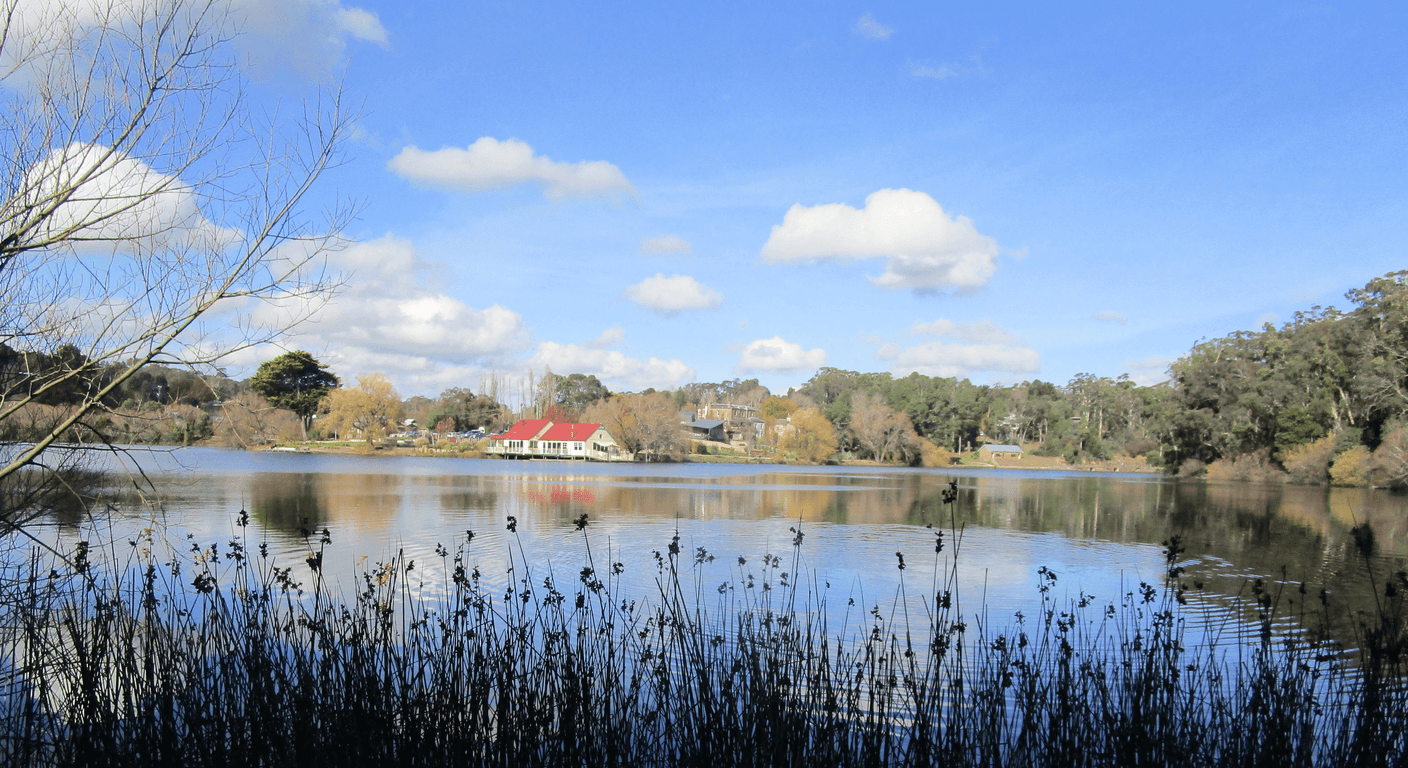
For travellers based in or visiting Melbourne, the upper Yarra — particularly the stretch around Dights Falls and Fairfield — offers a genuinely lovely flat-water environment on a calm morning. The river here is wide, unhurried, and flanked by parkland. Several Melbourne-based SUP operators run beginner sessions along this stretch; Paddle Australia's website is the most reliable place to find currently accredited operators in the area. Confirm session times and current pricing directly.
The practical rhythm works well for a day trip: an early session starting around 8 or 9am on the water, a couple of hours paddling, then a walk to Fairfield Boathouse for a late breakfast or morning tea on the terrace above the river. It's the kind of morning that feels both active and relaxed — which is exactly the balance most over-50 travellers are looking for.
From central Melbourne, the Fairfield area is accessible by train on the Hurstbridge or Mernda lines to Fairfield station, roughly fifteen minutes from the city. Confirm current timetables via ptv.vic.gov.au. Driving and parking is also straightforward on a weekend morning. For travellers based in regional Victoria, the Nagambie Lakes — about 90 minutes north of Melbourne — offer similarly calm conditions and a more rural setting.
Practical Details: Costs, Clothing and What to Bring
Indicative costs for a two-hour beginner group lesson with board and paddle hire sit roughly in the $60 to $120 AUD range across most Australian states, though prices vary by operator, location and season. Private lessons cost more — around $100 to $180 AUD indicatively — but offer a pace entirely tailored to you, which some beginners find worth the difference. Board-only hire (for those who've already had a lesson) is typically $30 to $60 AUD per hour. All figures are indicative; confirm current pricing directly with the operator before booking.
Wear clothes you're comfortable getting wet in — a rashie or light long-sleeved layer offers sun protection and is far more practical than a t-shirt. Apply sunscreen before you arrive; you'll be on the water with sun reflecting from every direction. Bring a change of clothes, a dry bag for your phone and keys (most operators provide these, but it's worth confirming), water, and a hat that won't blow off easily. Secure footwear — water shoes or old runners — is more practical than bare feet on a dock.
Leave the jewellery at home, and consider a waterproof pouch for your hearing aids if you wear them. Glasses wearers might prefer contact lenses for a session, or at minimum a sports strap to keep glasses on. None of this is complicated — it's the same common sense that applies to any water activity. The operator's pre-booking information should cover most of it; if it doesn't, that's worth noting.
Making It a Habit: Beyond the First Session
The first session is the hardest, and it's rarely as hard as anticipated. Many over-50 beginners who book a single lesson find themselves returning — partly because the physical benefits accumulate quietly, and partly because time on calm water has a particular quality that's difficult to replicate elsewhere. There's a reason paddling cultures exist across every continent.
Paddle Australia's website lists clubs across the country, many of which have informal beginner groups and social paddles. These are low-pressure, community-based, and often the most enjoyable way to develop confidence once the basics are in place. Some clubs have equipment available for member hire, which makes the economics considerably more attractive than paying commercial hire rates every time.
For grey nomads travelling by caravan or motorhome, an inflatable SUP board is worth considering. Quality inflatable boards pack into a bag the size of a large backpack, weigh around 9 to 12 kilograms, and can be used on almost any calm water you encounter along a route. They're not cheap — indicatively $600 to $1,500 AUD for a quality beginner board — but for travellers spending extended time near rivers and lakes, they open up a very particular kind of freedom.
Quick planning guide
| Ideal pace | Slow, unhurried morning session |
|---|---|
| Best months | No fixed season — early mornings preferred year-round for calmer water |
| Suggested stay | A single half-day outing; easily built into a day trip |
| Mobility level | Moderate — balance and core stability required, kneeling option keeps it accessible |
| Cost level | Budget-friendly ($60–$120 AUD for a two-hour group lesson) |
| Comfort level | Casual and hands-on — expect to get wet |
| Best for | Over-50 beginners wanting a gentle, low-impact introduction to water activity |
| Main planning consideration | Choosing a sheltered flat-water venue and an accredited operator experienced with older beginners |
Key takeaways
- Flat, sheltered water — a calm river, lake or protected bay — is the appropriate setting for any over-50 beginner SUP session; open surf is a different activity entirely.
- Reputable beginner sessions start everyone kneeling, making standing optional and removing the pressure that puts most people off trying.
- Balance and core stability matter more than upper body strength; SUP is excellent low-impact training for both.
- Look for instructors accredited through Paddle Australia and ask specifically about board width — 32 to 34 inches is the appropriate range for beginners.
- Indicative costs run roughly $60–$120 AUD for a two-hour group lesson; confirm current pricing directly with the operator.
- Morning sessions are consistently the best choice — calmer water, cooler temperatures, and the rest of the day free for a relaxed lunch or a short walk.
Recommended partners and links
Indicative prices only — always confirm with the operator before booking.
Frequently asked questions
Is stand-up paddleboarding safe for beginners over 50?
Yes, on flat, sheltered water with a qualified instructor and a wide beginner board, SUP is considered a low-risk activity for most adults over 50. Instructors start beginners kneeling rather than standing, which significantly reduces the chance of falling. Anyone with recent joint surgery, significant balance conditions, or cardiovascular concerns should speak with their doctor before booking and disclose relevant health information to the operator.
Do I need to be able to swim to try SUP?
Most operators require participants to be comfortable in water rather than strong swimmers, and all reputable operators provide personal flotation devices (life jackets) for beginner sessions. On sheltered flat water, the depth is often quite shallow. Confirm the operator's specific requirements before booking.
What is the best location in Victoria for beginner SUP?
The upper Yarra River around Fairfield and Dights Falls in Melbourne is a popular and accessible flat-water option for beginners. Lake Nagambie, approximately 90 minutes north of Melbourne, offers similarly calm conditions in a more rural setting. Confirm currently accredited operators via the Paddle Australia website at paddleaustralia.com.au.
How long does it take to stand up on a SUP board?
Most beginners attempt standing within the first 30 to 45 minutes of a lesson, after spending time kneeling to develop a feel for the board. Some people stand comfortably within minutes; others prefer to spend the majority of a first session kneeling, which is a completely valid choice. There is no standard timeline, and a good instructor will not rush you.
What should I wear to a SUP lesson?
Wear clothes you're comfortable getting wet in — a rashie or light long-sleeved layer for sun protection, board shorts or leggings, and secure footwear such as water shoes or old runners. Bring sunscreen applied before arrival, a hat with a secure fit, a change of dry clothes, and a dry bag for your phone and keys. Leave jewellery at home.