The Gobi Desert's ger camps are best visited June to September, avoiding spring dust storms and winter cold. Most itineraries involve several nights across multiple camps, with the towering dunes of Khongoryn Els and the Flaming Cliffs of Bayanzag as the defining highlight. Facilities are basic and shared, with temperature swings of up to 30°C between day and night. Mobility is moderate — low doorway steps and rough transfer drives — and access means a 14–18 hour flight via Beijing or Seoul plus a domestic hop to Dalanzadgad.
What is a ger, exactly?
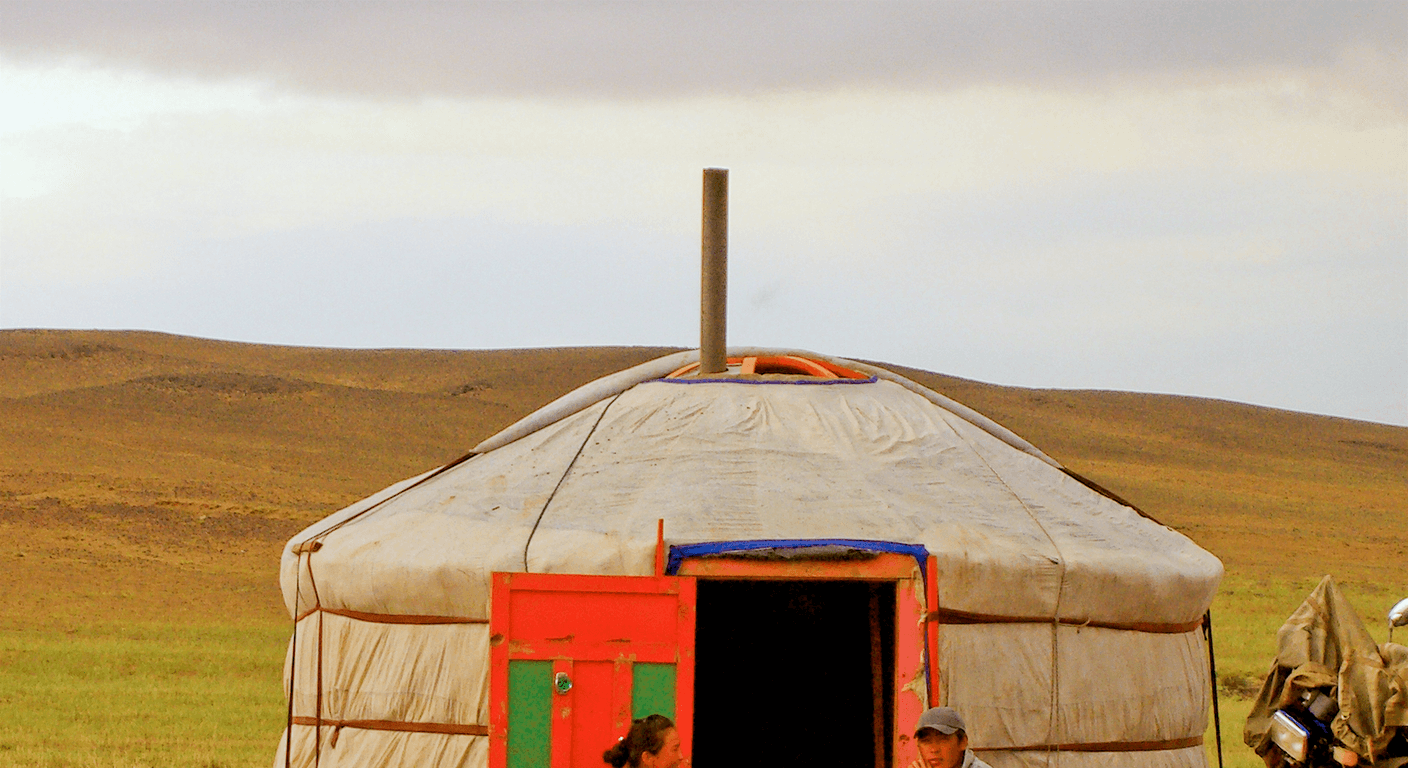
A ger — the Mongolian word for what the West often calls a yurt — is a circular, lattice-framed dwelling covered in layers of felt and canvas. Nomadic Mongolian families have lived in them for centuries, and the design is genuinely clever: the roof ring opens to let smoke out and light in, the felt insulates against cold that would surprise anyone who associates 'desert' with warmth, and the whole structure can be dismantled and loaded onto a camel or truck in under an hour.
At a tourist ger camp, the structure is permanent or semi-permanent for the season. Inside you'll find two to four single beds (some camps offer a double configuration on request, worth confirming), a central iron stove burning saxaul wood or dried dung, a small table, low stools, and not much else. There's no running water inside the ger. Lighting is typically solar LED. The decorated orange paintwork on the wooden frame is traditional and genuinely beautiful — one of those details that photographs can't quite capture.
The threshold beam at the ger doorway sits roughly ankle-height. Mongolian custom says not to step on it, and practically speaking, it's worth watching your footing every time, particularly at night when the stove has died down and the interior is dark. For travellers with any knee or hip considerations, that low step in and out — repeated several times a day — is worth factoring in honestly.
The temperature reality: what 'desert night' actually means
The Gobi is a cold desert, not a hot one. In peak summer (July–August), daytime temperatures reach 35–40°C in direct sun. By midnight, the same location can drop to 5–10°C. That swing — sometimes 30 degrees or more within eighteen hours — is not a weather anomaly. It's the Gobi's defining characteristic, and it shapes everything about how you pack and sleep.
The camp stove is your primary warmth source overnight. At most standard camps, a staff member lights it for you at dusk and it burns for several hours. By 3am it's often cold again. Packing a quality sleeping bag liner and a thermal layer to sleep in isn't overcaution — it's basic sense. Experienced travellers to the region consistently rate warmth layers as the item they were most glad to have brought.
Hydration is the other constant. The dry air, the altitude (much of the Gobi sits above 1,000 metres), and the physical exertion of even gentle walks combine to dehydrate you faster than expected. Carry a reusable bottle and refill at every opportunity. Most reputable camps provide boiled or filtered water; confirm this with your operator before departure.
The honest truth about toilet facilities
This is the section some guides gloss over. At standard and mid-range ger camps, toilet facilities are shared and located in a separate block, typically a short walk from the gers — which at 2am in 5°C darkness is a genuine consideration. These are usually pit or long-drop toilets, clean but basic. Some camps have introduced flushing toilets in a central block; a smaller number of premium camps have private en-suite bathroom pods adjacent to individual gers.
Shower facilities, where available, are usually a shared block with limited hot water at set times — often late afternoon. Some standard camps offer bucket showers. Wet wipes, hand sanitiser and a headlamp are not optional extras at this price point. They're the difference between managing comfortably and not.
None of this is cause for alarm if you go in knowing it. The same traveller who finds a long-drop toilet unacceptable in a hotel context often finds it entirely reasonable in a landscape this extraordinary. The key is making the decision with accurate information, not discovering it on arrival. Ask your operator directly and specifically: 'What type of toilet facility is at this camp, and how far is it from the sleeping ger?'
Getting there: the drives you need to know about
Mongolia has very few paved roads outside Ulaanbaatar. Travel between Gobi camps — and between Ulaanbaatar and the Gobi — means long hours in a Russian-built UAZ van or similar 4WD vehicle crossing open steppe and gravel desert. The road from Ulaanbaatar to the Gobi's Dalanzadgad region is roughly 550 kilometres; the drive takes eight to ten hours on the best days, longer after rain. Most reputable tour operators now fly this sector — a domestic flight from Ulaanbaatar to Dalanzadgad takes under two hours and is worth every indicative AUD 150–250 it costs, especially on the return when you're tired.
Within the Gobi itself, camp-to-camp transfers are typically two to four hours on tracks that exist primarily in the driver's memory. The vehicles are rugged and the drivers extraordinarily competent — this is reassuring, not concerning — but the corrugations and rocks mean the ride is physical. A good neck pillow, a lumbar support and the realistic expectation that you will not be reading a book help enormously. Schedule rest time at each camp rather than cramming transfers together.
For travellers with back problems or post-surgical hip and knee considerations, the drive segments deserve a direct conversation with your tour operator before booking. Some operators can arrange shorter daily transfers, or route adjustments that reduce consecutive drive days. Asking is not a special request — it's standard tour customisation.
Getting to Mongolia from Australia: the flight reality
There are no direct flights from Australia to Ulaanbaatar (Chinggis Khaan International Airport). The most common routing is via Beijing (Air China or MIAT Mongolian Airlines connection), Seoul Incheon (Korean Air), or occasionally Tokyo. Total travel time from Melbourne or Sydney, including the stopover, is typically 14–18 hours. Flying time from Melbourne to Beijing is around 11 hours; the onward sector to Ulaanbaatar adds roughly two hours.
A one-night stopover in Beijing or Seoul on the way out is not indulgence — it's practical. Arriving in Ulaanbaatar rested and adjusted to a time zone that sits three hours behind Australian Eastern Standard Time makes the first full day significantly more enjoyable. The jet lag curve for Mongolia is gentler than, say, Europe, but it still warrants a quiet first night before any early-morning activity.
Confirm current visa requirements for Australian passport holders at smartraveller.gov.au before booking anything. Mongolia has operated a mutual visa-free arrangement for Australian citizens for short stays in the past, but entry rules can change, and official government travel advice is the only source worth trusting. Your travel insurance policy should be in place before any deposit is paid, and it should explicitly cover pre-existing medical conditions, remote area evacuation, and trip cancellation.
Food, culture and what the experience actually delivers
Meals at ger camps are typically included and centre on Mongolian staples — mutton in various forms, dairy products including tsuivan noodles, buuz dumplings, and airag (fermented mare's milk, an acquired taste that most visitors try once and remember forever). The food is hearty and unpretentious. Vegetarians should discuss requirements with the operator in advance; options are limited but camp cooks are generally willing to adapt with notice.
The cultural dimension of a ger camp stay is not incidental. Mongolian nomadic culture — the relationship with horses, the practice of hospitality, the spiritual significance of the landscape — is present in ways that a city hotel cannot replicate. Many camps arrange a visit with a local nomadic family, a horse or camel ride, and an evening of traditional music. These are not performances staged for tourists; they're genuine, if inevitably mediated by the tourism context.
The Gobi itself is the defining thing. Khongoryn Els — the great sand dunes that rise 300 metres from the desert floor — and the Flaming Cliffs of Bayanzag, where the first dinosaur eggs were discovered in the 1920s, are within range of most Gobi camp itineraries. Neither requires serious hiking to appreciate. Both are the kind of place that stays with you — not because a brochure told you they would, but because the scale and silence are simply unlike anything in Australia or Europe.
Is a Gobi ger camp right for you?
The honest answer is: it depends less on age than on disposition. Travellers who need reliable air-conditioning, private bathrooms and a consistent hot shower will be uncomfortable at all but the most premium camps. Travellers who find a degree of roughness energising — who are prepared to layer up at night, use a shared toilet without complaint, and accept that the van will hit a rock at some point — tend to find the Gobi one of the more quietly profound experiences they've had.
At 73, with a life of travel behind you, the Gobi asks the same thing it asks of anyone: can you be flexible, patient, and genuinely curious about a way of life very different from your own? If the answer is yes, the logistics are entirely manageable with a good operator and honest preparation. If the answer is uncertain, start with a higher-tier camp — Three Camel Lodge in the Gobi is often cited as the benchmark for comfort without sacrificing authenticity — and use it as your base.
The community of Mongolian-experienced Australian travellers is small but enthusiastic, and online forums attached to travel groups for over-50s contain candid first-hand accounts worth reading before you commit. Your tour operator should also be willing to connect you with past clients. Any operator who isn't comfortable with that question is not the operator for this trip.
Quick planning guide
| Ideal pace | Slow-paced, with rest built in between long transfer drives |
|---|---|
| Best months | June to September |
| Suggested stay | Multi-night, spread across two or more camps |
| Mobility level | Moderate — low ger doorway steps, walks to shared toilet blocks, and physical drive segments |
| Cost level | Variable — standard camps to premium options like Three Camel Lodge |
| Comfort level | Basic and shared as standard, more private at higher-tier camps |
| Best for | Adaptable, curious travellers comfortable with rustic, shared facilities |
| Main planning consideration | Shared toilet/shower facilities, day-night temperature swings, and long unpaved drives between camps |
Key takeaways
- A ger camp stay means a felt-walled tent, a wood stove, shared or long-drop toilets, and temperature swings of up to 30°C between day and night — know this before you book.
- The best months for the Gobi are June to September; avoid spring dust storms and the severe cold of the Mongolian winter.
- Flying to Ulaanbaatar from Australia takes 14–18 hours with one stopover; a recovery night on arrival is practical, not optional.
- Long unpaved drives between camps are standard — flying the Ulaanbaatar–Dalanzadgad sector saves eight-plus hours on the road each way.
- Confirm current Mongolian entry requirements at smartraveller.gov.au and arrange travel insurance covering pre-existing conditions and remote evacuation before paying any deposit.
- A headlamp, thermal sleep layers, wet wipes and a reusable water bottle are not optional extras — they're the practical core of a comfortable ger camp stay.
Recommended partners and links
Indicative prices only — always confirm with the operator before booking.
Frequently asked questions
Do ger camps in the Gobi Desert have private bathrooms?
Most standard and mid-range ger camps have shared toilet facilities — often long-drop or pit toilets in a separate block — and communal shower areas with limited hot water. A small number of premium camps, such as Three Camel Lodge, offer en-suite bathroom pods. Always ask your operator specifically what toilet and shower facilities are at each camp before confirming your booking.
How cold does it get at night in the Gobi Desert in summer?
In peak summer (July–August), Gobi Desert nights regularly drop to 5–10°C even when daytime temperatures reach 35–40°C. The central ger stove provides warmth for several hours after lighting but typically dies down overnight. A quality sleeping bag liner and thermal sleep layers are strongly recommended regardless of camp standard.
Do Australians need a visa to visit Mongolia?
Visa requirements for Australian passport holders travelling to Mongolia can change. Check the current official advice at smartraveller.gov.au before booking, as this is the only authoritative source for Australian travellers. Do not rely on information from tour operators or travel forums as a substitute for official government guidance.
How do you get from Ulaanbaatar to the Gobi Desert?
The overland drive from Ulaanbaatar to the Gobi's Dalanzadgad region takes eight to ten hours on largely unpaved roads. Most experienced operators recommend taking a domestic flight instead — roughly two hours — and reserving the 4WD transfers for travel between camps within the Gobi itself. Confirm domestic flight availability and cost with your operator when booking.
Is a Gobi Desert ger camp suitable for travellers over 70?
A Gobi ger camp is suitable for travellers over 70 who are mobile, adaptable and comfortable with basic shared facilities and long vehicle transfers on rough tracks. Travellers with significant back, hip or knee conditions should discuss transfer distances and vehicle types with their operator before booking. Physical fitness matters less than flexibility and realistic expectations.