Guided birdwatching walks across Australia offer a slow, easy morning for over-50 travellers, from Melbourne's Royal Botanic Gardens — flat, tram-accessible paths with free walks lasting one to two hours — to Broome Bird Observatory on Roebuck Bay, best visited August to October to see tens of thousands of migratory shorebirds. Broome requires a four-hour flight via Perth and suits a three-to-five-night stay. Mobility throughout is easy, with gentle terrain and frequent pauses.
Why guided birdwatching suits over-50 travellers particularly well
There's something about a guided birdwatching walk that quietly rewards the traveller who's learned not to rush. The pace is deliberate. Stops are frequent. Conversation happens naturally. For solo travellers especially, a small guided group offers easy company without the social pressure of a tour coach.
Most walks cover flat, well-maintained ground — sealed garden paths, boardwalks over wetlands, compacted gravel tracks — making them genuinely accessible for people who want gentle exercise rather than a workout. A two-hour morning walk typically covers two to four kilometres with plenty of pauses. Guides do the work of knowing where to look; you simply have to show up and keep quiet at the right moments.
The other thing birdwatching does, which few activities manage, is anchor you to a specific place at a specific season. The migratory shorebirds at Roebuck Bay in Broome are there in September and October. The yellow-tailed black cockatoos moving through Melbourne's parks tend to appear in autumn. That seasonal specificity gives a walk genuine reason to be made — and remembered.
Royal Botanic Gardens Victoria, Melbourne: where to start
The Royal Botanic Gardens Melbourne — spread across 38 hectares on the Yarra's south bank — supports more than 100 bird species across its ornamental lake, lawns and dense plantings. It's a genuinely productive birdwatching site, not merely a pleasant garden that happens to have birds. Musk lorikeets, superb fairy-wrens, sacred kingfishers and grey-headed flying foxes (technically not a bird, but worth knowing about at dusk) all move through the grounds with some regularity.
The Gardens host guided nature walks and bird walks through their own program, and BirdLife Australia's local groups — including the Bird Observers Club of Australia, now operating under BirdLife — run regular morning outings in and around the gardens. These are typically led by experienced birders who know their Lewin's honeyeater from their yellow-faced, and who won't make a beginner feel self-conscious for not knowing the difference. Confirm current walk schedules directly via rbg.vic.gov.au or birdlife.org.au, as programs shift seasonally.
Getting there without a car is easy — tram routes 1, 3, 5, 6, 8, 16, 64, 67 and 72 stop on St Kilda Road, a short walk from the Birdwood Avenue entrance. The main paths are flat and paved. The Visitor Centre near Gate F has seating, toilets and a café for a restorative flat white afterwards. For a solo traveller based in Melbourne's inner suburbs, this is a morning that costs almost nothing and returns a great deal.
Broome Bird Observatory: a destination worth the flight
Broome is a long way from Melbourne — roughly four hours by air, often with a connection through Perth. That's a real consideration, not something to minimise. But the Broome Bird Observatory, situated on the shores of Roebuck Bay about 25 kilometres from Broome town centre, draws serious birdwatchers from across Australia and internationally for good reason. Roebuck Bay is one of the most significant shorebird sites in the Asia-Pacific flyway. During the northern migration season (roughly August to October), the tidal flats host tens of thousands of waders — bar-tailed godwits, great knots, red-necked stints — that have flown from Siberia and Alaska. Watching that on a calm morning, with a guide who can identify what's in the flock, is the kind of thing that stays with you.
The Observatory runs guided walks and talks suited to a range of experience levels, including participants who've never held binoculars before. Accommodation is available on-site in simple but comfortable cabins and chalets, which means early-morning walks require only stepping outside rather than a drive in the dark. Confirm current walk programs, accommodation availability and pricing directly at broomebirdobservatory.com. The site is managed by BirdLife Australia.
Mobility-wise, the Observatory's walks take in flat coastal scrub and tidal flats — uneven ground in places, but nothing that demands hiking boots or fitness beyond a comfortable walk. Sensible shoes, a hat, sunscreen and water are the essentials. In October, Broome's heat builds early; walks typically start at first light for good reason. A stay of three to five nights allows time for multiple walks at different tidal states, a visit to Cable Beach, and proper rest between outings.
Other excellent guided birdwatching sites across Australia
Beyond Melbourne and Broome, guided birdwatching walks are available at a surprising range of locations around the country. The Australian Botanic Garden at Mount Annan, south-west of Sydney, runs regular bird walks through its 416-hectare site — one of the largest botanic gardens in Australia — with a species list that includes Gang-gang cockatoos and glossy black cockatoos. Sydney Olympic Park, for its part, has become one of Sydney's better wetland birdwatching sites, with guided walks available through the Sydney Olympic Park Authority. Confirm current programs at sydneyolympicpark.com.au.
In South Australia, the Adelaide Botanic Garden and the nearby Cleland Wildlife Park both offer nature walk programs. In Queensland, the Cattana Wetlands near Cairns is a free, accessible site with a flat boardwalk and extraordinary diversity — cassowaries have been recorded there, though sightings are not guaranteed. Rangers and local BirdLife groups run occasional guided mornings; check birdlife.org.au for the local group contact.
Parks Victoria manages a number of reserves with ranger-guided nature programs, including Yarra Bend Park in Melbourne's inner north — arguably the best place in Australia to see wild platypus, and also very good for owls at dusk. Check parks.vic.gov.au for current guided walk schedules. The point is that guided birdwatching isn't a niche or remote activity. It's available, often free, in or near most Australian cities.
What to bring, and what you don't need to know beforehand
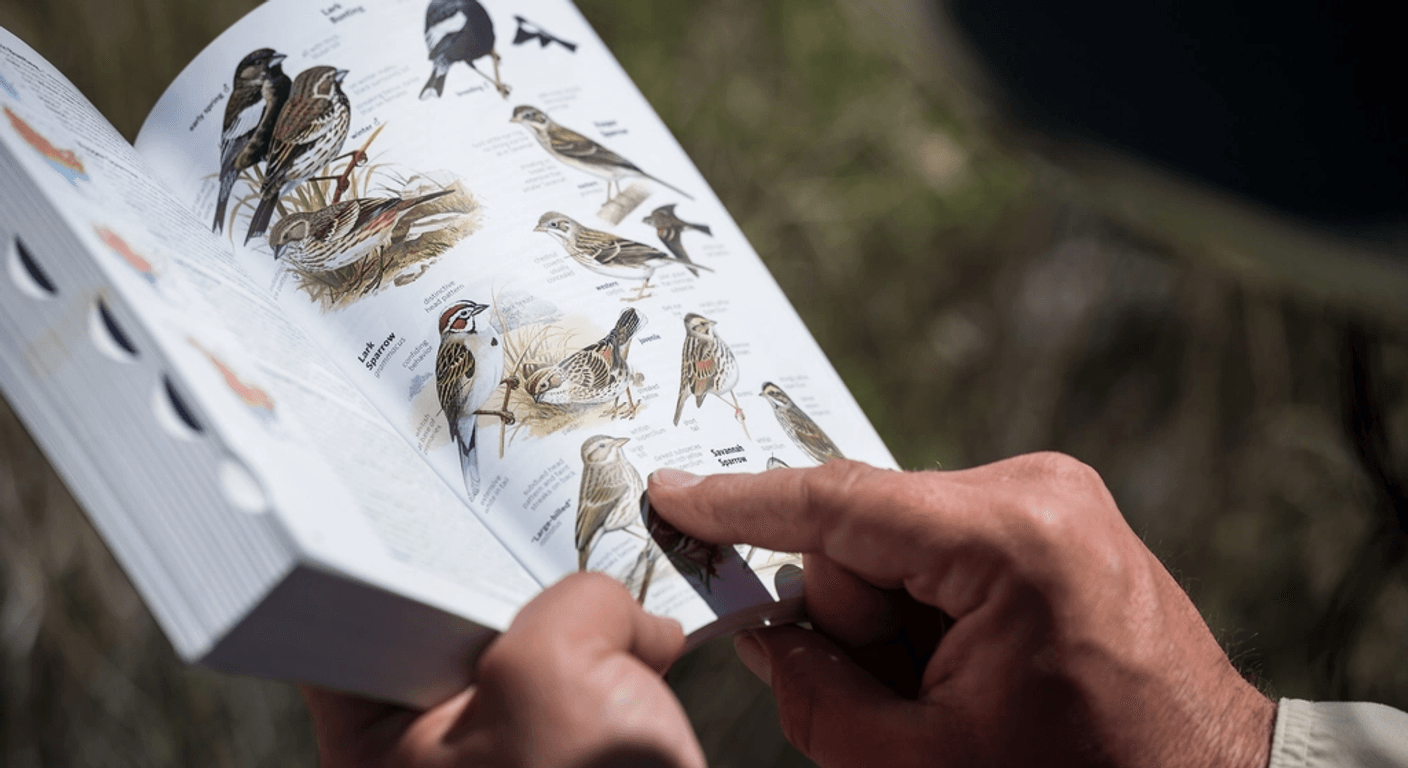
Binoculars make the difference between seeing a bird and seeing a bird. A pair with 8x42 magnification is a sensible all-round choice — light enough to hold steady, powerful enough for most situations. If you don't own a pair, some guided walk operators lend them; confirm this when you book. Don't wait until you have the perfect equipment. Many guides carry spare binoculars for exactly this reason.
Clothing in neutral or muted tones — olive, grey, brown — is genuinely helpful rather than affectation. Birds notice movement and colour contrast. A broad-brimmed hat and comfortable, closed-toe walking shoes are non-negotiable in most Australian conditions. Carry water, even on a cool morning. A small notebook is useful if you want to keep a life list, though apps like eBird (ebird.org) and Merlin Bird ID (from the Cornell Lab) handle this digitally if preferred.
You don't need to know any birds before you arrive. Every guide worth their salt has been asked 'what's that brown bird?' by a perfectly intelligent adult on their first walk. The better question to ask yourself beforehand is simply: what kind of morning do I want? One focused on learning species? Or one that's more about being outside quietly, with occasional identification as a bonus? Both are valid, and a good guide will read the group and pace accordingly.
Joining a group as a solo traveller
Solo travel to a group guided walk is, in practice, one of the least awkward solo activities available. Birdwatching groups tend to be self-selecting for people who are comfortable with companionable silence, which makes conversation easier rather than harder. The shared focus on something external — a bird in a tree rather than each other — takes the pressure off.
BirdLife Australia's network of local groups operates across every state and territory. Many run regular free or low-cost morning walks open to non-members, with membership fees modest by any standard. The local group coordinator is usually the best person to contact for walk schedules and to ask whether the group is welcoming to beginners or solo participants — in the author's experience, the answer is reliably yes. Find your nearest group at birdlife.org.au.
For Italian Australian travellers with family connections to a particular region, it's worth knowing that birdwatching has a long cultural tradition in Italy — and that Australians of Italian heritage sometimes find an unexpected resonance in learning the local birds of their adopted country. Noticing a welcome swallow or a willie wagtail with genuine curiosity rather than passing indifference is, in its way, a form of belonging.
Practical planning: what to confirm before you go
Walk schedules at botanic gardens and wetland centres change seasonally, and some programs pause over summer or during school holiday periods when venues are busier. Always confirm the current schedule directly with the venue or group organiser before travelling — especially if you're making a day trip from a distance. A quick email or phone call takes two minutes and saves a wasted journey.
For day trips from Melbourne, the Royal Botanic Gardens and Yarra Bend Park are reachable by public transport; check ptv.vic.gov.au for current tram and bus routes. For Broome, flights from Melbourne typically route through Perth; allow a full recovery day on arrival before your first early-morning walk. Travel insurance that covers pre-existing conditions is worth reviewing before any interstate or remote trip — confirm the terms of your policy with your insurer.
Costs across the guided birdwatching spectrum are genuinely modest. Free botanic garden walks, BirdLife group outings at no charge, and Observatory programs at indicative figures of $30–$60 AUD mean this is one of Australia's more accessible forms of nature travel. Confirm all current pricing directly with providers, as figures change.
Quick planning guide
| Ideal pace | Slow-paced with frequent stops |
|---|---|
| Best months | Year-round in cities; August–October for Broome's shorebird migration |
| Suggested stay | Half-day for city walks; three to five nights for Broome |
| Mobility level | Easy — flat, well-maintained paths and boardwalks |
| Cost level | Budget-friendly, from free to around $30–$60 AUD |
| Comfort level | Comfortable, gentle activity with plenty of rest stops |
| Best for | Solo travellers, beginners and nature lovers |
| Main planning consideration | Confirm walk schedules directly with the venue before travelling, as programs shift seasonally |
Key takeaways
- Most guided birdwatching walks in Australia cover flat, easy ground over one to two hours — genuinely accessible for over-50 travellers at any fitness level.
- Royal Botanic Gardens Victoria in Melbourne hosts bird walks reachable by tram, many of them free.
- Broome Bird Observatory on Roebuck Bay is one of the Asia-Pacific flyway's most significant shorebird sites, best visited August to October.
- BirdLife Australia's local group network runs free or low-cost walks in every state and territory — find your nearest group at birdlife.org.au.
- You don't need prior birdwatching experience; a good guide is there precisely for people who are starting out.
- Always confirm walk schedules directly with the venue before travelling — programs shift seasonally and are not always listed in real time online.
Recommended partners and links
Indicative prices only — always confirm with the operator before booking.
Frequently asked questions
Do I need birdwatching experience to join a guided walk?
No prior experience is needed. Guided birdwatching walks are explicitly designed for all skill levels, including complete beginners. The guide handles identification; your job is simply to look where they point and ask questions freely.
Are guided birdwatching walks suitable if I have mobility limitations?
Most guided walks in botanic gardens and wetland centres follow flat, sealed or compacted paths and are rated Easy for mobility. Always confirm the specific terrain with the walk organiser before attending, as conditions vary by site.
What is the best time of year to visit the Broome Bird Observatory?
August to October is peak season for migratory shorebirds at Broome's Roebuck Bay, with tens of thousands of waders present on the tidal flats. The Observatory runs guided walks year-round, but the August–October window offers the greatest species diversity and numbers.
How do I find a guided birdwatching walk near me in Australia?
BirdLife Australia's website (birdlife.org.au) lists local groups across every state and territory, many of which run regular free or low-cost guided walks open to non-members. Botanic gardens and Parks Victoria (parks.vic.gov.au) also publish guided walk programs — confirm current schedules directly with each venue.
Can I borrow binoculars if I don't own a pair?
Some guided walk operators and observatories lend binoculars to participants; the Broome Bird Observatory is one example. Confirm availability when you book or enquire, as loaner pairs are not guaranteed at every venue.