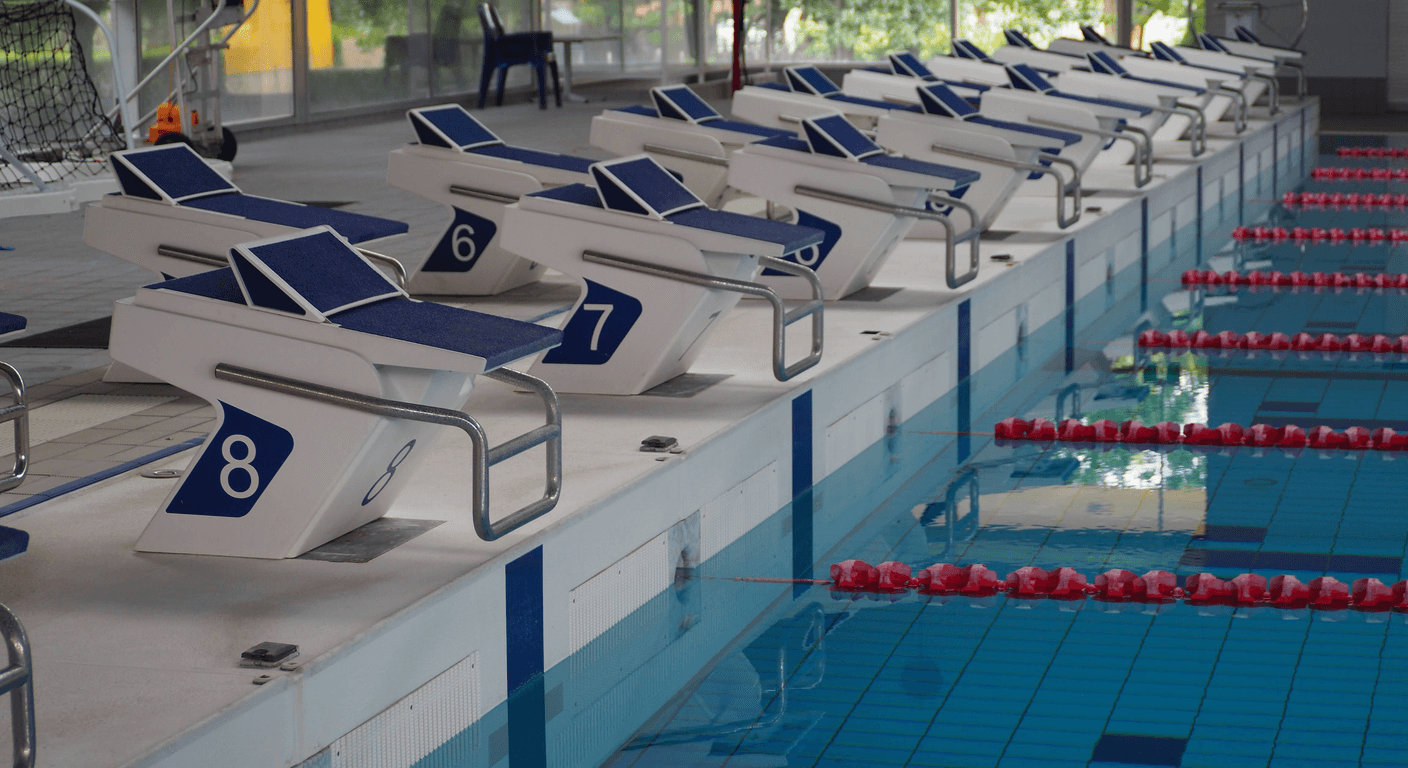
Council aquatic centres in most Australian towns sell casual swim and gym entry to travellers, often at Seniors Card concession rates of roughly $5 to $10 for a swim and $8 to $15 for a gym visit. This suits over-50s travellers wanting to keep up a fitness routine on the road. Since pricing and concession rules vary by facility, confirm current rates and eligibility directly with the local council aquatic centre or gym before visiting.
Why the Local Pool Is One of the Best Cheap Experiences in Any Country Town
Pull into almost any regional Australian town of a few thousand people and there is a fair chance a council aquatic centre is sitting quietly near the oval or the showgrounds, open to the public for a few dollars a visit. These are not tourist attractions. They are where locals swim laps before work, where the over-60s water walking group meets on Tuesday mornings, and where a travelling couple can do forty minutes in the pool without a booking, a membership, or a conversation with a salesperson.
For a traveller who has kept up a regular swim or gym habit at home, the local pool solves a real problem: how do you maintain some physical routine when you are living out of a caravan or moving hotels every few nights. The answer, more often than not, is already in the town you have just driven into. A quick search of the council website or a ask at the visitor information centre will usually turn up the address, hours, and whether a Seniors Card concession applies.
Beyond the practical value, there is something quietly enjoyable about dropping into a pool in a town you have never been to before. The water is the same temperature, the lane ropes are the same faded blue, and the retired bloke doing backstroke in the outside lane will almost certainly nod hello. It is one of those small, reliable pleasures that travel does not always offer.
How Do Seniors Card Concessions Work at Aquatic Centres?
The Seniors Card is issued by each state and territory government to residents who meet the age and residency criteria — in Victoria, that is generally residents aged 60 and over. The card is free to obtain and is recognised at a wide range of businesses and council services. When it comes to council aquatic centres, many centres offer a discounted casual entry rate for Seniors Card holders, though this is not universal and the discount varies considerably from one facility to the next.
The key practical point is that your Victorian Seniors Card will generally be accepted as proof of concession status at most council pools around the country, because the card is a government-issued document showing your age. However, it is always worth confirming before you drive across town. Some centres have their own concession categories that require a Pensioner Concession Card rather than a Seniors Card, and a small number of privately operated facilities may not recognise it at all. Checking the centre's website or ringing ahead takes two minutes and avoids any awkwardness at the desk.
If you hold a Pensioner Concession Card issued by Services Australia, you will generally find deeper discounts at council facilities, and some centres offer free or near-free entry for Pension Card holders on certain sessions. It is worth carrying both cards if you hold them. For indicative pricing, casual swim entry at a council aquatic centre around Australia tends to run somewhere around $5 to $10 for a concession rate, though this varies widely — always confirm current prices directly with the centre.
What Are the Options for Gym Access When Travelling?
For travellers who prefer a gym session over a swim, the picture is a little more varied. National chains such as Anytime Fitness have locations in many regional towns across Australia, not just capital cities, and some offer casual or short-term passes for visitors who are not members. The experience and pricing at each franchise location can differ, so it is worth checking the chain's website for a location finder and then contacting the specific club to ask about visitor access before you arrive in town.
Fitness Passport is a workplace wellness program that gives members access to a large network of gyms and aquatic centres across Australia at a reduced rate. If you or your partner has access through a current or former employer, it is worth checking whether your membership remains active and which facilities are covered in the regions you plan to visit. The network includes many council-run leisure centres, which makes it a genuinely useful option for a longer road trip.
Council-run leisure centres that include a gym floor — often called a health and fitness centre or a wellness centre within the complex — are frequently the most affordable casual gym option in regional areas. A casual gym visit at these facilities typically costs in the range of $8 to $15 indicative, with concession rates often available. The equipment tends to be functional rather than boutique, which suits most travellers perfectly well. You are not there for the ambience; you are there to move.
What Is a Hydrotherapy Pool and How Do You Use One While Travelling?
A hydrotherapy pool is a heated pool — typically kept at around 33 to 36 degrees Celsius — designed for low-impact exercise and rehabilitation. They are shallower than lap pools and kept warm enough that movement in the water feels genuinely comfortable even for people with joint pain, arthritis, or recovering from surgery. For travellers in their 60s and 70s who find cold lap pools hard on the body, a hydrotherapy session can be a more appealing option.
Not every aquatic centre has a hydrotherapy pool, but they are more common than many people expect, particularly at larger regional centres and facilities associated with hospitals or allied health services. When searching for a centre in a town you are visiting, it is worth specifically asking whether they have a hydrotherapy pool available for casual use, and whether any supervised sessions or aqua physiotherapy classes are open to drop-in visitors.
Etiquette in hydrotherapy pools is a little different from a lap pool. The water is shared with people who may be recovering from injury or managing chronic pain, so the pace is slower and the expectation is generally that you keep movement gentle and give others plenty of space. Most centres ask you to shower before entering and to avoid using the pool if you are unwell. Some facilities require a brief induction or a note from a physiotherapist for certain supervised sessions, though general casual access to a hydrotherapy pool usually does not require this.
Is Aqua Aerobics a Good Drop-In Option for Travellers?
Aqua aerobics classes at council pools are one of the more underrated travel experiences available to over-50s. They run on a regular schedule, are almost always open to casual participants, and cost roughly the same as a casual swim entry — often with a concession rate available. The classes tend to be low-impact and instructor-led, so you do not need any prior experience or a particular fitness level to join in comfortably.
From a social point of view, an aqua aerobics class in a country town is a genuinely warm environment. The regular participants are often local retirees who are well used to seeing new faces, and the atmosphere is generally relaxed and friendly. For a couple travelling together, it can be a pleasant way to spend an hour and have a brief, easy conversation with people who actually live in the place you are visiting — which is not something a tourist attraction usually offers.
To find out whether a class is running on the day you are in town, check the centre's website or Facebook page, or ring the front desk. Timetables are usually posted a week or more in advance. Arriving five minutes before the class starts and letting the instructor know you are a casual visitor is all the introduction you need. Most instructors are used to it and will make sure you know what equipment to grab.
How Do You Find Aquatic Centres and Gyms in Towns You Have Not Visited Before?
The most reliable starting point is the local council website for the town or shire you are visiting. Council leisure and aquatic facilities are almost always listed under community services or recreation, and the page will usually include opening hours, a timetable, pricing, and contact details. If you are travelling through Victoria, the Visit Victoria website at visitvictoria.com is a useful broader resource, and many regional visitor centres maintain lists of local facilities.
For a quicker search on the road, typing the town name plus 'aquatic centre' or 'leisure centre' into a maps application will usually surface the main council facility. It is worth cross-checking with the council website to confirm current hours, as leisure centres sometimes have reduced hours during school holidays or local events. Some travellers keep a simple note on their phone of the towns they plan to pass through and look up the pool details the evening before.
If you are a member of a national gym chain, most chains have a location finder on their website or app. For Anytime Fitness, the app will show nearby clubs and their contact details. For Fitness Passport members, the member portal lists all partner venues by postcode or location. Neither of these should be treated as a real-time guarantee that casual access is available on a given day — a quick call or email to the specific club the day before removes any uncertainty.
Practical Tips for Staying Active Without Disrupting the Trip
Packing for pool access adds very little weight to a travel bag: a swimsuit, goggles, a small towel, and a pair of thongs for the changeroom floor covers almost every scenario. If you use a pull buoy, kick board, or aqua dumbbells at home, you generally do not need to bring them — most council pools have basic equipment available at the pool deck, and aqua aerobics classes supply everything you need.
For travellers who use the gym primarily for resistance work, a set of resistance bands takes up almost no space in a bag and can supplement or replace a gym session on days when a suitable facility is not accessible. A yoga mat is bulkier but useful if you have a morning stretching or floor exercise routine. These are not replacements for a proper session, but they keep the body moving on travel days when stopping at a gym is not practical.
It is worth being realistic about pacing. A 73-year-old who swims four mornings a week at home may find that two or three sessions a week is a more honest target on a road trip, particularly if driving distances are long or sightseeing is physically active in itself. Walking a main street, climbing a lookout, or spending two hours in a botanic garden all count as movement. The goal on the road is to maintain enough activity to feel well, not to replicate a home routine exactly.
Quick planning guide
| Who it's for | Travellers aged over 50 who want to maintain a swim, gym, or aqua aerobics routine while moving between towns around Australia |
|---|---|
| How to start | Search the local council website or ask at the visitor information centre for the aquatic or leisure centre's address, hours, and casual entry pricing, or use a gym chain's location finder |
| Typical cost | Casual swim entry around $5 to $10 with concession; casual gym visits around $8 to $15, indicative and varying by centre |
| Time required | A few minutes to look up a centre online plus a quick phone call to confirm; sessions themselves typically run 30 to 60 minutes |
| Where to get help | Council websites, visitor information centres, Anytime Fitness's app/location finder, and the Fitness Passport member portal |
| Key documents needed | Seniors Card and/or Pensioner Concession Card, where held, to access discounted casual entry |
| Main planning consideration | Confirm ahead of time whether a centre accepts your Seniors Card, offers casual entry, and has the facility type you want (pool, gym, or hydrotherapy pool), since this varies between centres |
| Renewal or review | Not applicable |
Key takeaways
- Council aquatic centres in most sizeable Australian towns offer casual entry to both the pool and gym, often with Seniors Card concession rates.
- Your Victorian Seniors Card is generally accepted as proof of age concession status at council facilities around the country, but it pays to confirm before you visit.
- National gym chains such as Anytime Fitness have regional locations and some offer casual or short-term visitor access — check with the specific club before you arrive.
- Aqua aerobics classes at council pools are almost always open to casual drop-in visitors, cost roughly the same as a casual swim, and are one of the friendliest social options on the road.
- Hydrotherapy pools — heated to around 33–36 degrees — are available at many regional aquatic centres and are well suited to travellers managing joint pain or arthritis.
- The simplest way to find a pool or gym in an unfamiliar town is the local council website or a maps search for 'aquatic centre' plus the town name, followed by a quick phone call to confirm hours and pricing.
Recommended partners and links
Indicative prices only — always confirm with the operator before booking.
Frequently asked questions
Can I use my Victorian Seniors Card to get concession entry at pools in other states?
In most cases, yes. The Victorian Seniors Card is a government-issued document confirming your age, and most council aquatic centres around Australia will accept it as proof of concession eligibility. However, some facilities distinguish between a Seniors Card and a Pensioner Concession Card when setting their concession rates, so it is worth confirming with the specific centre before you visit. Carry your Pensioner Concession Card as well if you hold one.
Do I need to book in advance for a casual swim or aqua aerobics class?
For a casual lane swim, advance booking is rarely required at council aquatic centres — you can generally pay at the door. Aqua aerobics classes also typically accept casual participants without a booking, though it is worth checking the timetable in advance to make sure a class is running on the day you want. Ringing the centre or checking their website the day before is the most reliable approach.
How much does casual pool entry cost at a council aquatic centre in Australia?
Casual swim entry at council aquatic centres around Australia is indicatively around $5 to $10 for a concession rate, and somewhat more for full adult entry, though prices vary considerably between facilities and states. These figures are indicative only — always confirm current pricing directly with the centre you plan to visit, as costs change and vary by location.
Are hydrotherapy pools available to casual visitors, or do you need a referral?
Many council aquatic centres with hydrotherapy pools allow casual public access without a medical referral, treating it as a general warm-water exercise option. Some supervised aqua physiotherapy sessions may require a referral from a physiotherapist, but general casual use of the hydrotherapy pool typically does not. It is worth asking the centre directly whether casual access is available and whether any induction is required.
What is the easiest way to find a gym or pool in a regional town I have not visited before?
The most reliable method is to search the local council's website for recreation or aquatic facilities, which will include hours, timetables, and pricing. A maps search for 'aquatic centre' or 'leisure centre' combined with the town name also works well. For national gym chains, the chain's own website or app has a location finder. Always follow up with a phone call to the specific facility to confirm casual access and current hours before you make a trip across town.
- Visit Victoria — Travel and Tourism Information
- Victoria Seniors Card — Victorian Government
- Services Australia — Pensioner Concession Card
- Belgravia Leisure — Aquatic and Leisure Centre Operator
- YMCA Australia — Aquatic and Community Centres
- Anytime Fitness Australia — Club Locations and Membership
- Fitness Passport — Multi-Venue Fitness Access