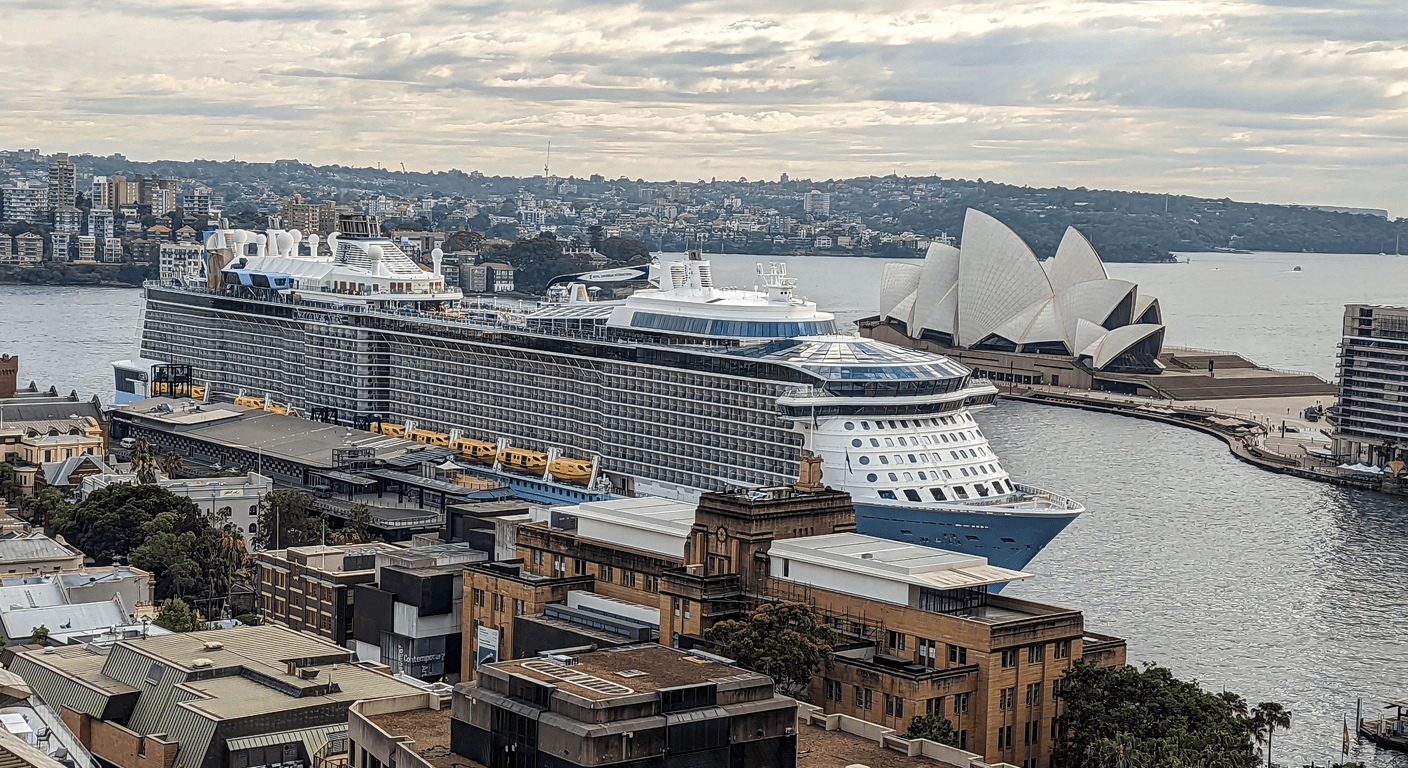
Cruise fares cover the cabin, main dining, buffet and entertainment, but extras—gratuities (about AUD 18–28 per person daily), drinks and shore excursions—can double onboard spending, with mid-range travellers budgeting AUD 120–180 daily for a typical fortnight-long voyage. Cruising suits any season and rates as easy mobility-wise, with flat decks and lifts. Regional travellers should factor in flights to embarkation ports like Melbourne, Sydney or Brisbane, plus a night's accommodation beforehand.
The fare is the beginning, not the budget
There's a reason cruise fares look so appealing on a per-night basis. They genuinely do include a great deal — your cabin, most meals in the main dining room and buffet, onboard entertainment, use of pools, gym and most public spaces, and port taxes and fees. For a fortnight at sea, that's real value. But the fare is not the budget. It's the floor.
What sits above that floor varies by cruise line, ship and your own habits. A relaxed traveller who skips the specialty restaurants, drinks moderately from the bar, and takes only one or two organised shore excursions will spend far less than someone who eats at the steakhouse three times, orders cocktails by the pool and books a full-day tour at every port. Neither approach is wrong. Knowing which one sounds more like you is where the planning starts.
The single most useful thing you can do before boarding is download your cruise line's current 'what's included' list and read it carefully. Lines change their inclusions regularly — particularly around specialty coffees, bottled water, room service and premium dining — and what was free on a cruise two years ago may now carry a charge. Confirm before you sail.
What is genuinely included on most cruise lines?
On mainstream cruise lines — Princess, Royal Caribbean, Carnival, Norwegian, MSC and similar — the included column typically looks like this: your cabin and its housekeeping, main dining room meals (breakfast, lunch and dinner), the buffet, basic pool-deck food like pizza or burgers, most onboard entertainment (shows, live music, trivia nights, deck parties), gym access, and port charges. That's a solid foundation.
What's almost never included on standard fares: alcohol and soft drinks (beyond water, basic tea and coffee in some venues), specialty restaurants, premium coffees from the café, shore excursions booked through the ship, the spa, casino play, photos taken by ship photographers, internet packages, and — critically — gratuities. Some lines bundle gratuities into their fare; many don't. Check your booking confirmation.
Luxury and ultra-premium lines like Silversea, Seabourn and Regent Seven Seas operate differently. Their fares typically include drinks, gratuities, shore excursions and sometimes flights. They cost considerably more upfront, but the onboard spend can be close to zero. For travellers who dislike financial surprises at sea, that model has real appeal — though the entry price demands a frank conversation with your travel budget.
Gratuities: the charge that catches people off guard
Gratuities — sometimes called a 'service charge' or 'crew appreciation' — are the expense that surprises first-time cruisers most. On most mainstream lines, they're charged automatically to your onboard account, typically ranging from roughly AUD 18 to AUD 28 per person per day. On a 14-night cruise for two friends sharing a cabin, that's potentially AUD 500–800 added before you've bought a single drink. Always confirm the current daily rate with your cruise line or travel agent before sailing.
Some cruise lines allow you to prepay gratuities at the time of booking, which many experienced cruisers prefer — it removes the sting from the final account and means you can budget accurately in advance. Others add them automatically and allow adjustments at guest services if you feel strongly about the service received. The practice can feel unfamiliar to Australians, who aren't accustomed to mandatory tipping culture at home, but on international ships it's standard and the crew rely on it.
A practical note for friends travelling together: if you're sharing a cabin, gratuities are charged per person, not per room. Two people in one cabin pay double. That's fair — you're both receiving the service — but it's worth factoring into the per-person daily budget from the start.
Drinks packages: when they pay off and when they don't
Drinks packages are one of the cruise industry's most discussed purchases, and the honest answer is that they work brilliantly for some travellers and represent poor value for others. A typical all-inclusive drinks package on a mainstream line runs roughly AUD 80–130 per person per day (indicative only — confirm current pricing). To break even, you'd generally need to consume several alcoholic drinks, specialty coffees and soft drinks each day. If that sounds like your holiday, the maths can work in your favour and the convenience is real.
For travellers who drink moderately — a glass of wine with dinner, a beer by the pool, the occasional cocktail — paying as you go often costs less. Individual drinks on mainstream ships are typically priced at AUD 10–18 for beer or wine by the glass, and AUD 15–22 for cocktails (indicative). Run the numbers against your honest daily habit. Cruise lines know the statistical averages; they price packages accordingly.
There are a few nuances worth knowing. Some packages require both guests in a cabin to purchase if either wants one — a rule designed to prevent sharing. Premium packages often include specialty coffees, bottled water and sometimes a minibar, which changes the value calculation for non-drinkers or light drinkers who consume a lot of café coffee. If you take a package, activate it on day one and track what you're using. And if the ship has a port day where you'll be ashore all day, factor in that you're paying for package coverage you won't use.
Shore excursions: the biggest variable in your daily spend
Shore excursions are where cruise budgets vary most dramatically between travellers. A port day can cost you nothing beyond a coffee ashore, or it can cost AUD 150–400 per person if you book a full-day ship-organised tour. Most itineraries have four to eight port days, so the cumulative cost of excursions is significant.
Ship-organised excursions carry a real advantage: if the tour runs late, the ship waits for you. That peace of mind has genuine value, particularly in unfamiliar ports or destinations where language is a barrier. For a group of friends who want a well-organised, low-stress experience ashore, it's often worth the premium. Booking through the ship also means the operator has been vetted and the tour is designed with the ship's schedule in mind.
Independent excursions — whether booked through reputable local operators, organised through a local tour desk at the port, or simply a self-guided walk and lunch — can cost a fraction of the ship price and sometimes offer a more authentic experience. The risk is time: if you're late back to the ship, it won't wait. Many experienced cruisers use a hybrid approach — ship excursions for complex or remote ports, independent exploration for straightforward, walkable ones. Research each port individually before deciding. Sites like the cruise line's own destination pages and reputable independent travel forums can help.
Realistic daily spending ranges by style
These figures are indicative, in Australian dollars, per person per day, and should be used as a planning starting point only. Confirm all current prices with your cruise line before sailing. They cover onboard spending above your fare — gratuities, drinks, excursions, incidentals — averaged across the length of the cruise including sea days.
A relaxed, low-spend style: gratuities, a couple of drinks daily, one or two modest shore excursions across the whole cruise, minimal spa or specialty dining. Budget roughly AUD 60–100 per person per day on average. A social, mid-range style: gratuities, a drinks package or moderate bar spend, two or three ship excursions, one specialty dinner, occasional café coffees and a treatment or two. Budget roughly AUD 120–180 per person per day. A generous, high-spend style: gratuities, premium drinks package, ship excursions at most ports, regular specialty dining, spa, shopping and photography packages. Budget AUD 200 or more per person per day.
None of these ranges include travel insurance, flights to the embarkation port, pre- or post-cruise accommodation, or any shopping you do ashore. For regional Victorian travellers, add the cost of getting to Melbourne, Sydney or Brisbane — and potentially a night's accommodation at the port city before embarkation. That's a real cost that belongs in the overall trip budget, not an afterthought.
Practical tips for managing your onboard account
Most cruise lines operate a cashless system onboard — your cabin key card is linked to an onboard account that accumulates charges throughout the voyage. You register a credit card at check-in, and the account is settled on the final night or morning. Check your account balance regularly via the ship's app or a folio printout from guest services. It's easy to lose track of spending when nothing feels like a transaction in the moment.
Set a daily or weekly mental limit before you sail and check in against it at the midpoint of the cruise. If you're travelling with friends, a quick 'how are we tracking?' conversation over dinner mid-voyage is far less stressful than a shocking final bill. Some lines allow you to set spending alerts or hard limits on the account — ask at embarkation.
Currency is worth a thought. On ships operating in Australian waters, onboard accounts are typically in Australian dollars. On international itineraries, the account currency may be USD, EUR or GBP, and exchange rates apply to whatever card you've registered. A travel money card loaded in the account currency can help manage this. For shore spending, carry a small amount of local cash for markets, tips to local guides and small purchases — cards aren't always accepted in ports.
Quick planning guide
| Ideal pace | Relaxed — onboard amenities and port days at your own speed |
|---|---|
| Best months | No single best season noted — comfortable year-round |
| Suggested stay | Around a fortnight is typical, per the article's examples |
| Mobility level | Easy — flat decks, lifts and minimal walking required |
| Cost level | Budget-friendly to premium depending on style, roughly AUD 60–200+ per day above the fare |
| Comfort level | High — cabin, main dining and entertainment included in the base fare |
| Best for | Couples or friends who want predictable comfort with optional add-ons |
| Main planning consideration | Extras like gratuities, drinks packages and shore excursions can double the advertised fare, so confirm current inclusions before sailing |
Key takeaways
- The cruise fare covers accommodation and most meals, but gratuities, drinks, shore excursions and incidentals are nearly always extra.
- Budget roughly AUD 80–150 per person per day above the fare for a realistic mid-range cruise experience — confirm all costs with your line before sailing.
- Gratuities on mainstream cruise lines run approximately AUD 18–28 per person per day and are often charged automatically to your onboard account.
- A drinks package pays off for consistent drinkers; moderate drinkers often spend less by paying as they go — run the numbers against your honest habits.
- Ship-organised shore excursions cost more than independent tours but guarantee the ship won't leave without you if the tour runs late.
- Regional Australian travellers should budget for flights or transport to the embarkation port and at least one night's accommodation nearby before sailing.
Recommended partners and links
Indicative prices only — always confirm with the operator before booking.
Frequently asked questions
How much spending money should I budget for a 14-night cruise?
For a 14-night cruise, a mid-range spender should budget roughly AUD 1,700–2,500 per person in onboard spending above the fare — covering gratuities, moderate drinks, a few ship excursions and incidentals. Higher or lower depending on your style. These are indicative figures; confirm current gratuity rates and package prices with your cruise line before booking.
Are gratuities included in cruise fares for Australians?
Not always. Many mainstream cruise lines add automatic daily gratuity charges — roughly AUD 18–28 per person per day on current indicative rates — to your onboard account. Some premium and luxury lines include gratuities in the upfront fare. Always check your booking confirmation and ask your travel agent before sailing. Gratuities can be prepaid at booking on many lines, which helps with budgeting.
Is a cruise drinks package worth it?
A cruise drinks package is worth it if you consistently drink several alcoholic beverages, specialty coffees and soft drinks daily — the break-even point on most packages requires meaningful daily consumption. For moderate drinkers, paying as you go is often cheaper. Compare the package daily rate against your honest drinking habits before purchasing. Also check whether both guests in a cabin are required to buy the package.
Can I book my own shore excursions instead of using the cruise line?
Yes, and many experienced cruisers do — independent excursions are often cheaper and can feel more personal. The main risk is timing: if an independent tour runs late, the ship will not wait and you'll need to reach the next port at your own expense. Ship-organised excursions guarantee the ship holds departure. A practical approach is to use ship excursions for remote or complex ports and explore independently at straightforward, walkable ones.
What currency should I use on a cruise as an Australian traveller?
On cruises operating in Australian waters, onboard accounts are typically settled in Australian dollars. On international itineraries, the onboard account is often in USD, EUR or GBP — check with your cruise line. A travel money card loaded in the ship's account currency can help avoid unfavourable exchange rates. For ports, carry a small amount of local cash for markets and small purchases where cards aren't accepted.