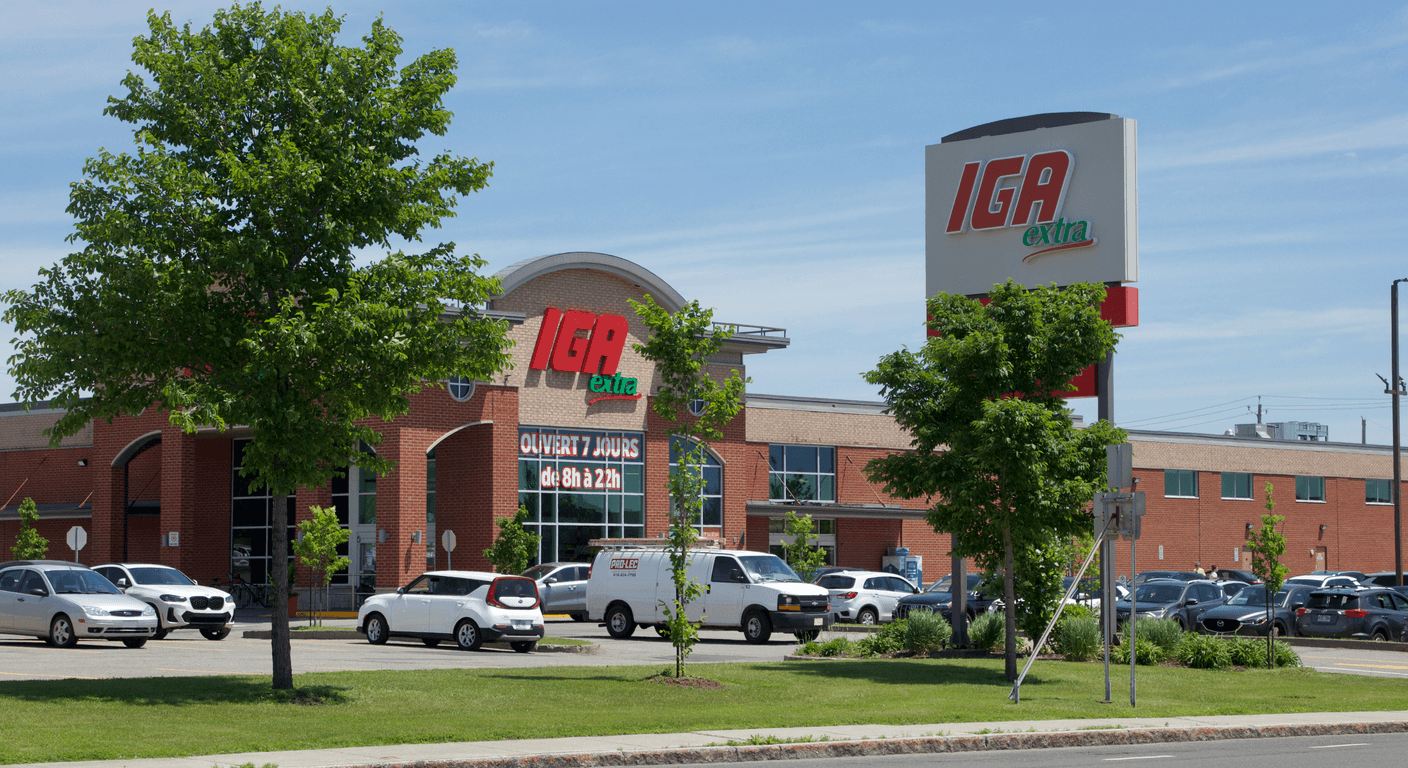
IGA is the supermarket chain many regional and rural Australians know best — sometimes the only full grocery option for hundreds of kilometres. Unlike Woolworths' Everyday Rewards or Coles' Flybuys, IGA's approach to rewards and community pricing is deliberately localised, which means the experience differs meaningfully from town to town. For over-50 travellers and grey nomads who move between regions, understanding how that model works can make a practical difference to both the weekly shop and the community they're passing through.
Why IGA Works Differently From the Big Two
Woolworths and Coles operate on a centralised model: one loyalty program, national pricing architecture, standardised promotions rolled out across thousands of stores on the same day. IGA is structurally different. Each IGA store is independently owned — the retailer buys into the IGA brand and supply network through Metcash, but retains considerable autonomy over how it runs its shop floor, what local deals it offers, and how it engages with its community.
That independence is the key to understanding everything that follows. When you walk into an IGA in Mildura, Broken Hill, or a small Victorian country town, you're dealing with a local business owner who has made their own decisions about pricing initiatives, loyalty offers and community contributions. The IGA brand provides a framework; the store owner fills it in. For over-50 shoppers accustomed to the consistency of the major chains, this can take a moment to adjust to — but it's also where the genuine local character comes from.
This decentralised model has historical roots. IGA — Independent Grocers of Australia — was built on the idea that independent retailers could compete with the majors by pooling their buying power while keeping local ownership. That founding logic still shapes how rewards and community pricing work today.
What Is 'Locals Pricing' and How Does It Actually Work?
Some IGA stores promote what they call locals pricing — a concept where regular community members receive preferential pricing on selected products. The mechanics vary. In some stores this might be a simple loyalty card or app-linked discount on nominated lines; in others it might be a weekly specials board that effectively functions as a locals-only offer because the store has calibrated it to what the surrounding community buys most. Confirm the exact mechanism with your specific store, as the term is applied differently across the network.
The practical upshot for over-50 shoppers is that it's worth introducing yourself to the store manager or customer service desk when you're in a new town — particularly on a longer grey nomad trip. A straightforward conversation about what loyalty or pricing options the store offers takes two minutes and can reveal savings that aren't prominently signposted. This is the kind of local knowledge exchange the IGA model is built for; don't assume the offer is the same as the last IGA you visited three towns back.
At the time of writing, some IGA stores also participate in digital offer platforms or have their own app-based specials — but coverage and functionality are not uniform nationally. The IGA website at iga.com.au includes a store finder and, where available, links to individual store catalogues and offers. That's the most reliable starting point for current information, since this guide cannot and does not verify what any individual store is offering at any given moment.
Community Chest and Local Giving: What It Means in Practice
One of IGA's more publicly recognised positioning points is the IGA Community Chest program. The broad concept is that a portion of sales at participating stores contributes to a community fund, which local organisations — schools, sporting clubs, community groups — can apply to access. The store's community identity is tied directly to its commercial activity, which is a meaningful distinction from a centralised corporate charity model.
For over-50 travellers who care about where their spending lands, this is worth knowing. Shopping at a regional IGA that participates in Community Chest is, by the program's design, a small act of local economic support — the kind of thing that resonates with grey nomads who are conscious of their impact on the towns they move through. That said, participation in the Community Chest program and the specific causes supported vary by store and by period. Confirm with the store or check iga.com.au for current program details rather than assuming every IGA branch participates.
It's also worth noting that 'community benefit' positioning is marketing as well as mission. IGA stores are businesses, and the Community Chest is both a genuine giving mechanism and a brand differentiator. Both things can be true simultaneously. For shoppers making decisions about where to spend, knowing the structure helps — but this guide offers general information only and is not financial or consumer advice.
How Does IGA Compare to Woolworths and Coles for Over-50 Shoppers?
The honest comparison starts with access. In many regional and remote Australian towns, IGA is simply the only option. For grey nomads travelling through outback Queensland, the Nullarbor, the Victorian high country or the far south-west of Western Australia, the relevant question isn't which chain is better — it's whether there's a supermarket at all. IGA's network reaches communities the major chains have never served, and that geographic reality outweighs any points-per-dollar calculation.
Where a choice does exist, the major chains offer advantages IGA typically can't match: the scale of Everyday Rewards and Flybuys means accumulated points can translate to meaningful fuel or grocery discounts over time, and national promotional cadence makes weekly specials predictable. IGA's individualised model means you might find exceptional value at one store and unremarkable pricing at the next. The experience is less consistent, which suits some shoppers and frustrates others.
For over-50 shoppers who are home-based in a regional area with an IGA as their primary store, the calculus is different again. Building a relationship with the local store — understanding when the catalogue changes, knowing which staff member to ask about upcoming specials — tends to extract more value from the IGA model than treating it like a transactional chain experience. That's not a limitation; it's how independent retail has always worked.
The Honest Downside Worth Knowing
The genuine downside of IGA's decentralised model is inconsistency — and for over-50 travellers on fixed incomes or tight travel budgets, inconsistency has a cost. A loyalty offer or discount you received at an IGA in one town may simply not exist at the next. There's no national points balance to accumulate across stores the way Everyday Rewards or Flybuys works. If you're travelling for several months and hoping to bank consistent grocery savings, IGA's patchwork of individual programs is a less reliable mechanism than a unified national loyalty scheme.
Pricing is also not uniformly competitive. Independent store owners carry their own overheads, and in some remote locations the cost of freight and thin margins means IGA prices are higher than metro equivalents — sometimes substantially so. This is not unique to IGA; any retailer in a remote area faces the same structural cost pressures. But it means the 'community' framing shouldn't be read as a guarantee of affordability. Check the weekly catalogue before you shop and compare where you have the option.
Senior Travel Australia takes no commissions from IGA, Metcash, or any loyalty program mentioned in this guide. The information here is general in nature and does not constitute financial or consumer advice. Always confirm current offers, pricing and program participation directly with the store or at iga.com.au before making decisions based on any specific benefit.
Practical Tips for Over-50 Shoppers Using IGA on the Road or at Home
Start with the IGA store finder at iga.com.au before you arrive in a new town. It lists stores by location and, where the individual store has set them up, links to catalogues and current offers. For grey nomads planning a route, this is a useful five-minute check that can inform where you stop and how much you budget for groceries that week.
Ask at the customer service desk — it sounds obvious, but it's the single most effective action in an independent retail environment. Ask whether the store has a loyalty card, a locals discount, or any senior-specific offer. Some stores have arrangements that aren't heavily advertised. Others won't have anything beyond the standard catalogue. Either way, you'll know in under two minutes rather than spending time assuming.
If you're home-based and your primary supermarket is an IGA, consider signing up for the store's email list or following the store's local social media page if it has one. Independent IGA stores often announce community events, one-day specials and local producer days through those channels rather than through national advertising. That local intelligence is part of what the model offers — it just requires a slightly more active approach than setting up a Flybuys card and forgetting about it.
A Note for Travellers Who Are Also Community Members
For an Indian Australian family that has built a life in Victoria — and for many multicultural communities across regional Australia — the local IGA has often been the store that stocked particular pantry staples when larger chains didn't bother. That's not a universal experience, and it varies enormously by store and region, but it reflects something real about how independent grocers respond to community need when they're paying attention.
Over-50 travellers who move through regional communities as guests — grey nomads, extended road-trippers, those doing a season somewhere new — can approach the local IGA with that context in mind. Spending there, asking what the store offers, and participating in community programs if they exist is a small but concrete way of being a good visitor to a place that relies on its local businesses.
None of that requires romanticising independent retail. It's still a commercial transaction. But understanding the model — why IGA works the way it does, what its community programs are designed to achieve, and what its genuine limitations are — puts over-50 shoppers in a better position to use it well, whether they're there for a week or have been shopping there for twenty years.
Key takeaways
- IGA stores are independently owned, so rewards, locals pricing and community programs vary significantly from store to store — always confirm with the specific location.
- In many regional and remote Australian towns, IGA is the only supermarket available, making its community programs and pricing the only game in town for grey nomads.
- The IGA Community Chest program directs a portion of sales to local community organisations, but participation and causes supported differ by store and period.
- IGA's decentralised model means there is no national points balance to accumulate across stores, which is a genuine disadvantage compared to Everyday Rewards or Flybuys for long-distance travellers.
- The most effective way to extract value from an IGA store is to ask the customer service desk directly about loyalty cards, locals pricing and current specials — not all offers are prominently signposted.
- Senior Travel Australia takes no commissions from IGA or any program mentioned here; all information is general only and not financial advice — confirm current offers at iga.com.au.
Recommended partners and links
Indicative prices only — always confirm with the operator before booking.
Frequently asked questions
Does IGA have a national loyalty program like Woolworths Everyday Rewards or Coles Flybuys?
No. IGA does not operate a single national loyalty program with a unified points balance. Because each IGA store is independently owned, any loyalty card or discount scheme is set up at the individual store level. This means points or benefits earned at one IGA store generally do not transfer to another. Check with each specific store for what it offers.
What is IGA's locals pricing and who qualifies?
Locals pricing is a concept applied by some individual IGA stores — typically a discount or preferential pricing on selected products for regular community members. The mechanics differ by store: some use a loyalty card, others use an app, and some simply adjust their weekly specials to reflect local buying patterns. There is no universal national standard. Ask at the customer service desk of your local IGA to find out what, if anything, that store offers.
How does the IGA Community Chest program work?
The IGA Community Chest program is designed so that a portion of sales at participating stores contributes to a community fund, which local organisations such as schools and sporting clubs can apply to access. Participation and the specific causes supported vary by store and by period. Confirm whether your local IGA participates by asking in store or checking iga.com.au.
Is IGA more expensive than Woolworths or Coles?
It depends on the store and location. In remote or regional areas, IGA stores can carry higher prices due to freight costs and lower sales volumes — a structural reality shared by any regional retailer, not a failing unique to IGA. In some areas, IGA's weekly catalogue specials are competitive with the major chains. Comparing the current catalogue before you shop is the most reliable approach; iga.com.au links to individual store catalogues where available.
Are there any senior-specific discounts at IGA stores?
Some individual IGA stores may offer senior-specific discounts or arrangements, but there is no national IGA senior discount program at the time of writing. Whether such an offer exists depends entirely on the individual store owner. Ask at the customer service desk of your specific store — it's the only way to know for certain, and some arrangements are not prominently advertised.