Indonesia's remote islands — Komodo, Raja Ampat, the Banda Sea and Flores — are best visited in the dry season, avoiding the swell-prone transition months of October and April. A 10 to 12-night small-ship or pinisi liveaboard itinerary allows time for both Komodo's dragons and Raja Ampat's coral reefs. Mobility is moderate, given Zodiac and wet landings, though land-based stays with day boats suit less mobile travellers. Access is via Bali, with a further domestic flight to Labuan Bajo or Sorong.
Why Indonesia's Remote Islands Suit the Over-50 Traveller
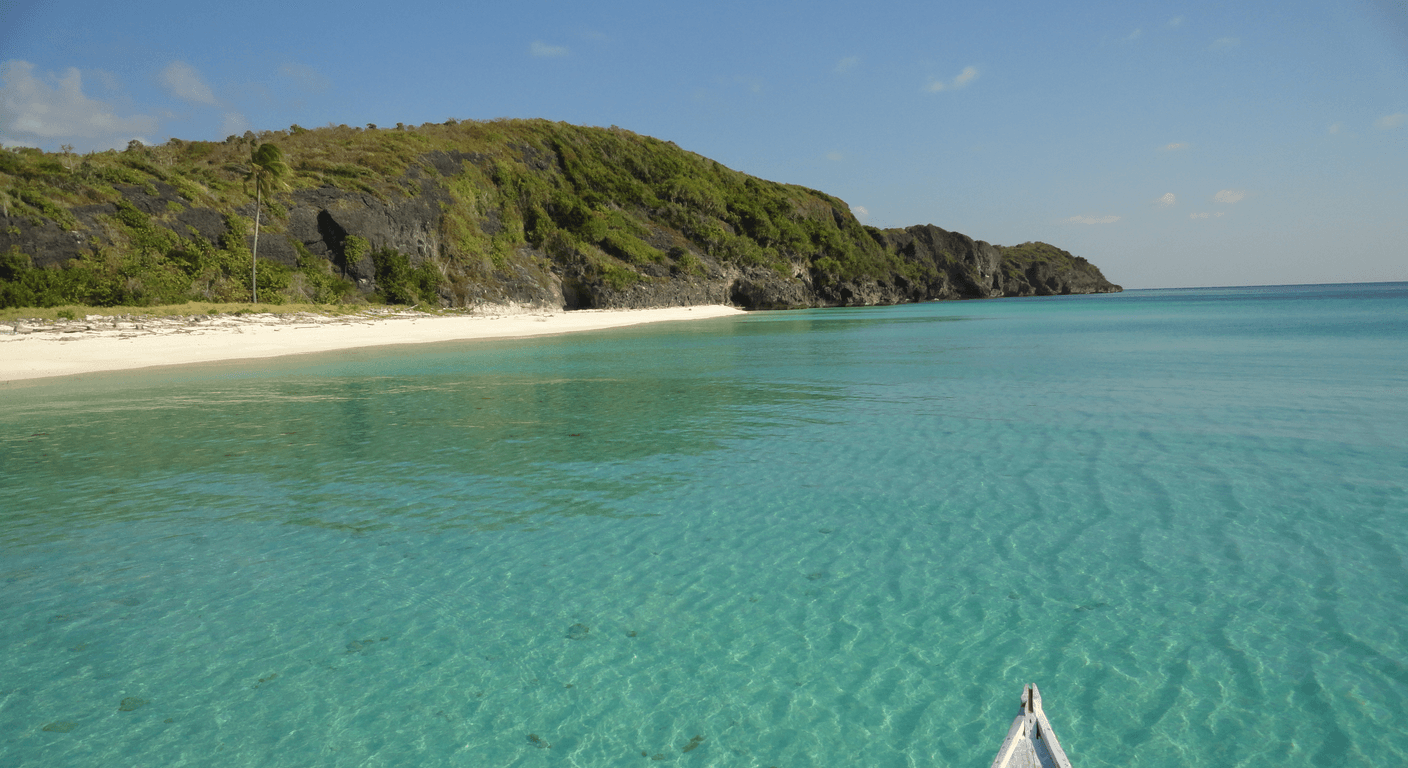
There's a particular pleasure in arriving somewhere by sea at dawn. The anchor goes down, the tender is lowered, and a village or a reef or a volcanic beach appears that most travellers will never see. Indonesia has roughly 17,000 islands. The ones that matter most to serious travellers — Komodo, Rinca, the Banda group, Misool and Waigeo in Raja Ampat, the Flores coastline — are either difficult or impossible to reach overland. That's not a flaw. It's the whole point.
For a couple in their early seventies, the appeal is concrete: small-ship travel moves at a pace that suits you, the scenery changes daily, and the social dynamic of a vessel with 12 to 36 guests tends to attract like-minded, well-travelled people. You're not on a floating resort with a waterslide. You're on a purposeful expedition with a naturalist guide, cold Bintang at sunset, and a very decent chance of seeing a Komodo dragon from three metres away.
Australia's geographic proximity is a genuine advantage here. Darwin to Kupang is under two hours. Sydney or Melbourne to Bali is around six hours, and Bali to Labuan Bajo — the main gateway to Komodo — is a further 90-minute domestic flight. It's a long day of travel, but it's not a transpacific marathon. That said, factor in a recovery night at each end, particularly if you're connecting through multiple airports.
What Are the Realistic Options — and Which Suits You?
Three distinct models cover most over-50 travellers. The first is a small-ship expedition cruise: think Coral Expeditions' 72-passenger Coral Adventurer or the 36-passenger True North, both purpose-built for shallow-water island hopping in the Indo-Pacific. These vessels carry Zodiacs or tenders, have trained expedition leaders and naturalists, maintain a proper medical kit, and offer cabin accommodation that wouldn't embarrass a three-star hotel. Prices are indicatively around AUD $600–$950 per person per night all-inclusive, which sounds steep until you factor in that almost everything — meals, guided excursions, snorkelling gear, National Park fees — is included.
The second model is the Indonesian pinisi liveaboard. A pinisi is a traditional two-masted wooden schooner, now typically diesel-powered, crewed by a local captain, cook and deck hands, and operating under charter. Quality spans a wide range. At the better end — operators like Indo Yachts or Seven Seas — you get air-conditioned en-suite cabins, an excellent cook producing fresh seafood, and a crew that knows the local waters intimately. At the lower end, you might share a bathroom and sleep under a fan. Ask very specific questions before committing. Chartering a well-appointed pinisi for a group of eight to ten guests works out to roughly AUD $1,500–$2,500 per person per week, which is genuine value for a private itinerary.
The third option is land-based island stays with day-boat excursions: a resort on Labuan Bajo or Flores as your base, with guided boat trips out to the Komodo National Park islands, Pink Beach, or Manta Point. This suits travellers who want their own bathroom, a proper bed every night, and the option to skip a day on the water when the swell picks up. It's the least immersive option, but it's also the most manageable for anyone with seasickness concerns, limited mobility, or a preference for sleeping on solid ground.
The Islands Themselves — Komodo, Raja Ampat, Banda, Flores
Komodo National Park is the logical starting point for most Australians, given Labuan Bajo's direct flight connections from Bali. The dragons are real, unhurried, and genuinely prehistoric in bearing — a guided walk on Rinca or Komodo island with a park ranger covers the essentials in two to three hours. The underwater world here is arguably more extraordinary than the dragons: the convergence of Indian Ocean and Pacific currents produces some of the densest marine life in the world, including manta rays at Manta Point year-round and schooling hammerheads for the more adventurous snorkeller.
Raja Ampat, accessed via Sorong in West Papua, is a longer haul but rewards the effort with a scale of coral reef biodiversity that's difficult to overstate without resorting to the sort of language this guide tries to avoid. The bird of paradise — seen on morning walks through the jungle with a local guide — is one of those wildlife encounters that stays with you. Sorong is a roughly 4.5-hour flight from Bali. Some small-ship itineraries loop between Komodo and Raja Ampat over 10–12 nights, which is an efficient way to see both regions.
The Banda Sea is less visited, which is precisely its appeal. The Banda Islands were the world's only source of nutmeg for centuries, and the Dutch colonial forts, the nutmeg plantations, the old merchant houses — all of it sits in a state of quiet, unrestored dignity. Banda Neira's volcano, Gunung Api, erupted as recently as 1988. The diving in the Banda Sea is serious — walls that drop hundreds of metres, open-ocean pelagics — but the snorkelling off the shallower reefs is accessible and spectacular. Getting there typically means a Coral Expeditions or True North itinerary, or a pinisi charter out of Ambon.
Pacing, Sea Days and Shore Days — Getting the Balance Right
One of the most common mistakes on liveaboard or small-ship itineraries is over-programming. Two or three port stops per week is a realistic pace for travellers who want to actually experience each place rather than tick it. A good itinerary builds in at least one full sea day mid-trip — not dead time, but a chance to rest, watch the ocean, talk to the naturalist, and let the previous days settle. Operators who promise six landings in four days are selling excitement on a brochure; what you'll actually feel is exhaustion.
Tender landings — being transferred from the ship to shore in a small inflatable boat — are a physical reality of this kind of travel. Getting in and out of a Zodiac requires a reasonable degree of balance and the ability to step down from a platform with some confidence. Wet landings, where you wade the last few metres to shore, are common. Good operators brief you thoroughly, crew members assist, and most people manage without difficulty. But if you have a knee replacement, a hip concern, or significant balance issues, ask the operator directly: some vessels have purpose-built landing platforms, others require a more athletic step.
Heat and humidity are the other honest reality. The Indonesian archipelago sits on the equator. Even in the dry season, midday temperatures in Labuan Bajo or the Banda Islands will sit around 30–33 degrees Celsius with high humidity. Morning excursions — leaving the vessel by 7am — are standard practice on well-run itineraries for exactly this reason. Afternoons are for shade, a book, and the gentle pleasure of watching the coastline from the deck with something cold in hand.
Accessibility, Medical Support and Seasickness — the Honest Assessment
Small-ship expedition vessels operated by Australian companies like Coral Expeditions carry onboard medical kits and typically have a crew member with first-aid or paramedic certification. True North carries a doctor on some departures — confirm this when booking. What none of them can provide is a hospital. The nearest serious medical facility to Raja Ampat is in Sorong; from the Banda Sea, it's Ambon. Medical evacuation by helicopter or fast boat from a remote anchorage is possible but expensive and logistically complex. This is not a reason not to go. It is a reason to purchase comprehensive travel insurance that explicitly covers maritime activities, remote location evacuation, and any pre-existing conditions you hold.
Seasickness is real in the Banda Sea and the passages between the Komodo islands, particularly in the transition months of October and April when swells can be irregular. The Flores Sea and sheltered Raja Ampat channels are generally calmer. Scopolamine patches (available in Australia on prescription), ginger tablets, and acupressure bands all have their advocates. The most effective strategy is a lower bunk amidships, avoiding screens below deck, and staying on deck in fresh air as much as possible during rougher passages. Ask your GP before departure.
Cabin accessibility on pinisi liveaboards varies enormously. Many traditional vessels have steep companionway stairs — essentially ladders — between decks. If navigating steep stairs is a concern, specify this when enquiring with operators and ask for photos or a video walkthrough of the vessel. Expedition cruise ships like Coral Adventurer have proper staircases and some accessible cabin configurations; contact the operator directly to discuss your requirements. Connectivity in remote Indonesian waters is patchy at best. Expect limited or no mobile signal for days at a time, and treat satellite Wi-Fi, where available, as a bonus rather than a given.
Getting There — Flights, Entry Points and the Journey In
The two main entry points for Indonesian island cruising are Labuan Bajo (for Komodo and Flores itineraries) and Sorong (for Raja Ampat). From Melbourne or Sydney, the most straightforward routing to Labuan Bajo is via Bali with Garuda Indonesia or Batik Air, with a domestic connection to Labuan Bajo. Total travel time from Melbourne is roughly 12–15 hours including the connection. Sorong is a further step: Bali to Makassar or Manado, then Sorong — allow a full travel day each way, and seriously consider an overnight stop in Bali or Makassar rather than connecting straight through.
Flights from Melbourne to Bali are served by Garuda Indonesia, Jetstar and Virgin Australia; confirm current schedules and fares at the airlines' own websites. Domestic Indonesian flights are operated primarily by Garuda, Batik Air and Lion Air — book through the airline directly or via a reputable travel agent who knows Indonesia, as schedules and routing change seasonally. Indicative return airfares from Melbourne to Labuan Bajo (via Bali) sit roughly in the AUD $800–$1,400 range in economy, though this varies considerably by season and booking lead time — treat this as a planning estimate only.
Australian passport holders currently enjoy visa-free entry to Indonesia for stays up to 30 days under the Bebas Visa arrangement, but visa rules do change — confirm the current requirements at the official Indonesian embassy website or via the Australian Department of Foreign Affairs and Trade (smartraveller.gov.au) before booking. DFAT's Smartraveller also carries current travel advisories for Indonesia, which are worth reading before any remote island itinerary.
Questions to Ask Your Operator Before You Book
The quality gap between operators in Indonesian small-ship travel is wide enough to define whether you have the journey of a decade or a genuinely difficult fortnight. Before committing to any vessel or itinerary, ask these questions directly — and take note of how readily and specifically the operator answers them. Vague or defensive responses are useful information in themselves.
Ask about the crew-to-guest ratio (a ratio of 1:1 or better is a mark of a well-run vessel), the medical kit and evacuation plan (what is the protocol if a guest requires urgent hospitalisation, and who bears the coordination cost), and the cancellation and weather-delay policy (Indonesian weather can force itinerary changes; what are your rights if the vessel can't reach a planned destination). Ask whether there is a minimum fitness requirement or age restriction, and whether the operator has hosted guests with your specific mobility considerations before. Ask for the actual cabin dimensions and stair configuration — not the marketing photograph.
For pinisi charters specifically, ask who owns the vessel versus who is operating the charter, whether the cook can accommodate dietary requirements (common for older travellers managing health conditions), and what the plan is if the vessel develops a mechanical fault at sea. Reputable charter operators answer all of this without hesitation. The YouTube channel Sailing La Vagabonde (youtube.com/watch?v=y9U72yYrTQo) offers a candid, experienced sailor's perspective on Indonesian waters that's worth watching before you book — not as a substitute for operator research, but as useful context for what remote Indonesian island sailing actually looks and feels like day to day.
Quick planning guide
| Ideal pace | Slow-paced — two to three port stops per week with a sea day built in |
|---|---|
| Best months | Dry season preferred; avoid the swell-prone October and April transition months |
| Suggested stay | 10-12 nights for a combined Komodo–Raja Ampat itinerary, or shorter for a single region |
| Mobility level | Moderate — Zodiac and wet landings, plus steep companionway stairs on some pinisi vessels |
| Cost level | Premium — roughly AUD $600-950 per person per night on small-ship cruises, or $1,500-2,500 per person per week on a chartered pinisi |
| Comfort level | Ranges from three-star-equivalent cabins on expedition ships to basic shared facilities on lower-end pinisis; land-based stays offer the most reliable comfort |
| Best for | Over-50 travellers wanting wildlife, reef and cultural encounters without needing any sailing experience |
| Main planning consideration | Matching the vessel and operator to your mobility, budget and honest appetite for adventure, including medical evacuation cover |
Key takeaways
- Over-50 Australians can explore Indonesia's remote islands without sailing experience, using small-ship expedition cruises, crewed pinisi liveaboards, or land-based island stays with day boats.
- Two to three port stops per week is a realistic and comfortable pace; itineraries promising daily landings often deliver exhaustion rather than experience.
- Travel insurance must explicitly cover maritime activities, remote location medical evacuation, and pre-existing conditions — this is non-negotiable for Indonesian island travel.
- The quality gap between pinisi liveaboard operators is significant; always ask directly about the medical evacuation plan, crew-to-guest ratio, and cabin stair configuration before booking.
- Labuan Bajo (Komodo) and Sorong (Raja Ampat) are the two main entry points, each reachable from Australian cities via Bali with one domestic connection.
- April to October is the dry season across most of the Indonesian archipelago and offers the calmest seas and best visibility for snorkelling and wildlife encounters.
Recommended partners and links
Indicative prices only — always confirm with the operator before booking.
Frequently asked questions
Do I need sailing experience to join an Indonesian small-ship cruise or liveaboard?
No sailing experience is required. Small-ship expedition cruises (such as those run by Coral Expeditions or True North) and fully crewed pinisi liveaboards have professional captains, crew and naturalist guides who handle all navigation and operations. Guests are passengers, not crew.
How fit do I need to be for an Indonesian island cruise?
A moderate level of fitness is realistic for most itineraries. Tender (Zodiac) landings require balance and the ability to step into and out of a small inflatable boat, sometimes onto wet or uneven surfaces. Steep companionway stairs are common on pinisi liveaboards. If you have knee, hip or balance concerns, ask your operator directly about vessel configuration and landing procedures before booking.
What is the best time of year for Australian travellers to cruise Indonesia's remote islands?
April to October is the dry season across Komodo, Flores, Raja Ampat and the Banda Sea, offering calmer seas, lower humidity and better underwater visibility. The wet season (November to March) brings higher swells and more frequent rain, particularly in the Banda Sea. Most Australian small-ship operators schedule their Indonesian departures within the April–October window.
How much does an Indonesian small-ship cruise cost from Australia, roughly?
As an indicative planning figure only (confirm with operators): small-ship expedition cruises run roughly AUD $600–$950 per person per night all-inclusive. A well-appointed pinisi liveaboard charter costs roughly AUD $1,500–$2,500 per person per week depending on the vessel and group size. Return flights from Melbourne or Sydney to Labuan Bajo via Bali add roughly AUD $800–$1,400 per person in economy. These are estimates — prices change and vary significantly by season.
What travel insurance do I need for a remote Indonesian island cruise?
You need a policy that explicitly covers maritime activities (snorkelling, tender transfers), medical evacuation from a remote location, and any pre-existing medical conditions you hold. Standard travel insurance policies often exclude or limit remote evacuation cover. Disclose all pre-existing conditions honestly when purchasing your policy, and check the policy wording carefully before departure. Compare policies via a licensed Australian insurance broker or comparison service.
- Coral Expeditions — Indonesia Cruises
- True North Adventure Cruises
- Tourism Indonesia — Official Tourism Website
- Smartraveller — Indonesia Travel Advisory (Australian Government DFAT)
- Komodo National Park — UNESCO World Heritage
- Indo Yachts — Indonesian Pinisi Charter
- Sailing La Vagabonde — Indonesia Sailing (YouTube)