Karijini National Park lies in WA's Pilbara, roughly 1,400 kilometres north of Perth, and is best visited April to September, avoiding the Wet season's flash-flood risk. A five-day stay suits a slow exploration of its 2.5-billion-year-old gorge system, whose defining highlight is the Oxer Lookout view over converging gorges. Mobility is rated Active — gorge floors require ladders and scrambles, though rim lookouts and Fortescue Falls are more manageable. Access means flying via Perth to Paraburdoo or Newman, then hiring a car, as there's no direct route.
Why Karijini Deserves the Journey
There's a particular kind of silence in Karijini that takes a day or two to properly hear. No traffic. No crowds — at least not by the standards of better-known parks. Just wind across spinifex, the occasional wedge-tail riding a thermal, and then, without much warning, the earth opens up beneath your feet. The gorges don't announce themselves from a distance. You walk across flat, rust-red country and suddenly there they are: sheer walls dropping into shadow, the sound of water somewhere far below.
The geology is not incidental here — it's the point. The banded ironstone formation that created these gorges is 2.5 billion years old, predating complex life on Earth. The horizontal red and grey striations in the rock face tell that story plainly. Travelling at 69, with decades of curiosity behind you, that kind of scale puts things in a useful perspective. Karijini doesn't care about your schedule. It rewards people who slow down and look properly.
For a solo traveller from Victoria, the distance can feel daunting. It is genuinely remote. But that remoteness is precisely why the experience stays with you. You're unlikely to find this kind of solitude — real solitude, not the curated variety — anywhere closer to home.
How to Get There from Victoria (and the Rest of the East Coast)
There's no direct flight from Melbourne to Karijini. The standard route is Melbourne to Perth, then a connecting flight on Qantas or a regional carrier to either Paraburdoo (the closer option, roughly 35 kilometres from the park's southern entrance) or Newman (about 115 kilometres south-east). Flights from Perth to Paraburdoo take around two hours; fares are indicative only, so check current prices and availability before committing. From Sydney, add a Perth stop. The total travel day is long — build in a night's rest in Perth or Newman before you drive into the park.
Once there, a hire car is close to essential unless you're on a guided tour. The roads within the park are a mix of sealed and unsealed; a 2WD is adequate in dry season, but confirm road conditions with DBCA or the park station before you head out. Driving on unsealed corrugated roads for the first time is an experience in itself — reduce tyre pressure slightly if you're comfortable doing so, and slow down. There's no hurry, and there's no phone signal for much of the park.
The alternative — and a genuinely good one for solo travellers who'd rather not navigate remote roads alone — is a guided multi-day tour departing from Perth or Tom Price. Operators manage the logistics, carry the gear, and often have Banjima cultural knowledge woven into the itinerary. For anyone uncertain about driving remotely solo, a tour removes real risk and adds real context.
The Honest Accessibility Picture: Gorge Floors vs Rim Lookouts
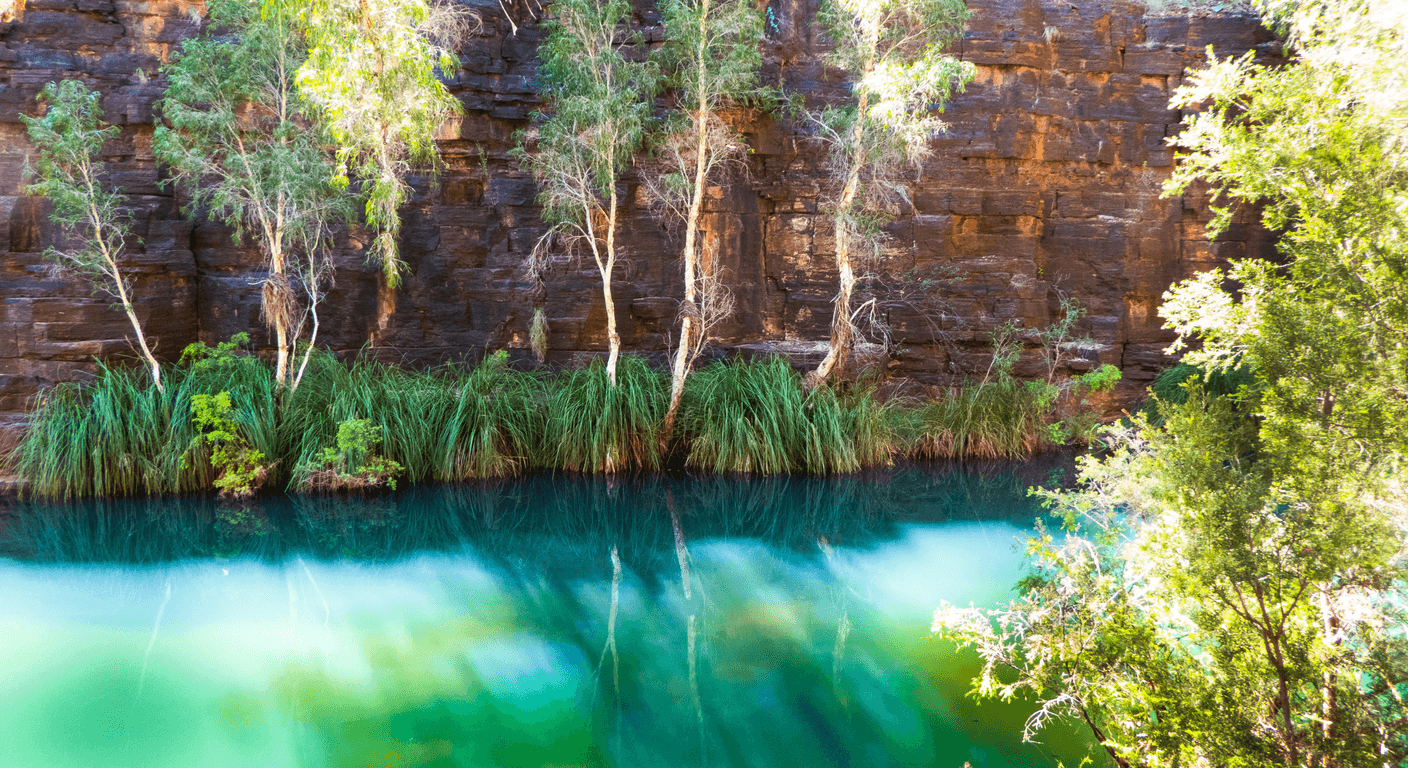
Here's what the Instagram photos don't show: getting to those turquoise pools at the bottom of Weano, Hancock or Knox gorges involves fixed steel ladders bolted into vertical rock faces, narrow ledges, and sections where you're effectively climbing down using hands and feet. It's spectacular. It's also genuinely demanding, and a slip on wet rock in a remote gorge is a serious matter. Anyone with knee problems, balance concerns, or a healthy respect for their own limits should be honest with themselves before attempting the gorge floors.
The rim lookouts are a different story entirely, and they're not a consolation prize. The view from the Oxer Lookout — where Weano, Hancock, Joffre and Red gorges converge — is one of the most extraordinary natural views in Australia. You stand at the rim and look down into a labyrinth of red rock. No climbing required. The path to the Oxer Lookout is short and relatively flat from the car park. Joffre Falls lookout is similarly accessible. These are not lesser experiences.
Fortescue Falls is the most manageable descent in the park for over-50s with reasonable fitness. A stepped, graded path leads down to the falls and a swimming hole in Dales Gorge — it's steep in places, and you'll feel it in your knees on the way back up, but it's achievable without technical scrambling. Circular Pool, a short walk along the gorge floor from the base of Fortescue Falls, is worth the extra effort if your legs are willing. Take trekking poles. Wear proper trail shoes, not sandals.
Where to Stay: Comfort in a Remote Place
Karijini Eco Retreat is the standout accommodation option and books out months ahead during peak season. It sits within the park, which means you're already there when the light turns golden at dusk — no long drive back to town. The eco tents are canvas structures on raised platforms with proper beds, linen, and enough comfort to make a week feel sustainable rather than endurance-focused. There's a licensed bar and restaurant on site, which matters more than you might expect after a day of walking in red-dirt country. Indicative prices are around $250–$400 per night; confirm current rates directly.
The national park campgrounds — Dales Campground in particular — are a solid option for self-sufficient travellers with their own camping gear or a campervan. Facilities are basic but functional: pit toilets, cold showers, fire rings. Book through the DBCA parks booking system well in advance. Tom Price, the nearest town of any size (about 80 kilometres from the park), has motel accommodation if you'd prefer a proper bed and a hot shower at the end of each day, though the daily drive adds up.
A word on self-catering: the nearest supermarket is in Tom Price, and it's a regional supermarket, not a Melbourne providore. Stock up before you arrive, and bring more water than you think you need. The park has no shops.
What to Actually Do: A Practical Day-by-Day Approach
Resist the urge to see everything at once. Karijini rewards a slow approach — one gorge area per day, with time to sit at a lookout and watch the light shift across the rock. A sensible five-day itinerary might look like this: arrival and recovery day in Tom Price or at the retreat; Dales Gorge and Fortescue Falls on day two; the Oxer Lookout and Weano Gorge rim on day three; Joffre Falls and Knox Gorge lookout on day four; and a half-day exploring Hamersley Gorge before departure on day five. That's a full visit without pushing beyond comfortable limits.
Hamersley Gorge, in the park's north-west, is often overlooked and is one of the more accessible gorge experiences — the walk to the spa pool involves some rock-hopping but no ladders, and the folded, contorted rock formations here are geologically dramatic in a different way to the main gorge cluster. It's worth the extra drive.
If you're travelling in June or July, pack layers for the evenings — temperatures can drop to single figures overnight in the Pilbara winter, which surprises most east-coast visitors. Days are typically clear and warm, around 20–25°C, ideal for walking. The park is closed to most visitors during the Wet season (October to March) when flash flooding in the gorges is a genuine danger, and some areas close without warning even in shoulder months.
Banjima Country: Cultural Context Worth Seeking
Karijini sits on Banjima country, and the traditional custodians have a relationship with this landscape that stretches back tens of thousands of years. The name Karijini itself comes from the Banjima language. Taking time to understand that context — rather than simply photographing the gorges and moving on — makes for a more considered visit.
The Karijini Eco Retreat has developed guided experiences led by Banjima rangers and community members, offering insight into country, story and connection to place that no geology textbook provides. These experiences are worth booking in advance and are among the better reasons to choose the retreat over camping independently. Check current offerings directly with the retreat, as programs evolve.
There's a useful honesty here for any traveller: Karijini is not just a landscape. It's a living cultural place. Arriving with that awareness, rather than acquiring it as an afterthought, changes what you notice and what you take home.
Practical Matters: Health, Safety and Solo Travel Considerations
Travel insurance with comprehensive medical evacuation cover is non-negotiable for a remote destination like this. Check that your policy covers pre-existing conditions and — if you're planning any gorge-floor walks — that adventure activities aren't excluded. The nearest hospital of any scale is in Karratha, roughly 280 kilometres north-west. Emergency services in the Pilbara are excellent but not close. That's not a reason to avoid Karijini; it's a reason to be prepared.
Solo travel in a remote national park requires some additional common sense. Tell someone your itinerary before you head into the park each day. Carry more water than you think you need — the standard advice is at least three litres per person for a day walk, more in warm weather. The DBCA recommends starting walks early, before 9am, and turning back well before midday if temperatures rise unexpectedly. Mobile phone coverage is largely absent; an emergency personal locator beacon (PLB) is worth hiring or borrowing if you're going off on your own.
Fly FIFO workers and mining traffic share the roads in this region, and road trains are a fact of life on the outback highways. Give them enormous space. Fuel up whenever you have the opportunity — don't assume the next town is close, because in the Pilbara, it usually isn't.
Quick planning guide
| Ideal pace | Slow-paced — one gorge area per day |
|---|---|
| Best months | April to September (dry season) |
| Suggested stay | Around five days |
| Mobility level | Active for gorge floors; Easy for rim lookouts and Fortescue Falls with care |
| Cost level | Premium (Eco Retreat around $250–$400/night; camping is budget-friendly) |
| Comfort level | Comfortable at Karijini Eco Retreat; basic at national park campgrounds |
| Best for | Older travellers seeking solitude, dramatic geology and cultural context, prepared for remote conditions |
| Main planning consideration | Remoteness — flights via Perth to Paraburdoo or Newman, a hire car is essential, and phone coverage is largely absent |
Key takeaways
- Visit Karijini only between April and September — the Wet season (October to March) brings dangerous flash flooding and extreme heat.
- Most gorge floors require steep scrambles and fixed ladders; rim lookouts, including the Oxer Lookout, are spectacular and far more accessible for over-50s.
- Fortescue Falls in Dales Gorge is the most manageable gorge descent — stepped path, no ladders, but still steep enough to warrant trekking poles.
- Fly to Paraburdoo (35km from the park) or Newman (115km) via Perth; a hire car is essential unless you join a guided tour.
- Karijini Eco Retreat books out months ahead in peak season — secure accommodation well before your travel dates.
- Comprehensive travel insurance with medical evacuation cover is essential; phone coverage is largely absent, so consider hiring a personal locator beacon.
Recommended partners and links
Indicative prices only — always confirm with the operator before booking.
Frequently asked questions
Is Karijini National Park suitable for over-50s with limited mobility?
The rim lookouts — including the Oxer Lookout and Joffre Falls lookout — are accessible to most over-50s with standard walking fitness and involve short, relatively flat paths from car parks. Gorge-floor walks are a different matter: they require steep descents, fixed ladders on vertical rock faces, and confident footing on wet surfaces. Fortescue Falls in Dales Gorge is the most manageable gorge descent, with a stepped graded path, but it's still steep. Anyone with significant knee problems or balance concerns should plan to enjoy the park primarily from the rim.
When is the best time to visit Karijini National Park?
April to September is the only sensible window for visiting Karijini. May to August offers the best conditions: clear days, temperatures around 20–25°C, and cold but manageable nights. October to March brings extreme heat (often above 40°C), high humidity, and flash flooding that can make gorge areas genuinely dangerous. Some sections of the park close without warning during and after rain events.
How do you get to Karijini from Melbourne or Sydney?
There are no direct flights from Melbourne or Sydney to Karijini. The standard route is to fly to Perth, then take a connecting flight to Paraburdoo (the closest airport, about 35 kilometres from the southern park entrance) or Newman (about 115 kilometres south-east). From Perth, regional flights to Paraburdoo take roughly two hours. Allow a full day for travel and plan a rest night before driving into the park. A hire car is essential; alternatively, join a guided tour that handles logistics from Perth or Tom Price.
Do you need to pay to enter Karijini National Park?
Yes, park entry fees apply at Karijini National Park. Fees are set by the Western Australian Department of Biodiversity, Conservation and Attractions (DBCA) and are subject to change. Confirm current rates at parks.dpaw.wa.gov.au before you travel. Campground bookings are separate and also made through the DBCA parks booking system.
Is it safe to visit Karijini as a solo traveller?
Karijini is safe for solo travellers who take sensible precautions. Tell someone your daily itinerary, carry at least three litres of water per person, start walks before 9am, and turn back if conditions change. Mobile phone coverage is largely absent throughout the park, so hiring or borrowing a personal locator beacon (PLB) is strongly recommended for anyone travelling alone. Comprehensive travel insurance with medical evacuation cover is essential — the nearest major hospital is in Karratha, roughly 280 kilometres away.