Morocco suits Australians over 50 best between March–May or September–November, when medina and desert temperatures are manageable. A two-week small-group tour is ideal, taking in Marrakech and Fes medinas, Atlas Mountain crossings and a Sahara desert camp at Merzouga — the trip's defining highlight. Mobility is moderate: expect uneven medina lanes, riads with steep stairs and no lifts, and long road transfers of seven to nine hours, best managed with a local guide.
Why Morocco works so well for over-50 Australians on a small group
Morocco sits at one of those rare intersections where history, landscape and daily life are all visible at once. You can walk through a medieval tannery district in Fes that has operated the same way for nearly a thousand years, sleep in a riad courtyard built around a fountain, and watch the Sahara dunes change colour at dusk from a camp at Merzouga — all within a single two-week itinerary. For Australians who have already done Europe and Southeast Asia, it offers genuine difference without requiring extreme physical effort, provided you plan thoughtfully.
The small-group format — typically eight to sixteen travellers — is not just a comfort preference for this age group, it is a practical necessity in Morocco. The medinas of Marrakech and Fes are classified UNESCO World Heritage sites, but they are also working cities with no street signs in many sections, motorbikes sharing pedestrian lanes, and vendors who read unaccompanied tourists as negotiating targets. A local guide who knows the quarter, speaks Darija and understands what you actually want to see converts what could be an exhausting scramble into a coherent, unhurried story.
For solo female travellers in particular, the small-group structure provides a ready social context and a buffer against the persistent attention that women travelling alone can encounter in the souks. That attention is rarely threatening — Morocco is generally considered safe for tourists — but it is relentless, and having a guide who handles it on your behalf is worth the tour premium on its own. The group dynamic also means that logistics like desert road transfers, overnight camel treks and long mountain drives are organised around the collective, not left to individual problem-solving.
What are the medinas of Marrakech and Fes actually like?
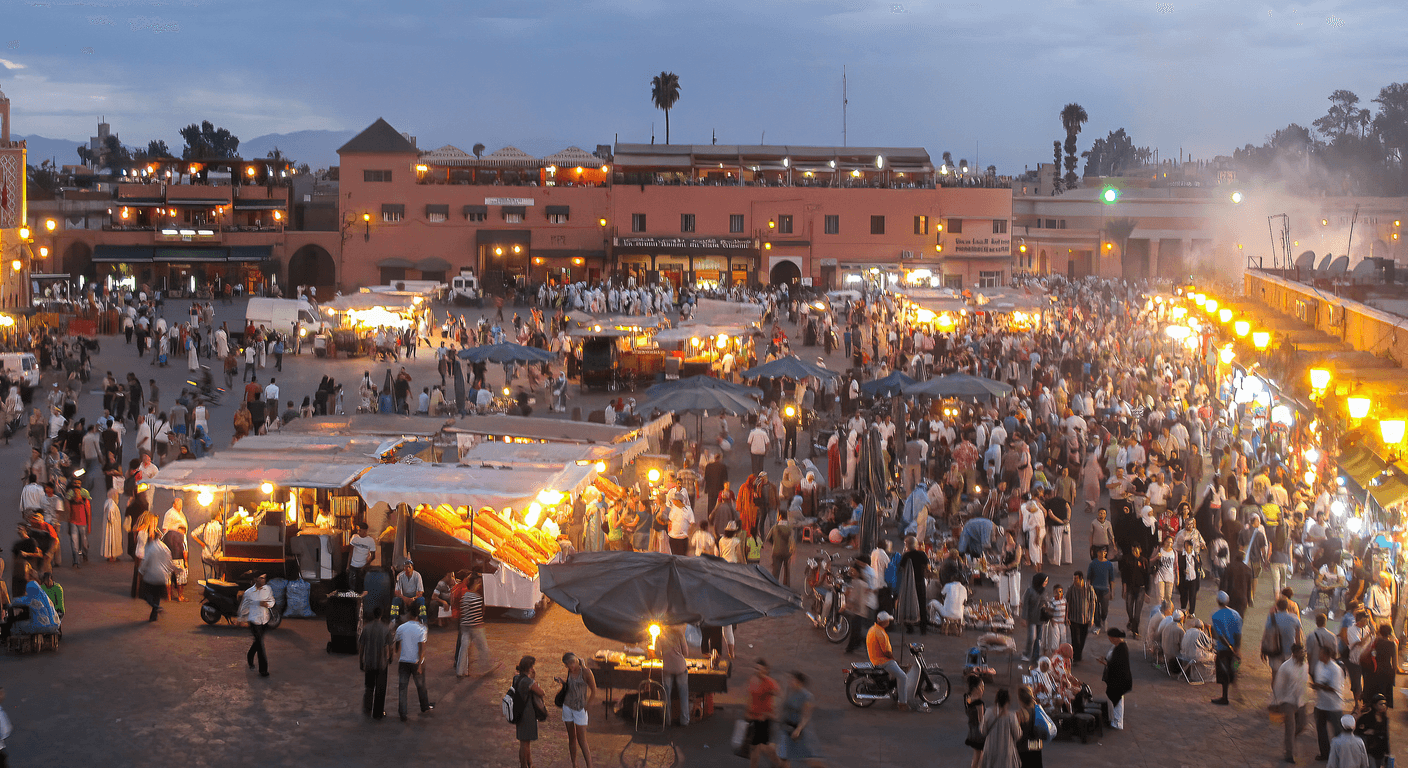
Both cities have a medina — a historic walled city — that forms the centrepiece of any Morocco itinerary, and both will surprise you on arrival. Marrakech's medina centres on the Djemaa el-Fna square, which by late afternoon becomes one of the most energetically chaotic public spaces you will encounter anywhere. Food stalls, musicians, storytellers, henna artists and snake charmers all operate simultaneously. It is genuinely fascinating and also genuinely overwhelming if you are managing it alone, jet-lagged, and unsure of the geography.
Fes el-Bali, the older of the two great medinas, is the more architecturally layered. The famous Chouara tannery, the Al-Attarine madrasa, and the Bou Inania madrasa are all concentrated in an area where the lanes can narrow to the width of two people walking side by side. Surface conditions vary: expect uneven cobblestones, occasional stepped thresholds, and stretches of lane that are damp from washing or market runoff. Flat, supportive walking shoes with grip are not optional. Comfortable sandals that look the part but offer no support will leave you sore by midday.
A good guide does several things at once in the medinas: they set a pace that suits the group, they translate the context of what you are seeing, they handle the transition between public and private spaces (some of the best architectural interiors require knowing which door to knock on), and they manage the moment when a shop owner pulls you inside with a glass of mint tea. That last dynamic — the tea-and-carpet sequence — is not hostile, but it has a momentum that can be hard to exit gracefully without experience. Your guide knows how.
The Atlas Mountains and desert drives: what does a long day on the road actually mean?
Most classic Morocco itineraries cross the High Atlas Mountains via the Tizi n'Tichka pass — a mountain road that reaches around 2,260 metres and delivers genuinely dramatic scenery, including the frequently photographed Kasbah Aït Benhaddou (a UNESCO World Heritage site used as a film location for productions including Gladiator and Lawrence of Arabia). The drive from Marrakech to the Draa Valley and onward toward Merzouga in the Sahara can involve seven to nine hours of road time across multiple days. That is not unusual for Morocco — the country is larger than many visitors expect — but it is something to assess honestly against your own tolerance for long vehicle days.
Tour operators use a range of vehicles, from air-conditioned minibuses to 4WD transfers for the final desert approach. Seating comfort varies by operator and vehicle age, so it is worth asking specifically about seat spacing and how many consecutive road hours are involved on any given day. If you have lower back concerns or find long sitting periods uncomfortable, look for itineraries that break the Atlas crossing with a night in the mountains, or ask operators whether slower-paced departures exist.
The roads themselves are sealed and generally in reasonable condition on the main tourist routes, though the Tizi n'Tichka pass involves many switchbacks and can be affected by winter snow or summer rockfalls. Reputable tour operators monitor road conditions and have contingency routes. Motion sickness on mountain roads is worth planning for if it is a known issue for you — carry your usual remedy and mention it to your guide at the start of the trip.
Riad accommodation: beautiful, honest about the stairs
A riad — a traditional Moroccan townhouse built around a central courtyard — is the accommodation choice most tour operators use, and rightly so. Staying in a riad rather than a chain hotel places you inside the medina's daily rhythm: the call to prayer from a nearby mosque at dawn, the sound of the city waking up, breakfast served on a rooftop terrace. For travellers who want genuine cultural immersion rather than a sanitised resort experience, riads deliver it.
What riads almost never have is a lift. The architectural form is vertical — rooms are arranged across two or three floors connected by staircases that are frequently steep, sometimes spiral, and occasionally quite narrow. Riads were not built with accessibility in mind, and even sympathetically renovated ones rarely achieve step-free access to upper rooms. If you have significant mobility limitations, knee replacements that restrict stair climbing, or use a walking aid, you need to discuss room allocation directly with your tour operator before booking. Some riads can offer ground-floor or lower-floor rooms on request; many cannot guarantee it.
Bathroom configurations in riads also vary more than in international hotel chains. Wet-room style showers (no separate shower tray, just a drain in the floor), low-set baths, and minimal grab-rail installation are common. None of this is insurmountable, but knowing in advance allows you to pack accordingly — a small portable grab rail, for example, is a worthwhile addition to any older traveller's kit when staying in heritage accommodation anywhere in the world.
Heat, timing and the best months to travel
Morocco's climate varies significantly by region and season. Marrakech in July or August sits regularly above 38–40 degrees Celsius, and the medina's narrow lanes, while shaded, offer limited airflow. The Sahara in summer is a different category again — daytime temperatures in Merzouga can reach 45 degrees or above, and the combination of heat and long road days in that season is not comfortable for most older travellers. The shoulder seasons are considerably kinder.
March to May and September to November are generally considered the most comfortable periods for a Morocco tour. Spring brings wildflowers to the Atlas foothills, manageable temperatures in the medinas, and pleasant evenings in the desert. Autumn offers similar conditions with the added benefit of post-summer thinning of tourist numbers. The Sahara at night in October is cold — genuinely cold, sometimes approaching zero — so packing a warm layer for the desert camp is as important as your sun protection for the day.
December to February is cooler and can be outright cold in the mountains and at altitude. Snow on the Tizi n'Tichka pass is possible in winter months, and some riad rooms without central heating can be chilly at night. That said, winter travel in the medinas is uncrowded and the light is soft and photogenic — for travellers who run hot or find summer heat limiting, a winter departure is worth considering with appropriate clothing.
Stomach health and food: how to travel sensibly
Moroccan food is genuinely good — tagines, couscous, bastilla, preserved lemon and harissa, fresh-baked bread, and the mint tea that appears at every social occasion. Eating well is part of the pleasure of the trip, and over-caution that keeps you out of local restaurants entirely misses a significant dimension of the culture. That said, stomach adjustment is a real consideration, and travellers over 60 often find that their digestive systems take longer to adapt to a new food environment than they did at 35.
The practical guidance is straightforward: drink bottled or filtered water consistently (ice in tourist restaurants is generally made from filtered water, but it is reasonable to ask), be selective about street food in the first few days rather than diving in immediately, peel fruit yourself when possible, and eat at restaurants your guide recommends rather than choosing randomly. Most small-group itineraries include meals at vetted establishments, which removes much of the guesswork. Carry your regular stomach remedies — oral rehydration sachets, something for loose bowel — and know that pharmacies in Moroccan cities are well stocked and pharmacists generally speak some French.
If you have specific dietary requirements — coeliac disease, severe allergies, vegetarian or vegan — discuss these with your operator before departure, not on arrival. Moroccan cuisine is naturally varied and accommodating in many respects, but deep-fried items may share oil, and cross-contamination management in small riad kitchens is not at the level of an allergy-aware international hotel. Good operators will brief kitchen staff in advance if they know your needs.
Entry requirements, travel insurance and what to check before you go
Australian passport holders have not required a visa for short stays in Morocco in recent years, but entry rules can change, and the only authoritative current source is the Australian Government's Smartraveller website at smartraveller.gov.au. Check it when you are researching the trip, again when you book, and once more in the weeks before departure. Register your travel plans on the Smartraveller portal so DFAT can contact you if conditions change while you are away.
Travel insurance is non-negotiable for Morocco, as it is for any international trip. Ensure your policy covers medical evacuation — the public hospital system in Morocco's cities is functional but variable, and private clinic care in Marrakech and Casablanca is available and generally good, but costs are significant without cover. If you are joining a small-group tour, your operator will require proof of insurance before departure. Check that your policy covers pre-existing conditions honestly and completely; do not assume coverage that is not explicitly stated.
Currency is the Moroccan dirham (MAD), which is not freely tradeable outside Morocco. Most travellers exchange currency on arrival at the airport or use ATMs in the medina areas — your guide will show you the reliable machines. Credit cards are accepted at larger riads, tour operators and some restaurants, but cash is the medium for the souks, market stalls, and tips. Small denominations are useful. Tipping guides and drivers is customary and expected; your tour leader will advise on appropriate amounts.
Quick planning guide
| Ideal pace | Unhurried and guide-led, with logistics handled by the group |
|---|---|
| Best months | March to May and September to November |
| Suggested stay | Around two weeks to cover medinas, Atlas Mountains and the Sahara |
| Mobility level | Moderate — medina lanes have uneven cobblestones and riads have steep, lift-free stairs |
| Cost level | Premium — small-group guided touring, with the guide considered worth the extra cost |
| Comfort level | Characterful rather than resort-standard, with variable riad bathrooms and long road days |
| Best for | Curious over-50 travellers, including solo women, who want cultural depth without navigating alone |
| Main planning consideration | Confirming accessible riad room allocation and pacing for long Atlas and desert drives |
Key takeaways
- A small-group tour with a local guide converts Morocco's medinas from disorienting to genuinely fascinating — it is the single most important decision you make for this trip.
- Riads rarely have lifts; steep internal staircases are the norm, and travellers with significant mobility limitations should discuss room allocation with operators before booking.
- March to May and September to November are the most comfortable travel windows for over-50 Australians; summer heat in Marrakech and the Sahara is serious.
- Atlas Mountain crossing days can run seven to nine hours of road time — assess your tolerance for long vehicle days and ask operators about itinerary pacing before you commit.
- Stomach adjustment is real; drink bottled water consistently, let your guide direct restaurant choices in the first few days, and carry your own remedies.
- Always check smartraveller.gov.au for current Morocco entry requirements and travel advice before booking and again before departure.
Recommended partners and links
Indicative prices only — always confirm with the operator before booking.
Frequently asked questions
Is Morocco safe for solo female travellers over 60?
Morocco is generally considered safe for tourists, including solo women, but persistent attention from vendors and touts in the medinas is common and can feel wearing. Travelling with a small group and a local guide significantly reduces that friction. The Australian Government's Smartraveller advice for Morocco should be checked for the most current safety assessment before travel.
Do I need a visa to travel to Morocco as an Australian?
Australian passport holders have not required a visa for short tourist stays in Morocco in recent years, but entry rules can change. The definitive current source is the Australian Government's Smartraveller website at smartraveller.gov.au — check it before booking and again close to departure.
How much does a small-group Morocco tour cost from Australia?
Tour costs vary considerably by operator, comfort level, duration and inclusions. As an indicative range only, small-group tours of eight to fifteen days have been priced from roughly AUD 2,500 to over AUD 7,000, before international flights. Confirm current pricing directly with operators such as Intrepid Travel or Peregrine Adventures, as prices change and inclusions differ.
Are Morocco's riads accessible for travellers with limited mobility?
Most riads are not step-free and do not have lifts. Staircases are often steep and can be narrow. Travellers with knee replacements, walking aids, or significant mobility limitations should discuss room allocation specifically with their tour operator before booking, as ground-floor rooms are limited and cannot always be guaranteed.
What is the best time of year for older Australians to visit Morocco?
March to May and September to November offer the most comfortable temperatures for most of the classic Morocco itinerary, including Marrakech, Fes and the Sahara. Summer months bring extreme heat in the desert and the cities. Winter is cooler and uncrowded but can be cold at altitude and in mountain areas.