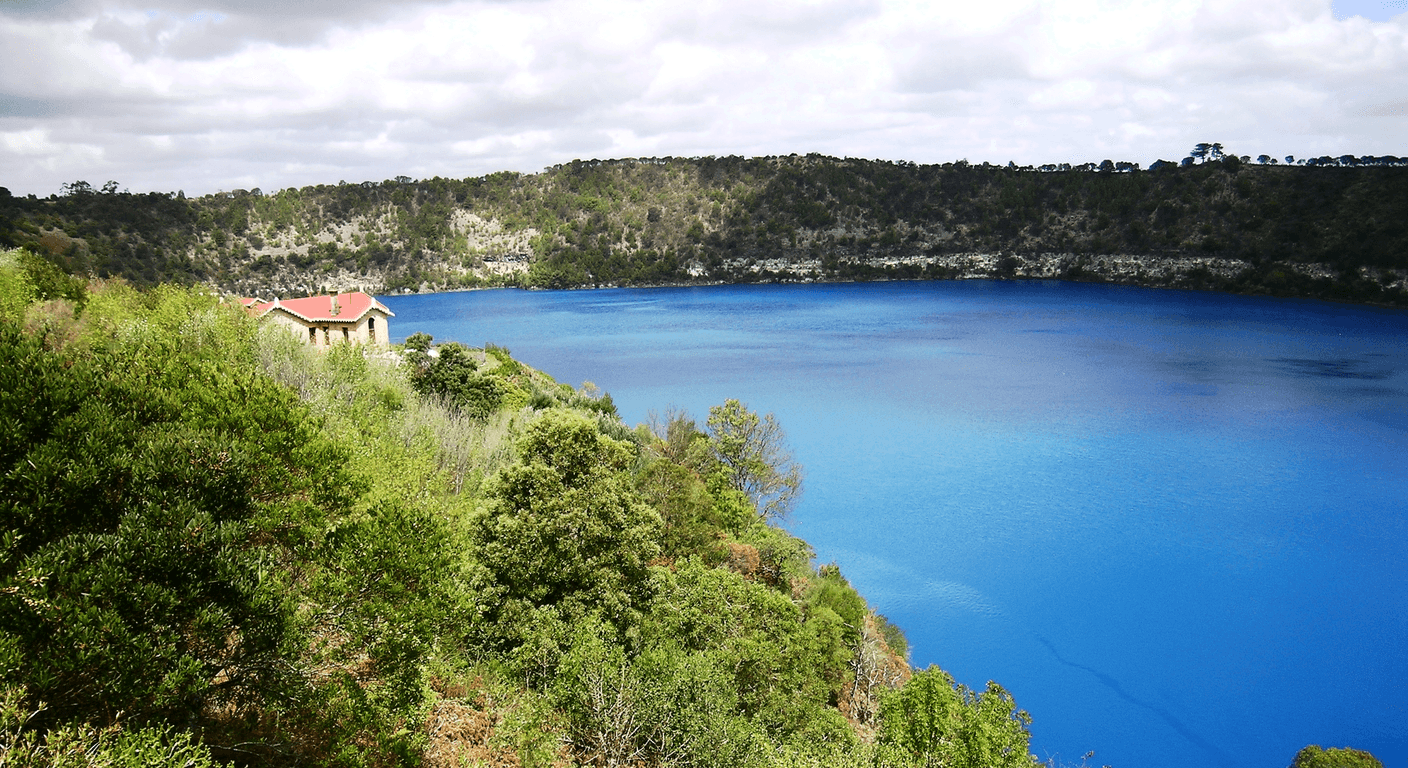
Mount Gambier's Blue Lake turns a vivid cobalt blue from around late November to March, making summer the best time to visit. Two nights suit a focused trip, while three allow a side trip to Coonawarra or the Tantanoola Caves. The crater-rim lookout, Umpherston Sinkhole and Cave Garden are all free and viewable without stairs, making the destination easy on mobility. Victorian travellers can drive five to six hours from Melbourne or fly with Rex Airlines in about one hour.
Why Mount Gambier works so well for Victorian travellers over 50
Mount Gambier is South Australia's second-largest city, sitting roughly 460 kilometres from Melbourne via the Princes Highway and about 4.5 hours by road from Adelaide. For a Victorian couple who enjoy a genuine road trip, the drive from Melbourne takes around five to six hours depending on rest stops, passing through the Limestone Coast and flat pastoral country that many Greek Australians of a certain generation will find pleasantly familiar — open, unhurried, easy to read from the passenger seat.
The city punches well above its size when it comes to natural attractions, and crucially, most of them are free. There are no entry fees to stand at the Blue Lake crater rim, no charge to walk through the Umpherston Sinkhole garden, and no ticket required for the Cave Garden in the city centre. That kind of honest value matters when you are budgeting a retired couple's travel year carefully.
Accommodation ranges from motel-style options near the lake to well-regarded hotels in the city centre, with prices that remain more reasonable than equivalent coastal towns in Victoria. The city is compact enough that you can reach its main volcanic sites by car within ten minutes of the central business district, which suits travellers who prefer not to rely on public transport in an unfamiliar place.
How to get there: flying versus driving from Victoria
Rex Airlines operates regular services between Melbourne (Tullamarine) and Mount Gambier Airport. Flight time is roughly one hour, making it a genuinely practical option for travellers who find long drives tiring or who have a partner with mobility considerations. Indicative return fares sit somewhere around $200–$350 AUD per person at the time of writing, though prices vary considerably with booking lead time — always check directly with Rex at rex.com.au for current availability and pricing.
Driving from Melbourne via the Princes Highway through Geelong, Colac, and Warrnambool is a well-sealed, straightforward route with good fuel stops and cafes. The total journey is around 460 kilometres and most couples break it with a night in Warrnambool or Portland, turning the transit into part of the experience. From Adelaide, the drive southeast along the Dukes Highway takes roughly four and a half hours.
There is no passenger rail service directly into Mount Gambier from Melbourne. V/Line operates services to Warrnambool, and from there a coach connection exists, but the journey becomes long and involves transfers — worth checking at vline.com.au if you prefer not to drive, but a hire car or personal vehicle will give you far more flexibility once you arrive, especially for reaching the volcanic sites on the city's outskirts.
The Blue Lake: what to expect and when to visit
The Blue Lake is the centrepiece of Mount Gambier and the reason most visitors make the journey. It sits in a dormant volcanic crater and holds the city's drinking water supply. The lake's colour changes from a grey-green through winter to a vivid cobalt blue that typically appears from around late November and holds through to March. The exact timing varies year to year and no one can predict it precisely, but if you are visiting between December and February, the colour is almost certain to be at its most striking.
The crater-rim road loops the lake and there are several designated viewpoints with free parking beside them. The most popular is the main lookout on Jubilee Highway East, where a short, paved path leads to the rim. The surface is sealed and relatively flat to the viewing platform, though the ground can be uneven close to the edge — sensible footwear is worthwhile. For a couple where one partner has limited mobility, staying near the car park and viewing from the road-level lookout is entirely viable and still offers a clear, wide view across the crater.
There is a walking trail that completes the full crater rim circuit — roughly three kilometres — but it involves some uneven and sloped sections. Many visitors over 60 walk a section of it and turn back rather than completing the loop, which is a perfectly reasonable approach. The lake itself cannot be accessed for swimming; it is a water supply and the crater walls are steep. The viewing experience is entirely from above, which actually suits the volcanic scale of the place.
Umpherston Sinkhole: a sunken garden with options for every mobility level
The Umpherston Sinkhole is about two kilometres from the city centre and is free to enter at any time. It was developed into an ornamental garden in the late 19th century by James Umpherston, a local businessman, and the result is genuinely unusual — a large natural sinkhole with terraced gardens descending into the earth, surrounded by fig trees whose roots hang dramatically down the limestone walls.
For travellers who are comfortable on stairs, there is a staircase that descends into the garden floor, and the space opens out into a shaded, peaceful area with formal plantings and lawn. For those who prefer not to manage stairs, the rim of the sinkhole is at ground level and fully accessible — you can walk around the edge on a gravel path and look down into the garden without descending at all. The view from above is genuinely satisfying and you lose very little of the experience by staying at rim level.
The sinkhole is particularly atmospheric in the evening when possums emerge from the fig tree roots, and some visitors make a point of returning after dusk. The site is lit at night. It is a gentle, unhurried place that suits a couple who want something beautiful without physical demands. Allow around 30 to 45 minutes depending on how long you linger.
Cave Garden and the city centre volcanic landscape
The Cave Garden sits in the middle of Mount Gambier's central business district on Bay Road and is one of the more surreal urban green spaces you will find anywhere in Australia. It is essentially a large natural cave opening in the middle of a public park, with gardens at street level surrounding the void below. Entry is free and the surrounding paths are flat and paved, making it one of the most accessible of the volcanic sites.
The cave itself descends about 15 metres and has an underground lake at the bottom. There are viewing platforms at the rim where you can look down into the cave, and interpretive signage explains the geological formation. For a traveller with a background in Mediterranean landscapes — the limestone country of the Aegean, say — the karst geology here will feel oddly familiar, though the scale and the Southern Australian light are distinctly their own.
The city centre around the Cave Garden has a modest but functional range of cafes and a good bakery or two. The Riddoch Arts and Cultural Centre nearby is worth a look if contemporary and historical South Australian art interests you. The whole precinct is walkable from most central accommodation, which makes it easy to combine a morning at the Blue Lake with an afternoon stroll through the city without needing to move the car.
What else is worth seeing in the region
The Valley Lake Wildlife Park, on the western edge of the city, sits in another volcanic crater and has a free walking circuit around the lake edge. It is a calmer, less visited site than the Blue Lake and suits a second morning when you want something quieter. Waterbirds are common and the circuit is mostly flat, though some sections are grass rather than sealed path.
The Tantanoola Caves, around 25 kilometres northwest of Mount Gambier, are managed by the South Australian Department for Environment and Water and offer guided tours through decorated limestone chambers. Tours involve walking on uneven cave floors and some low clearances — check accessibility details with the site directly before booking, as conditions can matter considerably for older travellers. Indicative tour costs have historically been modest; confirm current pricing and tour availability at the South Australia Parks website.
The broader Limestone Coast region — Coonawarra wine country, Robe's heritage town on the coast, and Beachport — sits within easy day-trip range if you have a hire car or your own vehicle and want to extend the trip to three or four nights. Coonawarra in particular offers cellar-door visits that are well set up for mature visitors, with flat grounds and unhurried tastings that suit a couple who enjoy a good red without the pressure of a busy tourism operation.
Practical tips: pacing, accommodation, and honest accessibility notes
Two nights in Mount Gambier is enough to see the main volcanic sites without rushing. Three nights is more comfortable and allows a day trip to the coast or the caves. Most of the central accommodation options are motel-style or small hotel, with car parking directly outside your room — a genuine convenience when you are carrying bags or have a partner who finds distance difficult. Prices for a motel double room run roughly $120–$200 AUD per night indicatively; confirm current rates directly with properties.
The main volcanic sites all have free parking close to the viewpoints, which matters if one partner needs to stay near the vehicle. The Blue Lake crater rim, Umpherston Sinkhole entrance, and Cave Garden all have accessible viewing options that do not require stairs, though the ground at the Blue Lake rim can be uneven away from the sealed paths. Sensible walking shoes with a closed toe and a grip sole are the practical choice; there is no need for hiking boots.
Mount Gambier's summers are warm but not extreme — January averages sit around 28–30 degrees Celsius — and the volcanic sites are largely exposed, so a hat, sunscreen, and water are straightforward necessities. The city has a regional hospital and a good range of pharmacies if any medical needs arise during the trip. For older travellers managing ongoing health conditions, knowing that proper medical services are accessible in the city — not just a small country town — adds a quiet layer of reassurance.
Quick planning guide
| Ideal pace | Relaxed, unhurried sightseeing over two to three days |
|---|---|
| Best months | December to February, when the Blue Lake is at its most vivid |
| Suggested stay | Two nights for the main sites, three for day trips to the wider Limestone Coast |
| Mobility level | Easy - Blue Lake, Umpherston Sinkhole and Cave Garden all offer stair-free viewing |
| Cost level | Budget-friendly - main attractions are free, with reasonably priced motel-style accommodation |
| Comfort level | Comfortable - central motels with car parking outside rooms, regional hospital and pharmacies on hand |
| Best for | Couples who prefer driving themselves and want a gentle, low-pressure regional trip |
| Main planning consideration | Timing the visit for the lake's blue phase and choosing between the Melbourne-Mount Gambier drive or the Rex flight |
Key takeaways
- The Blue Lake's cobalt colour phase runs from around late November to March — visiting in summer gives you the best chance of seeing it at its most vivid.
- Entry to the Blue Lake crater-rim viewpoints, Umpherston Sinkhole, and Cave Garden is free, with parking beside each site.
- The Umpherston Sinkhole can be fully appreciated from the rim without descending any stairs, making it accessible for travellers with limited mobility.
- Rex Airlines flies Melbourne to Mount Gambier in roughly one hour, with indicative return fares around $200–$350 AUD — confirm current pricing directly with Rex.
- Two nights is enough for the main sites; three nights allows a day trip to Coonawarra, Robe, or the Tantanoola Caves.
- Mount Gambier is a functioning city with a regional hospital, central accommodation with car parking, and a compact layout that suits couple travellers who prefer driving to relying on public transport.
Recommended partners and links
Indicative prices only — always confirm with the operator before booking.
Frequently asked questions
When does the Blue Lake in Mount Gambier turn blue?
The Blue Lake typically shifts from grey-green to cobalt blue from around late November each year and holds that colour through to March. The exact timing varies slightly from year to year. Visiting between December and February gives the best likelihood of seeing the vivid blue colour. The change is a natural phenomenon linked to water temperature and calcium carbonate particles, and it cannot be precisely predicted in advance.
Is the Umpherston Sinkhole accessible for travellers who cannot manage stairs?
Yes. The rim of the Umpherston Sinkhole is at ground level and can be walked around on a gravel path without descending any stairs. The full garden experience at the base of the sinkhole requires using a staircase, but the view from the rim is satisfying on its own and is accessible to most mobility levels. The site is free to enter and open at all hours.
How far is Mount Gambier from Melbourne and what is the best way to get there?
Mount Gambier is approximately 460 kilometres from Melbourne by road, a drive of roughly five to six hours depending on stops. Rex Airlines operates flights from Melbourne Tullamarine in about one hour, with indicative return fares around $200–$350 AUD per person — check rex.com.au for current pricing. There is no direct passenger train service. Most visitors over 60 either fly and hire a car on arrival, or drive and break the journey with a night in Warrnambool or Portland.
Are there any entry fees at Mount Gambier's volcanic attractions?
No entry fees apply at the Blue Lake crater-rim viewpoints, the Umpherston Sinkhole, or the Cave Garden in the city centre — all three are free. Parking at the main viewpoints is also free. The Tantanoola Caves, located about 25 kilometres from the city, charge a modest fee for guided tours; confirm current pricing at parks.sa.gov.au before visiting.
How many days should you allow for a visit to Mount Gambier?
Two nights gives you time to see the Blue Lake, Umpherston Sinkhole, Cave Garden, and Valley Lake without rushing. Three nights is more comfortable and allows a day trip to Coonawarra's cellar doors, the coastal town of Robe, or the Tantanoola Caves. Most couples find the city itself fully covered in two full days, with the third day used for a regional excursion.