Mulka's Cave and The Humps, three kilometres past Wave Rock in WA's wheatbelt, are best visited April to October, once summer heat above 40 degrees passes. A half-day loop of three to five hours covers both sites, highlighted by one of south-western Australia's largest collections of Aboriginal hand stencil art. The cave's boardwalk is Easy for any mobility level, while the optional granite climb up The Humps is Moderate to Active. There's no public transport; visitors need their own vehicle on sealed roads from Perth or Hyden.
Why These Two Sites Deserve Their Own Morning
Most visitors to Wave Rock tick it off, photograph it and drive back to Perth. That's a reasonable day out, but it misses the point of the country itself. Mulka's Cave and The Humps are a short drive further along a sealed road, and they offer something Wave Rock's famous curved granite wall doesn't — a direct, quiet encounter with the people who lived here long before European settlement, and a sense of the landscape's extraordinary scale.
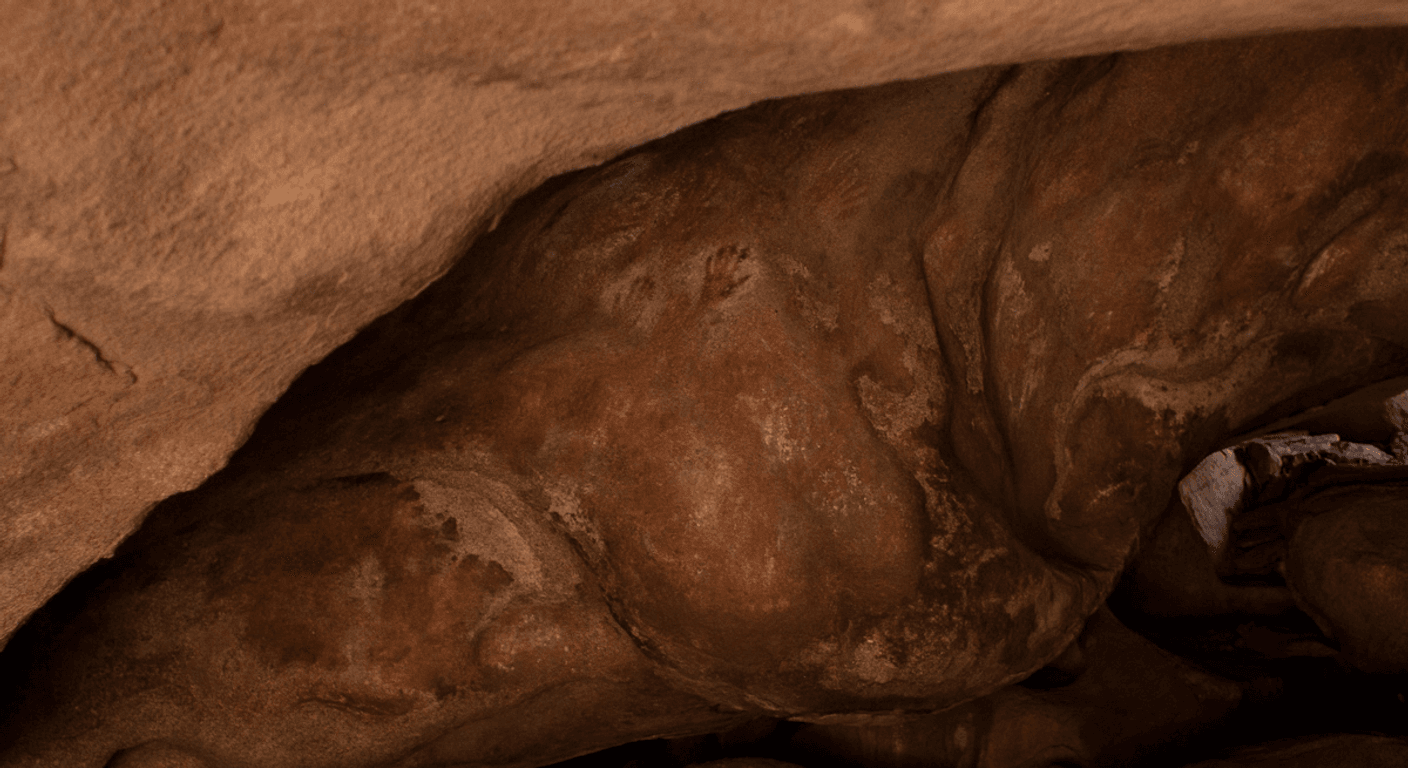
Mulka's Cave takes its name from a figure in Noongar oral tradition — a man of great size said to have used the cave as a shelter. The hand stencils covering the cave walls are thought to span many generations of occupation. Standing on the boardwalk and looking at them, you're looking at one of the most significant concentrations of this art form in the entire south-west of the continent. No ticket booth, no queue, no audio tour competing with the wind. Just the stencils, the granite, and a bit of context from the interpretive panels.
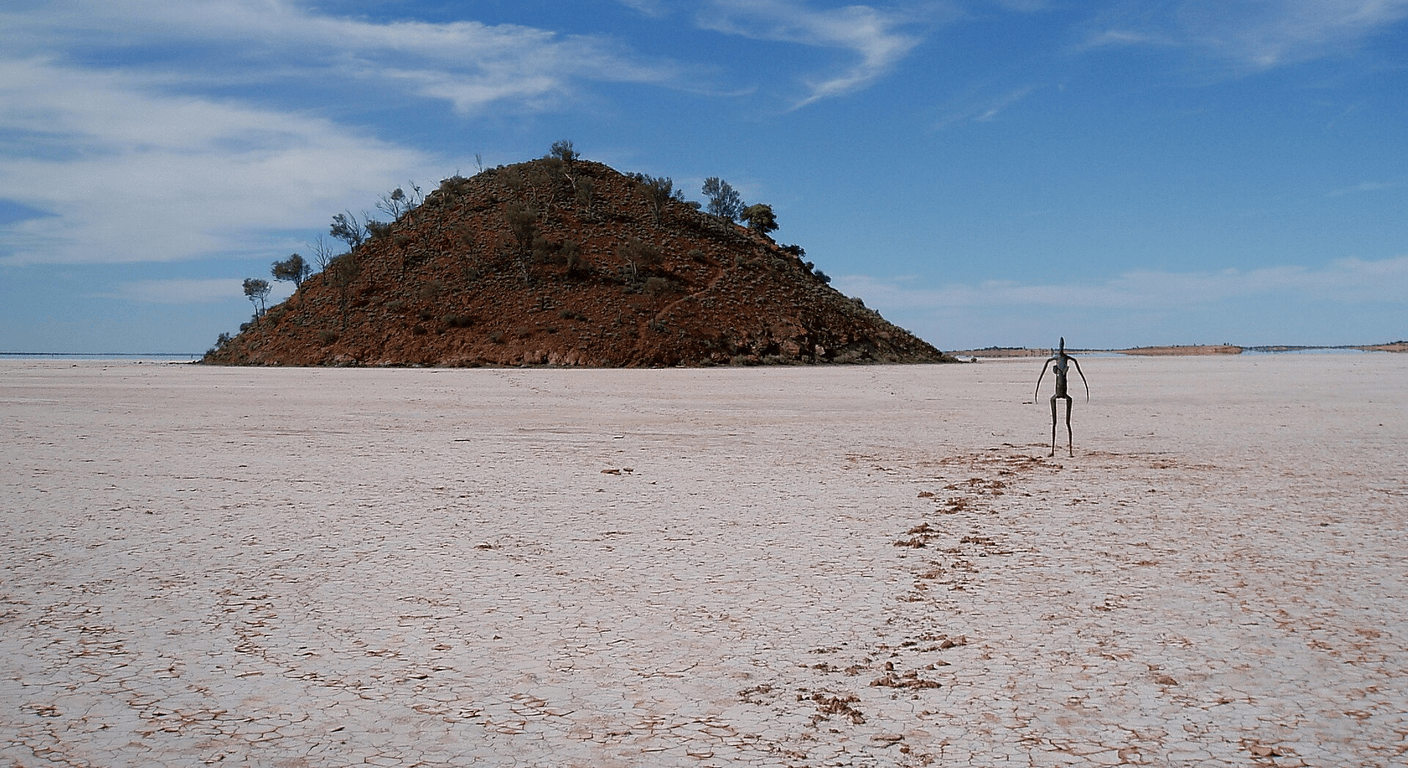
The Humps are visible from the cave car park — a series of rounded granite outcrops rising from the surrounding scrub. The lower sections are accessible on foot without any real climbing. The upper dome is a different proposition: bare, sloping granite with minimal handholds. For a 69-year-old travelling solo, the calculus is straightforward. The view from the base is genuinely good. The view from the top is better. Only you know which side of that equation your knees and confidence land on.
Getting There from Perth — and from Hyden
Hyden sits roughly 340 kilometres south-east of Perth. The standard route runs east on the Great Eastern Highway through Merredin, then south on the Hyden–Norseman Road. It's a long day's drive from Perth if you're pushing through — around four hours without stops — but the smarter approach is to overnight in Merredin or Hyden and arrive at the sites early the next morning, when the light on the granite is at its most striking and the temperature hasn't climbed.
There's no public transport to Hyden. This is grey nomad country: you need your own vehicle. A standard sedan handles all the roads involved without any trouble — no four-wheel drive required. From Hyden township, Wave Rock is about 4 kilometres, and Mulka's Cave is signposted a further 3 kilometres beyond the main Wave Rock car park. The road is sealed and straightforward.
Fuel in Hyden is available but priced at a rural premium. Fill up before you leave Merredin or Southern Cross to avoid paying more than necessary. The Hyden Wave Rock Hotel and the Wave Rock Resort both offer accommodation at the town end of the precinct; booking ahead is wise, particularly during school holidays and long weekends when the caravan park fills quickly.
What You'll See at Mulka's Cave
The cave itself is a granite overhang rather than a deep cavern — more a sheltered recess in the rock than anything claustrophobic. The hand stencils are created by the ancient technique of blowing pigment around a hand placed against the rock surface, leaving a negative impression. There are dozens of them here, at varying heights, in ochre tones that have survived on the protected granite surface for generations. Some are at adult head height; others are lower, possibly made by children.
The boardwalk keeps visitors off the rock floor and at a respectful distance from the stencils. It's a short walk — flat, with a gentle curve — and the surface is firm. Anyone who can manage a slow stroll at a shopping centre can manage this. The interpretive panels explain the Noongar cultural context with care; read them before you look at the art rather than after. It changes what you see.
Photography is permitted, but direct flash is best avoided — it's both culturally inappropriate and practically pointless, washing out the pigment. The cave faces in a direction that gives reasonable natural light through most of the morning. Arrive before 10am in summer months and you'll have both the light and the relative cool. In winter, the midday light is fine and the temperatures are genuinely pleasant.
The Humps: How to Read the Climb Honestly
The Humps are the rounded granite domes that rise behind the cave site. The walking track from the car park is unpaved but manageable — a dirt path through low scrub that leads to the base of the main dome. From here, you have a choice. Stay at the base and you still get a broad view across the flat wheatbelt landscape, the scrub stretching to the horizon in every direction with barely a hill to interrupt it. It's a landscape that rewards patience.
The climb to the dome's crest involves walking up bare granite at a moderate incline. There are no steps, no handrails and no marked path — you pick your own line across the rock. The surface is rough enough to grip in dry conditions, but it demands attentiveness. If your balance isn't what it was, or if your knees object to uneven descents, the base is the right call. Descending a granite slope is harder than going up, and there's no one to assist if you misjudge it when travelling solo.
In good conditions, a reasonably fit traveller in their late sixties with no significant joint issues will manage the climb without drama. Wear shoes with a proper sole — not sandals, not smooth-soled boat shoes. Trekking poles are worth bringing if you carry them; they're useful on the descent. The view from the top takes in Wave Rock itself in the middle distance, which gives a useful sense of scale for the whole granite formation.
Pairing the Sites: A Practical Half-Day Plan
The most satisfying sequence is to drive directly to Mulka's Cave first, arriving around 8am in summer or 9am in autumn. Spend 30 to 45 minutes at the cave — longer if you're inclined to sit with it. Then walk to The Humps, make your decision about the climb, and allow another 30 to 60 minutes depending on how far you go. Return to the Wave Rock precinct for a late breakfast or morning tea at the café, then walk Wave Rock itself and Hippo's Yawn before the day heats up.
This sequence means you're doing the culturally significant and less-visited sites while you're fresh, and ending at the more commercially serviced area where facilities are better. It also means you avoid the tour groups that arrive at Wave Rock mid-morning. Mulka's Cave, in particular, is often completely quiet — just you and the stencils — which is an experience worth protecting.
The whole loop, including driving between sites, takes around four to five hours at a comfortable pace. That leaves the afternoon free for a rest at your accommodation, a look around Hyden's small main street, or the short drive out to the salt lakes south of town, which are worth an hour in the right light.
Practical Matters for Solo Travellers
Water is the single most important thing to manage. Carry at least two litres per person in summer; more if you're attempting the dome. There's no water at the cave site. The Wave Rock precinct café and amenities are back at the main car park. Heat in the wheatbelt in summer is serious — December and January can push well above 40 degrees, and the granite radiates heat from below as well as above. April through October is genuinely the right window.
Mobile coverage in the Hyden area is limited. Telstra has the broadest reach in rural WA, but even then, coverage at the cave and dome sites can be patchy. Download offline maps before you leave Merredin. If you're travelling solo, let someone know your rough itinerary — not because the sites are dangerous, but because it's sensible practice in a region with limited traffic and no mobile guarantee.
Travel insurance matters here. Not because Mulka's Cave is particularly hazardous, but because any medical event in a town 340 kilometres from Perth's hospitals requires evacuation, and that's expensive without cover. Travellers aged 69 with pre-existing conditions should confirm their policy covers rural WA activities, including walking on uneven terrain. Most Australian travel insurers will cover this, but the detail is in the policy document, not the marketing brochure.
The Broader Context: Why This Country Matters
The granite outcrops of the south-west wheatbelt — Wave Rock, Mulka's Cave, The Humps, Hippo's Yawn, Lake Magic further south — are among the oldest exposed rock surfaces on earth. The geology is Precambrian granite, shaped over hundreds of millions of years by weathering and erosion into the rounded, extraordinary forms visible today. The Aboriginal history layered across this geology is equally deep. The Noongar people have lived in and moved through this country for tens of thousands of years.
Mulka's Cave sits within that context not as a tourist attraction but as a cultural site that happens to be accessible to visitors. The distinction is worth holding onto. The boardwalk, the interpretive panels and the free entry all reflect a management philosophy that prioritises preservation and respectful access over commercialisation. That's rarer than it should be, and it makes the experience more honest.
For a solo traveller from Victoria, this country can feel profoundly different from anything in the south-east. The silence, the scale, the flatness of the wheatbelt, the way the granite domes seem to rise from nowhere — it's a particular kind of Australian landscape that most eastern-state travellers never encounter. A morning at Mulka's Cave won't change that, but it will make the place feel less like a detour and more like a destination in its own right.
Quick planning guide
| Ideal pace | Slow, unhurried half-day |
|---|---|
| Best months | April to October |
| Suggested stay | Half-day (3-5 hours), with an overnight in Hyden or Merredin recommended |
| Mobility level | Easy at the cave boardwalk; Moderate to Active for the optional Humps dome climb |
| Cost level | Free entry; costs limited to fuel and accommodation |
| Comfort level | Basic — no water on site, limited mobile coverage, facilities back at the main Wave Rock car park |
| Best for | Solo and grey-nomad self-drive travellers seeking a quieter cultural site |
| Main planning consideration | Self-drive access on sealed roads, avoiding summer heat, and confirming travel insurance covers rural WA walking |
Key takeaways
- Mulka's Cave holds one of the largest collections of Aboriginal hand stencil art in south-western Australia and is free to enter.
- The boardwalk at Mulka's Cave is suitable for Easy mobility; The Humps dome climb is Moderate to Active and should be skipped if balance is a concern.
- April to October is the practical travel window — summer heat in the wheatbelt regularly exceeds 40 degrees and makes exposed granite sites uncomfortable.
- There's no public transport to Hyden; a standard sedan on sealed roads is all that's required, but fill the tank before leaving Merredin.
- Arriving at Mulka's Cave before the main Wave Rock tour groups reach the precinct often means having the site to yourself.
- Solo travellers should carry at least two litres of water per person, download offline maps and ensure travel insurance covers rural WA walking activities.
Recommended partners and links
Indicative prices only — always confirm with the operator before booking.
Frequently asked questions
Is Mulka's Cave suitable for travellers with limited mobility?
The boardwalk at Mulka's Cave is flat, firm and short — manageable for most travellers who can walk slowly without significant difficulty. The Humps dome climb involves bare, sloping granite with no handrails and is not suitable for travellers with balance issues, weak knees or limited confidence on uneven surfaces. The two parts of the site are genuinely independent: you can visit the cave comfortably without attempting the climb.
Is there an entry fee for Mulka's Cave or The Humps?
Entry to both Mulka's Cave and The Humps is free. The Wave Rock precinct car park charges a vehicle fee (around $15, indicative — confirm the current amount at waverock.com.au), but the cave and dome sites themselves have no separate admission charge.
How far is Mulka's Cave from Perth?
Mulka's Cave is approximately 343 kilometres south-east of Perth, around 3 kilometres beyond the main Wave Rock car park near Hyden. The drive from Perth takes roughly four hours without stops via the Great Eastern Highway and Hyden–Norseman Road. Overnight at Merredin or Hyden rather than attempting the full distance in a single day.
What is the best time of year to visit Mulka's Cave and The Humps?
April through October offers the most comfortable conditions. The wheatbelt experiences extreme heat in summer — December and January regularly exceed 40 degrees, and exposed granite amplifies the heat significantly. Autumn and spring mornings are mild, and the winter days (June to August) are cool and clear. Avoid visiting midday in any season if possible; morning light also shows the cave stencils to best advantage.
Can you photograph the hand stencils at Mulka's Cave?
Photography is permitted at Mulka's Cave. Direct flash is best avoided — it's both culturally disrespectful and technically counterproductive, as it washes out the ochre pigment. Natural light photography in the morning hours works well. Read the interpretive panels at the site for guidance on respectful conduct.