Museum of Brisbane and its City Hall Clock Tower Tour are free attractions best visited on a weekday morning, ideally in Brisbane's cooler months when humidity eases and crowds thin. Allow a few hours: the highlight is riding the original 1930s cage lift to the clock tower's observation deck over King George Square and the river. Mobility needs are minimal — full lift access, no stairs, seating throughout — and the site sits directly above Brisbane Central train station, with a free ferry stop a five-minute walk away.
What is the Museum of Brisbane, and why does it matter?
The Museum of Brisbane occupies level three of City Hall — the same building that has anchored the civic life of Queensland's capital since 1930. It's not a dusty repository of colonial silverware. The museum runs changing exhibitions that take Brisbane's own communities seriously: their migrations, their labour, their art, their contradictions. For a Greek Australian who has watched his own community's story get overlooked in mainstream institutions for decades, there's something quietly satisfying about a museum that genuinely tries to reflect the full picture of who built a city.
Entry is free, always. The galleries are air-conditioned, the lighting is easy on the eyes, and there's seating throughout — the kind of seating you can actually use, not the token bench bolted to a wall three rooms away from anything interesting. Exhibitions rotate, so even repeat visitors find something new. Check the museum's website before you go to see what's currently showing; the programming tends toward photography, social history and community portraiture rather than grand colonial narratives.
The museum also holds a permanent collection of Brisbane-related artworks and objects that provide continuity between the changing shows. The staff are knowledgeable and unhurried. On a weekday morning, the galleries are genuinely quiet — the kind of quiet that lets you actually read the wall text and think about what you're looking at, rather than shuffling along behind a school group.
The Clock Tower Tour: What to expect from Brisbane's 1930s lift
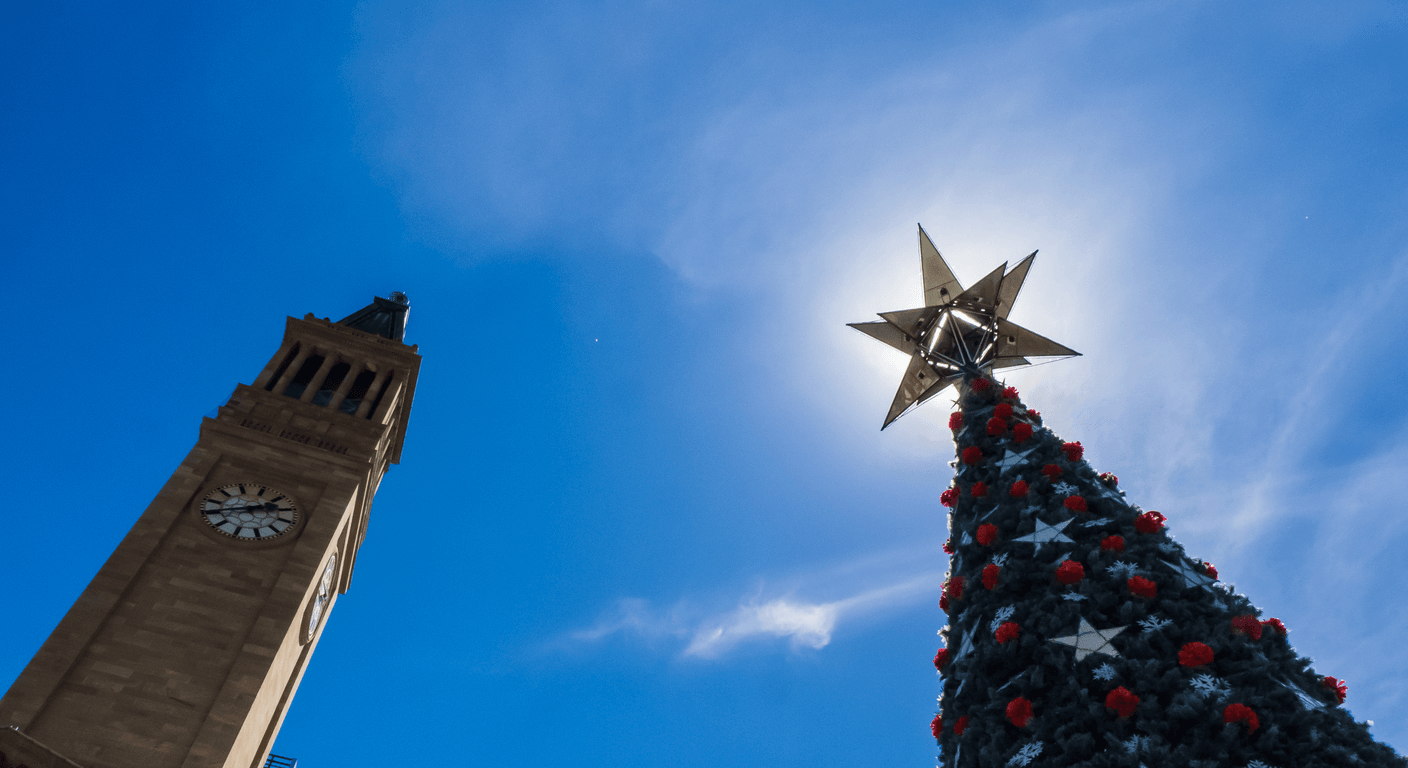
The clock tower tour is the detail that elevates a good visit into a memorable one. A small group — numbers are deliberately kept modest — is taken up through the building's interior in the original 1930s cage lift, a slow, clanking, entirely charming piece of machinery that has been operating continuously for nearly a century. It is enclosed, not an open shaft, and the ascent is gentle. For travellers who are cautious about lifts, this one is about as unthreatening as they come: slow, staffed, and reassuringly solid.
At the top, the observation deck opens out over King George Square and the Brisbane CBD, with views stretching to the river and, on a clear day, well beyond. The guide provides context about the building's construction, its clock mechanism, and the city spread below — delivered without the frenetic pace of a commercial tour. It takes roughly 45 minutes in total. The experience is free.
The critical practical detail: places are allocated on the day, from around 10:15 am at the museum's information desk. They go. Arrive before the museum opens, or at least well before mid-morning on weekdays, to secure a spot. The museum strongly advises confirming current arrangements — session times, any temporary closures for maintenance, accessibility specifics — directly with them before your visit. Don't assume the arrangements from a previous trip still apply; historic lifts occasionally need attention.
City Hall's heritage interiors: worth slowing down for
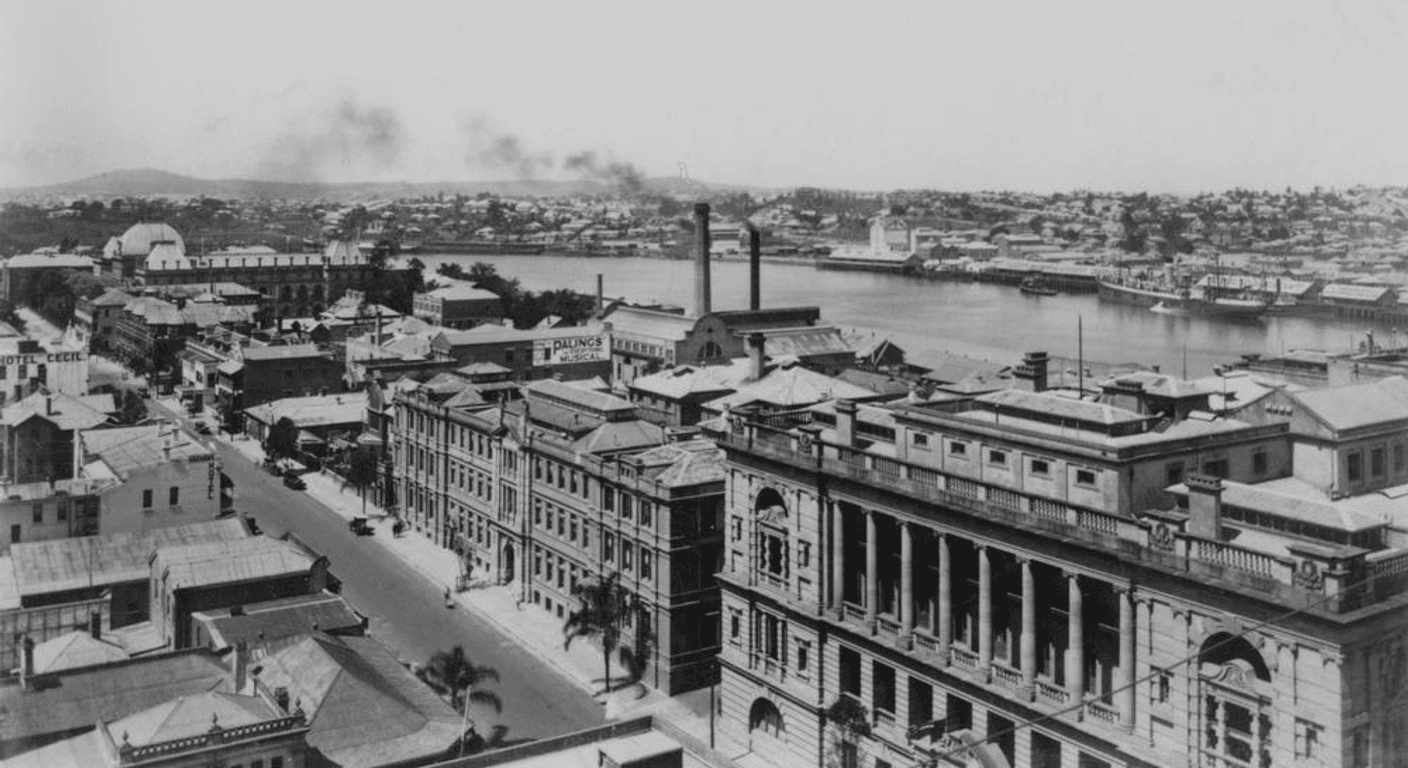
Most visitors focus on the museum and the tower and walk straight past one of Brisbane's genuinely impressive civic spaces. The City Hall building itself — the Auditorium, the foyer, the grand staircase — is open to the public and free to explore. The 1930s interior is all marble, timber and careful proportion: the kind of architecture that was designed to communicate civic dignity rather than corporate ambition, and largely succeeds.
The main auditorium is occasionally closed for events, but when open, it's worth stepping inside to appreciate the scale and the acoustic quality of a space built before amplification was assumed. The pipe organ, one of the largest in Australia, is a centrepiece; organ recitals are held periodically, and they're free. Check the Brisbane City Council events calendar or the museum's site for upcoming performances.
The heritage detailing throughout — the brass fittings, the mosaic floors, the coffered ceilings — rewards the kind of slow, attentive walking that older travellers tend to do better than anyone else. There's no rope herding you past anything. Take your time.
Weekday mornings: why timing matters here
Brisbane's City Hall precinct is a weekday lunch destination for CBD workers, which means it's at its most comfortable — and its quietest — before about 11:30 am on Monday through Friday. Arrive when the museum opens, secure your clock tower session, tour the galleries, and you'll be done before the lunch crowd descends on King George Square. Weekend mornings are also manageable, but school holiday periods bring larger family groups into the galleries.
The museum's quieter rhythm on weekday mornings suits travellers who prefer to set their own pace. There's no audio guide competing with your thoughts, no timed entry slot pressing you forward. The staff, in the experience of regular visitors, are particularly forthcoming with context and conversation when the galleries aren't full.
If you're visiting from Melbourne — perhaps combining a Brisbane leg with a broader Queensland itinerary — flying up for a few days midweek rather than over a weekend makes the whole experience more relaxed. Brisbane in the cooler months has a different quality to it: the humidity drops, the jacarandas eventually do their thing, and the city feels more like itself.
King George Square and where to eat nearby
King George Square sits directly below City Hall's main steps. It's a large, open civic square — good for a few minutes in the sun between gallery visits, though on hot Queensland days the shade inside City Hall is the more appealing option. The square serves as a major transport interchange, which means getting here is straightforward from virtually anywhere in the inner city.
For coffee and a meal, the options immediately around the square include the ground-floor café within City Hall itself (convenient, reliable, nothing fancy), and several cafés and restaurants along Adelaide Street and Ann Street within a two or three-minute walk. The Queen Street Mall — Brisbane's main pedestrian retail strip — is one block south and offers a wider range of options, from casual to sit-down. For a proper lunch, the Treasury precinct a short walk toward the river has several restaurants worth the walk.
A word on Greek cuisine, since Brisbane's Greek community has been quietly building one of the better Hellenic dining scenes outside Melbourne: Fortitude Valley and West End have the strongest concentration of Greek-Australian restaurants and delis. Neither is a long distance from the CBD — West End is a short bus or ferry ride, Valley is even closer — and both reward an afternoon visit if the itinerary allows.
Getting to King George Square: trains, buses, and the free ferry
King George Square is one of Brisbane's best-connected public transport hubs. The Brisbane Central train station is directly underneath the square — escalators and lifts connect the platforms to street level, making it fully accessible. Every suburban train line passes through Central, so from inner-city accommodation or South Bank (a popular base for visitors), you're looking at one train and a very short walk.
The square is also a major bus terminus. Dozens of routes converge here, and the real-time displays on the platforms make it easy to navigate even without a deep familiarity with Brisbane's network. The TransLink go card or the Translink ticketing app handles payment across trains, buses and ferries. Indicative fares from inner-city zones are modest — confirm current pricing at translink.com.au before travelling.
The CityHopper — Brisbane's free inner-city ferry — stops at North Quay, which is a flat five-minute walk from City Hall. If you're staying near South Bank or at any of the riverside hotels, the ferry is a pleasant way to arrive. It runs frequently and the river crossing takes only a few minutes. No ticket required; just board. For travellers who've spent decades navigating Melbourne's Myki or Sydney's Opal, Brisbane's go card system is immediately familiar.
Practical notes for travellers over 50
The entire Museum of Brisbane experience is accessible by lift from street level. There are no stairs required to reach any part of the museum, and the clock tower tour uses the original building lift rather than a staircase. Seating is available in the galleries and in the foyer. The building is air-conditioned throughout, which matters considerably in Brisbane's subtropical climate — even in the cooler months, afternoon temperatures can climb.
There's no need to book in advance for the museum itself — just arrive. For the clock tower tour, the on-the-day system means you can't pre-reserve a spot remotely, so build in time at the start of your visit to secure a session. If the first available time doesn't suit, staff can usually advise on later sessions. Confirm all of this directly with the museum before your visit, as operational arrangements can change.
Travel insurance is worth reviewing before any interstate trip if you have pre-existing conditions — not because Brisbane poses any particular risk, but because it's good practice. For Victorian travellers flying to Brisbane, the flight is around two hours from Melbourne, with no time zone change, which makes it one of the more comfortable interstate trips on offer. A single night to settle in before a full day of museum-going is sensible, not excessive.
Quick planning guide
| Ideal pace | Slow-paced and self-guided |
|---|---|
| Best months | Cooler months; weekday mornings before 11:30am for the quietest visit |
| Suggested stay | A few hours, or half a day combined with City Hall's interiors |
| Mobility level | Easy — full lift access throughout, no stairs, ample seating |
| Cost level | Free |
| Comfort level | High — air-conditioned galleries, unhurried pace, small tour groups |
| Best for | Culture-minded travellers who prefer quiet, well-curated civic museums over crowded ticketed attractions |
| Main planning consideration | Clock tower spots are allocated on the day from around 10:15am, so arrive early and confirm current arrangements with the museum beforehand |
Key takeaways
- Museum of Brisbane and the City Hall Clock Tower are both free — no ticket, no booking fee, no catch.
- The clock tower tour uses the building's original 1930s cage lift, making it accessible and unhurried rather than a physical challenge.
- Clock tower places are allocated on the day from around 10:15 am — arrive early and confirm current arrangements with the museum before visiting.
- Weekday mornings offer the quietest galleries and the most relaxed experience of the City Hall heritage interiors.
- King George Square is directly above Brisbane Central train station, making this one of the easiest cultural stops to reach in any Australian capital.
- The free CityHopper ferry from South Bank or riverside hotels delivers you to North Quay, a flat five-minute walk from City Hall's front steps.
Recommended partners and links
Indicative prices only — always confirm with the operator before booking.
Frequently asked questions
Is the Museum of Brisbane free to enter?
Yes. Entry to Museum of Brisbane is free, with no booking required for the general galleries. The clock tower tour is also free. Confirm current arrangements directly with the museum at museumofbrisbane.com.au before your visit, as operational details can change.
Is the City Hall clock tower accessible for people with limited mobility?
The clock tower tour uses the building's original 1930s enclosed lift rather than stairs, and the museum is fully accessible by lift from street level. The experience is rated Easy for mobility. Contact the museum before your visit to confirm current lift access and any temporary arrangements.
How do you book a clock tower tour at Brisbane City Hall?
Clock tower tours cannot be pre-booked remotely. Places are allocated on the day, from around 10:15 am at the museum's information desk on level three. Numbers are limited, so arriving early — ideally when the museum opens — gives you the best chance of securing a spot. Confirm the current process with the museum before you go.
What is the best time of year to visit Brisbane for travellers over 50?
May to September is the most comfortable period — temperatures are mild, humidity is lower, and the city is at its most walkable. January and February bring intense heat and humidity that can be taxing, particularly for older travellers spending time outdoors around King George Square.
How do you get to King George Square from South Bank or inner Brisbane?
Brisbane Central train station sits directly beneath King George Square, with lift access to street level — every suburban rail line stops here. The free CityHopper ferry stops at North Quay, a flat five-minute walk from City Hall. Dozens of bus routes also serve the square. Fares are managed via TransLink go card or the Translink app; confirm current pricing at translink.com.au.