Naracoorte Caves is Australia's only UNESCO World Heritage fossil site, holding half a million years of megafauna remains in the Limestone Coast. The caves stay around 17 degrees year-round, so timing is flexible. A half-day covers the Wonambi Fossil Centre and show-cave tours, extended to two or three days with Coonawarra wineries. Mobility is moderate: the Fossil Centre is accessible; show caves involve stairs. Access from Victoria is a four-to-five-hour drive or flight to Adelaide.
Why Naracoorte Caves earned its World Heritage badge
Naracoorte Caves Conservation Park sits about 330 kilometres southeast of Adelaide, near the South Australian town of Naracoorte. In 1994, it was inscribed on the UNESCO World Heritage List as part of the Australian Fossil Mammal Sites listing — a recognition shared with Riversleigh in Queensland. The caves are significant not for their formations alone, but for an extraordinary fossil record spanning roughly 500,000 years. Bones of giant wombats, Diprotodon, marsupial lions and other megafauna accumulated in natural pitfall traps, creating one of the most complete records of Pleistocene fauna anywhere in the world.
For a traveller who wants to understand why a place is genuinely important rather than just photogenic, Naracoorte delivers. The science is accessible without being dumbed down, and the park's interpretation — particularly at the Wonambi Fossil Centre — does a good job of connecting the fossils to the living Australian landscape. You do not need a background in palaeontology to find it absorbing. What you do need is a willingness to slow down and listen, which suits most travellers in this age group very well.
Which tours suit travellers who prefer a gentler pace?
This is the most practical question to ask before you arrive. Not all cave tours are equal in physical demand, and the park is honest about this on its website. The Wonambi Fossil Centre is the most accessible experience on the site — it is a surface-level facility with exhibits, fossil displays and a walk-through reconstruction of the ancient environment. It involves no stairs underground and suits any mobility level. If you are travelling with a partner who has knee or hip concerns, or if you simply prefer to set your own pace, the Fossil Centre alone is worth the trip.
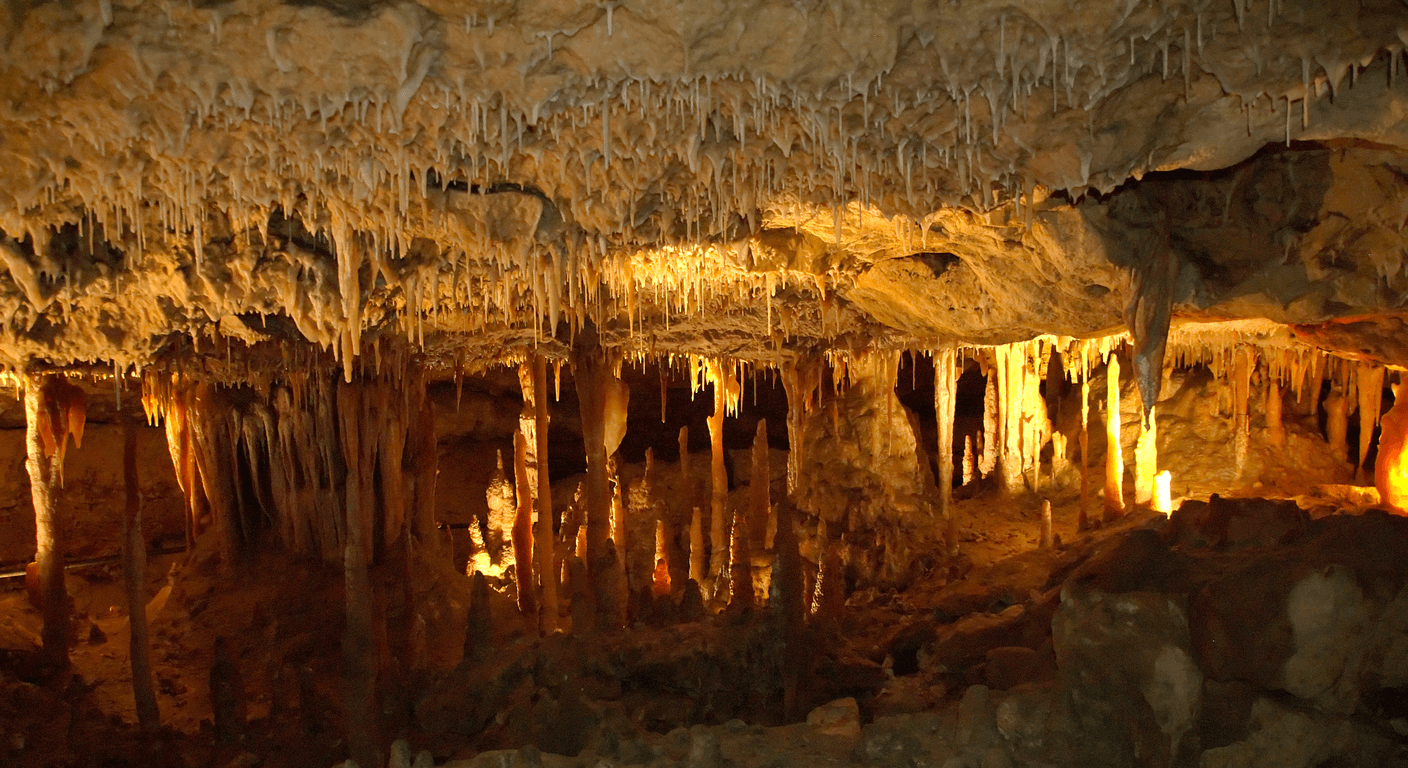
Among the show-cave tours, Alexandra Cave is generally considered one of the more accessible options, with guided walks through well-lit chambers featuring cave coral, shawls and flowstone formations. Blanche Cave is another show cave included in some tour combinations. Before booking, it is worth calling the park directly to ask which tour currently has the fewest stairs and the flattest walking surfaces — conditions and tour offerings can change seasonally, and staff are accustomed to these questions. Concession pricing is available, so have your seniors card or pension card ready.
Adventure caving — crawling through tight passages in overalls and helmets — is on offer for those who want it, but it is genuinely demanding and not designed for travellers with limited mobility or joint issues. There is no need to feel any pressure to attempt it. The show caves and the Fossil Centre together make for a full, satisfying half-day, and many visitors find that is exactly the right amount.
What does a visit actually cost, and how do you book?
Tour prices at Naracoorte Caves are indicatively in the range of around $20 to $40 per adult for show-cave experiences, with concession rates available. These figures are indicative only — always confirm current pricing directly with Parks SA before you travel, as fees are reviewed periodically. Booking in advance is sensible, particularly in school holidays and long weekends, when tours fill quickly. The Parks SA website is the correct place to book; links from third-party booking platforms may not reflect the current schedule.
A practical note for couples: some tour combinations bundle two show caves together at a slightly reduced combined rate. Ask about this when you book, and confirm which caves are included in each bundle. If one person in your party has a different mobility level, it is worth discussing this with staff — they are generally helpful in suggesting the right combination and can advise on where to wait comfortably between tours if needed.
Getting there from Victoria: your realistic options
Naracoorte is roughly a four-to-five-hour drive from Melbourne via the Princes Highway and then inland through Bordertown or via the Dukes Highway. If you are comfortable driving interstate, this is probably the most flexible option, giving you control over stops and pace. The road is not difficult, though the stretch through the Wimmera and into the Limestone Coast region is long and flat — plan a proper rest stop at a town like Bordertown or Keith.
V/Line operates coach services between Melbourne and Mount Gambier, which is about 90 kilometres south of Naracoorte. From Mount Gambier, you would need a hire car or a pre-arranged transfer to reach the caves and the Coonawarra region. Check vline.com.au for current timetables and concession fares; the service does not run daily on all legs, so build your itinerary around confirmed departure times rather than assuming frequency. Flying to Adelaide and hiring a car for a self-drive loop through the Limestone Coast is another option that gives you more flexibility over three or four days.
Accommodation in Naracoorte itself is modest — there are motel-style options and a caravan park near the caves. Some travellers prefer to base themselves in Penola, the small historic town at the heart of the Coonawarra wine region, which is about 30 kilometres north and has a slightly broader range of accommodation and dining.
Pairing Naracoorte with Coonawarra: why it works so well
Coonawarra is one of Australia's most respected red wine regions, built on a narrow strip of terra rossa soil that produces Cabernet Sauvignon of genuine character. It sits about 30 kilometres north of Naracoorte, making the two an easy and natural pairing for a two-to-three-day itinerary. Several cellar doors are open for tasting most days of the week; many are low-key and unhurried in atmosphere, which suits a couple who prefer to sit and talk wine rather than be rushed through a tasting.
Penola, the service town for the Coonawarra region, has a small historic precinct associated with Mary MacKillop — Australia's first saint spent time here, and the cottage and interpretive centre are worth a quiet hour. The town is flat and easy to walk in the cooler parts of the day. For travellers who enjoy layering cultural and culinary experiences, the combination of deep geological history at the caves and the sensory pleasure of a good Coonawarra red makes for a trip that feels genuinely rounded rather than one-note.
A suggested loose itinerary: arrive in the region in the afternoon, settle into accommodation, and begin with a cellar door visit before dinner. Spend the following morning at Naracoorte Caves, allowing three to four hours including the Fossil Centre and one or two show-cave tours. The afternoon is free for a second cellar door or a rest. A third day allows for the drive home or onward travel at a relaxed pace.
Accessibility and comfort: what to know before you go
The cave environment is cool year-round — typically around 17 degrees Celsius underground — so a light layer is sensible regardless of the surface temperature. Good walking shoes with grip are important; cave floors can be damp and uneven even on the more accessible tours. If you use a walking stick, let the guide know at the start of the tour; they are accustomed to adjusting pace and pointing out where to place your feet.
The Wonambi Fossil Centre is the safest bet for travellers using a walking frame or wheelchair, though the park recommends calling ahead to confirm current accessibility arrangements, as pathways and facilities can change. Toilets are available at the visitor centre. The park is in a rural setting, so there is no nearby medical facility — carry any personal medication as you normally would on a day trip, and make sure your travel insurance covers pre-existing conditions if you have them.
For Indian Australian travellers, it is worth knowing that dining options in Naracoorte and Penola are limited in variety — the region is firmly steak-and-seafood country. Pack snacks if you have specific dietary needs, and check menus in advance if you are vegetarian or have other requirements. The caves visit itself is entirely about the experience, not the food, and most travellers find the day satisfying regardless.
Is Naracoorte worth the travel from Victoria?
That depends on what you value in a trip. If you are drawn to places where the weight of time is genuinely palpable — where the exhibits are not reconstructions or simulations but actual bones of creatures that walked Australia hundreds of thousands of years ago — then yes, Naracoorte is worth the distance. It is not a theme park version of prehistory. It is a real scientific site that happens to be open to the public, and that distinction matters.
The practical reality is that the caves alone probably do not justify a week-long trip, but paired with Coonawarra and the broader Limestone Coast — which also includes the Blue Lake at Mount Gambier, the Robe historic township, and the coastal walking tracks — the region offers enough for five to seven days of comfortable, unhurried travel. For a couple who enjoys mixing nature, history, food and wine without punishing daily schedules, the Limestone Coast loop is one of the more underrated interstate options available from Victoria.
The honest summary: Naracoorte Caves is not spectacular in a visual sense in the way that, say, the Jenolan Caves in New South Wales are. The formations are modest. What makes it special is the fossil science, and if that genuinely interests you, the visit is memorable. Go with that expectation, and you will not be disappointed.
Quick planning guide
| Ideal pace | Slow-paced and unhurried |
|---|---|
| Best months | Comfortable year-round (caves sit around 17°C underground); book ahead for school holidays and long weekends |
| Suggested stay | Half a day for the caves alone; two to three days combined with Coonawarra; five to seven days for the full Limestone Coast loop |
| Mobility level | Moderate — the Wonambi Fossil Centre suits any mobility level, but show caves involve stairs and uneven, damp floors |
| Cost level | Budget-friendly, with show-cave tours indicatively $20–$40 per adult and concessions available |
| Comfort level | Casual and modest, with basic motel and caravan park accommodation near the caves |
| Best for | Couples who enjoy natural and scientific history paired with relaxed regional food and wine |
| Main planning consideration | Confirm current tour accessibility, stair counts and pricing directly with Parks SA before travelling |
Key takeaways
- Naracoorte Caves holds Australia's only UNESCO World Heritage listing for fossil sites, recognised for half a million years of megafauna remains.
- The Wonambi Fossil Centre is the most accessible part of the site and suits travellers of any mobility level.
- Show-cave tour prices are indicatively around $20–$40 per adult with concession rates available; always confirm current pricing with Parks SA before travelling.
- Ask Parks SA staff specifically which tour currently has the fewest stairs — this information is not always clear from the website alone.
- Coonawarra, about 30 kilometres north, pairs naturally with the caves for a two-to-three-day Limestone Coast itinerary.
- The cave temperature is a consistent 17 degrees Celsius underground, so bring a light layer regardless of the season.
Recommended partners and links
Indicative prices only — always confirm with the operator before booking.
Frequently asked questions
Is Naracoorte Caves accessible for older travellers with mobility limitations?
The Wonambi Fossil Centre is accessible at surface level and suits most mobility levels. Some show-cave tours involve stairs and uneven surfaces. Call Parks SA directly before booking to ask which tour currently has the fewest stairs, as conditions can vary.
How much do Naracoorte Caves tours cost for seniors?
Show-cave tour prices are indicatively around $20 to $40 per adult, with concession rates available. These figures are indicative only. Confirm current pricing with Parks SA at parks.sa.gov.au before you travel.
Why is Naracoorte Caves a World Heritage site?
Naracoorte Caves was inscribed on the UNESCO World Heritage List in 1994 as part of the Australian Fossil Mammal Sites listing. The caves preserve an exceptional fossil record of Pleistocene megafauna — including giant wombats and marsupial lions — spanning roughly 500,000 years.
How do you get to Naracoorte Caves from Melbourne?
By car, Naracoorte is roughly four to five hours from Melbourne via the Dukes or Princes Highway. V/Line coaches run to Mount Gambier, about 90 kilometres south, from where a hire car or transfer is needed. Check vline.com.au for current timetables and fares.
What else is worth visiting near Naracoorte?
Coonawarra, about 30 kilometres north, is one of Australia's most respected red wine regions and makes a natural pairing. The town of Penola has a historic precinct linked to Mary MacKillop. The broader Limestone Coast region also includes Mount Gambier and the coastal town of Robe.