Norway's Nutshell route links the Bergen Railway, the steep Flåm branch line and a near-silent electric ferry through the UNESCO-listed Nærøyfjord, best done across two unhurried days with an overnight in Flåm rather than one exhausting day trip. June to August brings the long daylight hours that make evenings on the fjord memorable. Mobility demands are easy, suiting most travellers in their 50s and 60s. There are no direct flights from Australia — expect 24–28 hours to Oslo via Dubai, Doha, Singapore or London, plus a recovery night before continuing to Bergen.
Why this route works so well for travellers in their 50s and 60s
The Nutshell route has endured as a favourite not because of marketing but because it is genuinely well-designed. Three distinct modes of transport — mainline train, mountain branch line, and fjord ferry — each do what the others can't. You cross a high Arctic plateau on the Bergen Railway, then plunge 863 metres in 20 kilometres on the Flåm branch line, then drift in near-silence through a fjord so narrow the cliff walls seem close enough to touch. No single experience duplicates another.
For a group of friends travelling together, the logistics are also forgiving. You're never more than a short walk from the next connection, accommodation in Flåm is concentrated and walkable, and Bergen is one of Scandinavia's most comfortable small cities for independent exploration. The pace, when you resist the temptation to cram it into one day, is genuinely restful.
The route also sidesteps the aspects of Norway that can feel overwhelming: the vast distances, the need to drive on unfamiliar roads, the sense of having to see everything at once. This is a corridor, not a country-wide scramble. You follow it at your own speed, eat well, and go to bed early if the evening light permits — which, in June, it absolutely does not.
Getting there from Australia: the long-haul reality
There are no direct flights from Australia to Bergen or Oslo. Most Australians connect through Dubai (Emirates), Doha (Qatar Airways), Singapore (Singapore Airlines) or London. From Melbourne, Sydney or Brisbane, total travel time to Oslo runs to around 24–28 hours depending on the connection, and Bergen adds a further domestic flight or a roughly seven-hour train ride from Oslo on the Bergen Railway itself — which you'll want to do anyway.
Jet lag into Norway can be significant. The time difference from eastern Australia is seven hours behind in summer (AEST). Arriving into Oslo and spending a recovery night there before continuing west is not excessive caution — it's the difference between arriving in Bergen ready to walk and arriving too tired to care about the view. A good hotel in Oslo's city centre costs roughly AUD 250–380 per night, indicative only.
Travel insurance is essential and non-negotiable. Norway is not part of Australia's reciprocal healthcare arrangements, and medical costs are high. If you have pre-existing conditions — and at 60-plus, most travellers do — confirm that your policy covers them before you book flights. The Australian Government's Smartraveller site (smartraveller.gov.au) has current entry requirements and safety advice; check it close to departure as visa rules can change.
Bergen: the gateway city worth two or three nights
Bergen earns its time. The old Hanseatic wharf district of Bryggen is a UNESCO World Heritage Site, and while that designation is handed out freely these days, here it's deserved — the coloured wooden warehouses lean at angles that suggest centuries of honest use, and the narrow passages behind them feel genuinely unlayered. The Fish Market on the waterfront is a good breakfast stop, though the sit-down stalls are tourist-priced. The covered Mathallen food hall nearby is where locals actually eat.
The Fløibanen funicular runs from the city centre to the top of Mount Fløyen in about eight minutes. The top station is at 320 metres, and on a clear day the view over Bergen's archipelago is the kind of thing that stays with you. The funicular itself is accessible for most mobility levels — the cars are modern and the boarding platform is level. Confirm current opening hours and fares at visitbergen.com before you go.
Bergen's walkable city centre suits a gentle pace. The main shopping street, Strandgaten, is flat and easy. The KODE art museums — four buildings around the Lille Lungegårdsvannet lake — hold Edvard Munch works that rarely get the attention the Oslo collection does, and the building interiors are warm and unhurried. Allow at least half a day there. From Bergen, the Bergen Railway east to Myrdal takes roughly two and a half hours.
The Bergen Railway and the Flåm branch: two trains, one unforgettable descent
The Bergen Railway (Bergensbanen) crosses the Hardangervidda plateau, one of the largest high mountain plateaus in Europe, at around 1,200 metres above sea level. In summer the plateau is a strange, treeless expanse of snow-patched rock and still lakes; in autumn it turns amber and rust. The train is comfortable, with large windows and a café car. Seat reservations are required in summer — book through vy.no well ahead.
At Myrdal, you change to the Flåm Railway (Flåmsbana), and the experience shifts entirely. This 20-kilometre branch line descends 863 metres through tunnels, past waterfalls, and around bends so tight the train seems to fold back on itself. The most-photographed stop is at Kjosfossen waterfall, where the train pauses and passengers step out briefly onto the platform. It is cold here even in July. Bring a layer.
The Flåm Railway is steep enough that it has its own dedicated braking system — the steepest standard-gauge railway in the world on which regular passenger services operate, if you want a dinner-table fact. The descent takes about an hour. At the bottom is Flåm village, on the inner arm of the Sognefjord, and the transition from the drama of the railway to the stillness of the water is abrupt and wonderful.
Why you should overnight in Flåm — and what to do there
The standard Nutshell day trip from Bergen sees travellers arrive in Flåm, board the ferry immediately, cross to Gudvangen, take a bus to Voss, and train back to Bergen. It works, technically. But it's a long day — often 10 to 12 hours with connections — and the ferry, which is the best part, becomes something you're watching from exhaustion rather than absorbing properly.
Overnight in Flåm and the rhythm changes completely. The village empties of day-trippers by late afternoon, the light on the fjord in the long Nordic evening is extraordinary, and you can take the ferry the following morning with a clear head and no schedule pressure. Flåm has several good accommodation options ranging from the well-regarded Flåmsbrygga Hotel (flamsbrygga.no, confirm availability and rates) to smaller guesthouses. Book early for June and July.
The village itself is small — you can walk end to end in ten minutes — but the surroundings are not. There's a cycling path along the Flåm valley that's flat and suitable for a gentle afternoon ride if your group is inclined. The Flåm Railway Museum beside the station is free and gives real context to the engineering story behind the line. And the supermarket, which Flåm does have, is useful for assembling a picnic for the ferry.
The Nærøyfjord ferry: the quietest way to see the fjords
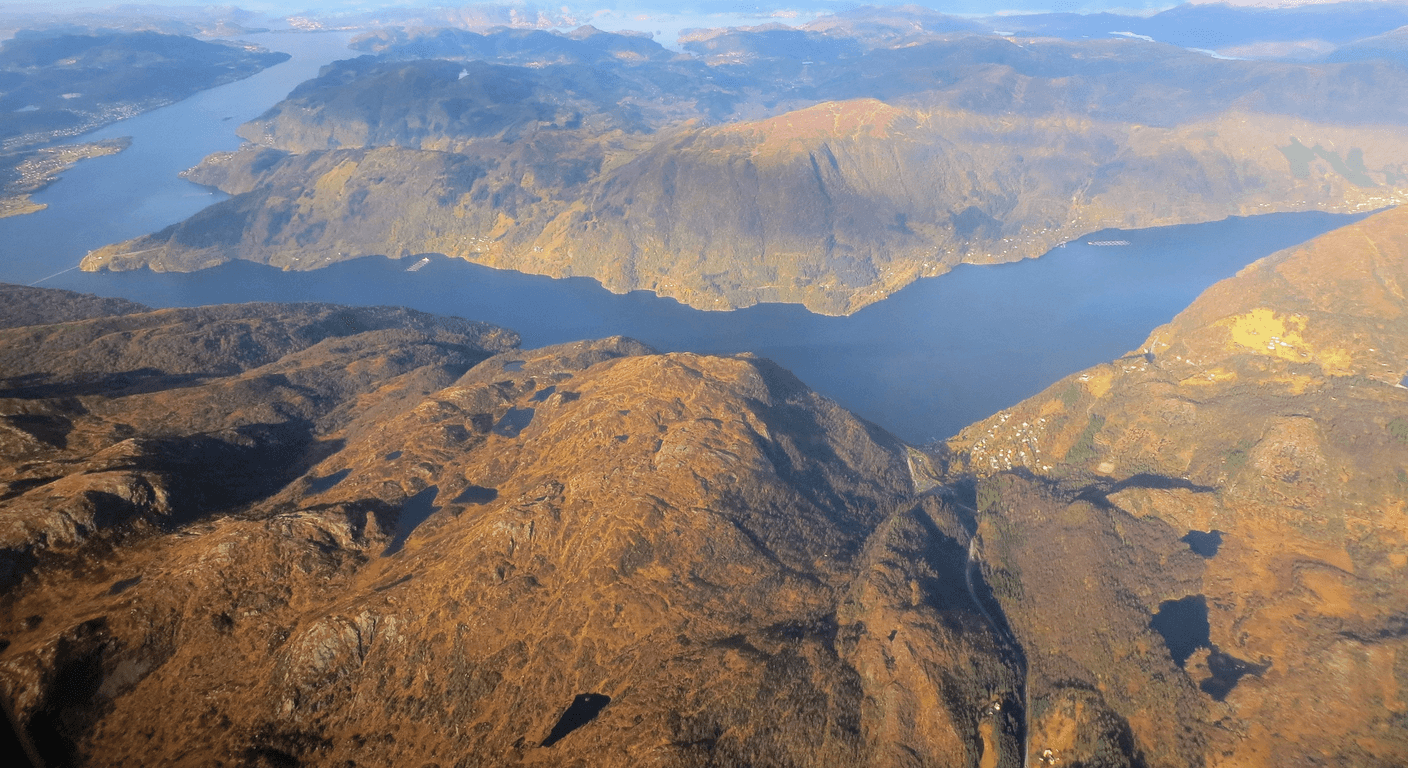
The electric ferry from Flåm to Gudvangen runs through the Nærøyfjord, a UNESCO-listed branch of the Sognefjord that narrows to around 250 metres at its tightest point. The cliff walls rise to over 1,700 metres on either side. Waterfalls thread down the rock faces. The water is deep green and still. The ferry is quiet — almost eerily so, because electric propulsion produces almost no engine noise — and the experience is one of the most genuinely peaceful things you can do in Norway.
The journey takes about two hours at a comfortable pace. There are seats inside and open deck space at the bow and stern. In summer the deck fills quickly; if you want unobstructed views, position yourself early. Dress in layers regardless of the forecast — the fjord creates its own microclimate and the temperature at water level can be noticeably cooler than Bergen. The ferry is operated by Fjord1; check current schedules and booking at fjord1.no or through Fjord Tours.
From Gudvangen, the classic Nutshell route continues by bus (the Stalheimskleiva road is steep and dramatic) to Voss, then by train back to Bergen. If your group is tired or the timing doesn't suit, it's also possible to retrace the ferry back to Flåm and continue from there — the scenery going the other direction is no less good. Flexibility is the whole point of doing this independently rather than on a fixed group tour.
Practical matters: money, packing, and pacing in Norway
Norway is expensive — that's simply true, and there's no point softening it. Meals in a mid-range restaurant in Bergen or Flåm run to roughly AUD 40–70 per person for a main and a drink, indicative. A glass of wine can cost what you'd pay for a bottle in regional Victoria. The way to manage it is to eat a good hotel breakfast, buy lunch from a supermarket or bakery (Norwegians do this too), and save restaurant spending for dinner. The food quality at that level is genuinely high.
Packing for Norway in summer means packing for four seasons in a single day. Morning on the Hardangervidda plateau can be genuinely cold; afternoon in Bergen's harbour can be warm enough for short sleeves; the fjord ferry is chilly even at midday. A packable down jacket, a waterproof outer layer, and comfortable walking shoes with grip are the essentials. Waterproof is not optional — Bergen receives around 240 days of rain per year on average. This is not a complaint; it's why the landscape is so green.
Norway uses the Norwegian Krone (NOK). Contactless card payment is universal — you'll rarely need cash. The country's mobile network is excellent, and most accommodation and cafes offer reliable wi-fi. If your group uses WhatsApp or similar for staying in touch, it works seamlessly. Pharmacies (Apotek) are well-stocked and easy to find in Bergen if any prescription top-ups are needed; bring a sufficient supply of regular medications from home and carry them in hand luggage, not checked bags.
Quick planning guide
| Ideal pace | Slow-paced — spread over two days rather than one long connection day |
|---|---|
| Best months | June to August for long daylight; autumn also scenic with amber plateau colours |
| Suggested stay | 2–3 nights in Bergen plus an overnight in Flåm before or after the ferry crossing |
| Mobility level | Easy — flat, walkable villages, an accessible funicular, and no strenuous hiking required |
| Cost level | Premium — Norway is expensive, roughly AUD 350–500 per person per day indicative |
| Comfort level | Comfortable — modern trains with café cars, walkable towns, good hotel options |
| Best for | Older travellers and groups who prefer scenic rail and ferry travel over cruise-ship crowds |
| Main planning consideration | Book train, ferry and accommodation ahead for summer, and overnight in Flåm instead of rushing the day trip |
Key takeaways
- Overnighting in Flåm converts the Nutshell route from an endurance day into a genuinely relaxed two-day experience.
- The Nærøyfjord electric ferry is one of the quietest and most atmospheric ways to see Norway's fjords — no cruise ship crowds, no engine noise.
- The Bergen Railway crosses a high Arctic plateau at 1,200 metres — bring a layer even in July.
- Norway is expensive; budget roughly AUD 350–500 per person per day for accommodation, food and transport, indicative only.
- Australians should allow a recovery night in Oslo or Bergen on arrival — the time difference from eastern Australia is seven hours behind in summer.
- Travel insurance covering pre-existing conditions is essential; Norway has no reciprocal healthcare agreement with Australia.
Recommended partners and links
Indicative prices only — always confirm with the operator before booking.
Frequently asked questions
Do Australians need a visa to visit Norway?
Norway is part of the Schengen Area. Australian passport holders can visit without a visa for stays up to 90 days within any 180-day period, but entry rules can change. Check the current requirements on the Australian Government's Smartraveller website (smartraveller.gov.au/destinations/europe/norway) before booking.
Is the Norway in a Nutshell route suitable for travellers with limited mobility?
The route is rated Moderate. Train carriages on both the Bergen Railway and Flåm Railway have steps at boarding, and not all platforms have level access; contact VY (vy.no) in advance to discuss assistance. The Nærøyfjord ferry boarding involves a short gangway walk. Flåm village itself is flat and easy to navigate on foot. Travellers with significant mobility limitations should confirm accessibility details directly with each operator before booking.
When is the best time to do the Nutshell route from Australia?
June, July and August offer the longest daylight hours — up to 20 hours of light per day in Bergen in June — and the most reliable ferry and train services. Late May and September are quieter, less expensive and still comfortable, but some ferry services run on reduced schedules. Winter travel is possible but the Nærøyfjord ferry may not operate; confirm schedules well in advance.
How far in advance should Australians book the Bergen and Flåm Railway?
For travel in June, July or August, book as early as possible — ideally three to six months ahead. The Flåm Railway in particular sells out quickly in peak summer. Tickets are available through vy.no (Bergen Railway) and flamsbana.no (Flåm Railway), or as part of a package through fjordtours.com.
Can you do the Nutshell route as an independent traveller rather than on a tour?
Yes, and most experienced travellers prefer it. All components — Bergen Railway, Flåm Railway, and Nærøyfjord ferry — can be booked separately and combined at your own pace. Fjord Tours (fjordtours.com) also offers self-guided Nutshell packages that handle the ticketing coordination if you prefer a single booking. Independent travel gives you the flexibility to overnight in Flåm, which is strongly recommended.
- Visit Bergen — official Bergen tourism information
- Flåmsbana (Flåm Railway) — official timetables and tickets
- VY (Norwegian State Railways) — Bergen Railway booking
- Fjord Tours — Norway in a Nutshell packages
- Smartraveller — Norway travel advice for Australians
- UNESCO World Heritage — West Norwegian Fjords (Nærøyfjord and Geirangerfjord)
- Fjord1 — Nærøyfjord ferry operator