Over-50 Australians cruising from Sydney, Melbourne, Brisbane, Perth, Fremantle or Adelaide should pack one soft-sided, expandable suitcase under 23 kg, carry all medications in hand luggage with a doctor's letter, and layer for variable ship air-conditioning. Mobility rating: Easy to Moderate depending on itinerary. Sailaway departures need no flights; itineraries joining in Singapore or the US add domestic and international checked-baggage rules to manage. Year-round cruising suits this format; autumn and spring departures avoid peak-season surcharges.
Why Cruise Packing Is Different — And Why It Matters More After 50
You unpack once. That's the whole deal. But the cabin you're unpacking into on a mainstream cruise ship — a standard inside or ocean-view stateroom on P&O Australia's Pacific Explorer or Princess's Coral Princess, say — offers roughly the same wardrobe space as a budget motel room. There's one shallow hanging section, two or three drawers, and a shelf or two under the vanity. Solo travellers in a standard single cabin get even less: typically a room built for two people where one occupant's worth of storage has quietly disappeared.
Getting the weight right matters before you even reach the ship. Most Australian home-port embarkations — Sydney's Overseas Passenger Terminal, Station Pier in Melbourne (Port Melbourne), the Brisbane International Cruise Terminal, Fremantle, and the Adelaide Outer Harbor — involve a portered bag drop where your suitcase is whisked away and appears outside your cabin. You don't carry it. But you do carry it to and from the terminal, in and out of taxis or rideshares, and potentially up a kerb or two. A 28-kg hard-shell case that seemed manageable in the spare bedroom is a different proposition on a sloping car park ramp at 7 am.
The case weight question gets sharper if your cruise requires a connecting flight to join the ship — flying to Singapore to board a world voyage leg, say, or to Auckland or Los Angeles. Domestic Australian carriers (Qantas, Jetstar, Virgin) typically allow 23 kg checked per bag in economy; international allowances vary by carrier and fare class but are often 23–30 kg. The hassle isn't the weight limit itself — it's the transfer. Hauling a heavy bag through Changi or LAX on a connection, particularly if you're managing a cane or a sore knee, is the part nobody photographs for the brochure.
What the Mainstream Lines Actually Allow — Luggage Policies in Plain Language
None of the major lines sailing from Australian ports — Princess, P&O Australia, Royal Caribbean, Celebrity — enforce a strict checked-luggage weight limit the way airlines do. There's no scale at the gangway. What they do have are practical limits: the porters and the cabin stewards are the constraint, and most lines ask that bags be manageable (a loose guideline of around 23 kg is commonly cited in passenger documentation, though you should confirm the current policy directly with your line before sailing). The real ceiling is the cabin itself. A 76-cm hard-shell case, fully packed, barely fits under the bed on a standard stateroom — and on some older ships on the P&O Australia fleet, it doesn't fit at all.
Soft-sided expandable luggage wins on a cruise. It compresses when empty (you can shove it flat under the bed or into the wardrobe base), it absorbs the odd porter's bump without cracking, and a decent quality 65–70 litre soft-shell case — brands like Samsonite, Antler or Delsey are widely available in Australian department stores — costs roughly $60–$150 on sale, though premium options run higher. Confirm current pricing with the retailer. A second, smaller soft bag or a quality tote for port days rounds out the kit without adding bulk.
Packing cubes deserve their reputation. A set of four to six cubes ($25–$60 a set, indicative — check current prices) lets you organise by category rather than by day, which matters when the cabin drawer is eight centimetres deep and you're searching for a cardigan at 11 pm. Compression cubes work well for bulkier items like jeans or a light jacket, though they do add a small amount of weight. One cube per category — medications and health items, underwear and base layers, tops, evening wear — is a system that holds up even in a cramped solo cabin.
Medications: The Category That Cannot Be Improvised
All medications — prescription and over-the-counter — go in carry-on luggage. Full stop. Checked bags go missing; ship medical centres stock basic supplies but cannot reliably dispense your specific blood pressure medication, thyroid hormone, or anticoagulant. Carry the full cruise supply plus a minimum five-day buffer for delays, port diversions, or the kind of extended disembarkation chaos that happens when 3,000 passengers and one customs hall meet. A doctor's letter listing every medication by generic and brand name, dosage, and the medical condition it treats is not optional — it's the document that gets you through customs in Bali, Ho Chi Minh City, or any port where the local authorities may query a bag full of blister packs.
Medications should travel in their original labelled packaging where possible. If you use a weekly pill organiser at home, keep the original boxes and pack both. A small, clearly labelled zip pouch inside your carry-on — not buried at the bottom — means you can access it quickly at security or if a crew member or fellow passenger asks. For insulin or temperature-sensitive medications, a soft insulated travel case (roughly $20–$40) works well in the cabin mini-fridge; confirm with your line before departure that the fridge in your cabin reaches adequate cooling temperatures, as some ship mini-bars run warmer than a domestic fridge.
Travel insurance that covers pre-existing conditions is non-negotiable, and it adds real money to the premium. For an over-50 Australian with a managed condition — hypertension, diabetes, a history of cardiac events, joint replacements — a single-trip international policy covering a 14-night Pacific cruise can run anywhere from $150 to $400 or more above a standard policy, depending on your condition, your age, and the insurer. Some insurers decline to cover specific conditions altogether; others cover them with a higher excess. Compare through a service like Cover-More (covermore.com.au) or directly with your insurer, declare everything, and read the product disclosure statement before you pay. The Seniors Card does not cover travel insurance, but some superannuation funds offer group travel cover worth checking.
What to Actually Pack: The Categories That Count
Layering is the practical answer to ship air-conditioning, which is aggressive on most mainstream lines and entirely out of your control. The public spaces — the main dining room, the theatre, the atrium — run cold. The pool deck runs hot. Your cabin thermostat is a negotiation. A lightweight merino or bamboo-blend cardigan that packs flat, a thin long-sleeved layer, and a light scarf cover most scenarios without taking up meaningful space. For shore excursions in the Pacific or Southeast Asia — Noumea, Port Vila, Ho Chi Minh City, Bali — the humidity will make you grateful for moisture-wicking fabrics and a small personal fan (a rechargeable handheld fan costs roughly $15–$35 and is worth every cent in Da Nang in February). A cooling towel, dampened and draped over the back of the neck, is the unglamorous but genuinely effective alternative.
Shoes are the category where most people over-pack and then regret it. Two pairs of walking shoes — one supportive flat for shore days, one slightly smarter for dining — plus a pair of thongs or sandals for the pool deck covers most itineraries. The supportive flat matters specifically for tender ports (Airlie Beach, some Pacific island stops) where you step from a tender boat onto a floating platform and then onto a dock, often on a slight lean. A rubber sole with real grip is not a fashion statement; it's what keeps you upright. Evening formal nights on Princess or Celebrity suggest a low heel or a dressy flat — nobody is scrutinising footwear if your outfit is right. Pack what you can walk in.
A lightweight daypack — 15 to 20 litres, soft-sided, with a zip-close top — is the shore-day essential that heavy handbags don't replace. It carries your water bottle, sunscreen, a light jacket, your camera or phone, a copy of your passport photo page, and any port-day cash without pulling one shoulder out of alignment. Brands like Osprey, Deuter or even a quality no-name option from an outdoor retailer run roughly $40–$120 (confirm current pricing). Compression stockings for any flights involved in joining the cruise — whether a domestic hop from Melbourne to Sydney to board, or an international flight to Singapore — are worth discussing with your GP or pharmacist. They're not glamorous, but deep-vein thrombosis risk on long-haul flights is real and measurable, particularly post-60.
Packing for Mobility Aids, Accessible Cabins, and the Reality of Getting Around the Ship
If you travel with a cane, a folding walking frame, or a rollator, the packing calculation shifts in one important direction: the cabin needs to accommodate both you and the equipment. Standard staterooms on most mainstream lines are not designed for rollators or power wheelchairs, and the bathroom — a compact wet-room arrangement on most ships — has limited turning radius. Accessible cabins are wider, have roll-in showers, fold-down shower seats, and grab rails, and they book out early. Request one at the time of booking, confirm it in writing, and follow up closer to departure. Do not assume a verbal assurance is sufficient.
Packing around a mobility aid means thinking about what you carry versus what the ship provides. Most lines will loan a manual wheelchair for use on board; confirm availability with your line before departure, as numbers are limited. If you use your own folding cane or walking poles, they go in the suitcase or in the carry-on — airline overhead bins accommodate folding poles reasonably well. A small hip pack or cross-body bag frees both hands on gangways and uneven port streets, which matters more than it sounds when a tender is rocking gently and the crew member holding your arm is also managing four other passengers.
For those managing fatigue conditions or cardiac considerations, the ship's layout is worth researching before you board. On larger Royal Caribbean or Celebrity ships, the distance from an aft cabin to the forward dining room can be 300 metres or more — not a problem on a good day, a real issue on a rough sea day when you're tired. Midship cabins on a lower-to-mid deck reduce walking distance and minimise the motion felt during overnight passages. Ask your travel agent to specify midship placement at booking; it's usually no extra cost and makes a meaningful difference.
The Solo Cruiser's Packing Reality — And the Single Supplement Conversation
Solo travellers on mainstream cruise lines face a financial reality that's worth stating plainly: most lines charge a single supplement, which typically adds 50–100% to the per-person fare to cover the unoccupied second berth. P&O Australia has at times offered solo-occupancy fares on selected sailings without a supplement; Princess and Royal Caribbean run periodic solo promotions. Celebrity has dedicated solo staterooms on some ships. The supplement situation changes frequently — check directly with the line or a cruise specialist, and ask specifically about share-match programmes (where the line pairs solo travellers of the same gender in a twin cabin) if the supplement is prohibitive. This is not a peripheral concern; for a two-week cruise, a 100% supplement can add $1,500–$4,000 or more to the fare.
The packing implication of a solo cabin is storage. Solo staterooms — where they exist — are purpose-built and generally better designed than a twin room with one person in it. But on ships without dedicated solo cabins, a solo traveller in a standard stateroom gets the same space as a couple, which sounds generous until you realise that the wardrobe, the vanity, and the bathroom counter are all sized for two sets of toiletries, two suitcases, and two people's daily habits. Packing light is not a suggestion in this context — it's the only way to keep the cabin functional. One well-organised soft-sided case, a daypack, and a small toiletries bag is the working formula. The second bed becomes a surface. Use it.
Solo female travellers in particular often carry more than they need because the instinct is to prepare for every scenario. The practical answer is a capsule wardrobe built around two or three neutral base colours, with accessories — a scarf, a piece of jewellery — doing the variation work. Five tops, three bottoms, one smart layer, one casual layer, two pairs of shoes, one pair of thongs. That's most of a fortnight sorted, with room for a small souvenir on the return. The YouTube channel LifeWellCruised (youtube.com/@LifeWellCruised) covers cruise cabin organisation and packing in useful practical detail, with content specifically relevant to women cruising solo or as part of a pair — worth an hour of pre-departure viewing.
What a Cruise Embarkation Day Actually Looks Like — Hour by Hour
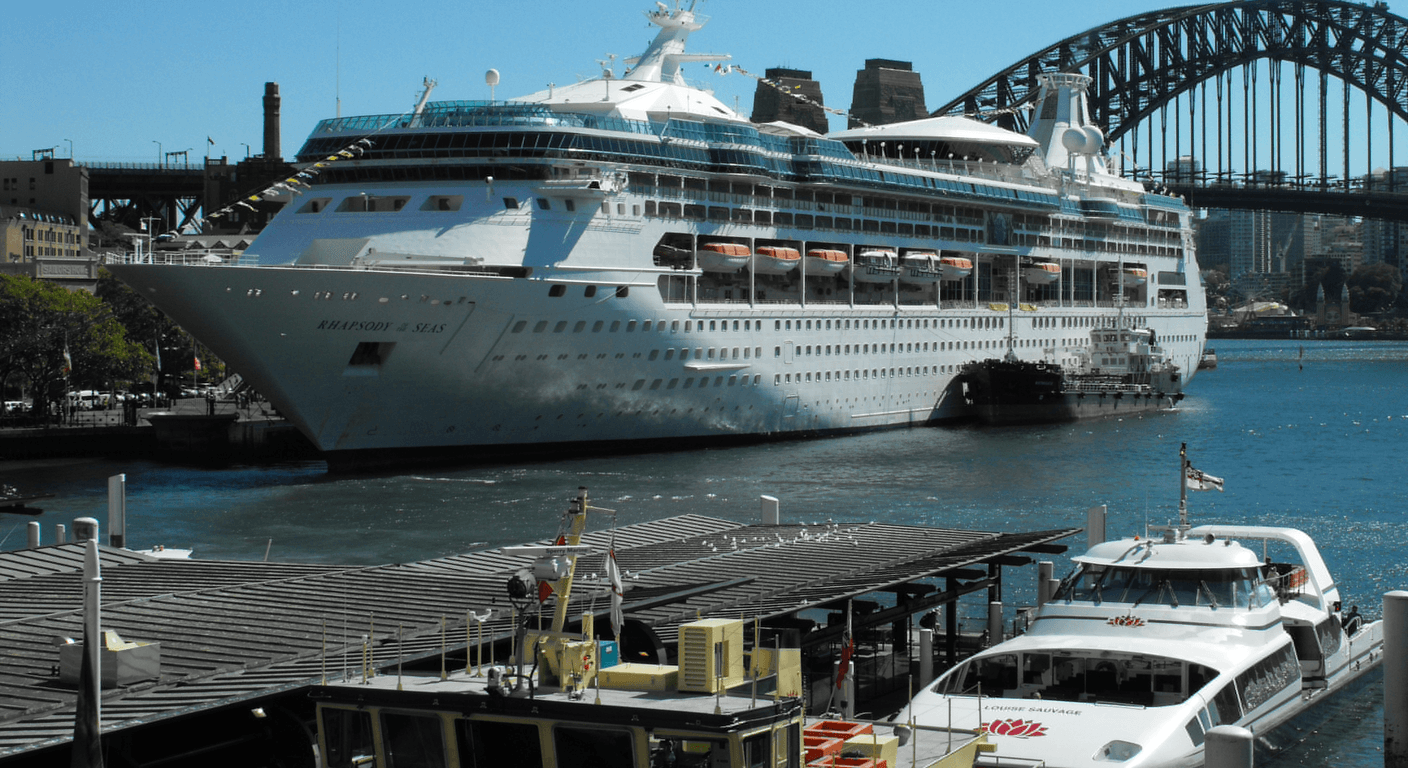
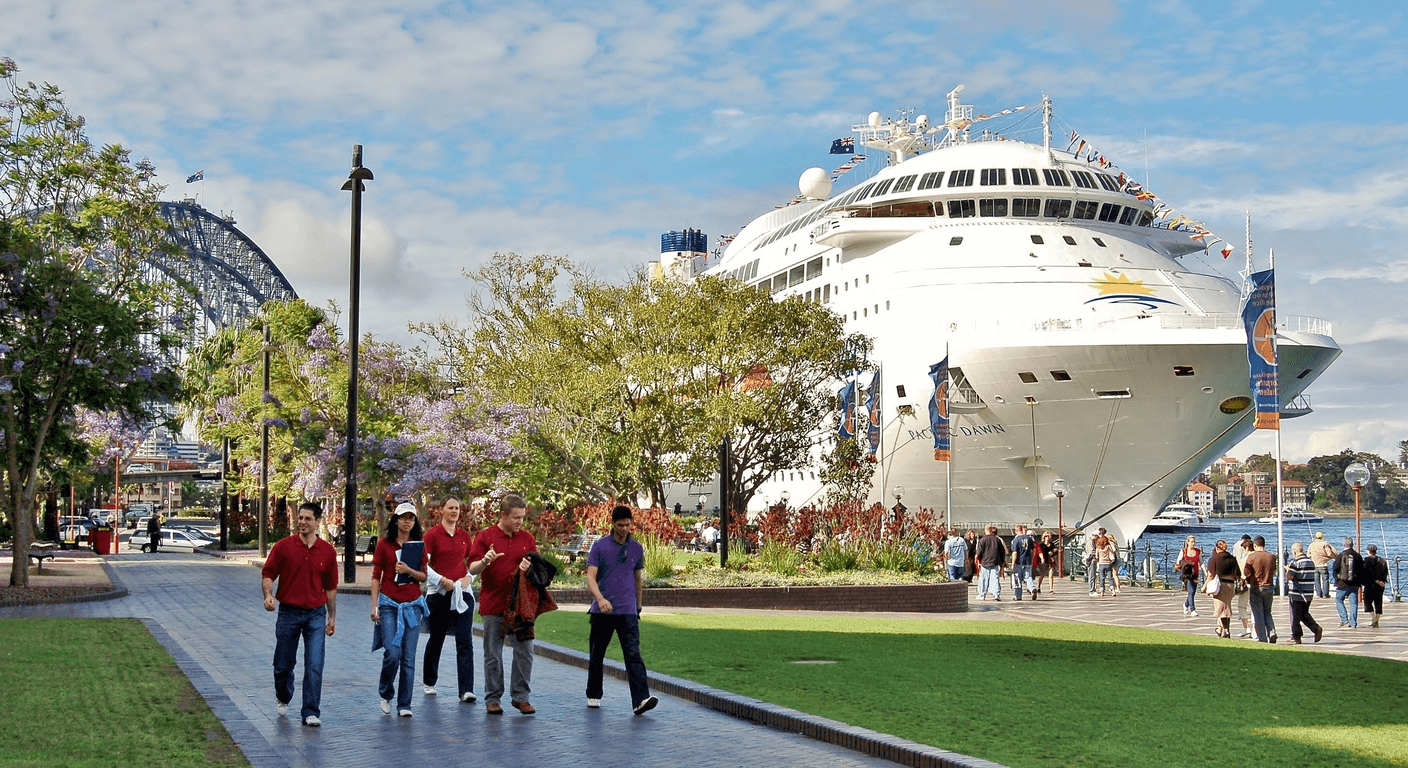
The embarkation timeline is one of those things cruise brochures omit entirely. Here's a realistic account for a Sydney departure from the Overseas Passenger Terminal at Circular Quay, indicative times — confirm yours with your line. Boarding typically opens between 10:30 and 11:00 am for general passengers; suite and loyalty-tier passengers board earlier. Arriving at the terminal around 11:00 am means a queue, but usually a moving one. Allow 30–45 minutes from kerb to cabin, longer on peak summer sailings. Luggage is tagged and surrendered at the terminal entrance — you won't see it again until it appears outside your cabin door, typically between 2:00 and 5:00 pm.
The gap between boarding and luggage arrival is the part to plan for. Your carry-on is your afternoon. Medications, a change of clothes if you need one, any valuables, your travel documents, and a charger — all of it needs to be in the bag on your shoulder, not in the case being trundled around the cargo hold. Most ships open the buffet (Lido deck) from around noon on embarkation day; the main dining room may not open until dinner. There are usually seating areas, a bar, and deck space available. Sailaway from Sydney Harbour is genuinely one of the finer ways to spend a late afternoon — find a spot on an upper deck before 4:00 pm.
For those with mobility considerations, embarkation terminals vary in accessibility. Sydney's OPT has lifts and wheelchair assistance available on request; Station Pier in Melbourne is generally flat but can involve a longer walk from the drop-off point to the gangway. Contact your line's special needs or accessibility team at least 30 days before departure — not the general booking line — to confirm what assistance is available dockside. This is the call that determines whether embarkation day is manageable or exhausting, and it takes ten minutes to make.
Quick planning guide
| Ideal pace | One embarkation day plus a half-day buffer at the end; no rushed connections at the home port |
|---|---|
| Best months | March–May and September–November for most Australian-departure itineraries; check seasonal cyclone zones for Pacific and Asian routes |
| Suggested stay | 7–14 nights is the sweet spot for cost-per-night value on mainstream lines |
| Mobility level | Moderate — gangways, tender platforms and uneven port streets require planning |
| Cost level | Varies widely; budget roughly $150–$350 per person per night all-in on P&O Australia or Princess, more on Celebrity or Royal Caribbean |
| Comfort level | High on ship; variable ashore — comfortable shoes and a light pack matter enormously |
| Best for | Solo women, culturally curious couples, grey nomads, anyone who wants to unpack once |
| Main planning consideration | Luggage weight limits and accessible cabin availability — both require early action, not afterthoughts |
Key takeaways
- All medications travel in carry-on luggage only, with a doctor's letter and a five-day buffer supply beyond the cruise duration.
- Soft-sided expandable luggage ($60–$150 indicative) outperforms hard-shell cases in compact cruise cabins and under ship beds.
- Accessible cabins on Princess, P&O Australia, Royal Caribbean and Celebrity book out early — request one at the time of booking, in writing.
- Solo cruisers should ask directly about single supplements, share-match programmes and dedicated solo staterooms before committing to a fare.
- A lightweight daypack, grip-soled flat shoes and a small personal fan are the three most practical additions for Pacific and Asian itinerary shore days.
- If your cruise requires a connecting flight, check domestic and international checked-baggage allowances separately — they differ, and heavy cases through airport connections are a real mobility hazard.
Recommended partners and links
Indicative prices only — always confirm with the operator before booking.
Frequently asked questions
Do cruise lines sailing from Australian ports have a luggage weight limit?
Mainstream lines including Princess, P&O Australia, Royal Caribbean and Celebrity do not enforce a strict checked-luggage weight limit at the gangway the way airlines do. However, most passenger documentation suggests keeping bags to around 23 kg for practical handling. The real constraint is cabin storage — a large hard-shell case often won't fit under the bed on older ships. Confirm the current policy with your specific line before departure.
Can I bring my rollator or walking frame on a cruise?
Yes, but you should book an accessible cabin at the time of reservation and confirm it in writing. Standard staterooms have limited turning radius in the bathroom and are not designed for rollators or power wheelchairs. Accessible cabins on mainstream lines feature roll-in showers, fold-down shower seats and grab rails. Numbers are limited and they book out early, particularly on popular Australian departure sailings.
What should solo women over 50 know about packing for a cruise cabin?
Solo travellers in standard staterooms share the same storage space as a couple, so packing light is essential. A capsule wardrobe built around two or three neutral colours, with one well-organised soft-sided case and a daypack, is the practical formula. Solo cabins — where the line offers them — are purpose-built and better proportioned. Always ask about single supplements and whether a share-match or solo-cabin option is available before booking.
Does travel insurance cost more if I have pre-existing medical conditions?
Yes. For an over-50 Australian with a managed condition such as hypertension, diabetes or a history of cardiac events, a single-trip international cruise policy can cost $150–$400 or more above a standard premium, depending on the condition, age and insurer. Some insurers exclude specific conditions entirely. Declare all conditions honestly, compare policies, and read the product disclosure statement carefully. Confirm current pricing with your insurer.
What changes about packing if I need to fly to join my cruise — say, in Singapore or Los Angeles?
Connecting flights introduce airline checked-baggage rules that the cruise line doesn't control. Domestic Australian carriers typically allow 23 kg per checked bag in economy; international allowances vary by carrier and fare class. The real issue for over-50 travellers is the physical transfer of heavy luggage through connecting airports, particularly with limited mobility. Pack lighter than you think you need to, use a soft-sided expandable case, and carry all medications in your hand luggage regardless of the connection.
- LifeWellCruised — Cruise Packing and Cabin Organisation (YouTube)
- Princess Cruises Australia — Official Site
- P&O Cruises Australia — Official Site
- Royal Caribbean Australia — Official Site
- Celebrity Cruises Australia — Official Site
- Cover-More Travel Insurance Australia
- Smartraveller — Australian Government Travel Advice