Good to know: The pier is a long, exposed walk, and the crowds at sunset and on weekends can be tiring. Check prices, opening hours and pier access with official sources before you go.
St Kilda Pier suits a slow half-day any time of year, but the best months are March to May and October to November, when the wind is kinder. Allow four to six hours for the long walk, a Kiosk coffee, a seat and a foreshore stroll. Mobility rating: Easy to Moderate. From Tullamarine, take SkyBus and a tram, or a rideshare for roughly $60 to $90.
How do you get to St Kilda Pier from Sydney, Brisbane, Perth and the airport?
Flight times into Melbourne are roughly 1.5 hours from Sydney, 2.5 hours from Brisbane and 3.5 to 4 hours from Perth. Perth arrivals gain two or three hours on the clock but still lose a day to tiredness. A recovery evening before the pier walk is a smart choice, not a weakness. Sydney and Brisbane travellers can manage a morning arrival and a gentle afternoon.
From Tullamarine, SkyBus runs to Southern Cross Station, usually costing around $20 to $30 one way. From there, a tram or a short rideshare gets you to the bay. A taxi or rideshare straight from the airport to St Kilda typically lands in a band of roughly $60 to $90, depending on traffic and time of day. Treat those figures as indicative. Check them on the day.
Several tram routes serve St Kilda, including routes 96, 16 and 3/3a, which reach Fitzroy and Acland streets or the beach end. Check the current route, stop and low-floor tram details with Public Transport Victoria before you leave. Low-floor trams are common but not universal, and the stop nearest the pier is not always the one with the easiest kerb. Allow a short, flat walk from the tram to the pier entrance.
What does a slow day at the pier actually look like?
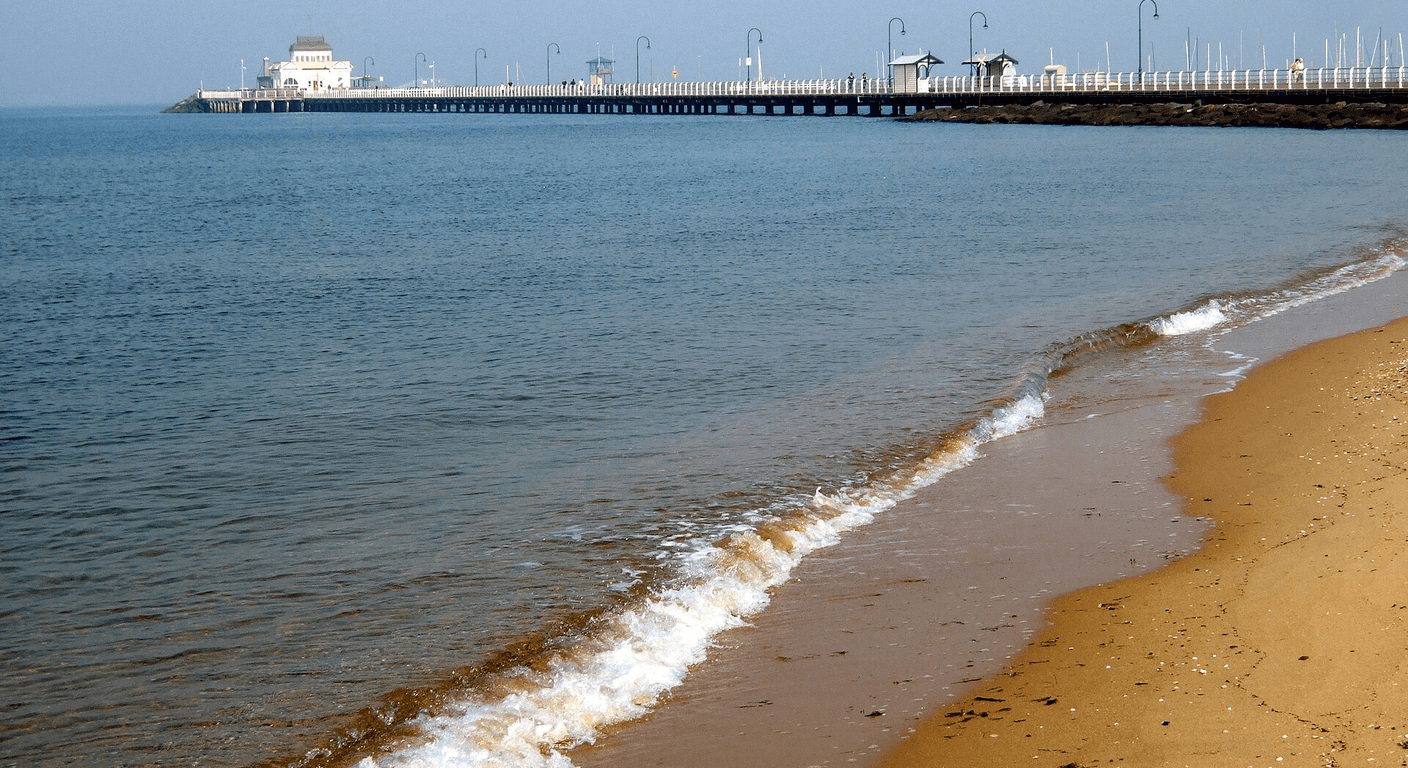
These times are indicative, not a timetable. Aim to arrive by 9:30. A morning visit beats the wind that often builds in the afternoon, and it's well ahead of the sunset crowd. Walk out along the pier at an easy pace. At roughly 600 to 700 metres each way (confirm the length with the managing authority), it's a 20 to 30 minute stroll out if you stop for photos, and the same back.
Reach the Kiosk around 10:15 and sit for a coffee and something sweet. This is the real point of the trip. Give it 45 minutes to an hour. If the Kiosk is busy, there are benches along the pier and the view back to the city is the same from a seat. By 11:30, wander back toward the foreshore. The Esplanade and the Jacka Boulevard promenade are flat and wide, and good for a gentle 30 to 40 minute stroll.
Lunch can be fish and chips on the grass, or a sit-down meal at a Fitzroy Street café from about 12:30 to 1:30. Acland Street, a short walk up the hill, is the old home of the Eastern European cake shops. It's worth a look for a late coffee. The genuinely skippable part is the full foreshore walk if the wind is up. Take the tram up to Acland Street instead and spend the afternoon in the cafés and shops, then head back about 3:30 to 4:00. Toilets are available near the pier entrance and along the foreshore, but check the council's current list for locations and opening hours.
How accessible is St Kilda Pier for older and less-mobile travellers?
The pier is long, mostly level, and walked daily by people of every age. Even so, surfaces, ramps and any steps should be checked with the City of Port Phillip or the managing authority (confirm whether it's Parks Victoria or the council) before you go. Ask specifically about step-free access to the Kiosk, whether any section has timber boards with gaps, and whether any recent works have changed the layout. The 'newly redone' description in online posts needs confirming against official sources.
The pier is exposed. Wind picks up quickly, shade is limited and rain offers little shelter. Pack a windproof layer, a hat and sunscreen, even in cooler months. Seating is available but not constant. If you tire easily, plan your rest stops before you set off, not once you're halfway along.
Mobility scooters and walkers are commonly used on the foreshore. Confirm that the pier surface suits them and whether any rules apply. On the approach, check the kerb ramps near the tram stops and the pedestrian crossings on Jacka Boulevard. Gradients are generally gentle but some crossings are busy. A taxi or rideshare drop at the pier entrance is an easy fix if the tram stop feels too far.
What does a St Kilda pier day cost?
Coffee and a pastry at the Kiosk or a nearby café typically runs about $12 to $20. A fish and chips meal is roughly $20 to $35, more with a drink and a side. These are indicative bands, and kiosk and seaside pricing tends to run high. Check the Kiosk's own menu and hours before you plan a meal around it. Card surcharges on weekends and public holidays are common and can add a few percent.
Tram travel uses myki, with a two-hour fare of roughly $5 to $6 and a daily cap in the vicinity of $10 to $12. Concession fares are lower. Victorian Seniors Card holders can access concession myki travel, so apply for one if you're eligible. Interstate seniors card holders should check with Public Transport Victoria about what's recognised. Don't assume it carries over. Confirm all fares on the PTV site.
Many older Australians miss the Victorian Seniors Card's wider discounts. These can cover cafés, accommodation and attractions, though they vary by business. Ask at the counter before you pay. Pension recipients should also check their own concession arrangements.
Where should you stay, and what does solo pricing look like?
Bayside accommodation around St Kilda, Elwood and Albert Park ranges from compact hotel rooms to serviced apartments. Indicative nightly rates run roughly $180 to $320 for a comfortable double or twin room, depending on season and events. These are bands only. Confirm current rates with each property.
A solo traveller's perspective: most hotels price per room, not per person. There's usually no formal single supplement, but you're effectively paying the twin-share rate for one. Some properties offer a small solo discount, and shoulder-season midweek rates are often noticeably lower. Ask directly. Choose a place with a well-lit street, a lift if needed, and a tram stop close by.
A couple's perspective: twin-share splits the room cost, so a $220 room becomes roughly $110 each. Apartments with a kitchen cut the dining bill and give you a place to rest between outings. Ask about step-free access, lift size and ground-floor rooms when booking. St Kilda is lively on Friday and Saturday nights, so request a quieter room if you're a light sleeper.
What about healthcare near St Kilda?
Melbourne's inner south is well served. Pharmacies operate along Fitzroy Street, Acland Street and Carlisle Street, and several run extended hours. GP clinics are close by, though walk-in availability varies. Confirm hours on the day if you need a script or a consultation. Pack a written list of medications and your doctor's contact details.
For hospital care, the Alfred in Prahran is the major public hospital in the area, with private options in the surrounding suburbs. In an emergency, call 000. For non-urgent advice, Nurse-on-Call (1300 60 60 24) is a Victorian government service. Check that it's currently running before relying on it.
Interstate travellers should carry their Medicare card and review their travel insurance, particularly for pre-existing conditions. Domestic trips are often left out of policies, so ask your insurer what applies. Cancellation cover matters too, given weather and flight disruptions.
What needs confirming before you go?
Weekend and sunset crowds are the biggest comfort factor. The pier fills at golden hour, especially in summer, and a slow walker can feel crowded on a narrow section. Weekday mornings are noticeably calmer. Wind and weather can turn a pleasant outing into a short one, so check the forecast and carry a layer.
The Kiosk's hours, menu and booking rules may change, and online posts can be out of date. Check the operator's own website or social page directly. Equally, details of recent pier works, new surfaces or changes to seating should be matched against the City of Port Phillip and Visit Victoria. The creator video from BrittAndMitchWorldwide is a useful visual of the location, but it carries no trip date. Treat it as a starting point, not a source for prices or access.
Little penguins are known to shelter near the St Kilda breakwater, and volunteer-led viewing has run there. Access points, viewing times and rules (including no flash photography and keeping a respectful distance) should be confirmed with the City of Port Phillip or the volunteer group before you plan around it. Don't count on a sighting, and don't go to the breakwater at night without confirming current access.
Quick planning guide
| Ideal pace | Unhurried. A morning or late-afternoon visit, with long pauses for coffee and a bench. |
|---|---|
| Best months | March to May and October to November for milder wind and lighter crowds. Summer weekends and sunset are busy. Winter is bracing but quiet. |
| Suggested stay | A half-day or full day trip. One or two nights if flying in from Sydney, Brisbane or Perth. |
| Mobility level | Easy. The pier is long and flat but exposed, so check surfaces and access with the managing authority before you go. |
| Cost level | Low for the day itself. Roughly $12 to $20 for coffee and pastry, $20 to $35 for fish and chips. Indicative only. |
| Comfort level | Good, with cafés, toilets and benches nearby. Shade and wind shelter on the pier itself are limited. |
| Best for | Solo travellers, couples and friends who like water views, a good coffee and a gentle walk. |
| Main planning consideration | Wind, weekend and sunset crowds, and the unconfirmed detail on the pier's recent works and the Kiosk's current hours and menu. |
Key takeaways
- St Kilda Pier is an easy walk, but it is long and exposed, so plan seat stops and carry a windproof layer.
- Flight times to Melbourne are roughly 1.5 hours from Sydney, 2.5 from Brisbane and 3.5 to 4 from Perth.
- SkyBus to Southern Cross then a tram or rideshare works well; a direct rideshare costs roughly $60 to $90.
- Coffee and a pastry run around $12 to $20 and fish and chips around $20 to $35. These are indicative, so check current menus.
- Hotels usually price per room, so solo travellers pay close to the twin-share rate. Ask about midweek and shoulder-season discounts.
- Confirm pier access, Kiosk hours and any penguin viewing rules with official sources before you travel.
Recommended partners and links
Indicative prices only — always confirm with the operator before booking.
Frequently asked questions
How long should you allow for St Kilda Pier and the Kiosk?
Allow four to six hours for a relaxed visit. That covers the walk out and back, a coffee stop at the Kiosk, a seat with the view and a gentle foreshore stroll. Times are indicative and depend on your pace and the weather.
Is St Kilda Pier suitable for people with limited mobility?
The pier is long and largely level, but it is exposed and seating is limited. Confirm surfaces, step-free access and mobility-scooter suitability with the City of Port Phillip or the managing authority before you go. A rideshare drop at the entrance shortens the approach.
How much does a day at St Kilda Pier cost?
Coffee and a pastry cost roughly $12 to $20 and fish and chips roughly $20 to $35. Tram travel on myki is around $5 to $6 for two hours, with a daily cap near $10 to $12. All figures are indicative, so confirm current prices.
Do Seniors Card holders get cheaper tram travel in Melbourne?
Victorian Seniors Card holders can access concession myki fares. Interstate card holders should check with Public Transport Victoria about what is recognised, because it is not guaranteed. Always confirm before you travel.
Can you see little penguins at St Kilda?
Little penguins are known to live near the St Kilda breakwater, but access, viewing times and rules change. Check the City of Port Phillip or the volunteer viewing group for current details. Do not use flash and keep your distance.
Want the next guide like this?
Choose your state, the subjects you care about, or both. We will let you know when a new guide lands. Email once a week at most, or a quiet phone notification on the day it publishes. No advertising, no sponsored content, and we never pass your details to anyone.