The Sulu Sea and Palawan reward slow, deliberate travel, with April to June bringing calm seas and clear reef visibility for small-ship liveaboards and crewed charters. A well-paced visit runs 12–14 days, pairing a 7-night liveaboard—often to Tubbataha Reef—with recovery in Puerto Princesa and a stay in El Nido. Access means a long-haul flight to Manila, a short domestic hop, and moderate mobility demands, as boarding via tender requires balance and crew assistance.
Why the Sulu Sea Has Captured the Imagination of Long-Distance Travellers
There's a particular kind of envy that comes from watching ocean-sailing adventurers thread their way through the Calamian Islands or drop anchor off a reef so remote it has no mobile signal and no other boats. Channels like Sailing La Vagabonde have brought these waters into living rooms across Australia, and the response from travellers over 50 is entirely predictable: 'How do we get there without buying a yacht?' The answer is better than most people expect.
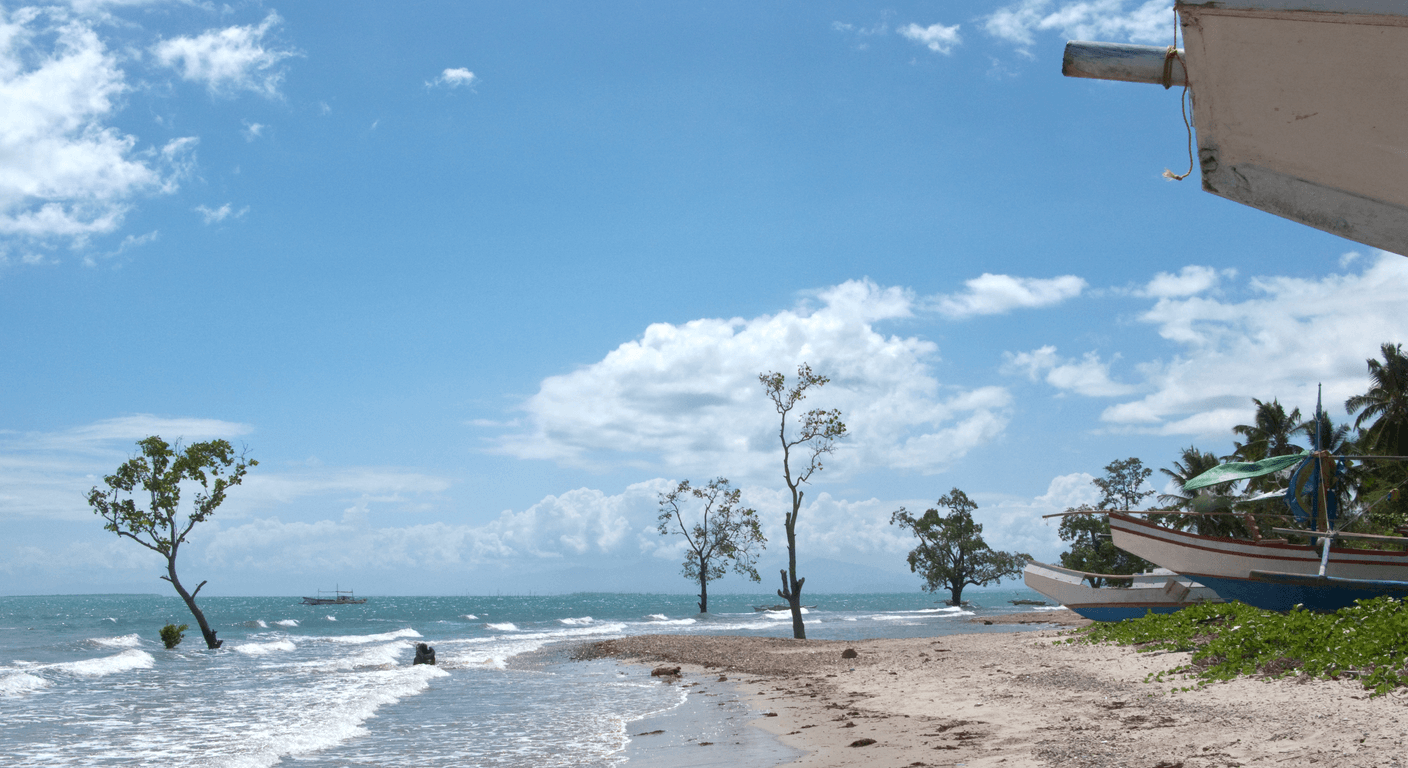
The Sulu Sea sits between Palawan — the Philippines' long, spine-like western province — and the island groups of the Visayas and Mindanao. It encompasses some of the world's most biodiverse coral reef systems, including Tubbataha, a UNESCO World Heritage reef that's genuinely difficult to reach and all the better for it. The surrounding waters hold limestone karst formations, turquoise lagoons, and island chains that remain, by any reasonable measure, lightly visited.
For a traveller in his 70s who has spent decades appreciating the Aegean's particular quality of light on water, there's a useful parallel here: the Sulu Sea rewards patience and slow movement. It is not a destination for ticking off a list. It's a place for sitting on a deck at dusk with a cold San Miguel, watching a reef pass at four knots, and feeling genuinely far from anywhere ordinary.
Getting There: Flights, Connections and the Honest Reality of Long-Haul
From Melbourne, Sydney or Brisbane, the most practical routing is a direct or one-stop flight to Manila (Ninoy Aquino International), typically 8–10 hours flying time depending on the airline and routing. Philippine Airlines, Cebu Pacific and connecting services via Singapore, Kuala Lumpur or Hong Kong all service this route. From Manila, the gateway to the Palawan region is Puerto Princesa (PPS), a short domestic flight of roughly 75 minutes. Some itineraries also begin or end in Coron (Busuanga), reachable via a further domestic hop.
Budget at least one full recovery night in Manila or Puerto Princesa before boarding any vessel. Jet lag combined with the physical demands of boarding a small ship — even with crew assistance — is not a combination to underestimate. Puerto Princesa itself is a pleasant, walkable town with good hotel options from around AUD $80–$200 per night for well-regarded mid-range properties; confirm current rates before booking.
As of 2025, Australian passport holders can enter the Philippines visa-free for stays of up to 30 days, with extensions available. Always confirm current visa conditions with the Philippine Embassy in Canberra or via the Bureau of Immigration Philippines website before departure, as entry requirements can change. Travel insurance that covers pre-existing medical conditions and, critically, medical evacuation from a remote maritime area is non-negotiable for this destination — standard policies frequently exclude both.
Small-Ship Expedition Cruises: What the Experience Actually Looks Like
The vessels that operate in Palawan and the Sulu Sea range from converted traditional bangka (outrigger) boats carrying 8–12 passengers, to purpose-built liveaboard dive vessels accommodating up to 20, to boutique expedition ships with proper en-suite cabins and air-conditioned saloons. The key distinction for over-50 travellers is not the vessel's age but its configuration: cabin headroom, bathroom size, the number of steps between decks, and whether crew can physically assist with boarding from a tender or zodiac.
A typical 7-night liveaboard itinerary in this region might cover Puerto Princesa to Coron, stopping at reef systems, limestone lagoons and small island anchorages — perhaps 4–6 reef or shore stops across the week, with sea transits usually conducted overnight or during early mornings so daylight hours are spent at anchor. That rhythm suits travellers who don't want to be in constant motion. Snorkelling from the vessel's stern platform or a tender is the primary activity; diving is offered on vessels with compressors and divemasters, but it's never compulsory.
Indicative costs for this style of travel run roughly AUD $3,500–$7,000 or more per person for a 5–7 night liveaboard, depending on the vessel's quality, the season, and whether the itinerary includes Tubbataha (which carries additional park fees and requires an operator-held permit). Premium vessels and peak-season departures sit at the higher end or beyond. These figures are indicative only — confirm current pricing directly with operators before making any decisions.
Tubbataha Reef: The Reason Serious Travellers Come This Far
Tubbataha Reef National Park sits roughly 180 kilometres south-east of Puerto Princesa, in the middle of the Sulu Sea. There is no island to stay on, no resort nearby, and no way to reach it except by overnight sea passage. The park is open only between mid-March and mid-June — the window when the Sulu Sea is calm enough for safe anchoring — and the Philippine government issues a strictly limited number of visitor permits per season. This is not a bureaucratic inconvenience. It's why the reef still looks the way it does.
For over-50 travellers who snorkel rather than dive, Tubbataha's shallow reef tops offer visibility that experienced divers describe as among the clearest they've encountered anywhere. Bumphead parrotfish, hammerhead sharks in the blue water beyond the reef edge, manta rays on cleaning stations — these are not guaranteed sightings, but they're not unusual ones either. The park rangers are present on a small platform structure and take their mandate seriously.
Securing a Tubbataha berth requires booking through a licensed operator well in advance — many operators fill their permitted departures six to twelve months ahead. Check the official Tubbataha Reef Natural Park website (tubbatahareef.org) for the current list of accredited operators. Do not book any vessel claiming Tubbataha access without confirming it holds a valid permit for your travel dates.
Crewed Charters and Shore-Based Alternatives for Those Who Prefer More Control
A crewed yacht or gulet charter — where a private vessel with skipper and cook is hired by a small group — offers a different proposition to a scheduled liveaboard. The itinerary is negotiable, the pace is yours, and the guest-to-crew ratio is often higher than on commercial vessels. For a group of four to eight friends or two or three couples, a crewed charter in the Calamian Islands or around El Nido can work out comparably priced to a premium liveaboard, with considerably more flexibility.
Palawan's El Nido and Coron are the two main charter hubs. Vessels range from traditional wooden bangka-style boats to fibreglass sailing catamarans and motor yachts. Quality varies significantly — inspect vessel photographs carefully, ask for references from previous guests, and confirm the safety equipment carried (life rafts, EPIRBs, first-aid capacity) before committing. Reputable charter brokers can assist with vetting; platforms such as Click4Boat list Philippines options, though direct engagement with established local operators is often more reliable for quality assurance.
For travellers who decide that sleeping aboard a small vessel isn't for them — perhaps because of seasickness concerns, mobility considerations, or simply preference — Palawan's shore-based resort options have improved considerably. El Nido and Coron both have properties ranging from mid-range (roughly AUD $150–$250 per night) to boutique eco-resorts (AUD $300–$500 or more per night). Day-trip island-hopping by bangka from these bases covers much of the same terrain that liveaboards visit, without the overnight-at-sea component. Confirm current rates directly with properties.
Accessibility and Medical Realities: The Honest Conversation
Boarding a small ship from a zodiac or tender — particularly in a gentle swell — requires a reasonable level of upper-body strength, balance and confidence stepping across a moving gap. Most reputable operators carry boarding ladders and provide crew assistance, but this is not a trivial physical task. Travellers with significant joint replacement concerns, balance disorders or limited upper-body mobility should discuss their specific situation directly with operators before booking, not after. Some vessels have stern platforms that simplify this considerably; ask specifically about the boarding method.
Cabins on smaller liveaboards are compact by design. Bunks or narrow double berths, low headroom in some below-deck cabins, shared bathrooms on budget vessels, and steep companionway stairs are all common. Request a cabin specification sheet — berth dimensions, bathroom type, number of stairs — as part of your pre-booking due diligence. Premium vessels generally offer proper double beds, en-suite bathrooms and more generous headroom; the price difference reflects this.
The remoteness of the Sulu Sea is real and should be factored into decision-making. Medical evacuation from Tubbataha or the outer Calamian Islands is a logistically complex and expensive undertaking. The nearest hospitals with meaningful surgical capacity are in Puerto Princesa. This is not a reason to avoid the region — it's a reason to carry appropriate travel insurance with a reputable provider that specifically covers emergency evacuation from remote maritime areas, and to be honest with yourself about pre-existing cardiac, respiratory or other conditions that might become acute. Discuss your travel plans with your GP before departure.
Planning the Palawan Visit: Timing, Pacing and What to Prioritise
The window from April to June is the sweet spot for Sulu Sea voyages — the habagat (south-west monsoon) hasn't yet arrived, seas are generally calm, and visibility at reef sites is typically excellent. July through October brings the typhoon season proper, and while Palawan sits west of the main typhoon belt, conditions can deteriorate quickly and operators cancel or curtail voyages when they do. November through February suits Palawan's onshore attractions and El Nido resort stays, with some liveaboard activity continuing in sheltered northern Palawan waters.
A well-paced itinerary for a couple in their 70s might look like this: two nights in Puerto Princesa to acclimatise and recover from the flight, a 7-night liveaboard to Tubbataha or the Calamian Islands, then two to three nights at an El Nido resort before the return domestic flight to Manila and onward to Australia. That's roughly 12–14 days in-country — long enough to feel immersed, short enough to return without exhaustion.
Connectivity aboard small ships in these waters is limited to non-existent. Satellite messaging services may be available on some vessels; mobile data coverage disappears quickly once offshore. For many travellers, this is a feature rather than a problem. For those who need to remain contactable — for family health reasons, for example — discuss the vessel's communication equipment with the operator before booking and consider carrying a personal satellite communicator such as a Garmin inReach as backup.
Quick planning guide
| Ideal pace | Slow-paced, at-anchor rhythm rather than constant motion |
|---|---|
| Best months | April to June, before typhoon season |
| Suggested stay | 12–14 days including Manila/Puerto Princesa transit and a 7-night liveaboard |
| Mobility level | Moderate — tender boarding requires balance and crew assistance |
| Cost level | Premium (roughly AUD $3,500–$7,000+ per person for 5–7 nights) |
| Comfort level | Ranges from compact budget cabins to en-suite premium vessels |
| Best for | Patient, experienced over-50 travellers seeking remote, uncrowded reefs |
| Main planning consideration | Book Tubbataha permits and vessels well ahead, and secure evacuation-inclusive travel insurance |
Key takeaways
- April to June is the optimal window for Sulu Sea liveaboards, offering calm conditions and good reef visibility before typhoon season.
- Tubbataha Reef requires a government-issued permit held by licensed operators — berths fill months ahead, so early booking is essential.
- Small-ship liveaboard cruises in this region run roughly AUD $3,500–$7,000+ per person for 5–7 nights, depending on vessel quality and itinerary — confirm current pricing with operators.
- Zodiac or tender boarding is standard on most small ships; travellers with balance or mobility concerns should discuss boarding arrangements directly with operators before committing.
- Travel insurance must explicitly cover emergency medical evacuation from a remote maritime area — standard policies frequently do not.
- Shore-based resort stays in El Nido or Coron, combined with day-trip island hopping, offer a practical alternative for travellers who prefer not to sleep aboard a small vessel.
Recommended partners and links
Indicative prices only — always confirm with the operator before booking.
Frequently asked questions
Do Australians need a visa to visit Palawan and the Philippines?
As of 2025, Australian passport holders can enter the Philippines visa-free for stays of up to 30 days. Extensions are available through the Bureau of Immigration Philippines. Always confirm current visa conditions with the Philippine Embassy in Canberra before travel, as requirements can change.
How do you get to Puerto Princesa from Australia?
The standard routing is a flight from Melbourne, Sydney or Brisbane to Manila (roughly 8–10 hours), followed by a domestic Philippine Airlines or Cebu Pacific flight to Puerto Princesa (approximately 75 minutes). Some itineraries begin in Coron (Busuanga), reachable by a further domestic hop from Manila. Confirm current routes and schedules with airlines before booking.
Is Tubbataha Reef suitable for snorkellers who don't dive?
Yes. Tubbataha's shallow reef tops offer excellent snorkelling with strong visibility, and diving is not required to experience the reef's marine life. Non-divers can snorkel from tenders or the vessel's stern platform. Confirm with your specific operator what snorkelling arrangements are provided and whether dedicated snorkel guides are available.
What are the main physical requirements for a Sulu Sea liveaboard?
Most small-ship liveaboards require passengers to board via a zodiac or tender, which involves stepping across a moving gap with crew assistance. Reasonable balance, upper-body strength and confidence in a marine environment are needed. Steep companionway stairs are common on smaller vessels. Travellers with significant mobility limitations should discuss their specific situation with operators before booking.
What does a Palawan liveaboard cruise cost for Australians?
Indicative costs for a 5–7 night small-ship liveaboard in the Palawan and Sulu Sea region run roughly AUD $3,500–$7,000 or more per person, depending on vessel quality, itinerary (Tubbataha adds park fees), and season. Crewed private charters vary depending on group size and vessel. These figures are indicative only — confirm current pricing directly with operators.
- Tubbataha Reef Natural Park — official park authority and accredited operator list
- Philippine Department of Tourism
- Sailing La Vagabonde — Sulu Sea and Philippines sailing voyage (YouTube, used as destination inspiration reference)
- Scuba Travel Australia — liveaboard and dive travel specialist
- Smartraveller — Philippines travel advice (Australian Government)