Wave Rock, a 15-metre striped granite formation near Hyden in Western Australia's Wheatbelt, is best visited during wildflower season from August to October, though it suits most of the year outside the hottest months. An overnight stay of one to two nights is ideal, giving time for the flat, easy base walk plus nearby Hippo's Yawn and Mulka's Cave. There's no public transport, so a hire car from Perth Airport is essential for the roughly four-hour drive from the city.
What actually makes Wave Rock worth the effort?
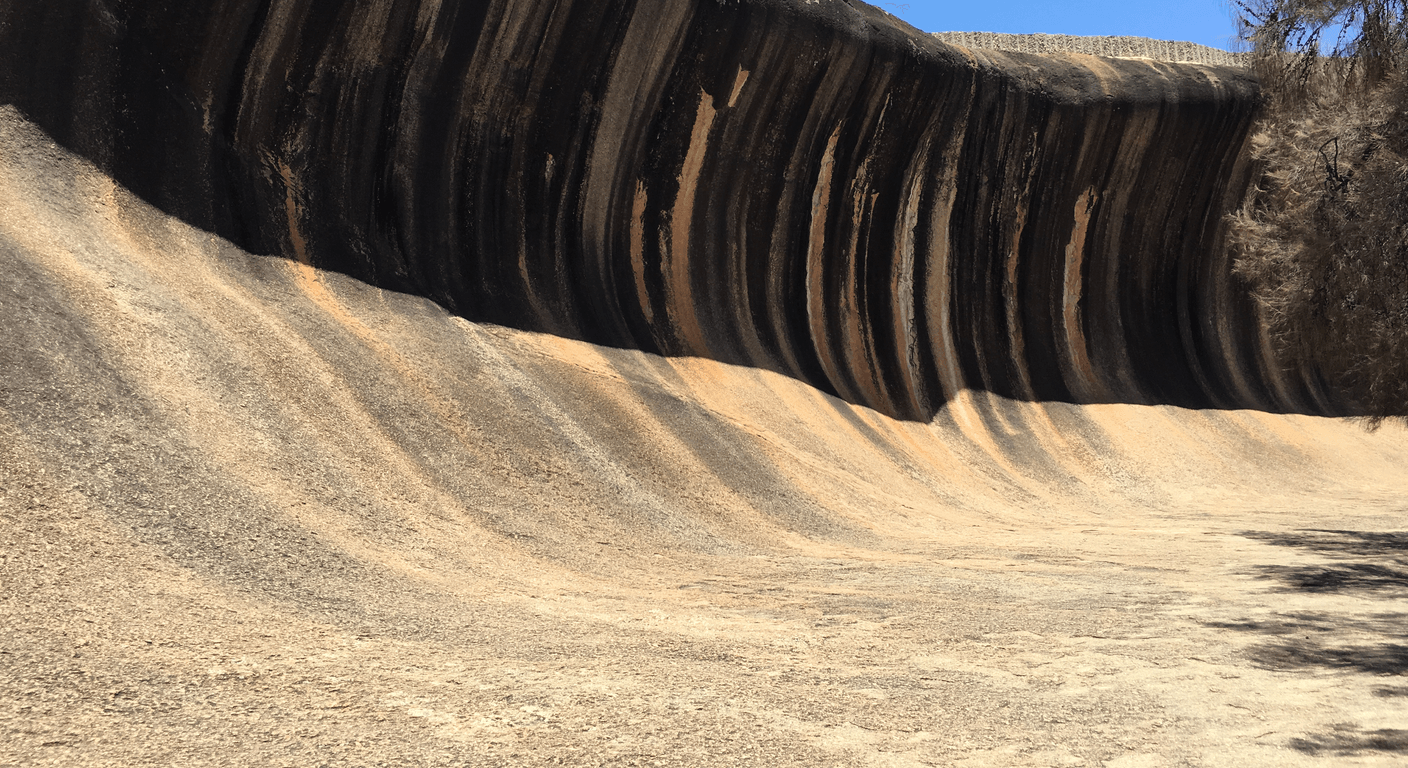
Wave Rock is a granite inselberg formation on the northern face of Hyden Rock, about 340 kilometres south-east of Perth. The rock face curves upward to roughly 15 metres and stretches around 110 metres in length, with vertical bands of grey, red, and ochre staining the surface — the result of carbonates and iron washing down over millennia. Photos do not quite capture the scale or the texture until you are standing at the base with your hand against the stone.
For travellers from regional Victoria who have grown up around granite country — the ranges near Beechworth, the boulders outside Stawell — there is still something genuinely different about Wave Rock. The Wheatbelt light is harder, the sky is wider, and the silence on a weekday morning has a particular quality. It is not a long visit in terms of walking distance, but it rewards those who slow down enough to notice the detail.
The site sits within the Hyden Wildlife Park, which is managed as a private reserve. There is a small entry or parking fee — indicative figures have been around $15–$20 per vehicle, but you should confirm the current rate directly with the Wave Rock Wildlife Park before you go, as charges do change. The fee covers access to Wave Rock, Hippo's Yawn, and the broader reserve area.
Why should over-50s stay overnight rather than day-tripping from Perth?
The drive from Perth to Hyden is roughly 340 kilometres and takes around three and a half to four hours each way, depending on your pace and which route you take. Doing that as a return day trip means seven to eight hours of driving for perhaps two to three hours at the site. Even for confident drivers who travel regularly, that is a tiring equation — and it leaves no room for a flat tyre, a long lunch, or simply wanting to sit quietly at the rock as the afternoon light shifts.
Staying overnight in Hyden changes the entire experience. You can arrive in the late afternoon, walk the base of the rock as the day cools, have a relaxed dinner, and then return to the rock early the following morning before the tour buses arrive. The dawn light on the coloured striations is worth the early alarm. You also give yourself time to visit Hippo's Yawn and Mulka's Cave without feeling rushed, which is exactly the kind of morning that makes a trip feel like a holiday rather than a logistics exercise.
For travellers who find long drives taxing — whether that is back discomfort, fatigue, or simply preferring to arrive somewhere feeling human — breaking the journey with a stop in Merredin or Narembeen on the way through is a practical option. Both towns have basic services and fuel. The roads are generally good quality sealed highways, though you will want to check road conditions via Main Roads Western Australia if you are travelling in the wetter months between June and August.
What are the walking options, and how accessible is the site?
The base walk along the front of Wave Rock is flat, well-maintained, and suitable for most mobility levels. It runs the length of the rock face and takes perhaps ten to fifteen minutes at a comfortable pace, with plenty of opportunities to stop and look. The surface underfoot is compacted gravel and rock, so supportive footwear is sensible — but you do not need hiking boots or any particular fitness level to complete it. For travellers who use a walking stick or have mild knee or hip concerns, this walk is generally manageable.
There is an optional summit route that takes you up and over Hyden Rock. It is steep in places, involves some uneven rock surfaces, and should be considered carefully by anyone with balance concerns, heart conditions, or significant joint issues. The summit view is broad and rewarding, but it is genuinely optional — the main attraction is the wave face itself, and you can have a full and satisfying visit without going up. If you are uncertain, the base walk first will tell you how your body is travelling on the day.
The carpark and toilet facilities near the rock are functional. There is a small visitor centre and cafe area within the Wave Rock Wildlife Park precinct, which is useful for a break, particularly if you have been driving since early morning. The precinct also has a small wetland area that attracts birdlife in the cooler months — worth a slow wander if you are staying overnight and have time to fill before check-in.
What else is worth seeing nearby — Hippo's Yawn and Mulka's Cave?
Hippo's Yawn is a small granite overhang about four kilometres from Wave Rock that resembles — with some imagination and good humour — a hippopotamus opening its mouth. It is a short, flat walk from the carpark and takes perhaps twenty minutes return. It is not dramatic in the way Wave Rock is, but it has a pleasing quirkiness and the rock formations around it are interesting in their own right. It is the kind of place that makes for good travel conversation later.
Mulka's Cave is around twenty kilometres from Wave Rock and is a more significant site — it contains Aboriginal hand stencils on the cave walls, some of the most accessible examples of this type of rock art in the Wheatbelt region. The site is managed respectfully, and visitors are asked to observe the standard protocols: stay on the path, do not touch the art, and take time to read the interpretive information provided. For travellers who find rock art genuinely moving — and many do, particularly as they get older and think more about deep time — Mulka's Cave is quietly affecting.
Between these three sites, you have a relaxed but full morning. The practical shape of the overnight trip tends to work best as: arrive at Wave Rock late afternoon on day one, visit Hippo's Yawn and the wetland area that evening or early the following morning, drive to Mulka's Cave mid-morning on day two, then head back toward Perth or continue further into the Wheatbelt depending on your itinerary.
How do you get to Hyden from Perth, and what should you know about driving?
The most straightforward route from Perth is via the Great Eastern Highway to Merredin, then south on the Merredin-Hyden Road. There is no direct public transport to Hyden, so a hire car is the practical option for most travellers flying in from Victoria. Perth Airport has all the major hire car companies on site, and picking up a vehicle on arrival keeps the logistics simple. An automatic transmission vehicle is the sensible default if you have not driven a manual in some years.
Fuel is available in Hyden, but it is worth filling the tank in Merredin or another larger town on the way through, as regional fuel prices can be noticeably higher than metropolitan rates. Carry water — more than you think you need — particularly if you are travelling between October and April when temperatures in the Wheatbelt can be significant. The drive itself is largely flat, straight, and undemanding, though kangaroo activity near dusk and dawn means the standard caution applies: avoid driving those hours if you can, and reduce speed in rural areas.
For a group of friends travelling together, the drive is genuinely pleasant — the Wheatbelt landscape has a particular austere beauty, the wildflowers between August and October are worth stopping for along the roadside, and there is something companionable about a long straight road with good conversation. If you are travelling solo, an audiobook or podcast loaded before you leave Perth makes the kilometres pass more comfortably.
Where should you stay in Hyden?
Accommodation options in Hyden are limited but functional. The Wave Rock Resort, operated by the same management as the wildlife park, is the main option and sits close to the rock itself. It offers motel-style rooms and some self-contained units, which suit travellers who prefer to have a kettle and their own bathroom without sharing facilities. Standards are comfortable rather than luxurious — this is a regional Western Australian town, not a resort destination — but the rooms are well-maintained and the location is hard to beat.
There is also a caravan and camping area within the precinct for those who travel with a van or prefer that style of accommodation. For travellers from regional Victoria who are accustomed to caravan travel, this is a familiar and comfortable option, and the site has the basic amenities you would expect. Booking ahead is strongly recommended if you are travelling during school holidays or the wildflower season (roughly August to October), when the Wheatbelt sees higher visitor numbers.
There are limited dining options in Hyden beyond the resort's own facilities and the Hyden Hotel, so if you have dietary requirements or particular food preferences, bringing some supplies from Perth or Merredin is sensible. The resort cafe is adequate for breakfast and light meals. The town itself is small and quiet — which, for many travellers in this age group, is precisely the point.
How does Wave Rock fit into a broader Western Australia itinerary for Victorian travellers?
Wave Rock works well as a two or three night addition to a Perth-based trip, rather than as a standalone destination. A practical shape might be: fly into Perth, spend a night or two in the city or Margaret River region, then drive out to Hyden for one or two nights before returning to Perth for your flight home. This avoids the exhaustion of trying to see too much in a short time, which is a real risk when you are managing interstate travel on top of the driving.
For travellers who want to extend further, the Wheatbelt has other points of interest — the historic town of York, the Pinnacles at Cervantes (a separate trip north of Perth), and the wildflower trails that run through the region in spring. Tourism Western Australia's website has useful itinerary suggestions for self-drive travel in the region, and it is worth browsing before you finalise your plans.
The honest advice for travellers in their sixties flying from regional Victoria is to resist the temptation to over-schedule. Wave Rock itself takes perhaps a morning. Mulka's Cave adds another hour. The rest of the time in Hyden is for sitting, watching the light change, having an unhurried meal, and letting the place settle into you. That is not wasted time — that is what makes a trip worth taking.
Quick planning guide
| Ideal pace | Slow-paced, overnight rather than a rushed day trip |
|---|---|
| Best months | August to October for wildflowers and cooler temperatures |
| Suggested stay | One to two nights in Hyden, or two to three nights as part of a wider Perth itinerary |
| Mobility level | Easy on the flat base walk; the optional summit route is steep and better suited to those without balance or joint concerns |
| Cost level | Budget-friendly — small vehicle entry fee, comfortable rather than luxury accommodation |
| Comfort level | Comfortable, motel-style regional accommodation with basic self-contained options |
| Best for | Over-50s travellers, including those flying in from interstate, who prefer a slower pace and self-drive touring |
| Main planning consideration | No public transport to Hyden, so a hire car and an overnight stay are needed to make the long drive from Perth worthwhile |
Key takeaways
- Wave Rock is around 340 kilometres from Perth — roughly a four-hour drive — making an overnight stay in Hyden the sensible choice over a day trip.
- The base walk along the rock face is flat and suitable for most mobility levels; the summit route is steep and genuinely optional.
- Hippo's Yawn and Mulka's Cave round out a relaxed morning and are both within easy driving distance of Wave Rock.
- There is no public transport to Hyden, so a hire car from Perth Airport is the practical option for most travellers.
- Accommodation in Hyden is limited — book the Wave Rock Resort ahead, particularly during school holidays and wildflower season (August to October).
- Carry more water than you think you need, fill the fuel tank before Hyden, and avoid driving at dusk or dawn when kangaroo activity is highest.
Recommended partners and links
Indicative prices only — always confirm with the operator before booking.
Frequently asked questions
How long does it take to drive from Perth to Wave Rock?
The drive from Perth to Hyden, where Wave Rock is located, takes roughly three and a half to four hours, covering around 340 kilometres via the Great Eastern Highway and Merredin-Hyden Road. It is a straightforward drive on sealed roads, but the distance makes an overnight stay in Hyden the practical choice rather than attempting a return day trip.
Is Wave Rock accessible for older travellers or those with mobility concerns?
The base walk along the front of Wave Rock is flat, well-maintained, and suitable for most mobility levels, including those who use a walking stick or have mild joint concerns. The optional summit route involves steep sections and uneven rock surfaces and should be assessed carefully by anyone with balance, heart, or significant joint issues. You can have a complete and satisfying visit without taking the summit route.
Is there an entry fee to visit Wave Rock?
Yes, Wave Rock sits within the Hyden Wildlife Park, which charges a small parking or entry fee. Indicative figures have been around $15–$20 per vehicle, but fees can change, so confirm the current rate with the Wave Rock Wildlife Park directly at waverock.com.au before your visit.
What is the best time of year to visit Wave Rock?
The cooler months between April and September are generally the most comfortable for visiting, with mild temperatures that suit walking and being outdoors. The wildflower season from roughly August to October adds colour to the Wheatbelt landscape and attracts more visitors, so accommodation should be booked well ahead during that period. Summer months (December to February) bring significant heat to the Wheatbelt and are best avoided for those sensitive to high temperatures.
Can you visit Wave Rock without a car?
There is no regular public transport service to Hyden. Hiring a car from Perth Airport is the standard approach for most visitors, including those flying in from interstate. Some private tour operators run day trips from Perth, but given the distance involved, an overnight guided tour would be a more comfortable option than a single-day coach trip. Check Tourism Western Australia's website for current guided tour availability.