Wilpena Pound Resort, the only accommodation inside Ikara-Flinders Ranges National Park, suits over-50s travellers from April to October, especially October and May, when days are warm and mornings cool for walking. Its defining highlight is the scenic flight, the only way to see the Pound's full ring of ridges. Mobility needs are moderate, with easy and demanding trails both available. From Victoria, access means flying Melbourne to Adelaide, then a four-to-five-hour drive on sealed roads, or a guided tour.
Why Wilpena Pound works for travellers over 50
There is a particular appeal to waking up inside a national park without having spent the night on a camp mat. Wilpena Pound Resort does exactly that. The resort sits at the natural entrance to Wilpena Pound — the vast, sunken amphitheatre of ancient quartzite ridges that defines the Flinders Ranges — and it is the only commercial accommodation within Ikara-Flinders Ranges National Park. That location is the whole point.
For a solo traveller in his late 60s arriving from Victoria, the resort removes most of the logistical friction of outback travel. There is a restaurant, a bar, a pool, and staff who know the terrain. You are not roughing it, but you are genuinely out there — the colours at dusk, the silence after 9pm, and the sheer scale of the ridgeline above the resort are real and unmediated by any resort bubble.
The practical upshot is that you can set your own pace. Go out early for a short walk, return for a long lunch, take the afternoon scenic flight, and be back for dinner. That rhythm suits this stage of travel well, and the resort is designed around it.
What are the accommodation options at Wilpena Pound Resort?
The resort offers two main styles of accommodation. Standard hotel-style rooms in the main lodge building are the most straightforward choice — air-conditioned, en suite, and a short flat walk from the restaurant and facilities. These are the sensible pick if mobility or temperature sensitivity is a consideration. Rooms in this category commonly run in the range of around $200 to $350 a night, though rates shift with season, school holidays, and special packages. Always confirm current pricing directly with the resort at wilpenapound.com.au.
The safari tents are a step up in atmosphere and often in price. Each tent is a permanent, furnished structure with a proper bed, en suite bathroom, and a private deck facing the bush. They feel genuinely immersive without requiring you to manage any camping equipment. The decks are where you want to be at sunrise. The trade-off is that they involve a slightly longer walk from the central facilities, and the path between tents and the main building is uneven in places — worth checking with the resort if steady ground underfoot matters to you.
A South Australian National Parks pass or daily entry fee applies on top of accommodation costs, as the resort is inside the park boundary. Confirm the current fee structure with Parks SA at parks.sa.gov.au before you travel, as these are subject to change. The resort can also advise on this when you book.
How do you actually see the Pound — and what is realistic?
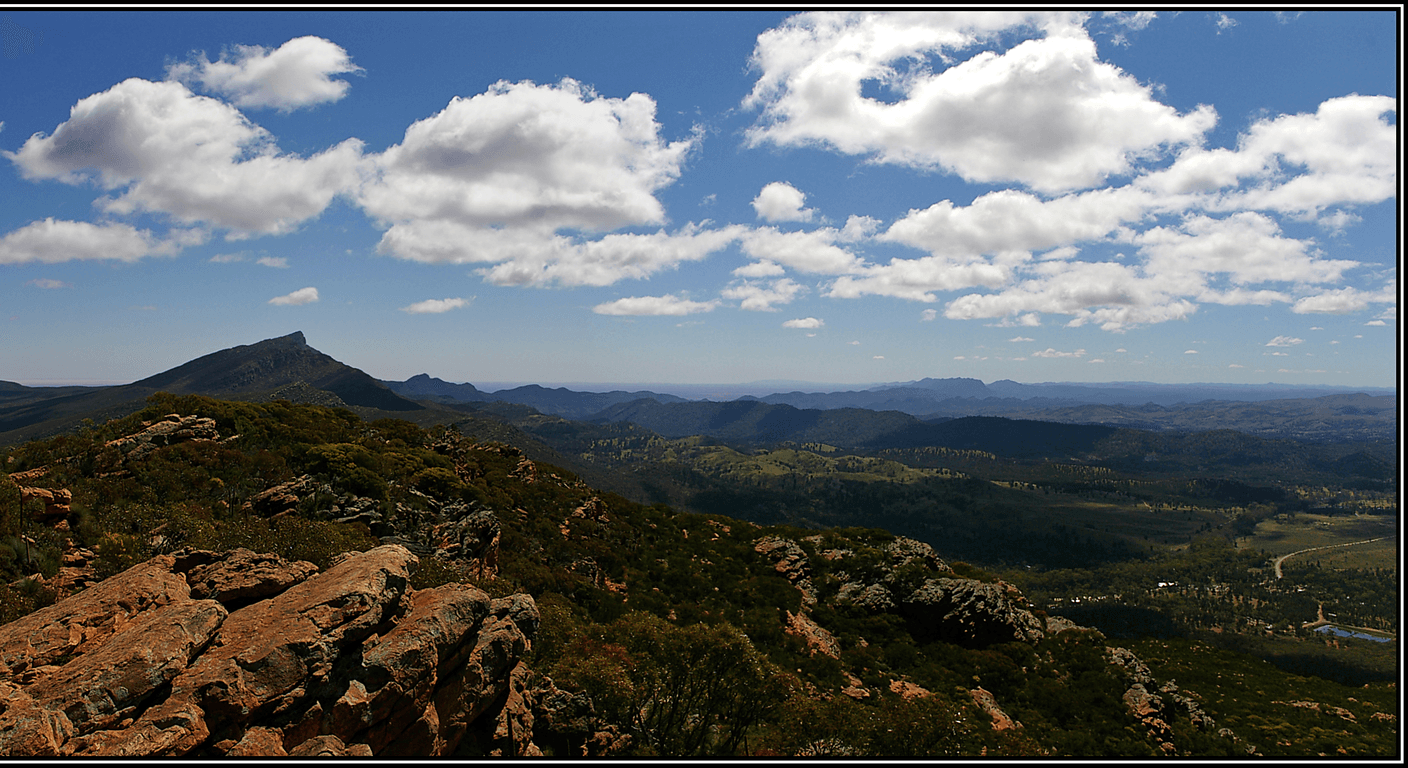
Here is the honest answer that most travel content skirts around: you cannot see the shape of Wilpena Pound from inside it, or from the resort, or from any of the shorter walking tracks. The Pound is a natural basin roughly 80 kilometres in circumference, and its defining feature — that closed, crater-like ring of ridges — only becomes legible from the air. If you want to understand what you are looking at, and most people who make the journey do, the scenic flight is not an optional extra. It is the experience.
Scenic flights operate from the small airstrip at the resort. Options range from short circuits over the Pound itself to longer flights that take in Arkaroola and the northern ranges. Prices are indicative and vary by operator and route — check directly with the resort or Visit Flinders Ranges for current operators and costs. The flights use light aircraft and the doors-on experience is smooth for most travellers. If you have concerns about light aircraft, mention them when booking.
Walking tracks at Wilpena Pound range from genuinely accessible short trails near the resort entrance to multi-hour ridge walks that are rocky, exposed, and demanding. The walk to the old Hill homestead ruins inside the Pound entrance is flat and manageable for most people. The Wangara Lookout trail involves some elevation and uneven ground but is achievable at a steady pace. The full rim walk is a multi-day undertaking and is not the target here. Be straightforward with yourself about what suits your knees and your cardiovascular comfort in heat, and plan accordingly.
When should you go, and what is the weather like?
April to October is the accepted prime window for the Flinders Ranges, and there are good reasons for that consensus. Daytime temperatures in this period typically sit in the comfortable range for walking — roughly 15 to 25 degrees Celsius, though mornings and evenings in winter (June to August) can drop sharply, so layers are essential. The light in autumn and winter is particularly good for the ochre and rust tones of the ranges.
Summer in the Flinders — November through March — brings genuine heat. Temperatures above 40 degrees Celsius are not unusual, and the outback sun at that intensity is a different proposition for anyone over 60. The resort is air-conditioned, but activity outside is severely limited mid-day. If you are travelling in that window, you would be going in spite of the conditions rather than because of them.
October and May tend to be the sweet spots for a first visit: warm enough to be comfortable in the evenings, cool enough to walk in the mornings, and outside the peak school holiday crowds that compress July. Wildflowers can be good in late winter through September depending on rainfall, though the Flinders is not as reliably floral as the south-west of Western Australia.
How do you get to Wilpena Pound from Victoria?
The resort is roughly 430 kilometres north of Adelaide. From Victoria, the practical approach is to fly Melbourne to Adelaide — a short flight on multiple daily services — and then either hire a car in Adelaide or join a guided tour. The drive from Adelaide to Wilpena takes around four and a half to five hours via the Princes Highway and then north through Port Augusta and Hawker. The roads are sealed all the way to the resort entrance. It is a long day's drive, but manageable if you stop in Port Augusta or Quorn overnight.
Hiring a car gives you independence and the ability to stop at Rawnsley Park, Brachina Gorge, or Hawker on the way through. A standard sedan handles the route to the resort without issue — you do not need a four-wheel drive to reach Wilpena Pound Resort itself, though a 4WD opens up tracks in the broader park. If driving long distances alone is not appealing, small-group guided tours departing Adelaide are available and worth considering; they handle logistics and add interpretive value, particularly for the Adnyamathanha cultural context of the country.
Rex Airlines operates regional services into Leigh Creek, which is around 100 kilometres north of the resort. Charter flights directly into Wilpena's airstrip are occasionally available. Check current options with the resort and with visitflindersranges.com.au, as regional air connections in outback South Australia change. For most Victorian travellers, the fly-to-Adelaide-then-drive combination remains the most reliable route.
What is the cultural context, and why does it matter?
Wilpena Pound — Ikara in the Adnyamathanha language, meaning 'meeting place' — is Country of deep and continuing significance to the Adnyamathanha people, the Traditional Owners of the Flinders Ranges. The resort operates within that context, and the experience is more rewarding if you come with some awareness of it. The Adnyamathanha have their own account of the Pound's formation — the Yurlu (wedge-tailed eagle) Dreaming story — and it reframes the landscape in a way that the geological explanation alone does not.
The resort offers guided cultural experiences and works with Adnyamathanha guides. These are worth prioritising, not as a box-ticking exercise, but because the country makes more sense with that layer of understanding. Parks SA and the resort can advise on what is currently available. The broader national park was renamed Ikara-Flinders Ranges National Park in 2016 to formally acknowledge the Adnyamathanha name, and that dual naming is now standard in official signage and literature.
Approaching this country with genuine curiosity rather than just ticking a scenic destination is part of what makes a trip here feel substantive at this stage of life. The Flinders Ranges has been inhabited and known for tens of thousands of years. That depth is part of what you are in the presence of.
Practical notes on health, pacing, and what to bring
Sun protection in the Flinders is non-negotiable even in cooler months. The UV index at this latitude is high, the air is dry, and the reflected light off pale rock adds to exposure. A broad-brimmed hat, SPF 50+ sunscreen, and a long-sleeved shirt for walking are the baseline. Hydration matters more than most people expect — carry more water than you think you need on any walk, even short ones.
The resort has a swimming pool, which doubles as a recovery tool after warm afternoons. The restaurant serves dinner and breakfast, and the quality is generally regarded as solid for a remote location — though menus and operating hours vary by season, so confirm details when you book. There is a small shop for basics. Mobile coverage at Wilpena is limited; the resort has Wi-Fi, but do not rely on phone data for navigation in the broader park.
If you take regular medications, carry more than you need plus a written list. The nearest town with a pharmacy is Hawker, around 53 kilometres south. Port Augusta, which has a hospital, is around 150 kilometres away. None of this should deter a healthy traveller, but knowing it in advance is sensible. Travel insurance that covers medical evacuation from remote areas is worth having, and worth reading the fine print on before you depart.
Quick planning guide
| Ideal pace | Slow and self-directed — short walks, long lunches, afternoon activities |
|---|---|
| Best months | April to October, with October and May the sweet spots |
| Suggested stay | A few days, enough to combine walking tracks, the scenic flight, and rest |
| Mobility level | Moderate — flat trails near the resort, uneven paths to safari tents, tougher ridge walks optional |
| Cost level | Mid-range to premium, roughly $200–$350 a night for hotel rooms, safari tents often more |
| Comfort level | High — air-conditioned rooms, pool, restaurant, and on-site staff support |
| Best for | Over-50s wanting genuine outback immersion without camping |
| Main planning consideration | Book the scenic flight to see the Pound's true shape and confirm park entry fees with Parks SA before travelling |
Key takeaways
- Wilpena Pound Resort is the only accommodation inside Ikara-Flinders Ranges National Park, giving you outback immersion without camping.
- Hotel rooms and safari tents both offer en suite facilities; safari tents involve more uneven walking paths between structures.
- The scenic flight is the honest way to see the Pound's shape — the ring of ridges is not visible from ground level at the resort.
- April to October is the practical travel window; summer heat above 40°C makes outdoor activity difficult for most travellers over 60.
- The resort is roughly five hours' drive from Adelaide on sealed roads — a standard hire car is sufficient to reach the property.
- National park entry fees apply in addition to accommodation costs; confirm current fees with Parks SA before travel.
Recommended partners and links
Indicative prices only — always confirm with the operator before booking.
Frequently asked questions
Do you need a four-wheel drive to reach Wilpena Pound Resort?
No. The resort is accessible on sealed roads from Adelaide via Port Augusta and Hawker, and a standard hire car is sufficient. A four-wheel drive opens up additional unsealed tracks within the broader national park, but is not required for the resort itself.
Is Wilpena Pound Resort suitable for travellers with limited mobility?
The main lodge rooms are the most accessible option, with flat paths to the restaurant and facilities. Safari tents involve a longer walk on uneven ground. The resort should be contacted directly to discuss specific mobility requirements before booking, as terrain around the property is not uniformly smooth.
How much does it cost to stay at Wilpena Pound Resort?
Hotel-style rooms generally run in the indicative range of around $200 to $350 per night, with safari tents often at a higher rate. Prices vary with season and availability. National park entry fees are charged separately. Always confirm current rates directly with the resort at wilpenapound.com.au.
What is the best way to see the full shape of Wilpena Pound?
A scenic flight from the resort's airstrip is the clearest way to understand the Pound's enclosed amphitheatre shape. It cannot be seen from inside the basin or from the resort grounds. Flights range from short circuits to longer routes taking in the northern ranges — check current operators and prices with the resort or visitflindersranges.com.au.
Is it safe to travel to the Flinders Ranges alone as an older traveller?
Yes, with straightforward preparation. Stay informed about conditions, carry extra water on any walk, have travel insurance that covers remote medical evacuation, and keep the resort staff aware of your plans if you head out independently. The resort environment itself is staffed and secure. Solo travellers regularly visit without difficulty.