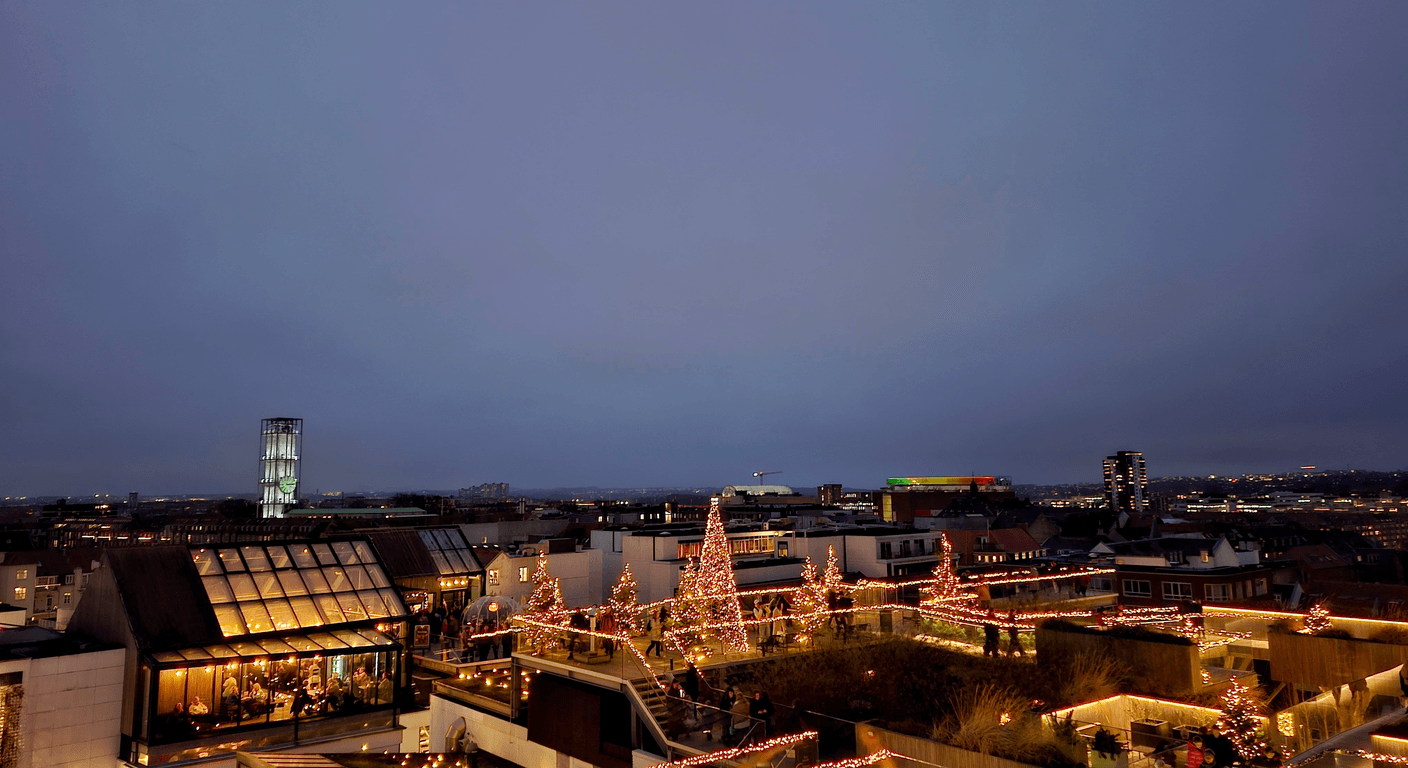
Aarhus, on Denmark's Jutland peninsula, rewards a two-night stay rather than a rushed Copenhagen day trip. May and June bring long daylight for the flat harbour promenade, while ARoS Art Museum's rainbow rooftop walkway — reached by lift, not stairs — is the defining highlight. The city is easy underfoot, with low-floor trams and mostly flat, sealed paths. Reach it from Copenhagen by a comfortable direct train of under two hours, avoiding the need to fly.
Why Aarhus deserves more than a day trip
Most Copenhagen itineraries treat Aarhus as an optional extra — a long day trip if time permits. That's a mistake. The city has enough cultural weight and walkable pleasure to justify its own chapter. Two nights gives you unhurried mornings, proper meals, and the particular satisfaction of actually knowing a place rather than just having ticked it.
Aarhus is Denmark's second city, which in Danish terms means a compact, confident place of around 350,000 people — large enough for excellent restaurants and a serious art museum, small enough to cross on foot without a plan. For a group of women travelling together, it has an easy sociability: the central streets feel safe at all hours, the café culture is genuinely good, and nobody rushes you.
For Australian travellers arriving from the other side of the world, there's also a practical logic to staying longer. You've already spent the time and money getting to Europe. Adding two nights in Aarhus to a Copenhagen base costs relatively little in extra effort and returns a destination that most of your friends at home won't have done — which, among a certain kind of traveller, is its own reward.
Getting there from Copenhagen — the train is the easy answer
The InterCity train between Copenhagen Central Station (København H) and Aarhus runs frequently throughout the day and takes around 1 hour 50 minutes to just under 2 hours, depending on the service. Seats are comfortable, carriages are quiet, and the journey crosses the Great Belt Bridge — a stretch of sea and sky that is, by any reasonable measure, worth the window seat. Book through DSB (dsb.dk/en) in advance for better fares; a standard reserved seat in second class runs roughly AUD 30–80 per person each way, though prices shift considerably with timing and booking window. Confirm current fares on the DSB site.
Luggage storage is available at Aarhus Central Station, useful if you arrive before your hotel room is ready. The station sits close to the city centre, and the harbour and main cultural sites are all reachable on foot or via the Aarhus light rail (Letbanen), which has low-floor carriages and is straightforward for travellers with rolling luggage or any mobility considerations. The city's tram network is clean, punctual and — by Australian regional standards — quietly remarkable.
Flying into Aarhus Airport from Copenhagen is possible but adds complexity without much benefit for this itinerary. The train is simply the better option: faster door-to-door, more comfortable, and it deposits you right in the city rather than 40 kilometres outside it.
ARoS: the rainbow you take a lift to reach
ARoS Aarhus Art Museum is the anchor of any visit, and its Your Rainbow Panorama — a circular glass walkway on the rooftop tinted through every colour of the spectrum — has become one of those experiences that photographs cannot quite replicate. Standing inside it as the city shifts from amber to violet through the glass is genuinely disorienting in the best way. The walkway is reached by lift, not stairs, which matters to know in advance and removes any anxiety about managing it.
The collection across ARoS's ten floors is serious and varied — Danish Golden Age paintings sit alongside large-scale international contemporary installations, and the building itself is designed to reward slow movement. Allow two to three hours, more if the current temporary exhibition catches your attention. The museum café on the ground floor is a decent lunch stop, and the museum shop stocks design objects that actually travel well in checked luggage.
Entry costs around AUD 35–45 per adult, indicative only — confirm current prices at aros.dk/en. The museum is closed Mondays, so factor that into your two-night plan. Tuesday to Sunday, doors open at 10am. Book tickets online in advance during peak summer months; queues at the door can be slow.
Den Gamle By and the art of walking through time
Den Gamle By — the Old Town — is an open-air museum that reassembles historic Danish buildings from across the country on a single site, creating a walkable reconstruction of urban Danish life across several centuries. The newest section depicts everyday life in the 1970s, which has an unexpected emotional pull: the kitchens, workplaces and living rooms feel simultaneously foreign and familiar in the way that all recent history does.
The site is large but largely flat and well-maintained underfoot, with sealed paths through most of the main areas. Sensible shoes are enough; you don't need hiking boots. Costumed interpreters move through the buildings during peak season, and the overall effect is less theme park than genuinely thoughtful cultural preservation. Set aside a half-day, and don't skip the 19th-century merchant's house — it's the anchor of the original collection and remains the most carefully detailed part of the site.
Entry is around AUD 35–45 per adult, indicative — confirm at dengamleby.dk/en. The museum has a café and several smaller food spots on site, which makes it easy to pace the visit without needing to leave and come back.
The harbour promenade — a slow afternoon done well
Aarhus rebuilt its harbour area over the past two decades, and the result is one of those waterfront promenades that feels genuinely lived-in rather than constructed for tourism. The flat path runs from the old dock area past new residential buildings, outdoor swimming platforms, and a series of cafés and restaurants that open toward the water. On a clear May or June afternoon, with the light lasting until 9pm or later, it's the kind of walk that earns its reputation quietly.
The surface is smooth and even — good for anyone managing mild knee or hip discomfort — and there are regular benches and café terraces to pause at without any sense of having given up. The walk from the city centre to the far end of the harbour development and back is around four to five kilometres in total; most people cover it in ninety minutes to two hours, stopping as the mood takes them. There's no wrong pace here.
The harbour is also where you'll find some of Aarhus's better dinner options, with several restaurants focused on modern Danish cooking using local seafood and seasonal produce. Booking ahead is sensible in summer, particularly for Friday and Saturday evenings. Visit Aarhus (visitaarhus.com) maintains a current list of restaurants and can be a useful starting point for narrowing down options.
Practical planning for Australians — what to sort before you go
Denmark is part of the Schengen Area, which means Australian passport holders are subject to Schengen entry rules — currently a 90-day stay within any 180-day period across all Schengen countries combined. The EU's ETIAS pre-travel authorisation system has been in development and may apply to Australian travellers by 2026; the status of this changes, so confirm current requirements at smartraveller.gov.au well before departure. Don't rely on information from friends who travelled a year or two ago.
Travel insurance is non-negotiable for this destination, and for Australians over 50 — particularly those managing any pre-existing conditions — it requires careful reading of the policy, not just the price. Medical costs in Denmark are high by any standard, and the European Health Insurance Card does not apply to Australian citizens. Look for policies that cover pre-existing conditions explicitly and confirm what 'adequate travel insurance' means for your specific health situation before you leave. The Smartraveller advice page for Denmark (smartraveller.gov.au) is the right place to start.
The flight from Australia to Denmark involves a long-haul journey — typically 20 to 24 hours or more depending on route and stopover, often via Singapore, Dubai, or Doha. Most Australian travellers connect through Copenhagen, which is the natural gateway. Factor in a recovery night in Copenhagen before heading to Aarhus; jet lag in Scandinavia arrives with particular force given the time difference of 8 to 10 hours behind eastern Australia (depending on daylight saving in each country). Arriving tired into a new city and immediately trying to navigate museums is a reliable way to enjoy neither.
Money, comfort and what Aarhus actually costs
Denmark is expensive. There's no softening that, and any guide that implies otherwise is doing you a disservice. A comfortable mid-range hotel in central Aarhus runs roughly AUD 250–350 per person per night sharing, indicative only — confirm current rates when booking. Meals at a decent restaurant will run AUD 40–70 per person for a main and a drink. A good coffee is around AUD 8–10. These are indicative figures only; confirm everything at the time of booking and allow a buffer.
The flip side is that Danish quality is consistently high. Hotels are well-maintained, restaurant food is taken seriously, and the physical infrastructure — footpaths, public toilets, public transport — works reliably. For travellers who find budget travel increasingly tiring, there's a real comfort in knowing that what you pay for, you generally receive.
Credit cards are accepted almost universally in Aarhus, including at small cafés and museum shops. Cash is rarely necessary and sometimes actively declined — Denmark has moved further toward a cashless economy than most Australian travellers expect. Notify your bank before departure to avoid cards being blocked on first use overseas.
Quick planning guide
| Ideal pace | Slow and unhurried, built around long walks and museum time |
|---|---|
| Best months | May to June, for long daylight and clear harbour walks |
| Suggested stay | Two nights |
| Mobility level | Easy — flat, sealed paths, lift access at ARoS, low-floor trams |
| Cost level | Premium — Denmark is genuinely expensive |
| Comfort level | High — reliable infrastructure, well-maintained hotels and restaurants |
| Best for | Couples or small groups wanting culture and walkability without a rushed pace |
| Main planning consideration | Book ARoS tickets ahead, confirm Schengen/ETIAS rules, and arrange travel insurance covering pre-existing conditions |
Key takeaways
- The train from Copenhagen to Aarhus takes around 1 hour 50 minutes — comfortable, scenic, and far simpler than flying.
- ARoS museum's rainbow rooftop walkway is reached by lift, making it accessible for travellers who'd rather skip the stairs.
- Two nights is the right stay — enough for ARoS, Den Gamle By and the harbour promenade without rushing any of them.
- Confirm ETIAS requirements and Schengen entry rules at smartraveller.gov.au before booking — these change and online hearsay lags behind.
- Denmark is genuinely expensive; build a realistic daily budget of AUD 200–300 per person above accommodation, indicative only.
- The Aarhus harbour promenade is flat, well-maintained and walkable at any pace — one of the most pleasant two hours the city offers.
Recommended partners and links
Indicative prices only — always confirm with the operator before booking.
Frequently asked questions
How do you get from Copenhagen to Aarhus?
The most practical option is the InterCity train from Copenhagen Central Station (København H) to Aarhus, which takes around 1 hour 50 minutes to just under 2 hours. Trains run frequently throughout the day. Book through DSB at dsb.dk/en; fares vary by timing and booking class, roughly AUD 30–80 per person one way, indicative — confirm current prices on the DSB site.
Is ARoS art museum accessible for travellers with limited mobility?
Yes. The museum's famous rainbow rooftop walkway — Your Rainbow Panorama — is reached by lift, not stairs. The building has lift access throughout its ten floors. Travellers with limited mobility or those who prefer to avoid stairs can complete the full rooftop loop and access the main collection without issue. Confirm any specific accessibility requirements directly with the museum at aros.dk/en before visiting.
Do Australians need a visa to visit Denmark?
Australian passport holders do not currently need a visa for short stays in Denmark as part of the Schengen Area, but are subject to the 90-day-in-180-day Schengen rule. The EU's ETIAS pre-travel authorisation system may also apply to Australian travellers; its rollout status changes. Always confirm current entry requirements at smartraveller.gov.au before booking any European travel.
What is the best time of year for Australians to visit Aarhus?
May to September offers the best conditions — long daylight hours, mild temperatures, and the harbour promenade and outdoor areas of Den Gamle By at their most enjoyable. June and late August tend to balance good weather with slightly fewer crowds than the peak school holiday weeks of July. Aarhus in winter is cold and dark; the cultural sites remain open, but the outdoor experience is limited.
Is Aarhus suitable for a group of women travelling together?
Aarhus is well-suited to small groups of women travelling together. The city centre is walkable and feels safe, English is spoken widely, the café and restaurant culture encourages lingering, and the main cultural sites — ARoS, Den Gamle By, and the harbour — are all easy to navigate at your own pace. Solo female travellers also report feeling comfortable in the city.
- Visit Aarhus — official tourism information
- ARoS Aarhus Art Museum — official site
- Den Gamle By (The Old Town) — official site
- DSB Danish Railways — Copenhagen to Aarhus timetables and fares
- Smartraveller — Australian Government travel advice for Denmark
- Aarhus Letbanen (light rail) — Midttrafik public transport