Australia's country agricultural show circuit runs from February to November, peaking in autumn (March–May) and again in spring, offering a cheaper, quieter alternative to the capital-city Royal shows. A single show suits a half-day to full day visit, while a road trip can anchor two or three shows across a week. The pavilion — with its judged scones, dahlias and preserves — is the defining highlight. Mobility is easy, with flat, undercover show floors and grassed grounds, though most country showgrounds are best reached by car rather than public transport.
What makes country shows different from the Royal circuit?
The Royal shows — Melbourne, Sydney, Brisbane, Adelaide, Perth — are enormous, well-marketed events that attract tens of thousands of visitors over multiple days. They are worth attending, but they are not the whole story. Australia has several hundred smaller agricultural shows running from late summer through to early winter, each one organised by a local agricultural society that has often been running the event for well over a century. These are community-funded, community-run, and community-attended shows, and that changes the atmosphere entirely.
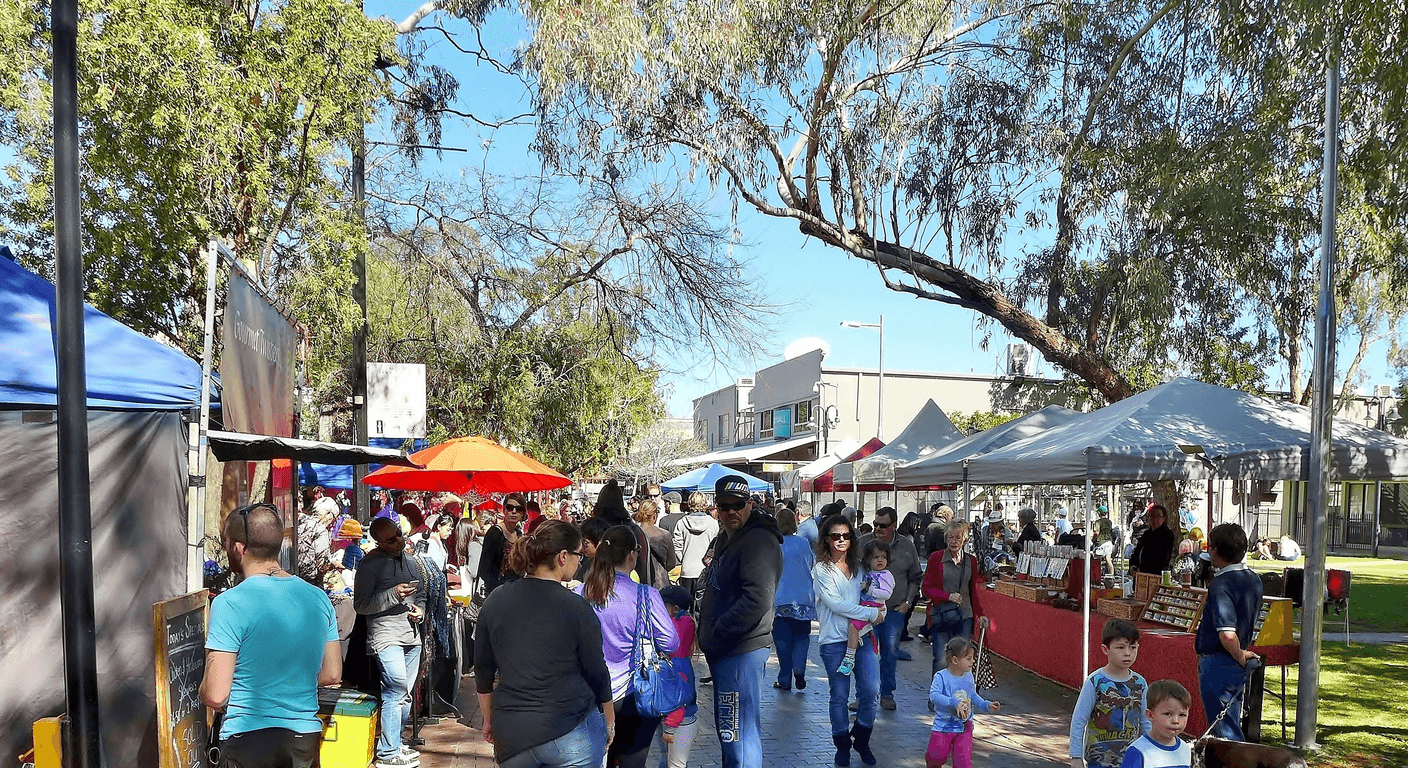
At a country show, you are not navigating a crowd of forty thousand. You are standing at a pavilion trestle table while a retired farmer explains, with complete seriousness, why his marrow beat the one next to it. The woodchopping competitors know the announcer by name. The show bag shed is three canvas stalls run by the local Lions club. Entry fees at country shows are typically a fraction of Royal show prices — often around $8 to $15 for adults, though you should confirm current pricing directly with each society before you go, as fees vary and change year to year.
For travellers who find large crowds tiring or who simply want to spend time with locals rather than with other tourists, the country circuit is the more rewarding choice. It also suits a slower pace: most country shows are compact enough to cover comfortably on foot over half a day, with plenty of seating in the grandstand and shade under the pavilion awnings.
How do you find country show dates and build a circuit?
The most reliable starting point for Victorian travellers is the Agricultural Societies Council of Victoria (ASCV) at ascv.com.au, which publishes a calendar of affiliated shows across the state. Shows Australia at showsaustralia.com.au aggregates dates nationally and is useful if you are planning to cross into New South Wales, South Australia, or Queensland. State-based agricultural societies in each jurisdiction maintain their own calendars, so it is worth checking the relevant body for wherever you are travelling.
The show season has a loose rhythm worth understanding before you plan. In Victoria, shows tend to cluster from February through to November, with a concentration of district shows in late summer and autumn — roughly March to May — when harvest is done and communities have the energy for a celebration. Spring brings another run of shows as weather improves. Winter is quieter but not entirely empty. In Queensland and northern New South Wales, the pattern shifts earlier in the year to avoid the wet season.
When building a circuit, look for shows within an hour or two of each other and check whether they fall on consecutive weekends. A common approach is to anchor a road trip on two or three shows across a week, filling the days between with the region's other attractions — a winery, a heritage railway, a national park walk. The shows become the social and cultural punctuation marks on a broader journey rather than the only reason to travel.
The pavilion: where the real theatre happens
If you attend only one part of a country show, make it the pavilion. This is where the competitive exhibits are displayed — preserves, baked goods, needlework, photography, floral arrangements, vegetables, and fruit — and where you begin to understand how seriously rural communities take craft and produce. The judging happens before the gates open, but the results are pinned to each exhibit with a small card, and reading those cards while looking at the entries is its own education.
The scone judging is particularly worth seeking out at shows that schedule it as a public event. Judges assess colour, rise, crumb, and texture with a rigour that would not look out of place in a professional kitchen. The same applies to the dahlia and rose sections, where subtle differences in petal form and colour depth determine placings. For anyone with a background in cooking, gardening, or textile craft, the pavilion is not a peripheral attraction — it is the centrepiece.
Pavilions are also, almost universally, accessible. They are flat, undercover, and unhurried. There are usually chairs and benches. The volunteers staffing the entries are happy to talk, and that conversation — about a particular variety of heritage apple, or the technique behind a particular piece of smocking — is the kind of exchange that does not happen at larger, faster events. Allow at least an hour in the pavilion, more if you find yourself drawn into conversation, which you will.
Woodchopping, livestock, and the ring events: what to expect
Woodchopping is one of those Australian show traditions that surprises visitors who have not seen it before. Competitors work to strict rules across several disciplines — standing block, underhand, and tree-felling among them — and the skill involved is considerable. At country shows, you can watch from a few metres away, which is quite different from the distant view you get at a Royal. The competitors at smaller shows often include young locals competing alongside veterans who have been on the circuit for decades.
Livestock judging — cattle, sheep, horses, alpacas, pigs depending on the district — runs throughout the day and has its own language and logic. You do not need to understand the judging criteria to enjoy watching a handler work a sheep around the ring or a horse being put through its paces in the equestrian arena. The handlers are usually willing to answer questions if you approach between classes rather than during judging. Ask about the breed, the preparation, or how far they have travelled to compete — most will talk at length.
Ring events vary by show but can include novelty races, dog jumping, trotting, campdrafting, and local traditions specific to that district. Check the show programme, which is usually available on the society's website before the event or at the gate on the day. Programme timing at country shows is approximate — things run late, classes overrun, and the announcer fills the gaps with commentary that is half information and half local gossip. Build that looseness into your day and it becomes part of the charm.
Practical planning: getting there, getting around, and pacing yourself
Most country shows are not easily reached by public transport. If you are not driving, look at whether V/Line services to a regional hub connect with a local bus or taxi, or whether a hire car from the nearest large town makes sense. The ASCV and individual show websites sometimes note transport arrangements, particularly for larger district shows. For couples travelling together, self-driving remains the most flexible option, and the roads between Victorian country towns are generally well-maintained and not demanding.
Parking at country showgrounds is typically plentiful and low-cost or free, which is another point of difference from city events. Grounds are usually flat and grassed, though after rain the ground can be soft, so footwear with some grip is sensible. Many showgrounds have sealed paths around the main pavilion and ring areas. If mobility is a consideration, contact the show society directly before attending — they are almost always accommodating and can advise on accessible entry points and seating.
Pacing is worth thinking about deliberately. A country show can fill a full day if you want it to, or a comfortable half-day if you prefer. Arrive when the gates open — usually around 9am — to catch early livestock judging and avoid the midday heat in summer. Bring a hat, sunscreen, and water. Most shows have food stalls with reasonable options, though the quality varies. The CWA or equivalent women's group often runs a tea tent with homemade food that is reliably good and modestly priced — seek it out.
Which shows are worth anchoring a trip around?
In Victoria, shows like Ballarat, Bendigo, Geelong, and Wangaratta are large enough to have strong programmes across all categories but small enough to feel genuinely local. Further into the regions, shows at towns like Leongatha, Mildura, Echuca, and Horsham each reflect the character of their district — the Goulburn Valley show circuit, for example, has strong fruit and vegetable pavilions that reflect the region's horticultural industry. The ASCV calendar is the best place to cross-reference dates with your planned route.
Across the border, the New South Wales show circuit is extensive, with the Royal Agricultural Society of NSW maintaining a calendar at rasnsw.com.au. The Sydney Royal is the flagship, but shows at Orange, Dubbo, and Tamworth have strong reputations and make natural anchors for a longer trip. In South Australia, the Royal Adelaide Show is complemented by a vigorous district circuit through the Barossa, Clare Valley, and Fleurieu Peninsula — regions that double as wine tourism destinations.
For travellers willing to plan further ahead, some shows have specific events that are worth targeting: heritage machinery displays, particular livestock breed competitions, or cultural performances tied to local history. The Ekka in Brisbane (Royal Queensland Show) is the northern equivalent of the Melbourne Royal and attracts visitors from across Queensland. Whatever your starting point, the principle is the same: use the ASCV, Shows Australia, or the relevant state society's calendar to match show dates to your preferred travel window, then build the rest of the trip outward from there.
The social side: shows as a way into community
One of the things that distinguishes a country show from most other tourism experiences is that it is not designed for tourists. It is designed for the community, and you are a welcome guest in it. That distinction matters. The conversations you have in the pavilion, at the woodchopping, or over a cup of tea from the CWA stall are with people who live in that place — farmers, teachers, retired tradespeople, show committee members who have been running the same stall for thirty years.
For travellers who travel partly for connection rather than only for sights, this is significant. A country show gives you a structured reason to be in a small town on a particular day, and it opens doors to conversation that a drive-through visit does not. If you have a background in cooking, agriculture, crafts, or animals, you will find your own entry points quickly. If you do not, the shared experience of watching something you do not fully understand — a cattle judging class, a spinning demonstration — is itself a way in.
Shows are also genuinely multigenerational events. You will see grandparents with grandchildren, teenagers competing in junior woodchopping, elderly exhibitors who have been entering the same pavilion category for decades. For a solo traveller or a couple who enjoy being part of the fabric of a place rather than observing it from the outside, the country show circuit is one of the better-kept secrets in Australian travel.
Quick planning guide
| Ideal pace | Slow-paced — half a day to a full day per show |
|---|---|
| Best months | February to November, peaking March–May and in spring (earlier in Queensland and northern NSW to avoid the wet season) |
| Suggested stay | Half a day per show, or a week-long road trip anchoring two to three shows |
| Mobility level | Easy — pavilions are flat and undercover, and showgrounds are generally flat and grassed |
| Cost level | Budget-friendly — entry typically around $8–$15, with free or low-cost parking |
| Comfort level | Casual and unhurried, with seating, shade, and a relaxed programme |
| Best for | Retirees and couples who enjoy rural culture, craft, produce, and genuine local conversation |
| Main planning consideration | Self-driving is usually necessary, as most country shows are not easily reached by public transport |
Key takeaways
- Australia runs several hundred country agricultural shows annually, most costing a fraction of Royal show entry — confirm current prices with each society before attending.
- The ASCV calendar at ascv.com.au is the most reliable starting point for Victorian show dates; Shows Australia at showsaustralia.com.au covers the national circuit.
- Pavilion judging — scones, dahlias, preserves, needlework — is the cultural heart of a country show and is almost universally flat, undercover, and accessible.
- Most country showgrounds have ample parking, flat terrain, and a pace that suits travellers who prefer to move at their own speed.
- The country show circuit pairs naturally with regional road trips: anchor your route on two or three shows, then fill the days between with the local wine, heritage, or landscape.
- Country shows are community events, not tourist attractions — that distinction makes the conversations you have there more genuine than most travel experiences offer.
Recommended partners and links
Indicative prices only — always confirm with the operator before booking.
Frequently asked questions
How do I find country agricultural show dates in Victoria?
The Agricultural Societies Council of Victoria publishes a calendar of affiliated shows at ascv.com.au. For a national view, Shows Australia at showsaustralia.com.au lists show dates across all states and territories. Individual show societies also maintain their own websites with current dates, entry details, and programmes.
How much does it cost to enter a country agricultural show in Australia?
Entry fees at country shows are typically much lower than Royal shows and can range from around $8 to $15 for adults, though this varies by show and changes year to year. Always confirm current gate prices directly with the relevant agricultural society before you travel, as indicative figures date quickly.
Are country showgrounds accessible for older travellers or those with limited mobility?
Most country showgrounds are flat and compact, and the main pavilion and ring areas are usually accessible. Conditions underfoot can be soft after rain, so footwear with grip is sensible. If you have specific mobility requirements, contact the show society directly before attending — they are generally well-prepared to help and can advise on accessible entry and seating.
Can I get to a country show without a car?
Most country shows are not on public transport routes, and a car is the most practical option for the majority of locations. Some regional hubs are accessible via V/Line train or coach services from Melbourne, and local taxis or rideshare may bridge the gap to the showground. Check vline.com.au for regional services and contact the show society about any transport arrangements they may have in place.
What is the best time of year to follow the country show circuit in Victoria?
Victoria's country shows run from roughly February through to November, with a concentration of district shows in the late summer and autumn months of March to May, and another cluster in spring. The ASCV calendar at ascv.com.au gives a full year view so you can plan a route around the shows that fall within your preferred travel window.