The Amalfi Coast rewards visitors most in May, early June, September or October, when the heat eases and crowds thin. Basing in flatter, well-connected Sorrento for several days, with ferry day trips to Positano, Amalfi and Ravello, works better than sleeping in the steep cliffside villages. Ravello's clifftop gardens are the standout highlight. Mobility demands are moderate given steep lanes and stairs, and reaching the coast from Australia means a long-haul flight with one stopover, totalling 22–26 hours.
What the Amalfi Coast actually is — and what it isn't
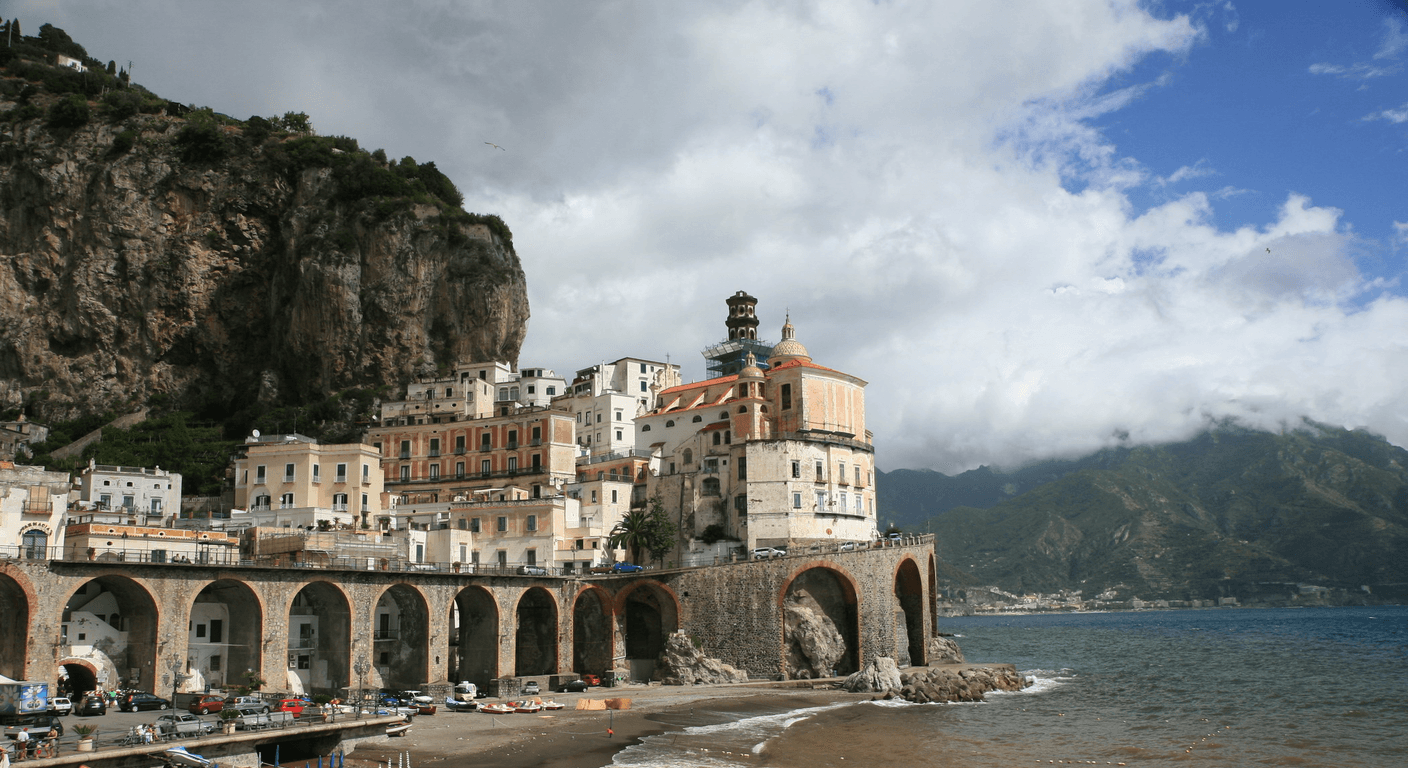
The Amalfi Coast is a 50-kilometre stretch of the Sorrentine Peninsula south of Naples, where the Lattari Mountains drop almost vertically into the Tyrrhenian Sea. The villages — Positano, Praiano, Amalfi, Ravello, Cetara — cling to the cliff faces like barnacles. The scenery is real. The lemon groves, the painted ceramics, the water in seventeen shades of blue: none of it is exaggerated. What travel marketing reliably omits is the physical architecture of the place.
Positano is built on a near-vertical slope. Getting from the bus stop to the beach involves somewhere between 200 and 400 steps depending on your route, and most of the lanes are too narrow and too steep for anything other than your own two legs. Amalfi town is less punishing but still involves uneven stone streets and significant gradients. For travellers who walk well but find sustained stair-climbing uncomfortable — which is a perfectly reasonable position at 66 — this matters enormously when choosing where to sleep.
None of this is a reason not to go. It is a reason to plan intelligently, which is exactly what experienced travellers do.
Why Sorrento makes the better base
Sorrento sits at the northern tip of the peninsula, connected to Naples by the Circumvesuviana train line — a rattly but reliable service that runs roughly every 30 minutes and takes around 65 minutes. The town itself is largely flat along its main corso, with a clifftop setting that delivers sea views without requiring the views to be earned by staircase. Hotels here range from modest three-star properties to grand liberty-era palaces, and the restaurant scene is legitimate rather than tourist-facing.
From Sorrento, ferries run to Positano, Amalfi and Capri when seasonal schedules permit — typically April through October, with the most frequent services in summer. This is the key insight: you can day-trip to the dramatic villages by boat, experience their beauty at the quieter morning hours, and return to a town where your hotel room doesn't require a 15-minute stair descent to reach the nearest café. That's not a compromise. That's good planning.
The Circumvesuviana also connects Sorrento to Pompeii in around 30 minutes, which makes a half-day there straightforward. Pompeii itself involves a lot of uneven cobblestone and gravel paths — wear proper walking shoes, not sandals — but the site is largely flat and the cultural weight of it is difficult to overstate.
The coast road bus: what you're in for
The SITA bus service along the SS163 Amalfitana is genuinely one of the more dramatic rides in Europe. The road is single-lane in many sections, carved into the cliff face, and the buses navigate it with the casual confidence of drivers who have done it ten thousand times. Passengers on the right-hand side look straight down to the sea. This is either exhilarating or deeply uncomfortable depending on your relationship with heights and motion.
In July and August, these buses are crowded well beyond what most travellers would consider pleasant. Standing room, luggage on laps, windows fogged: the ride can take 90 minutes between Sorrento and Amalfi when traffic backs up. In May or September, the same journey on a quieter bus with a window seat is a completely different experience — still winding, still dramatic, but manageable and even enjoyable.
The practical advice is this: use the bus when the ferry isn't running or when you want to stop at smaller villages like Praiano that ferries skip. Sit on the left side heading towards Amalfi for the sea views. Travel before 9am or after 4pm in shoulder season to avoid the tour-group crush. And if motion sickness is a consideration for you, the ferry is not just more scenic — it's kinder.
Ravello: where the coast slows down
Ravello sits 350 metres above the sea, reached by a winding road from Amalfi town or, for the fit, by a steep footpath. It's a different register entirely from the coastal villages — quieter, cooler in summer, and built around two extraordinary gardens that have been drawing writers, composers and heads of state since the 19th century. Villa Cimbrone and Villa Rufolo are the two main properties, and both are worth a full morning.
Villa Rufolo's Belvedere terrace is the view that appears on most Ravello photographs: a formal garden on a rocky promontory with the coast spread below. The garden paths are largely manageable for confident walkers, though some sections are uneven. Villa Cimbrone requires a gentle uphill walk from the town centre — roughly 10 minutes — and its Terrace of Infinity, a balustraded clifftop walkway lined with classical busts, is the kind of place where you sit on a bench and simply stop. Worth every minute of the journey to get there.
Ravello also hosts a famous music festival across summer, with concerts held in the Villa Rufolo gardens. For a group of friends who enjoy classical music alongside their scenery, this is worth building an itinerary around. Check the Ravello Festival website (ravellofestival.com) for current programming — confirm dates and ticketing well in advance as events sell out.
Getting there from Australia: the long-haul reality
There are no direct flights from Australia to Naples, which is the nearest major airport to the Amalfi Coast. The typical routing from Melbourne, Sydney or Brisbane involves a single stopover — most commonly in Dubai, Abu Dhabi, Singapore, Doha or Rome — with total travel time landing somewhere between 22 and 26 hours depending on connections. From regional Victoria, add the drive or train to Melbourne first.
A recovery night in Naples or Rome on arrival is not an indulgence. It is a practical necessity. Trying to navigate Neapolitan traffic, transfer to Sorrento and check into a hillside hotel on the day of a 24-hour journey is a reliable way to start a holiday in a state of exhaustion. Book a simple, well-located hotel near Naples Centrale or in Rome for the first night, do very little, and begin the coast properly the following morning.
Jet lag on the westward return to Australia is typically more disruptive than the outbound journey. Build in at least one rest day after you arrive home before resuming normal commitments. Travel insurance that covers pre-existing medical conditions is non-negotiable for this kind of long-haul trip — compare policies carefully, disclose everything, and read the fine print on cancellation and medical evacuation cover. The Australian Government's Smartraveller website (smartraveller.gov.au) is the correct place to check current visa requirements and travel advisories for Italy before you book.
When to go — and when not to
July and August are the months the Amalfi Coast is most photographed and least enjoyable for most travellers over 50. Temperatures regularly reach 32–36°C with high humidity. The narrow lanes of Positano and Amalfi fill with crowds from mid-morning. Ferry queues are long. Hotel prices peak. If those months are the only option available to you, it's still worth going — just set expectations accordingly, start every excursion before 9am, and retreat indoors for two hours in the early afternoon.
May and early June offer the best combination of warmth, manageable crowds and full ferry services. The hillside gardens are at their most lush, the water is swimmable by late May, and the light in the late afternoon is the one the painters came for. September and October are the other excellent window — slightly quieter than May, with warm sea temperatures and a softened quality to the crowds as European school holidays end.
March and April are cooler and quieter still, with some ferry services not yet running. November through February sees many smaller hotels and restaurants close, ferry schedules reduced dramatically, and the coast road occasionally affected by landslides after heavy rain. Manageable for independent travellers who've done their research, but not the version of the Amalfi Coast most people are imagining.
Costs, practicalities and what to actually budget for
The Amalfi Coast is expensive by Italian standards, which are themselves not cheap by Australian standards. A mid-range hotel in Sorrento runs roughly €150–€250 per room per night in shoulder season — indicative only, confirm current pricing. Positano and Ravello hotels at comparable quality tend to cost more. Meals at a proper restaurant — not the tourist-menu places on the waterfront — run around €40–€65 per person with wine. A ferry day-trip from Sorrento to Positano and back is roughly €20–€30 in each direction; confirm with operators as seasonal pricing varies.
Budget for a private transfer from Naples airport to Sorrento rather than public transport on arrival day. The Circumvesuviana train is fine once you're rested and oriented, but navigating it with luggage after a long-haul flight, through a busy Naples station, is an unnecessary stress. A pre-booked transfer costs around €80–€120 depending on vehicle size — shop around through your hotel or a reputable Naples transfer operator.
Currency is the euro. Australian credit and debit cards work widely, though some smaller restaurants and ferry kiosks are cash-only. Notify your bank before travel. Tipping is appreciated but not the cultural obligation it is in North America — rounding up the bill or leaving a few euros is sufficient. The most important financial decision you'll make is travel insurance: don't economise on it.
Quick planning guide
| Ideal pace | Slow-paced, one base with day trips rather than village-hopping |
|---|---|
| Best months | May, early June, September and October |
| Suggested stay | Several days based in Sorrento, with day trips to Positano, Amalfi and Ravello |
| Mobility level | Moderate — Sorrento is largely flat, but Positano involves 200–400 steps and other villages have uneven, steep streets |
| Cost level | Premium — expensive by Italian standards, with hotels, meals and ferries all costing more than average |
| Comfort level | Comfortable with planning; peak summer brings heat, crowds and packed buses |
| Best for | Over-50 travellers who want the coast's scenery without daily stair-climbing or motion-sickness-inducing transfers |
| Main planning consideration | Choosing Sorrento over a cliffside village as a base, and timing the trip for shoulder season |
Key takeaways
- Sorrento is the practical base for over-50 travellers — flatter, better-connected, and a ferry ride from the dramatic villages.
- Positano involves hundreds of steps; plan to visit it as a day trip by ferry, not as a place to sleep.
- Ravello's clifftop gardens — Villa Cimbrone and Villa Rufolo — are the coast's calmest and most rewarding half-day.
- Shoulder season (May, early June, September, October) delivers the coast's best scenery without the summer crush.
- Total travel time from Australian cities to the Amalfi Coast runs 22–26 hours; a recovery night on arrival is essential, not optional.
- Check current Italian visa requirements and travel advisories at smartraveller.gov.au before booking anything.
Recommended partners and links
Indicative prices only — always confirm with the operator before booking.
Frequently asked questions
Is the Amalfi Coast suitable for travellers over 60 with some mobility limitations?
Sorrento and Ravello are the most accessible parts of the Amalfi Coast — both are manageable for travellers who walk confidently but prefer to avoid long stair climbs. Positano and Amalfi town involve significant steps and steep lanes; visiting them as ferry day trips rather than basing yourself there is the practical solution. Anyone with significant mobility limitations should research specific hotel access carefully before booking, as lifts and level entrances are not universal.
Should I take the ferry or the bus along the Amalfi Coast?
When ferry services are running — generally April through October — the ferry is the better choice for most over-50 travellers. It avoids the winding cliff road, reduces motion sickness risk, and offers unobstructed coastal views. The SITA bus is useful for smaller villages ferries don't serve, and for off-season travel when boat services are reduced. Confirm current ferry schedules with operators such as Alilauro (alilauro.it) before you travel, as timetables change seasonally.
What is the best time of year for Australians to visit the Amalfi Coast?
May, early June, September and October are the recommended months for Australian travellers over 50. These shoulder-season windows offer warm temperatures, full ferry services, manageable crowds and lower hotel prices than July–August peak. July and August are the hottest and most crowded months; February and March see many businesses closed and ferry services significantly reduced.
Do Australians need a visa to visit Italy and the Amalfi Coast?
As of 2025, Australian passport holders can enter Italy for tourism without a visa for stays up to 90 days within the Schengen Area. However, the EU's ETIAS travel authorisation system — a pre-travel online registration — was expected to come into effect for Australian visitors; confirm the current status and any entry requirements at smartraveller.gov.au before booking, as rules can change.
How long should Australians plan to spend on the Amalfi Coast?
Given the travel time from Australia — typically 22–26 hours including stopovers — a stay of at least ten to twelve days makes the journey worthwhile. This allows for a recovery night on arrival, three to four nights based in Sorrento, a day in Ravello, ferry trips to Positano and Amalfi, and time in Naples or Rome either side of the coast. Rushing the Amalfi Coast to fill a one-week holiday is a genuine waste of a very long flight.