Armidale, on the New England Tablelands of northern NSW, is best visited in autumn (April–May) when heritage-lined streets turn gold. Two to three nights suit its unhurried pace, with the free New England Regional Art Museum and two historic cathedrals as the defining highlight. The flat, compact centre is easy to walk, though reaching it from Victoria means travelling via Sydney by rail-coach or flight rather than a direct service.
What makes Armidale worth the journey from regional Victoria?
Armidale sits at roughly 1,000 metres above sea level on the New England Tablelands, about 570 kilometres north of Sydney and a genuine world away from the coastal tourist trail. It is a city shaped by education — the University of New England has been here since 1938 — and that university presence gives the place a cultural density unusual for a regional town of around 25,000 people. There are bookshops, galleries, live music in pubs, and a population that actually uses them.
For a group of women travelling together, Armidale offers something rarer than another coastal walk: the pleasure of wandering somewhere that feels lived-in and layered. The streets are wide, the architecture is a coherent mix of Federation and Victorian sandstone, and the pace is unhurried without feeling sleepy. It rewards two to three nights rather than a day trip, giving you time to settle into its rhythms rather than rush through the highlights.
Victorians travelling north will notice that Armidale's climate feels familiar — cool summers, proper winters, and an autumn that genuinely rivals Bright or the Dandenongs for colour. That shared sensibility of four-season life makes it feel less foreign and more like a natural extension of the landscapes many regional Victorian travellers already love.
The New England Regional Art Museum: what to expect inside
NERAM — the New England Regional Art Museum on Kentucky Street — holds one of the most significant collections of Australian art outside a capital city. The Howard Hinton and Chandler Coventry collections form its backbone, with works spanning colonial and early twentieth-century Australian painting, including names that would hold their own in any state gallery. Entry is free, with donations welcome; confirm current conditions on the NERAM website before you visit, as ticketed special exhibitions sometimes run alongside the permanent collection.
The building itself is accessible and human in scale — not the kind of sprawling institution that exhausts you before you reach the good rooms. Plan on two to three hours if you want to move through thoughtfully rather than skim. The gallery shop is worth a look for locally made and arts-related items, and the garden setting gives you a natural pause point between galleries.
NERAM regularly presents temporary and touring exhibitions, so it is worth checking the current program on their website before you travel. A group visit works well here — there is enough to spark conversation without the overwhelm of a major metropolitan institution. If anyone in your group has an interest in Australian art history, this is genuinely one of the places in the country where that interest is well served.
Two cathedrals worth your time: St Peter's and St Mary's
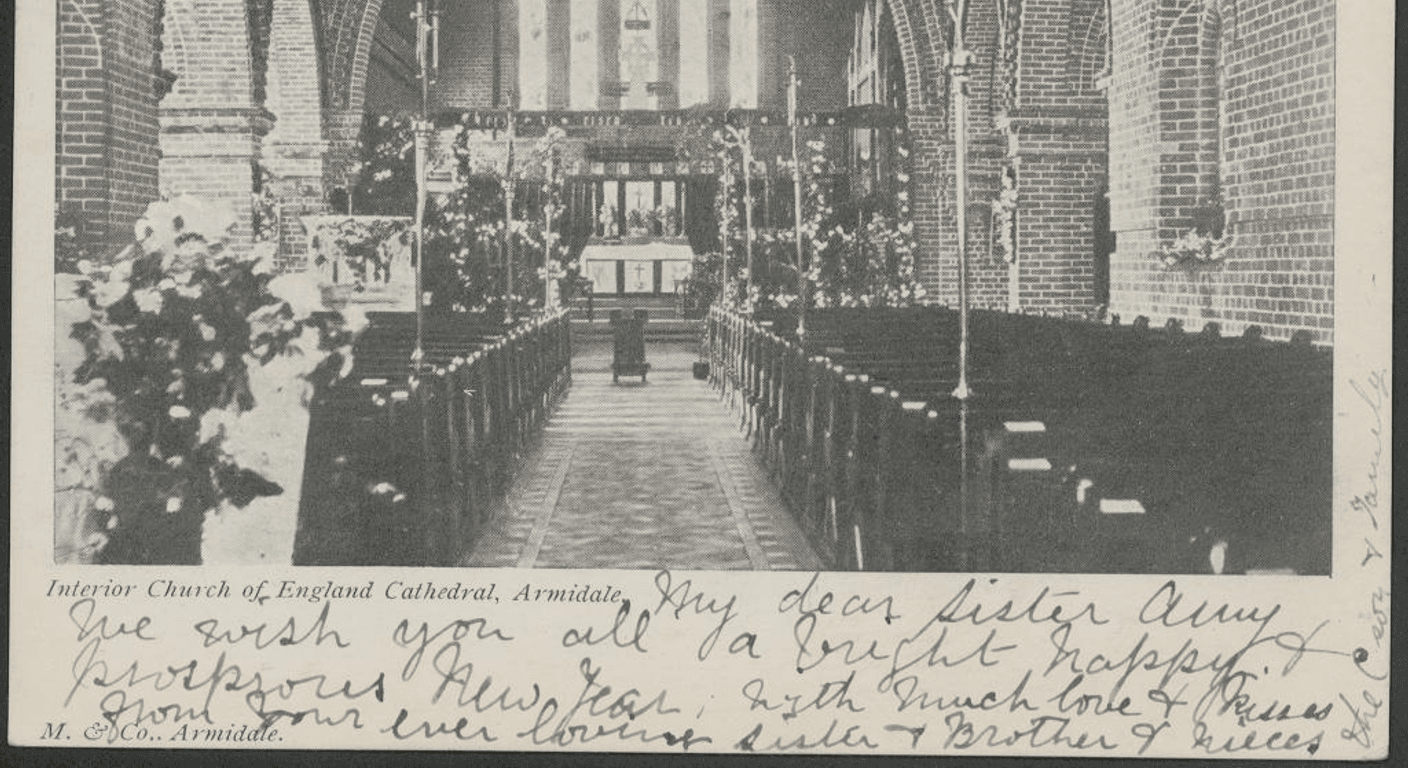
Armidale has two cathedrals within comfortable walking distance of the centre, and together they tell a story about the city's colonial and ecclesiastical history that is more interesting than it might sound on paper. St Peter's Anglican Cathedral on Faulkner Street is a graceful Gothic Revival building in local sandstone, with stained glass and a quiet interior that invites a longer sit than most visitors plan for. It is one of the more architecturally considered regional Anglican cathedrals in New South Wales.
St Mary's and St Joseph's Catholic Cathedral, also in the central precinct, is a substantial and somewhat grander structure, reflecting the strong Irish Catholic presence in the New England region through the nineteenth and early twentieth centuries. Both cathedrals are generally open to visitors during daylight hours, though it is courteous to check locally if a service is scheduled. Neither charges entry.
Walking between the two cathedrals and then out along the tree-lined streets toward the university gives you the shape of Armidale's history in a single afternoon. The elm and plane trees that line many of the older streets were planted in the late nineteenth and early twentieth centuries, and in autumn — roughly April through May — they produce the kind of colour that makes you stop and actually look at a street rather than walk through it.
Getting around: the flat central grid and the heritage bus
One of Armidale's practical advantages for travellers who prefer not to cover long distances on foot is that the central grid is genuinely flat and compact. The main cultural sites — NERAM, the two cathedrals, the mall, the courthouse, and the university's outer edges — are all within a walkable radius for most people. The footpaths in the central area are in reasonable condition, though some of the older residential streets can be uneven, so sturdy, comfortable shoes matter more than fashion here.
Armidale has offered a free heritage bus tour for visitors, typically covering the main historical and cultural landmarks with commentary. Schedules and availability have varied, so it is essential to confirm current operation with the Armidale Regional Council visitor information before you plan around it. When running, it provides an excellent orientation on arrival — particularly useful if anyone in your group finds extended walking tiring, as it lets you identify which sites you want to return to on foot.
Taxis and rideshare services operate in Armidale, though availability is more limited than in a major city. If your group is staying centrally, you are unlikely to need a car for the cultural sites. Hiring a car for a half-day excursion to Dangars Gorge or Wollomombi Falls — both within the New England National Park — is worth considering if your group is up for it, but the city's culture program itself is walkable.
Getting to Armidale from Victoria: the rail-coach option
Armidale is not directly connected to Melbourne by a single train service, but it is reachable by a combination of routes that suit travellers who prefer not to fly. From regional Victoria, the practical approach is to travel to Sydney — by train, coach, or a short flight — and then connect via NSW TrainLink's northern service. NSW TrainLink operates a rail-coach combination between Sydney Central and Armidale, with journey times of roughly seven to eight hours depending on the connection. Check current timetables and book ahead at nswtrainlink.info.
Indicative fares from Sydney are roughly in the $50–$80 range one way, though these vary by booking time, seat class, and concession eligibility. NSW TrainLink offers a seniors concession for eligible travellers, which is worth confirming directly with them before booking. The journey passes through Tamworth, which means you can also break the trip there if a multi-stop itinerary appeals.
Flying is faster — Regional Express (Rex) has historically served the Armidale–Sydney route, though airline routes in regional Australia shift, so confirm current services directly with the airline or through a travel agent. For a group travelling together and not in a hurry, the train-coach option has its own appeal: you arrive having already seen something of the New England landscape, which prepares you well for the city itself.
Dressing for New England's four-season climate
The New England Tablelands runs cold by NSW standards, and Armidale specifically can surprise visitors who arrive expecting the warmth of coastal Queensland or northern NSW. Even in summer, evenings cool quickly and a light jacket is not optional — it is necessary. In winter, overnight temperatures regularly drop below zero, and frosts are common. The upside is that the air is clear and the days are often brilliantly sunny even when cold.
For a group visiting in autumn — the most visually rewarding season — layers are the sensible approach. A warm mid-layer, a wind-resistant outer layer, and comfortable walking shoes with some grip will cover most situations. The cathedrals and NERAM are climate-controlled indoors, so the main exposure is between sites. If anyone in your group is sensitive to cold, a scarf and gloves are practical even in April.
Spring brings wildflowers and the university's academic energy, summer is genuinely pleasant rather than hot, and winter has its own austere beauty if you are prepared for it. The city does not shut down seasonally the way some coastal towns do, which means a winter visit is perfectly viable — just pack accordingly and expect to appreciate a good coffee more than usual.
Eating, staying, and making the most of a few days
Armidale's café and restaurant scene is modest but genuine, shaped by a university population that expects decent coffee and food that goes beyond the standard regional pub menu. The central mall area and the streets immediately around it have the highest concentration of cafés, and several serve food that reflects the multicultural character a university town tends to develop over time. For a group wanting a relaxed lunch between gallery visits, the options are sufficient without being overwhelming.
Accommodation ranges from standard motel-style rooms on the main approaches to the city through to some heritage-listed guesthouses and serviced apartments that suit a group travelling together. Booking ahead is sensible, particularly in autumn when the colour-season draws visitors. Check Armidale Regional Council's visitor information or mainstream accommodation booking platforms for current options; prices are indicative and vary significantly by season and property type.
Two full days gives you NERAM properly, both cathedrals, a walk through the university grounds, and time to simply sit in a café and watch the street. Three days allows for a half-day excursion into the surrounding tablelands — the gorge country is genuinely dramatic and accessible by car — without feeling rushed. The city rewards a pace that matches its own, which is unhurried and quietly confident.
Quick planning guide
| Ideal pace | Slow-paced and unhurried |
|---|---|
| Best months | April–May for autumn colour, though the four-season climate keeps it comfortable year-round with appropriate layers |
| Suggested stay | Two to three nights |
| Mobility level | Easy — flat, compact central grid linking all main cultural sites, though some older residential footpaths are uneven |
| Cost level | Budget-friendly — key attractions like NERAM and the cathedrals are free, with modest accommodation and dining costs |
| Comfort level | Comfortable but genuinely cool-climate; layers needed even in summer evenings |
| Best for | Groups seeking substance over spectacle — art, history and architecture at a relaxed pace |
| Main planning consideration | No direct train from Victoria; travel via Sydney using NSW TrainLink's rail-coach service (roughly 7–8 hours) or a connecting flight, and confirm current heritage bus and NERAM exhibition schedules before travelling |
Key takeaways
- NERAM holds one of regional Australia's most significant collections of Australian art and entry is generally free — confirm current conditions before visiting.
- Armidale's central grid is flat and compact, making most cultural sites walkable without needing a car.
- The city's four-season climate means layers are essential year-round; even summer evenings can be cool at 1,000 metres altitude.
- NSW TrainLink runs a rail-coach service from Sydney to Armidale, with indicative fares around $50–$80 one way — confirm current prices and senior concessions directly.
- Autumn (April–May) is the most visually rewarding season, when elm and plane trees along the heritage streets turn gold and amber.
- A heritage bus tour for visitors has operated in Armidale — confirm current schedule with Armidale Regional Council before planning around it.
Recommended partners and links
Indicative prices only — always confirm with the operator before booking.
Frequently asked questions
Is NERAM in Armidale free to enter?
NERAM — the New England Regional Art Museum — generally offers free general admission, with donations welcomed. Ticketed special exhibitions may run alongside the permanent collection. Confirm current entry conditions on the NERAM website at neram.com.au before you visit.
How do you get from Melbourne or regional Victoria to Armidale by public transport?
There is no direct train from Melbourne to Armidale. The practical public transport route is to travel to Sydney first — by train, coach, or short flight — then connect via NSW TrainLink's northern rail-coach service to Armidale. The Sydney–Armidale leg takes roughly seven to eight hours. Check current timetables and book at nswtrainlink.info.
What is the best time of year to visit Armidale for autumn colour?
April through to mid-May is generally the peak period for autumn colour in Armidale, when the elm, plane, and oak trees along the heritage streets turn gold, amber, and red. The timing varies slightly year to year depending on temperatures, so checking locally before you travel is worthwhile.
Are Armidale's cathedrals accessible to visitors?
Both St Peter's Anglican Cathedral and St Mary's and St Joseph's Catholic Cathedral are generally open to visitors during daylight hours at no charge. It is courteous to check locally if a service is scheduled before entering. Accessibility within both buildings is reasonable for most visitors; contact the individual cathedrals for specific mobility access information.
Is Armidale suitable for a group of women travelling together?
Armidale suits a group travel style well. The city is compact and walkable, the cultural sites are clustered centrally, and the pace is relaxed enough that a group can move at its own speed without feeling pressured. Accommodation options that work for groups — including serviced apartments — are available; book ahead, particularly in autumn.