Augusta, at Western Australia's south-western tip, suits over-50 travellers seeking a slower coastal escape, ideally for two nights. Its defining highlight is Cape Leeuwin Lighthouse, where the Indian and Southern Oceans meet, with June–August whale watching an added draw. Mobility is moderate: grounds and foreshore paths are easy, but the 176-step tower climb suits only those without knee, hip, or balance concerns. Access requires flying Melbourne–Perth then a self-driven three-to-four-hour journey, as Augusta has no direct flights.
Why Augusta suits over-50 travellers so well
Augusta is the kind of town that does not try too hard. The main street is short, the cafes are genuinely relaxed, and the locals are used to visitors who arrive wanting to breathe rather than rush. For travellers in their sixties and seventies — particularly those who have done the busier parts of the Margaret River region and are ready for something quieter — Augusta offers a natural next chapter.
The town sits on the Hardy Inlet where the Blackwood River meets the sea, and the light here changes constantly. There is birdlife along the estuary, a small boat harbour, and enough to fill two full days without a single moment of feeling you have over-scheduled yourself. That unhurried quality is not an accident; it is simply what Augusta is.
For a couple travelling together, the rhythm of Augusta is particularly well suited. You can share a long breakfast, walk a section of the coastline at your own pace, and spend an afternoon reading on a veranda without any sense that you are missing something. That is, in itself, a kind of travel worth planning for.
Getting to Augusta from Victoria: what to expect
Augusta is not a quick trip from Victoria, and that is worth acknowledging honestly. The most practical approach is to fly into Perth from Melbourne — flights run daily and take roughly three and a half hours — then hire a car and drive south. The drive from Perth to Augusta is around 320 kilometres along the South Western Highway, passing through Bunbury and Busselton, and takes roughly three and a half to four hours depending on stops.
Many travellers choose to break the drive in Busselton or Margaret River, which makes the journey more comfortable and adds another day or two to the itinerary. If driving long distances is not ideal, a small number of coach services operate between Perth and Augusta via Bunbury; check Transwa (transwa.wa.gov.au) for current routes and timetables, as this is the official WA government regional transport service.
A hire car is genuinely useful in Augusta because the lighthouse and coastal lookouts are not walkable from the town centre. If you prefer not to drive yourself, some regional tour operators offer day trips from Margaret River that include Cape Leeuwin — the Augusta Visitor Centre can point you toward current options. Confirm all transport details and costs before you travel, as schedules change.
Cape Leeuwin Lighthouse: what you actually see and do
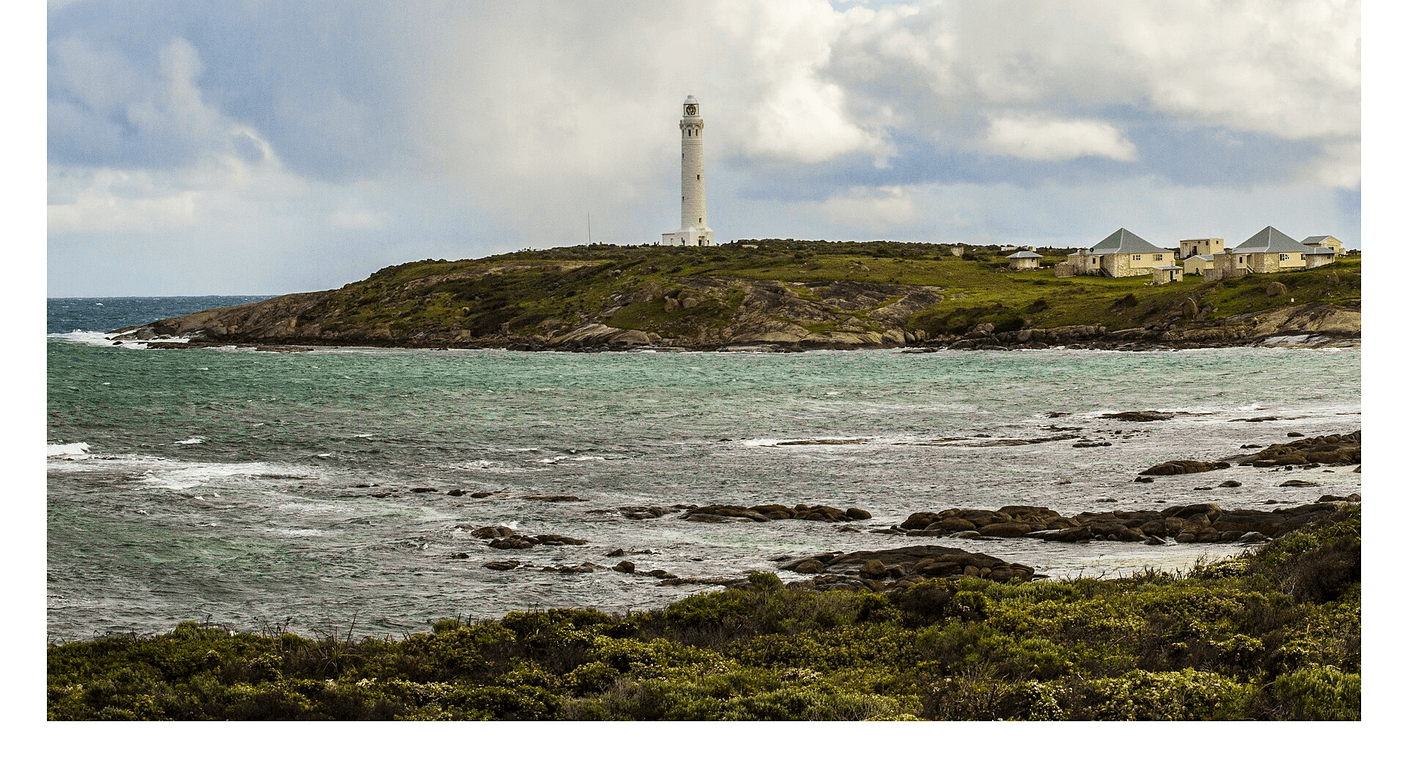
Cape Leeuwin Lighthouse stands at the most south-westerly point of Australia, and the physical fact of standing there — where two great oceans press against each other — is genuinely affecting. The lighthouse has been operating since 1896 and is managed by the Parks and Wildlife Service of Western Australia. There are two ways to experience it: grounds entry, which gives you access to the headland, the historic water wheel, and the views from ground level; or a guided tower tour, which takes you up the 176 steps inside the lighthouse to the top.
The guided tower tour costs noticeably more than grounds entry alone, and the stairs are steep and narrow — this is not a climb for anyone with significant knee, hip, or balance concerns. There is no lift. That said, the view from the base of the lighthouse and from the surrounding headland is genuinely worth the grounds entry fee on its own. You can stand at the marker point between the two oceans, watch the water moving in different directions, and take your time without any physical strain.
The site is open daily, though hours and tour availability can vary by season. Indicative grounds entry is roughly $15–$20 per adult and guided tower tours around $25–$35 per adult at the time of writing, but confirm current pricing directly with the Parks and Wildlife Service before you visit, as these figures are indicative only. Allow at least ninety minutes at the site, more if the weather is cooperating and you want to walk the short coastal paths nearby.
Whale watching from Augusta: June to August
Between roughly June and August each year, humpback and southern right whales pass close to Augusta on their annual migration. This is not a distant, binocular-required experience — whales have been spotted from the shore at Cape Leeuwin and from the lookouts around Flinders Bay, sometimes close enough that you can hear them surface. It is one of the more quietly extraordinary wildlife experiences on the Australian coast.
Augusta is considered one of the better land-based whale watching locations in Western Australia precisely because the geography funnels the whales close to the headland. Flinders Bay, just north of the lighthouse, is a particularly reliable spot. There are also boat-based whale watching tours that operate from Augusta during the season; the Augusta Visitor Centre maintains current information on operators and conditions.
If your travel dates fall outside the June to August window, the coastline and the lighthouse are still worth the visit — but if you have any flexibility in your travel planning, timing a trip to coincide with whale season adds a dimension that is difficult to replicate elsewhere along the Victorian or South Australian coast.
Where to stay in Augusta: two nights, no rush
Augusta has a modest but comfortable range of accommodation. There are holiday cottages and self-contained apartments along the waterfront and around the town, a caravan and cabin park with good facilities, and a small selection of bed and breakfast style options. For a couple wanting to settle in properly, a self-contained cottage for two nights gives you the freedom to cook a quiet dinner, keep your own hours, and feel genuinely at home rather than passing through.
The town is small enough that most accommodation is within easy reach of the main street, the estuary foreshore, and the boat harbour. Mobility-wise, the town centre is reasonably flat, though some of the hillier residential streets leading to coastal lookouts involve a gradient. Check accessibility details directly with any accommodation provider before booking, particularly if walking on uneven ground is a consideration.
Two nights is the right amount of time for Augusta. One night feels rushed; three nights is comfortable if you are using Augusta as a base to explore the surrounding national park and coastline more thoroughly. The Margaret River region's cellar doors and the Boranup Karri Forest are within an easy thirty to forty minute drive if you want to extend your time in the area.
Eating, walking, and filling the days at your own pace
Augusta's dining options are small in number but honest in character. There are cafes on the main street that do a proper breakfast, a bakery, and a small number of casual dining options for the evening. For a more considered dinner, Margaret River — thirty minutes north — has a wider range of restaurants if you feel like a short drive. Augusta is not a food destination in the way that Margaret River is, but what it offers is perfectly good for a relaxed couple of days.
Walking options around Augusta suit a range of fitness levels. The foreshore path along the Hardy Inlet is flat and easy, ideal for a morning or evening stroll. The Leeuwin-Naturaliste National Park, which surrounds the town, has a number of trails, some of which are gentle and others more rugged. The Cape to Cape Track passes through this section of the coast, but you are under no obligation to walk more than a short section of it — even a twenty-minute walk to a coastal lookout gives you a sense of the landscape.
The Jewel Cave, located about eight kilometres north of Augusta, is worth considering as a half-day addition. It is one of the more accessible caves in the region, with guided tours that are manageable for most travellers, though there are some uneven surfaces and steps involved. Confirm current tour details and any mobility considerations with the operator before visiting.
Practical notes for over-50 travellers visiting Augusta
Augusta is a small town, and that means some practical limitations are worth knowing in advance. There is a small supermarket and a pharmacy, but for anything more specific — specialist medications, larger shopping needs — Busselton or Margaret River are better equipped. If you manage any regular health conditions, carry sufficient supplies for your trip rather than relying on local availability.
Mobile phone coverage in Augusta is generally reasonable in the town centre, but it can be patchy along the coastal tracks and in parts of the national park. Let someone know your plans if you are heading out for a longer coastal walk, particularly in cooler months when the weather can change. The South West of WA can be genuinely cold and wet in winter, which is also, of course, whale season — pack layers and a proper waterproof jacket.
Travel insurance is always worth having for an interstate trip, and particularly so for travellers with any pre-existing health considerations. Augusta's nearest hospital with emergency facilities is in Margaret River, and more comprehensive services are in Busselton. None of this should discourage you from going — it is simply the honest picture of a remote, beautiful corner of the country that rewards a little preparation.
Quick planning guide
| Ideal pace | Slow-paced and unhurried |
|---|---|
| Best months | June to August for whale watching, though the coast is pleasant year-round |
| Suggested stay | Two nights, three if using Augusta as a base |
| Mobility level | Moderate — flat town centre and lighthouse grounds are easy, but the 176-step tower tour and some national park trails are not suited to those with knee, hip, or balance concerns |
| Cost level | Budget-friendly to moderate, with modest attraction entry fees |
| Comfort level | Simple, relaxed small-town facilities |
| Best for | Couples over 50 wanting a quiet, low-key coastal break |
| Main planning consideration | A hire car is essential, the town is remote with limited medical services nearby, and all current prices and transport options should be confirmed before travel |
Key takeaways
- Augusta is one of the quietest and least crowded coastal towns in WA's South West, making it well suited to over-50 travellers who want to slow down.
- Cape Leeuwin Lighthouse grounds entry is modest in cost and worthwhile without climbing the tower; the 176-step tower tour is not suitable for travellers with knee, hip, or balance concerns.
- Whales pass close to Augusta between roughly June and August, and land-based sightings from Flinders Bay and the lighthouse headland are genuinely possible.
- Two nights in Augusta is the recommended stay — enough time to visit the lighthouse, walk the estuary foreshore, and settle into the pace of the place.
- A hire car is the most practical way to get around Augusta, as the lighthouse and coastal lookouts are not walkable from the town centre.
- All indicative prices in this guide should be confirmed directly with operators before travel, as costs change and this guide does not quote precise current figures.
Recommended partners and links
Indicative prices only — always confirm with the operator before booking.
Frequently asked questions
Is Cape Leeuwin Lighthouse accessible for older travellers with mobility concerns?
The lighthouse grounds and the headland viewing area are accessible on foot over relatively flat terrain and are suitable for most travellers. The guided tower tour involves 176 steep, narrow internal stairs with no lift and is not recommended for anyone with significant knee, hip, or balance concerns. The view from the base of the lighthouse and the ocean meeting point marker is worthwhile on its own, without climbing the tower.
When is the best time to see whales at Augusta, WA?
Humpback and southern right whales migrate past Augusta between roughly June and August each year. Augusta is considered one of the better land-based whale watching locations in Western Australia, with Flinders Bay and the Cape Leeuwin headland both offering close sightings in good conditions. Boat-based tours also operate during the season; contact the Augusta Visitor Centre for current operator information.
How do you get from Melbourne to Augusta, Western Australia?
The most practical route is to fly from Melbourne to Perth — roughly three and a half hours — and then hire a car for the approximately 320-kilometre drive south to Augusta, which takes around three and a half to four hours. Many travellers break the drive with a stop in Busselton or Margaret River. Regional coach services operate between Perth and Augusta via Transwa; check transwa.wa.gov.au for current timetables.
How many days should you spend in Augusta, WA?
Two nights is a comfortable stay for most travellers visiting Augusta. This gives you time to visit Cape Leeuwin Lighthouse, walk the Hardy Inlet foreshore, explore Flinders Bay, and enjoy the town's cafes without feeling rushed. A third night is worthwhile if you plan to visit Jewel Cave or explore more of the Leeuwin-Naturaliste National Park.
What is the significance of Cape Leeuwin — do the two oceans really meet there?
Cape Leeuwin is officially recognised as the point where the Indian Ocean and the Southern Ocean meet, and there is a marked site at the lighthouse headland that indicates this. The water movement visible from the headland — particularly in rougher weather — does reflect the different ocean systems pressing against each other. The lighthouse has operated there since 1896 and is managed by the Western Australian Parks and Wildlife Service.