A 48-hour Perth weekend suits over-50 couples best in autumn or spring (March–May, September–November), when temperatures are comfortable and crowds are thinner. Plan two full days plus a travel-eve arrival — Perth is 4–5 hours from Sydney, Melbourne or Brisbane, and same-day arrivals waste half a day. The defining highlights are Kings Park, the Swan River foreshore and Fremantle by train. Mobility rating: Moderate (some uneven paths and cobblestones; easy alternatives exist). Domestic flights make access straightforward, though Perth's time-zone shift needs a recovery night.
The flight reality: why Perth deserves an extra night
Perth is genuinely far. Not in the vague, hand-wavy way people sometimes describe Australian distances — but factually, concretely far. From Melbourne or Sydney, you're looking at 4 to 4.5 hours in the air. From Brisbane, closer to 5. Add check-in, boarding, baggage, and the transfer to your hotel, and a morning departure from the east coast means you're dropping your bags in Perth somewhere around early afternoon — tired, possibly stiff, and two to three hours behind your body clock. That is not the start of a relaxed weekend.
The smarter move is to fly in the evening before. Take the 6pm or 7pm departure, arrive around 9 or 10pm Perth time, check in, sleep. Your body adjusts overnight. Your first full day begins without a deficit. Yes, this turns 48 hours into three nights, but that extra hotel night — around $180 to $300 depending on where you're staying — is the single best investment in the trip. Perth operates on AWST, which is two hours behind Sydney and Melbourne in summer and three hours behind during eastern daylight saving. That shift is subtle enough to feel manageable and persistent enough to disrupt sleep if you ignore it.
For travellers managing any pre-existing conditions — cardiovascular, respiratory, joint-related — it's worth confirming your travel insurance covers you in Western Australia and that your insurer knows about any conditions before you fly. Smartraveller (smartraveller.gov.au) is the reference point for general travel advice, though for a domestic trip the main consideration is ensuring your private health insurance and travel insurance work in WA. If you hold a state Seniors Card, check whether any transport or attraction concessions apply — Transperth offers concession fares for eligible holders of the WA Seniors Card, but if you hold a Victorian or other state card, confirm eligibility before assuming it transfers.
Where to stay: comfort bands and honest pricing
Perth's CBD and the inner riverside precinct offer the most practical base for a couple doing this itinerary. You want to be within easy reach of Elizabeth Quay (flat, walkable, good for an evening stroll on arrival night), and on a direct train or bus line to Fremantle. The Perth CBD sits on the Fremantle line — that matters.
At the comfortable mid-range, expect to pay from around $180 to $260 a night for a well-located three-to-four-star hotel. The area around Hay Street, Murray Street and the QT Perth precinct gives you walkable access to the river and good restaurant density. Four-to-five-star options — think COMO The Treasury or Crown Perth (the latter out at Burswood, which is a short taxi or train ride from the CBD) — run from roughly $300 to $450 a night for a couple, sometimes more during major events. Always check what's on in Perth that weekend; the city's event calendar can push hotel prices sharply. Confirm all rates directly with the property before booking.
A note for any solo traveller reading this alongside a couple's guide: Perth hotels generally price per room, so a solo traveller pays the same room rate as a couple — which is relatively fair compared to the tour and cruise world, where single supplements of 50 to 100 per cent of the twin-share price are standard. If you're joining a guided day tour (Swan Valley, for instance), ask directly whether the operator charges a single supplement and whether a share-match is available. Some smaller Perth day-tour operators are flexible; others aren't. Get it in writing.
Day one, morning: Kings Park and the Swan River foreshore
Kings Park is 400 hectares of bushland and manicured gardens sitting on a low ridge above the city — and the view from the war memorial terrace across the Swan River and the CBD skyline is one of those views that earns its reputation. Go in the morning, before 10am if you can, when the light is softer and the temperature is manageable. Spring (September to November) brings the wildflower season, which transforms the park's bushland sections into something genuinely worth planning a trip around.
The mobility reality: Kings Park has a mix of sealed paths, gravel trails and grassed areas. The main terrace and the DNA Tower viewing platform are accessible, and there are electric buggies available for hire if walking extended distances is uncomfortable — confirm availability and current pricing with the Kings Park and Botanic Garden Authority (bgpa.wa.gov.au). Accessible toilets are located near the main carpark and visitor centre. The steeper bushland tracks are optional; the best views don't require them. Plan for 90 minutes to two hours, with a rest on one of the many benches that face the river.
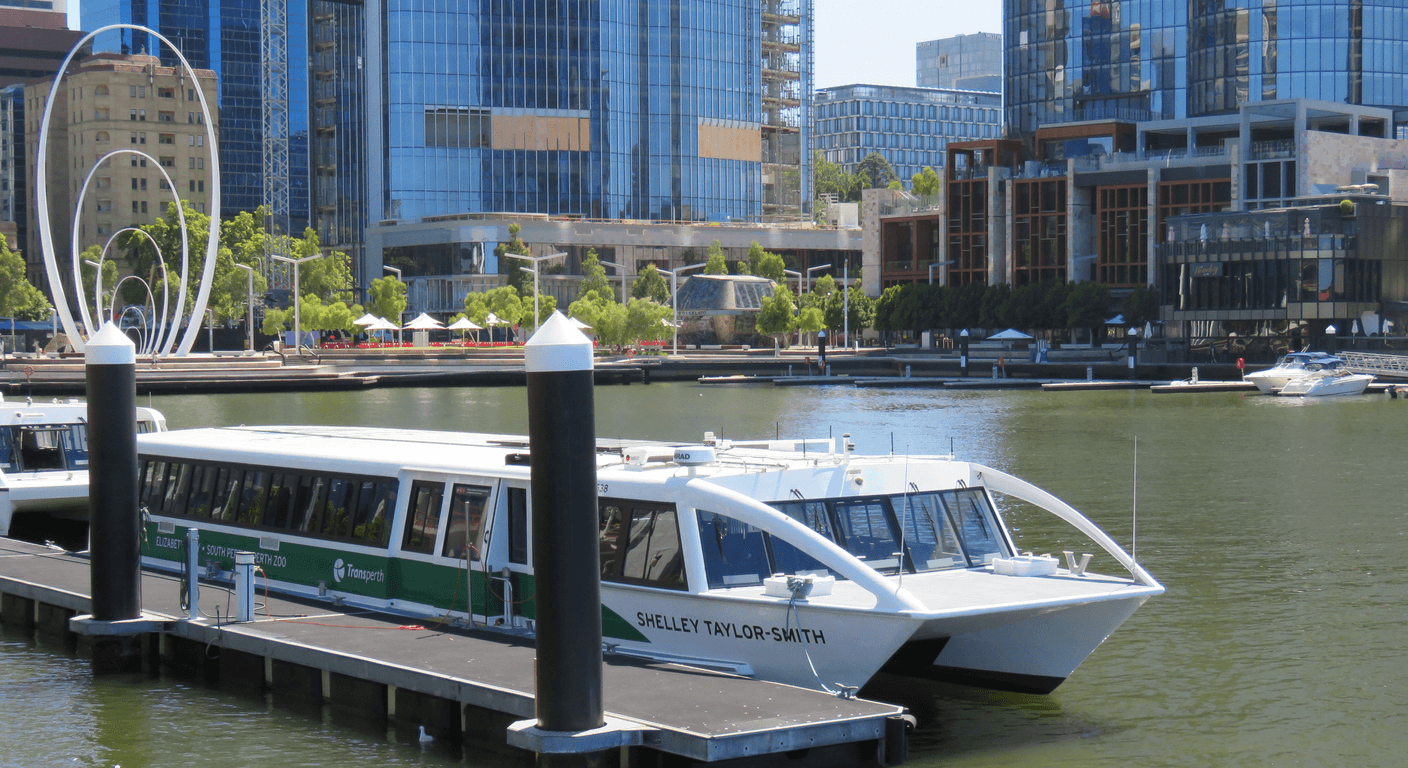
From Kings Park, the Elizabeth Quay foreshore is a 10-to-15-minute taxi or rideshare ride, or about 20 minutes' walk downhill (one way — the uphill return is not recommended after a morning's walking). Elizabeth Quay itself is flat, modern and pleasant: a small inlet off the Swan, ringed with cafes, a footbridge and river-facing seating. It's a good place to sit with a long coffee and watch the river traffic before lunch. The precinct was purpose-built with accessibility in mind and shows it.
What does the day actually look like? A realistic shape of Day One
7:30am: Breakfast at your hotel or a nearby cafe — Perth's cafe culture is strong, and there's no shortage of good flat whites within walking distance of any CBD hotel. 9:00am: Taxi or rideshare to Kings Park (around $12–$18 from the CBD; confirm current rates with your driver). 9:15am to 11:00am: Terrace views, wildflower walk or buggy tour, rest on a bench. No rush. 11:15am: Return to Elizabeth Quay by taxi or rideshare. 11:30am to 12:30pm: Coffee and a sit at the foreshore. This is not wasted time — it's the point.
12:30pm: Lunch at one of the Elizabeth Quay restaurants or the nearby Barrack Street precinct. Budget around $35–$55 per person for a relaxed two-course lunch with a glass of wine; confirm current menu pricing with individual venues. 2:00pm: Board a Swan River cruise from Barrack Street Jetty — Captain Cook Cruises runs afternoon departures and the 1.5-to-2-hour scenic cruise is genuinely low-effort. You sit, the river slides past, someone brings you a drink. From around $35–$55 per person (confirm with operator). Toilets are on board. 4:00pm: Return to the jetty. Back to the hotel by 4:30pm. Rest before dinner. That is a good day. It is not a half-day. It is a full, satisfying day that doesn't leave you wrecked.
Evening: Perth's restaurant scene in the CBD and nearby Northbridge has expanded considerably. Northbridge is a 10-to-15-minute walk from most CBD hotels or a short taxi ride — it has the density of options that suits a couple who want to browse before committing to a table. Budget around $80–$130 for dinner for two with wine at a mid-range restaurant; upscale options run higher. Confirm bookings; Perth restaurants fill on Friday and Saturday evenings. If you prefer something quieter, the Elizabeth Quay and South Perth waterfront precincts both have good options with river views.
Day two: Fremantle by train — not by car
Fremantle is 19 kilometres south of the Perth CBD and the train journey takes around 30 minutes. Take the train. The Fremantle line runs from Perth Station, stops are frequent, and the fare on a SmartRider card is around $4–$6 each way for most adult fares — confirm concession eligibility if you hold a Seniors Card. Driving to Fremantle means parking decisions, unfamiliar streets and the nagging awareness that you had wine at lunch. The train means you step out at Fremantle Station and you're 400 metres from the markets. This is not a minor logistical point: it shapes the entire day.
Fremantle Markets (fremantlemarkets.com.au) open Friday, Saturday, Sunday and public holidays. If your weekend includes a Saturday, that's your Fremantle day — the markets are at their fullest. The building itself is heritage-listed, the floor is a mix of flat tiles and slightly uneven boards, and it gets genuinely crowded by mid-morning. Go at 9am when it opens, before the tour groups arrive. Accessible entry is available; the ground floor is manageable for most mobility levels, though the stalls are tightly packed and navigation with a walking frame would be challenging in peak hours. The produce section — local cheeses, WA olive oils, fresh fruit — is worth the visit alone.
The Fremantle streetscape is the other draw, and here the cobblestone reality needs naming plainly: the heritage precinct around High Street and South Terrace has uneven stone paving that is attractive in photographs and hard on ankles. Wear supportive footwear. The cappuccino strip (South Terrace) has outdoor seating on flat pavement. Fremantle Prison (fremantleprison.com.au) is worth a look from the outside even if you skip the tour — the Tunnels Tour involves significant walking and is best suited to Active-rated travellers. The Fremantle History Museum (Museum of Fremantle, museumoffremantle.com.au) offers a quieter, air-conditioned alternative with free entry. From the harbour, the views across to Rottnest Island are clear on a fine day, and several ferry operators run day trips — though that's a third-day option, not something to bolt onto an already full afternoon.
What does Perth genuinely allow in 48 hours — and what it doesn't
Honesty first: 48 hours in Perth, paced for comfort, is not enough to do the Swan Valley wine region, Fremantle, Kings Park, a river cruise, Rottnest Island and the Cottesloe Beach sunset. That is a five-day itinerary squeezed into a marketing brochure. What 48 hours — properly understood as two full days with a travel-eve arrival — does allow is two or three focal points done well, without the cumulative fatigue that turns a holiday into a recovery mission.
The itinerary above covers Kings Park, Elizabeth Quay, a river cruise and Fremantle. That is the right scope. If you want to add the Swan Valley — and it is worth adding, particularly for couples who enjoy a long lunch at a winery — replace the afternoon river cruise on Day One with a half-day Swan Valley tour, or build it into a third day. Swan Valley is about 25 kilometres northeast of the CBD; a guided half-day tour from Perth costs from around $80–$120 per person (confirm with operators). Driving yourself is possible but means navigating unfamiliar roads; a guided option handles logistics and lets both of you have a glass of Chenin Blanc without negotiating.
A 66-year-old travelling with friends rather than a partner may find the rhythm slightly different: solo room costs are a wash (hotels charge per room), but social energy matters. Perth is an easy city for small groups — restaurant bookings for three or four are rarely difficult, Fremantle is good for a group browse, and a river cruise is better with company. The city doesn't demand the kind of constant couple-bubble dynamic that some destinations enforce. It's relaxed enough for each person to wander at their own pace and reconvene for meals.
What does the whole trip cost? A realistic AUD band for a couple
Return flights for two from Melbourne or Sydney to Perth: roughly $500 to $1,100 per couple depending on carrier, timing and how far in advance you book. Brisbane tends to be at the higher end of that range. These are economy indicative figures — confirm with your airline. Business class or premium economy from Melbourne runs considerably more; some couples making this a genuine treat will find the extra cost worthwhile on a 4.5-hour flight, particularly if either traveller has mobility or comfort considerations.
Three nights accommodation (including the travel-eve night): from around $540 to $780 for a couple at a comfortable mid-range hotel (three to four stars, $180–$260 per night), or from roughly $900 to $1,350 at a four-to-five-star property ($300–$450 per night). All indicative — confirm directly with the property, and check what's included (breakfast, parking if relevant, resort fees). Meals: budget around $100–$160 per couple per day for breakfast, lunch and dinner, including a couple of glasses of wine each — Perth is not a cheap eating city, but it's not Sydney prices either. Two days of meals: roughly $200–$320.
Local transport (Transperth train to Fremantle, taxis or rideshares for Kings Park and evening outings): budget around $80–$150 for the full weekend for a couple, depending on how often you take rideshares versus trains. River cruise: around $70–$110 for two. Entry to attractions (markets are free; museum is free; Kings Park is free): minimal. Total indicative range for a couple over three nights, including flights, accommodation, all meals and local transport: roughly $1,800 to $3,200, depending heavily on which end of the accommodation and flight spectrum you choose. These are estimates — confirm all costs with operators and airlines before booking.
Quick planning guide
| Ideal pace | Slow — one or two focal points per half-day, rest built in |
|---|---|
| Best months | March–May and September–November |
| Suggested stay | 3 nights (arrive evening, two full days, fly home day 3 or 4) |
| Mobility level | Moderate — uneven paths in Kings Park, cobblestones in Fremantle; accessible alternatives noted throughout |
| Cost level | From around $1,800–$2,800 per couple for a full 3-night trip (flights, hotel, meals, local transport); indicative only — confirm with operators |
| Comfort level | High — Perth has excellent hotels, reliable public transport and a relaxed pace |
| Best for | Couples seeking a short domestic recharge; also suits friends travelling together |
| Main planning consideration | Perth's 2–3 hour time-zone difference from eastern Australia means fatigue is real; arrive the evening before your first full day |
Key takeaways
- Fly into Perth the evening before your first full day — the time-zone shift and flight fatigue are real, and a same-day turnaround wastes your best hours.
- Kings Park is best before 10am; the main terrace and accessible paths deliver the signature river view without requiring steep bushland walks.
- Take the Fremantle train from Perth Station — 30 minutes, around $4–$6 each way, and it removes every parking and navigation headache.
- A well-paced 48-hour Perth weekend covers two or three focal points done properly; anything more is a faster itinerary, not a better one.
- Indicative total cost for a couple over three nights (flights, hotel, meals, transport): roughly $1,800 to $3,200 — confirm all components with operators before booking.
- Hotel pricing in Perth is per room, so solo travellers aren't penalised the way they are on guided tours — but always ask about single supplements if joining any group day tour.
Recommended partners and links
Indicative prices only — always confirm with the operator before booking.
Frequently asked questions
Is Perth worth visiting for just a weekend if you're flying from Melbourne or Sydney?
Yes, but the math only works if you add the travel-eve arrival night. A true 48 hours in Perth — two full days — is genuinely satisfying if you pace it well and focus on two or three areas rather than trying to cover the whole city. Flying in the evening before your first full day, rather than the morning of it, is what makes the trip feel like a holiday rather than a commute.
How long is the flight from Melbourne, Sydney or Brisbane to Perth?
From Melbourne or Sydney, the flight to Perth is approximately 4 to 4.5 hours. From Brisbane, allow around 5 hours. Perth operates on Australian Western Standard Time (AWST), which is 2 hours behind Sydney and Melbourne in winter and 3 hours behind during eastern daylight saving time — factor this into your arrival planning and first-morning energy levels.
Is Fremantle accessible for older travellers with mobility considerations?
Fremantle is partially accessible. The train journey from Perth is flat and easy. Fremantle Markets has accessible entry and manageable ground-floor navigation. The heritage precinct around High Street and South Terrace has uneven cobblestone paving that is hard on ankles — supportive footwear is essential. The cappuccino strip on South Terrace has flat outdoor seating. Fremantle History Museum (Museum of Fremantle) is air-conditioned, free to enter and a good lower-exertion alternative to the heritage streetscape.
What is the best time of year to visit Perth as an older couple?
Autumn (March to May) and spring (September to November) are the most comfortable seasons for a paced Perth weekend. Summer (December to February) brings extreme heat that makes outdoor walking unpleasant and potentially risky for older travellers. Spring also coincides with WA's wildflower season, which transforms Kings Park's bushland sections and is a genuine highlight worth timing your trip around.
Do solo travellers pay more for a Perth weekend than couples?
For hotels, no — Perth hotels price per room, so a solo traveller pays the same room rate as a couple, which is relatively fair. For any guided day tours (Swan Valley, river cruises), a single supplement may apply. Ask the operator directly before booking, confirm whether a share-match option exists, and get any supplement waiver in writing. Some smaller Perth day-tour operators are flexible on this; others charge a significant premium.
- Tourism Western Australia — official visitor information
- Kings Park and Botanic Garden Authority (BGPA)
- Transperth — Perth public transport (trains, buses, ferries)
- Fremantle Markets — official site
- Captain Cook Cruises Perth — Swan River cruises
- Smartraveller — Australian Government travel advice
- FlyingTheNest — Perth travel video (YouTube)