This guide covers ten bucket-list adventures across Australia and New Zealand for travellers in their 50s, 60s and 70s, including an Australian circumnavigation cruise, The Ghan through the Red Centre, and a New Zealand motorhome loop. Best months run April to September for Australian outback trips and October to April in New Zealand. Stays range from ten days to six weeks, mobility varies from easy to moderate, and most involve guided transport rather than self-driving.
Why these ten trips suit over-50 travellers
There is a particular kind of travel that opens up once you are past the scramble of work and family commitments — slower, more immersive, and far more attentive to the landscape around you. The ten adventures in this guide share a quality that makes them especially rewarding for travellers in their 50s, 60s and 70s: they are built around scenery and experience rather than endurance, and most of them involve someone else doing the driving, the navigation, and the heavy lifting.
Each trip has been chosen because it offers genuine depth — the kind that rewards curiosity and patience rather than speed. Several are classic Australian journeys that many Victorians have talked about doing for decades. Others, particularly the New Zealand options, are accessible enough by air and then by guided transport that they suit solo travellers who prefer not to manage unfamiliar roads in a foreign country.
Accessibility and pacing are noted honestly for each experience. Not every trip is suitable for every traveller, and the guide says so plainly. Costs are indicative only and based on publicly available information at the time of writing — always confirm current pricing directly with operators or through Tourism Australia at australia.com and Tourism New Zealand at newzealand.com before committing.
1. Australia circumnavigation cruise: seeing the whole continent by sea
A full circumnavigation of Australia by cruise ship — typically departing from Sydney or Melbourne and calling at Brisbane, Cairns, Darwin, Broome, Fremantle, Adelaide and back — is one of the most comprehensive ways to see the country's coastal character without the exhaustion of multiple flights and hotel changes. For older travellers, the appeal is obvious: you unpack once, the ship moves while you sleep, and each port is a day excursion rather than a logistical ordeal. Major cruise lines including P&O Cruises Australia and Cunard operate circumnavigation itineraries, typically ranging from 28 to 40 nights. Indicative fares start at roughly $5,000 per person for an interior cabin on a budget-tier line and rise considerably for balcony or suite cabins on premium ships — confirm all current pricing directly with operators or through a cruise specialist.
Accessibility on modern large cruise ships is generally good, with lifts between decks, accessible cabin configurations, and shore excursion options that avoid steep terrain. That said, some Australian ports — particularly Broome and Darwin — involve tendering ashore by small boat when the ship cannot berth directly, which can be physically demanding and may not suit travellers with significant mobility limitations. Ask your operator specifically about tender ports before booking.
The best season for a full circumnavigation depends on the itinerary direction, but broadly speaking, departures between April and September avoid the Northern Territory and Queensland wet season and the intense summer heat of the north-west. For a deeper look at what to expect on an Australian coastal cruise, see our dedicated cruise guide on this site. Travellers who want a more intimate, expedition-style experience around the north of the continent should read on to the Kimberley section below.
2. The Ghan: Adelaide to Darwin through the Red Centre
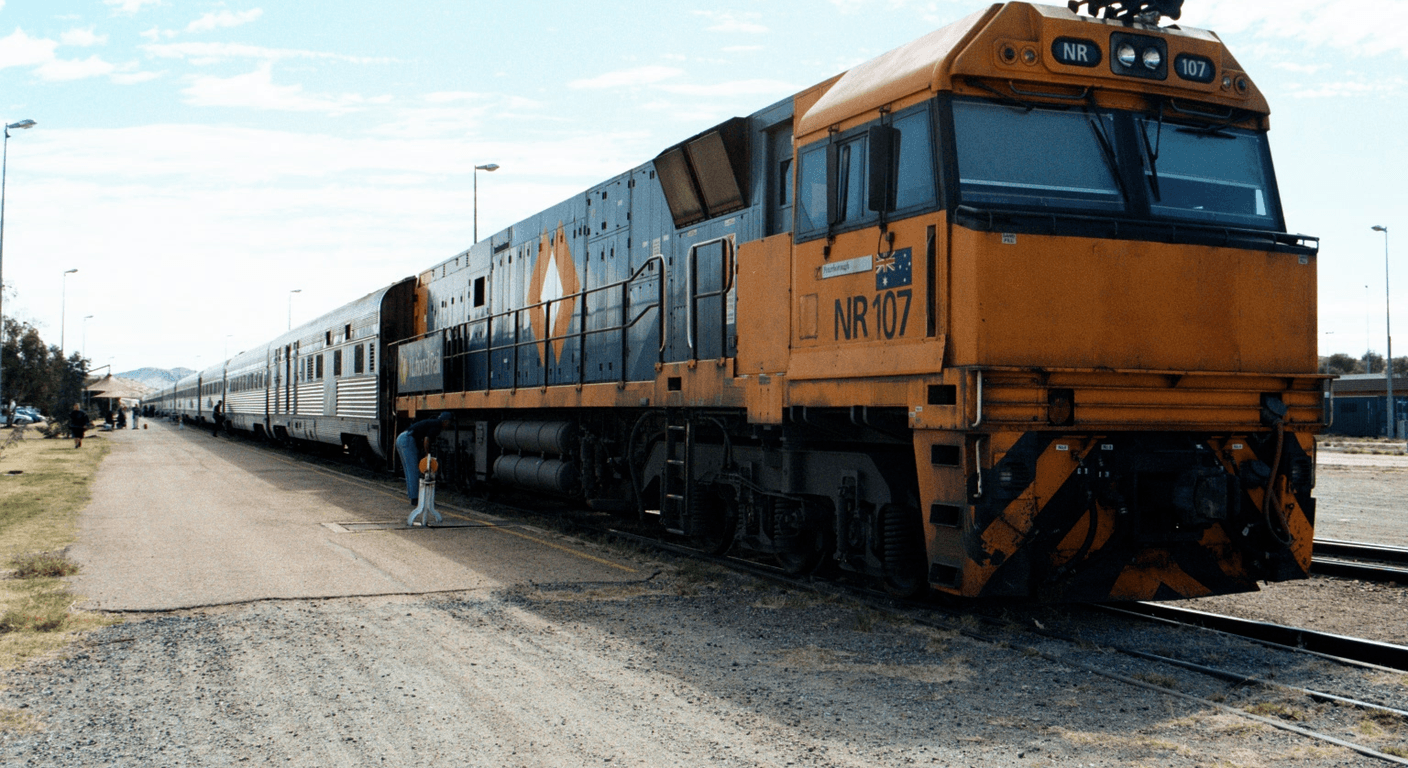
The Ghan is one of the world's great train journeys — 2,979 kilometres of track connecting Adelaide to Darwin through Alice Springs and the heart of Australia. For older travellers, the Gold Service cabins offer a genuinely comfortable way to experience the outback without any physical exertion beyond stepping off the train at off-train excursions in Alice Springs and Katherine. The journey takes roughly 54 hours in total, with off-train experiences included in the Gold and Platinum fares. Journey Beyond Rail Expeditions operates the service; indicative Gold Service fares run from around $2,000 per person for a solo cabin (Platinum and Outback Explorer packages are higher — confirm all current pricing at journeybeyondrail.com.au).
The train is well-suited to solo travellers. Dining is at shared tables where conversation flows easily, and the lounge cars are a natural gathering point. Cabins have a fold-down single or queen configuration depending on the class, and all have an en suite. The off-train excursions involve some walking on uneven ground in Alice Springs and at Nitmiluk Gorge near Katherine, so travellers with limited mobility should discuss options with Journey Beyond directly — there are generally less-strenuous alternatives available.
The best season is April through September, when daytime temperatures in the Red Centre are manageable and the light on the landscape is extraordinary. The Ghan runs year-round but the wet season (November through March) brings heat and occasional service disruptions in the north. For a full guide to planning a Ghan journey, including what to pack and how to combine it with time in Alice Springs, see our dedicated Ghan guide on this site.
3. Kimberley expedition cruises: the last great wilderness by small ship
The Kimberley coast of Western Australia is remote, ancient, and genuinely unlike anywhere else in the country. Expedition cruises along this coastline — typically operating between Broome and Darwin or in reverse — visit gorges, waterfalls, Aboriginal rock art sites, and wildlife-rich tidal flats that are simply inaccessible by road. Small-ship operators including Coral Expeditions and Kimberley Quest run intimate voyages carrying between 50 and 120 passengers, with onboard naturalists and historians who bring the landscape into context.
For older travellers, the small-ship format means more personalised service and a more manageable scale than a large ocean liner. Shore excursions involve Zodiac inflatable boats for landing, which requires stepping in and out of a small craft — operators are experienced at assisting passengers, but this is worth discussing honestly if balance or joint mobility is a concern. Itineraries typically run 10 to 14 nights. Indicative costs range from roughly $10,000 to $16,000 per person depending on the operator, cabin category, and departure date — always confirm current pricing directly with the operator.
The Kimberley cruise season is strictly May to September, dictated by the wet season and extreme tidal conditions outside those months. Departures book well in advance. For solo travellers, some operators offer single cabins or single-supplement arrangements — ask directly. For a broader look at Broome as a base before or after a Kimberley cruise, see our Kimberley and Broome guide on this site.
4. Spirit of the Outback to central-west Queensland and the Stockman's Hall of Fame
The Spirit of the Outback is a Queensland Rail long-distance train service running between Brisbane and Longreach twice weekly, a journey of roughly 1,325 kilometres through the pastoral heart of Queensland. Longreach is home to the Australian Stockman's Hall of Fame and the Qantas Founders Museum, two genuinely absorbing cultural institutions that tell the story of outback Australia with considerable care and depth. For older travellers who want a sense of the Queensland interior without flying into a remote airstrip, the Spirit offers a practical and comfortable overland option.
The train has sleeper berths (first-class twin and economy) and a dining car. It is not as premium as The Ghan — think functional rather than luxurious — but the journey itself, particularly the stretch west of Rockhampton as the landscape opens into red plains and Mitchell grass downs, is quietly remarkable. The trip takes around 24 hours each way. Queensland Rail's indicative fares for a first-class sleeper are available at queenslandrail.com.au — confirm current pricing directly. In Longreach, the Stockman's Hall of Fame (outbackheritage.com.au) is flat and fully accessible, making it one of the more relaxed cultural visits in outback Queensland.
The best season for Longreach is April to September, avoiding summer heat that regularly exceeds 40 degrees. Small-group tour operators also run packages combining the train with guided time in Longreach and surrounding stations — searching through Tourism Queensland at queensland.com will surface current options. Solo travellers will find Longreach friendly and manageable on foot from the main accommodation strip.
5. Tasmania small-group touring: the island at a human pace
Tasmania is Victoria's closest international-quality destination — and it rewards those who give it a week or more rather than a long weekend. The combination of wilderness, colonial history, exceptional food and wine, and a genuine sense of quiet makes it particularly appealing to travellers in their 60s and 70s who are done with rushing. Small-group touring is the most sensible format for older solo travellers who prefer not to self-drive on Tasmania's occasionally narrow and winding roads: operators including Tasmanian Expeditions and various operators listed through Tourism Tasmania (discovertasmania.com.au) run 7 to 14-day itineraries covering Hobart, the Huon Valley, Freycinet, the Cradle Mountain area, and the north-west coast.
Accessibility in Tasmania varies considerably by attraction. The MONA museum in Hobart has lifts and accessible pathways, the Salamanca market is flat and easy, and many of the historic sites around Port Arthur are manageable for travellers with moderate mobility. Walks in the national parks — including Cradle Mountain and Freycinet — range from short, sealed boardwalk circuits to multi-day wilderness tracks; a good small-group operator will tailor the walking to the group's pace and ability. Parks Victoria does not manage Tasmanian parks — the relevant authority is Parks and Wildlife Service Tasmania at parks.tas.gov.au.
Indicative costs for a quality small-group Tasmania tour of 10 days run from roughly $4,000 to $8,000 per person including accommodation and most meals — confirm with operators directly as pricing varies widely by season and standard. The best season is October through April for warmer temperatures and longer daylight hours, though autumn (March–April) offers beautiful light and smaller crowds. The Spirit of Tasmania ferry from Melbourne's Station Pier to Devonport is a pleasant overnight crossing and avoids the cost and hassle of flying — check current schedules and fares at spiritoftasmania.com.au.
6. New Zealand motorhome touring, South Island to North Island: the slow way through Aotearoa
New Zealand by motorhome is one of those trips that sounds ambitious and turns out to be deeply manageable, particularly if you start with a clear itinerary and resist the urge to cover too much ground each day. The classic approach for over-50 travellers is to fly into Queenstown or Christchurch, pick up a motorhome from an established hire company such as Britz (britz.com/nz) or Maui Campervans (maui-rentals.com/nz), and work northward through the South Island before crossing Cook Strait by Interislander ferry to the North Island, finishing in Auckland. The whole loop takes four to six weeks comfortably.
New Zealand's road network is well-maintained but includes mountain passes and narrow sections that require genuine attention — this is not a trip for travellers who are uncomfortable with unfamiliar driving conditions or who have not driven regularly in recent years. For those who prefer not to drive at all, New Zealand has a strong small-group touring sector: operators listed through Tourism New Zealand at newzealand.com offer fully guided coach tours of both islands with accommodation included. These are a sensible alternative that still covers the major landscapes without the responsibility of the wheel.
Indicative motorhome hire costs run from roughly NZD $150 to $350 per day depending on vehicle size and season, plus fuel, campsite fees, and the Interislander ferry crossing — check current fares at interislander.co.nz. The best season is October through April (New Zealand's spring and summer), though the South Island in particular sees significant visitor numbers in December and January. Shoulder season in October–November or March–April offers a better balance of weather and quieter roads.
7. Milford Sound nature cruising: the fiord that earns its reputation
Milford Sound — or Piopiotahi — in Fiordland National Park is one of those places that has been photographed so many times it seems almost impossible to experience freshly. And yet most people who travel there find it genuinely moves them, particularly on a nature cruise that goes deep into the fiord and out toward the Tasman Sea. The scale of the walls of rock rising directly from the water, the waterfalls that appear after rain, and the wildlife — fur seals, Fiordland crested penguins, bottlenose dolphins on occasion — make it a difficult experience to reduce to cliché.
Real NZ (realnz.com) operates the most established cruise services on Milford Sound, with options ranging from a standard two-hour scenic cruise to overnight vessels that stay on the fiord after day visitors have departed. The overnight experience is particularly recommended for older travellers who want a quieter, less crowded encounter with the landscape. Indicative fares for a standard cruise are roughly NZD $85 to $150 per person; overnight options are considerably higher — confirm current pricing and availability at realnz.com. The cruise vessels are generally accessible, with flat decks and indoor seating, though outdoor viewing areas involve some movement on deck.
Getting to Milford Sound requires either a scenic drive from Te Anau (approximately 120 kilometres on a single road through the Homer Tunnel) or a scenic flight. The drive is famously beautiful but the Homer Tunnel is narrow and the road requires care, particularly in wet conditions. Many travellers over 60 prefer to take a guided day tour from Queenstown or Te Anau, which handles transport and includes the cruise — operators can be found through newzealand.com. The best season is November through March, though Milford Sound receives rain year-round and the waterfalls are most dramatic after heavy rainfall.
8. Rottnest Island and the WA wildflower and silo art trail
Western Australia offers two very different experiences that pair well for a longer trip to the state. Rottnest Island — a short ferry ride from Fremantle or Perth — is famous for the quokka, a small wallaby that has become genuinely iconic, and for its beaches and clear water. The island is largely car-free; getting around is by bicycle hire, bus, or the island's own guided tours. For travellers who cannot manage a bicycle, the Rottnest Island Authority (rottnestisland.com) operates bus services and golf-cart hire is available — the island is flat enough to be manageable for most mobility levels. Indicative return ferry fares from Fremantle run from roughly $45 to $90 per adult depending on the operator; confirm current pricing with Rottnest Express at rottnestexpress.com.au or SeaLink at sealinkrottnest.com.au.
The WA wildflower season — roughly August through October — is one of the great natural spectacles of the southern hemisphere, with the wheatbelt and mid-west regions of Western Australia producing carpets of everlastings, kangaroo paws, and hundreds of other species across a vast area. Tourism Western Australia (westernaustralia.com) provides detailed wildflower trail information each season. The silo art trail, centred on the CBH grain silos of the WA wheatbelt, has developed into a genuine cultural draw, with large-scale murals by Australian artists adorning silos in towns including Merredin, Mukinbudin, and Ravensthorpe. The trail requires a car or a guided tour — several operators offer wheatbelt day trips from Perth.
Combining Rottnest with a wildflower and silo art road trip makes for a rich two-week WA itinerary. Perth is the natural base, well served by direct flights from Melbourne (Tullamarine) with Virgin Australia and Qantas. For older solo travellers, a guided small-group wildflower tour is a more comfortable option than self-driving the wheatbelt alone — Tourism Western Australia's website lists accredited operators.
9. Valley of the Giants Tree Top Walk, WA south-west: ancient forest at eye level
In the tingle forests near Walpole in WA's south-west, the Tree Top Walk at Valley of the Giants offers one of the more extraordinary perspectives available to any traveller in Australia. A steel walkway rises to 40 metres above the forest floor, threading through the canopy of ancient red tingle trees — some of the largest living things in the southern hemisphere, with bases several metres in diameter. The walkway is fully accessible: it is a ramp system, not stairs, designed to Australian accessibility standards, and moves gradually from ground level to the canopy and back. Parks and Wildlife Service Western Australia manages the site; information is available at parks.dpaw.wa.gov.au.
The Tree Top Walk is located approximately 420 kilometres south of Perth, near the town of Walpole. Self-driving is the most common approach, but the south-west of WA — including Margaret River wine country, the tall karri forests around Pemberton, and the coastal town of Denmark — is well covered by coach touring operators who can be found through Tourism Western Australia. The nearest regional airport is at Albany, serviced by flights from Perth, which reduces the driving distance significantly for those who prefer to fly in.
Indicative entry fees for the Tree Top Walk are around $21 per adult — confirm current pricing at parks.dpaw.wa.gov.au. The walk itself takes roughly 45 minutes to an hour at a relaxed pace, and the Ancient Empire boardwalk at ground level among the largest trees is available as a separate, flat circuit for those who prefer to stay closer to ground. The best season is spring through early autumn (September through April), though the forest is worth visiting year-round and the winter rains bring a particular green intensity to the light.
10. Phillip Island Penguin Parade: a Victorian classic worth doing properly
The Phillip Island Penguin Parade is one of those experiences that long-term Victorians often assume they will eventually get around to, and then don't — which is a genuine loss, because watching hundreds of little penguins emerge from the Bass Strait at dusk and waddle up the beach to their burrows is one of the more quietly moving wildlife encounters available within two hours of Melbourne. Phillip Island Nature Parks manages the site, and the Penguin Parade visitor centre at Summerlands Beach is modern, well-heated, and fully accessible, with tiered seating areas including accessible viewing platforms. Detailed information is at penguins.org.au.
For older travellers and solo visitors, the most comfortable approach is a guided day tour from Melbourne that handles return transport, which removes the need to drive Phillip Island's roads after dark. Several Melbourne-based operators offer Penguin Parade day trips; Tourism Victoria lists accredited options at visitvictoria.com. Alternatively, staying overnight on the island — Cowes is the main town, with a good range of accommodation — allows a more relaxed experience and the chance to explore the island's other attractions including the Nobbies boardwalk and the koala conservation centre.
Indicative general admission to the Penguin Parade runs from roughly $30 to $75 per adult depending on the viewing package — the Penguin Plus experience, which places you in a smaller viewing area closer to the penguins' path, is worth the additional cost for those who want a more intimate encounter. Confirm current pricing and available packages at penguins.org.au. The parade runs every evening of the year at dusk; winter evenings (June through August) offer earlier dusk times and often smaller crowds, and the penguins are present year-round. For a full guide to planning a Phillip Island trip including accommodation and what else to see, see our dedicated Phillip Island guide on this site.
Planning your bucket-list trip: practical advice for over-50 solo travellers
Several of these ten experiences can be combined into a single extended journey. A logical Australian loop might begin with The Ghan from Adelaide to Darwin, connect to a Kimberley expedition cruise from Darwin to Broome, then spend time in Fremantle before a Rottnest Island day, a wildflower trail drive, and a south-west WA swing to the Valley of the Giants. That itinerary alone represents three to four weeks of genuinely different landscape and experience. A New Zealand addition — fly from Perth to Queenstown — adds the South Island, Milford Sound, and the North Island, making a six to eight-week journey of real substance.
Travel insurance is non-negotiable for any of these trips, particularly for older travellers and particularly for expeditions in remote areas such as the Kimberley. Ensure your policy covers pre-existing conditions, medical evacuation, and trip cancellation. The Australian government's Smartraveller service (smartraveller.gov.au) provides current travel advice for New Zealand and all domestic travel safety information.
Solo travellers — particularly women travelling alone — will find that small-group tours, train journeys with shared dining, and cruise ships are among the most naturally sociable travel formats available. The shared experience of a remote landscape creates conversation easily, and many of the operators mentioned in this guide are well practised at making solo travellers feel genuinely included rather than merely tolerated. Booking a cabin or tour with a single-supplement waiver, where available, removes the financial penalty of travelling alone — always ask operators directly whether single-friendly pricing is available.
Quick planning guide
| Ideal pace | Slow-paced, built around scenery and immersion rather than covering ground quickly |
|---|---|
| Best months | April–September for Australian outback and coastal journeys; October–April for New Zealand |
| Suggested stay | Ranges from around 10 days to six weeks depending on the chosen adventure |
| Mobility level | Varies by trip — from fully accessible cruise ships and flat attractions to tender landings, Zodiac boarding and uneven walking tracks |
| Cost level | Mid-range to premium, with indicative fares from around $2,000 up to $16,000 per person depending on the trip |
| Comfort level | High on guided trains, cruises and small-group tours; more variable on self-drive motorhome touring |
| Best for | Over-50 travellers who prefer depth and pace over speed, and who favour guided or self-navigated transport over unfamiliar self-driving |
| Main planning consideration | Accessibility, season and cost differ significantly between the ten trips, so mobility needs and timing should be checked directly with each operator |
Key takeaways
- The Ghan, Kimberley expedition cruises, and an Australian circumnavigation cruise are three of the most complete ways to see Australia without self-driving or managing multiple hotel changes.
- New Zealand by motorhome suits confident, recent drivers; those who prefer not to drive will find fully guided coach tours cover the same landscapes in comfort.
- The Kimberley expedition cruise season is strictly May to September — outside those months, the region is inaccessible by sea due to weather and extreme tidal conditions.
- The Valley of the Giants Tree Top Walk near Walpole, WA, is one of the few elevated forest experiences in Australia fully designed as an accessible ramp system rather than a staircase.
- Phillip Island's Penguin Parade operates every evening year-round, with winter departures often offering smaller crowds and an earlier dusk time.
- Travel insurance covering pre-existing conditions and medical evacuation is essential for remote Australian and New Zealand bucket-list travel at any age.
Recommended partners and links
Indicative prices only — always confirm with the operator before booking.
Frequently asked questions
What is the best bucket-list train journey in Australia for over-50 travellers?
The Ghan, operated by Journey Beyond Rail Expeditions between Adelaide and Darwin via Alice Springs, is widely regarded as Australia's premier long-distance train experience for older travellers. Gold Service cabins include an en suite, meals in the dining car, and off-train excursions at Alice Springs and Katherine. The journey takes approximately 54 hours. Indicative Gold Service fares start from around $2,000 per person — confirm current pricing at journeybeyondrail.com.au.
Are Kimberley expedition cruises suitable for older travellers with limited mobility?
Kimberley expedition cruises can be suitable for older travellers, but they involve boarding Zodiac inflatable boats to reach shore, which requires stepping in and out of a small, moving craft. This can be difficult for travellers with significant balance or joint problems. Speak directly with the operator — such as Coral Expeditions at coralexpeditions.com — about your specific mobility needs before booking, as some excursions have alternatives and crew are experienced at assisting passengers.
Can you visit Milford Sound in New Zealand without driving yourself?
Yes. Guided day tours from Queenstown and Te Anau include return coach transport to Milford Sound and a nature cruise on the fiord, removing the need to drive the Homer Tunnel road yourself. Operators can be found through Tourism New Zealand at newzealand.com. Overnight cruise options on the sound, operated by Real NZ (realnz.com), also provide transport as part of the package.
Is the Phillip Island Penguin Parade accessible for travellers who have difficulty with stairs or uneven ground?
Yes. The Penguin Parade visitor centre and viewing areas at Summerlands Beach include accessible seating and viewing platforms managed by Phillip Island Nature Parks. The site is modern and purpose-built. Confirm specific accessibility requirements directly with Phillip Island Nature Parks at penguins.org.au before your visit, as different viewing packages use different areas of the site.
What is the best season for a WA wildflower trail and south-west WA road trip?
The WA wildflower season runs approximately August through October, making those months ideal for combining a wheatbelt wildflower trail with a visit to the Valley of the Giants Tree Top Walk and the silo art trail. Spring temperatures in WA's south-west are mild and pleasant for travelling. Tourism Western Australia publishes seasonal wildflower information at westernaustralia.com each year.
- Journey Beyond Rail Expeditions — The Ghan
- Coral Expeditions — Kimberley cruises
- Real NZ — Milford Sound cruises
- Tourism New Zealand — trip planning
- Tourism Australia
- Tourism Western Australia
- Phillip Island Nature Parks — Penguin Parade
- Parks and Wildlife Service WA — Valley of the Giants
- Discover Tasmania — Tourism Tasmania
- Queensland Rail — Spirit of the Outback
- Australian Stockman's Hall of Fame, Longreach
- Rottnest Island Authority
- Rottnest Express ferry
- Spirit of Tasmania ferry
- Visit Victoria
- Smartraveller — Australian Government travel advice
- Interislander ferry — New Zealand