Held every two years in February at Hobart's Sullivans Cove, the Australian Wooden Boat Festival gathers hundreds of timber vessels, from tall ships to backyard-built dinghies, along a free waterfront precinct. A three- to five-night stay allows time for the docks, Salamanca and MONA. The flat, paved grounds are easy underfoot, though boarding some boats suits better mobility. Hobart is reached by short flights or the Spirit of Tasmania ferry.
What Is the Australian Wooden Boat Festival?
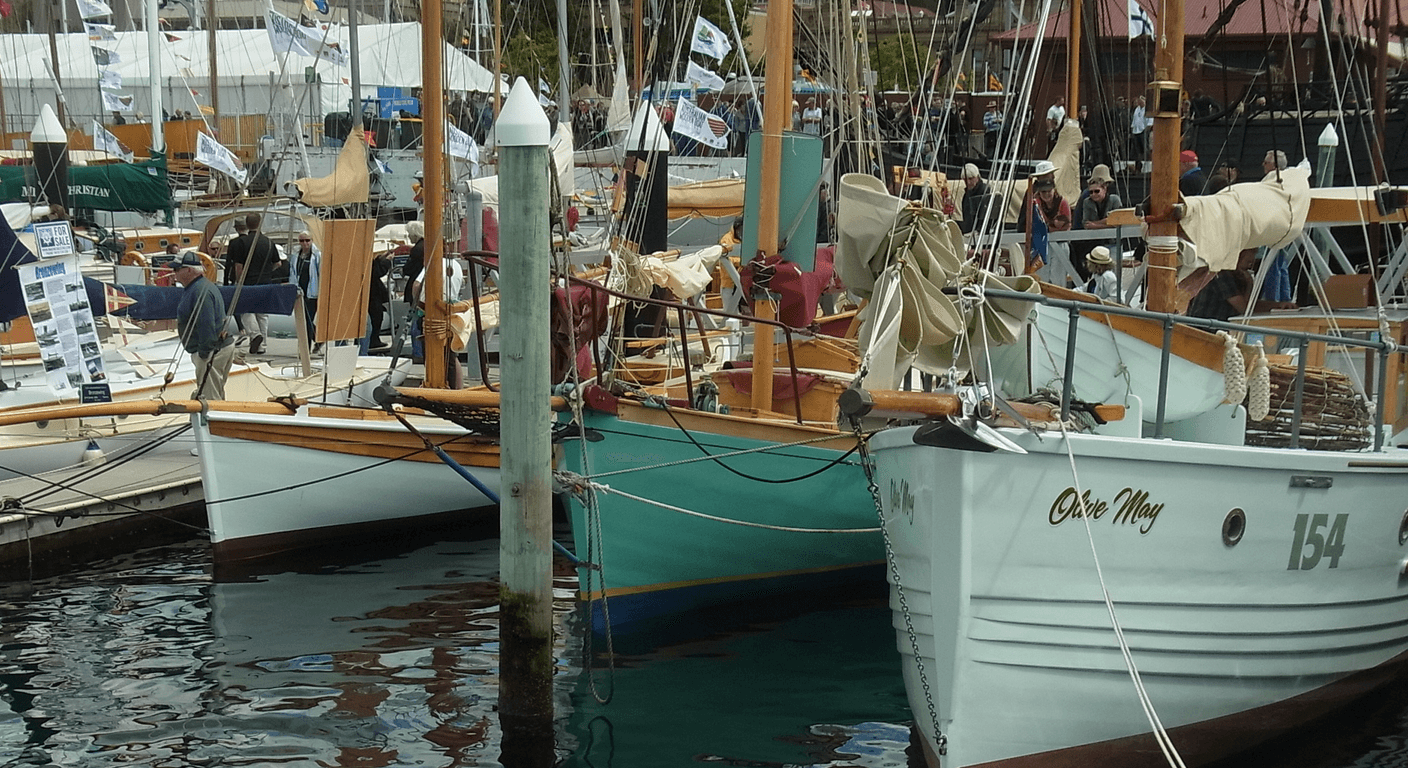
Held every two years in February at Hobart's Sullivans Cove, the Australian Wooden Boat Festival is a four-day celebration of timber vessels in all their forms. Registered boats range from graceful tall ships and heritage ketches to modest hand-built dinghies that a single craftsperson spent years completing in a backyard shed. They moor side by side along the docks, and their owners — proud, knowledgeable, usually delighted to talk — are very much part of the spectacle.
The festival runs in odd-numbered years. That matters for planning: always confirm current dates and the program directly with the official festival website before making any bookings. The waterfront precinct itself is free to enter, though some onboard tours, ticketed performances and speciality events carry a separate charge. Check the program as it's released, because the ticketed sessions — boatbuilding demonstrations, talks by master craftspeople, sailing excursions — tend to sell out well ahead of time.
Culturally, the event sits at an interesting intersection: it's part working maritime showcase, part craft fair, part community gathering. There's live music, Tasmanian food and produce stalls, and the kind of relaxed, unhurried energy that comes when a city genuinely loves what it's celebrating. For anyone who grew up near the water, or simply appreciates the beauty of things made by hand, it resonates in a way that's hard to manufacture.
Getting to Hobart: What Travellers from Victoria (and Beyond) Need to Know
From Melbourne, Hobart is roughly an hour and ten minutes by air — one of Australia's more civilised interstate hops. Qantas, Jetstar and Virgin Australia all service the route; confirm current schedules and fares, as February is peak season and prices reflect that. Sydney travellers are looking at around an hour and thirty minutes; from Brisbane, allow closer to two hours and fifteen minutes. The Spirit of Tasmania ferry from Geelong to Devonport is a longer but genuinely enjoyable option if you're bringing a car — the overnight sailing can itself feel like the beginning of the adventure.
Hobart Airport is about 17 kilometres from the city centre. Taxis, rideshares and the SkyBus shuttle are the practical options; confirm current SkyBus routes and timetables at skybus.com.au. If you're not hiring a car — and for the festival itself, you don't need one — the Hobart waterfront and Salamanca are very walkable. The festival precinct at Sullivans Cove is flat and paved, which makes it accessible for those who prefer even ground.
February in Hobart is the height of summer, but 'summer' here means mild and changeable rather than scorching. Expect daytime temperatures roughly between 17°C and 24°C, occasional sharp breezes off the water, and the possibility of a brief afternoon shower. Layers are sensible; a light waterproof jacket is worth packing. The Tasmanian light in February — long evenings, the mountain catching the late sun — is its own reward.
How to Pace Yourself Through the Festival
Weekday mornings are the calmest time on the docks. Crowds build through the day and are at their densest on Saturday and Sunday afternoons, when navigating between boats can become slow and occasionally difficult. For travellers who prefer space and a quieter conversation with a boat owner, arriving at the waterfront by 9am on a Thursday or Friday is genuinely different from arriving at noon on the weekend. The boats are no less impressive; the experience is considerably more relaxed.
A sensible approach for a three-night stay is to spend one morning doing a slow circuit of the entire moored fleet — getting a sense of scale and picking out the vessels you want to return to — then use subsequent mornings to go deeper. Talk to the builders. Ask about the timber. Many of the people aboard have spent years on their craft, and they don't often get the chance to explain it to someone who's genuinely curious. That's one of the quiet pleasures of this festival.
The afternoons are well spent away from the main crowds. Salamanca Place, a short flat walk from the docks, has excellent galleries, bookshops and cafés. The Tasmanian Museum and Art Gallery (tmag.tas.gov.au) is free and within easy walking distance; its maritime collection has obvious resonance during festival week. If you're travelling as a couple, Hobart's restaurant scene — particularly around the waterfront and North Hobart — rewards an unhurried dinner reservation.
Accommodation: Why Booking Early Is Not Optional
Hobart is a small city. During the festival, every hotel, apartment and well-reviewed guesthouse within walking distance of the waterfront fills up fast — and the prices climb accordingly. Six months ahead is reasonable; twelve months ahead is better if you have specific requirements around accessibility, location or budget. Accommodation close to Sullivans Cove means you can return to your room mid-morning if the crowds become heavy, which is a practical advantage worth paying for.
Options in the mid-range and higher tiers cluster around the waterfront and Battery Point. Boutique hotels and self-contained apartments suit couples who like the flexibility of their own kitchen — useful in a city where dinner reservations can be competitive during the festival. If budget is a consideration, North Hobart and Sandy Bay have quieter options at lower price points, though you'll need a taxi or rideshare to reach the docks. Check discovertasmania.com.au for a current accommodation overview and book direct with properties where possible to avoid additional fees.
For grey nomads or those travelling with a campervan, there are caravan parks and holiday parks in the greater Hobart area, but proximity to the festival precinct is limited. Factor in the time and cost of daily transport to and from the waterfront. It's worth doing the sums before assuming a park on the outskirts is the more economical choice.
Beyond the Boats: Making the Most of a Hobart Visit
The festival is reason enough to come to Hobart, but the city offers considerable depth for those who extend their stay. MONA — the Museum of Old and New Art — is a 25-minute ferry ride from the waterfront and is genuinely unlike any other museum in Australia. Its ferry, the MR-1, is itself a design object worth experiencing. MONA is adult in its themes and confident in its strangeness; allow a full day and book ahead at mona.net.au.
The Huon Valley, about an hour's drive south, is Tasmania's orchard and timber heartland. In February, roadside stalls are laden with stone fruit, and the valley towns have a quiet, unhurried character that pairs well with a post-festival day trip. The drive along the Huon River is scenic without requiring any special exertion. If you're hiring a car for a day or two, this is where to point it.
Salamanca Market runs every Saturday morning and is one of Australia's better weekend markets — local produce, craft, Tasmanian art and the particular pleasure of a good flat white in the open air. During festival week it overlaps with the waterfront activity, and the whole of Hobart's southern precinct takes on a relaxed, festive character that's easy to enjoy at whatever pace suits you.
Accessibility and Practical Comfort at the Festival
The main festival precinct along Sullivans Cove is flat and paved — a genuine advantage for those who prefer even ground or use a walking aid. The docks themselves are the main variable: some gangways and vessel access points can be narrow or uneven, and boarding boats is generally not recommended for those with significant mobility limitations. The viewing from the dock is excellent, and the boats' exteriors are the main event anyway.
Seating is available in some areas but can be limited at peak times. If resting regularly is important, a small fold-up seat is worth bringing. Public toilets are available in the precinct; check the festival site for current accessibility information closer to the event. Shade is limited on the open dockside, so a hat, sunscreen and water are standard equipment for a February morning in Hobart.
The festival atmosphere is inclusive and genuinely multigenerational. Children are present, but so are many travellers in their 50s, 60s and 70s — the event's history and craft focus tends to draw an older, more engaged crowd than a purely entertainment-driven festival might. Solo female travellers consistently report Hobart as one of Australia's more comfortable and safe city environments. The waterfront precinct is open and well-populated during festival hours.
Travel Insurance and Pre-Trip Checklist
Even for domestic travel, comprehensive travel insurance is worth having — particularly for travellers with pre-existing health conditions. Policies vary significantly in what they cover; read the product disclosure statement carefully and declare all conditions honestly. The cost of a policy is modest against the cost of an unexpected medical event, even within Australia's public health system.
Confirm festival dates and the program on the official website before finalising flights and accommodation — the event runs in odd-numbered years, but specific dates shift. Book accommodation as early as possible. If you're planning any ticketed events within the festival, watch the program release date and act promptly. Hobart's February restaurant scene is busy; making dinner reservations a few weeks ahead avoids disappointment at the better tables.
Pack layers rather than bulk. The waterfront can be warm in the morning sun and noticeably cooler once a southerly comes through. Comfortable walking shoes with grip are more useful than anything stylish. A small daypack keeps hands free — useful when you're moving along crowded docks and want to stop and photograph a particularly beautiful hull.
Quick planning guide
| Ideal pace | Slow-paced and leisurely, with room to linger and talk to boat owners |
|---|---|
| Best months | February, in odd-numbered years when the festival is held |
| Suggested stay | Three to five nights |
| Mobility level | Easy on the flat, paved waterfront precinct, though boarding some boats requires good mobility |
| Cost level | Free entry to the precinct, with accommodation prices rising sharply during festival week |
| Comfort level | Casual and outdoor, with sun and wind exposure on the open dockside |
| Best for | Craft and history lovers, couples, grey nomads and multigenerational travellers |
| Main planning consideration | Confirm biennial festival dates and book accommodation six to twelve months ahead |
Key takeaways
- The Australian Wooden Boat Festival is held every two years in February, in odd-numbered years — confirm current dates before booking anything.
- Entry to the Sullivans Cove waterfront precinct is free; some onboard tours and ticketed events carry a separate charge.
- Weekday mornings are significantly quieter than weekend afternoons — the best time to walk the docks and talk to boat owners.
- Book accommodation six to twelve months ahead; Hobart's limited hotel stock fills quickly and prices rise sharply during the festival.
- The waterfront precinct is flat and paved, making it one of the more accessible major Australian outdoor festivals for those who prefer even ground.
- Extending to four or five nights allows time for MONA, Salamanca Market and the Huon Valley without rushing the festival itself.
Recommended partners and links
Indicative prices only — always confirm with the operator before booking.
Frequently asked questions
Is the Australian Wooden Boat Festival really free to attend?
Entry to the main waterfront precinct at Sullivans Cove is free. Some events within the festival program — such as sailing excursions, ticketed talks or onboard tours — may carry a separate charge. Always check the official program at australianwoodenboatfestival.com.au for the current event year's details.
When is the next Australian Wooden Boat Festival?
The festival runs in odd-numbered years — 2025, 2027, and so on — in February. Confirm the exact dates for the upcoming event directly with the official festival website, as specific dates vary each cycle.
How far in advance should I book accommodation for the festival?
Six months ahead is a reasonable minimum; twelve months is better if you want a specific hotel close to the waterfront. Hobart has limited accommodation stock and the festival is a major drawcard — prices rise and availability tightens quickly as February approaches.
Is the festival suitable for travellers with mobility considerations?
The main precinct along Sullivans Cove is flat and paved, which suits those who prefer even ground or use a walking aid. Boarding individual vessels involves gangways and steps that may not be accessible to everyone. Viewing from the dockside is excellent. Weekend afternoons are crowded; weekday mornings are significantly easier to navigate.
What else is worth doing in Hobart during festival week?
MONA (Museum of Old and New Art) is a 25-minute ferry ride from the waterfront and warrants a full day. Salamanca Market runs every Saturday morning and is within easy walking distance of the festival precinct. The Tasmanian Museum and Art Gallery is free and has a maritime collection that complements the festival well. The Huon Valley is a worthwhile day trip for those with a hire car.