Blackheath's Grand Canyon Track, in the Blue Mountains, is best walked in autumn (March–May), when the rainforest gorge is lush and crowds thin. The full 5.4-kilometre loop takes three to four hours, descending 300 metres over uneven stone steps — rated Active, and best attempted by fit walkers with trekking poles and grippy footwear. Less confident walkers can instead take the accessible Evans Lookout and Govetts Leap rim views. It's reached via a two-hour train from Sydney's Central Station, or a short flight plus train from Melbourne.
What makes the Grand Canyon Track worth the trip
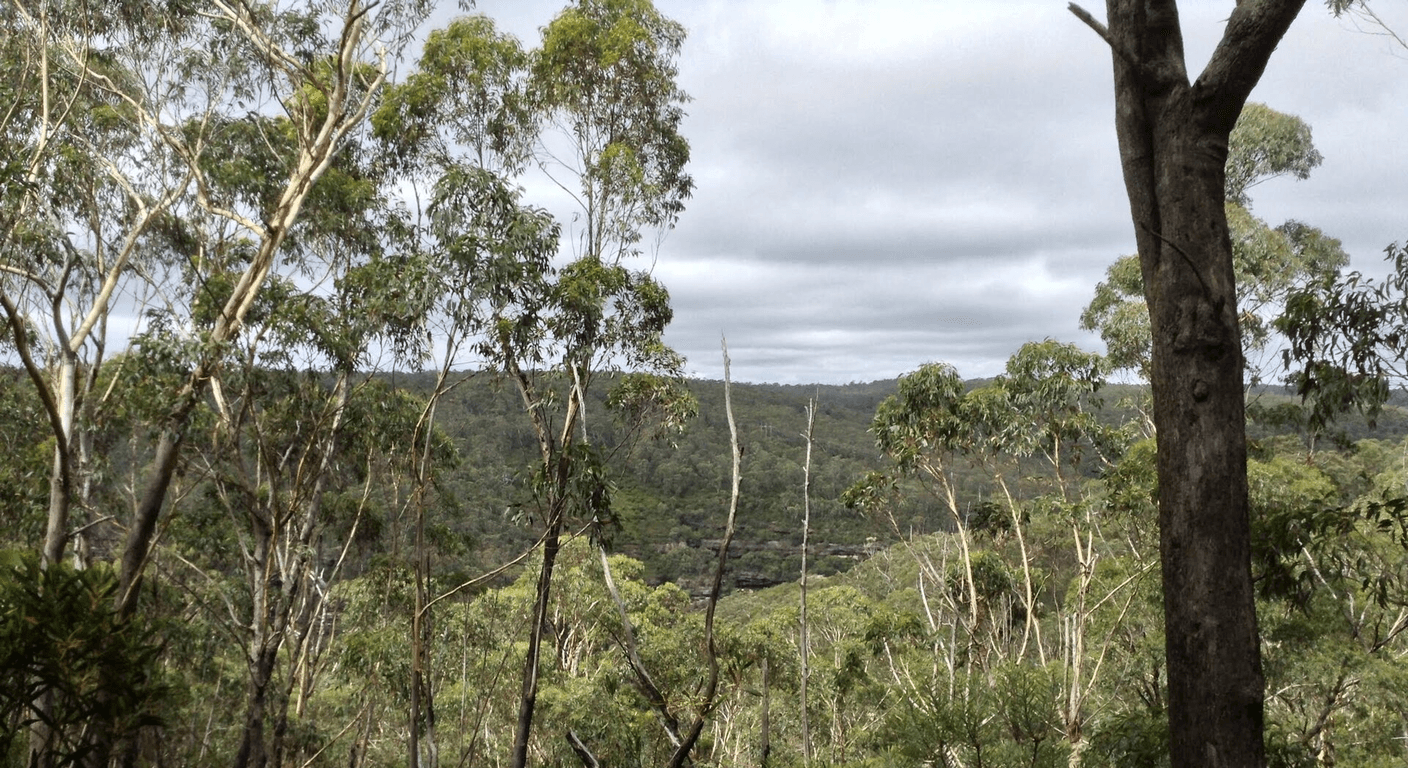
The name is borrowed, not inflated. Blackheath's Grand Canyon is a sandstone gorge cut deep into the plateau, where the temperature drops noticeably as you descend and the vegetation shifts from dry eucalypt scrub to a cool, dripping rainforest of coachwood, sassafras and tree ferns. It's a genuine microclimate — you can set out from Blackheath village in warm sunshine and find yourself pulling on a layer twenty minutes into the descent.
For a traveller who's spent time in well-worn tourist corridors of the Blue Mountains — Katoomba, the Three Sisters, Echo Point — this track offers something quieter and more physically immersive. You're not looking at the landscape from a railing; you're inside it. That distinction matters, and it's worth planning for properly.
Honest assessment: what the full loop actually involves
The 5.4-kilometre loop descends roughly 300 metres into the canyon via Evans Lookout, passes through the rainforest floor beside a creek, traverses a rock overhang known as the Rotunda, and returns via Neates Glen. The full circuit takes most fit walkers between three and four hours — longer if you stop, which you will. On paper, 5.4 kilometres sounds modest. In practice, the stone steps are uneven, occasionally steep, and in shaded sections they stay damp long after rain. Trekking poles are not a luxury here.
The descent is sustained rather than brutal, but it demands concentration. Loose gravel over sandstone, narrow ledges, and one or two sections where you're essentially stepping down a natural rock staircase. For a 69-year-old in good condition with solid walking shoes and no significant knee issues, the track is entirely achievable — and genuinely satisfying. The honest caveat is that 'good condition' needs to mean something. This isn't a track to test your fitness on; it's one to attempt once you know you have it.
The return climb via Neates Glen is the easier gradient of the two options, which is why the loop is best walked in the Evans Lookout–to–Neates Glen direction. Going the other way means finishing with the steeper ascent, which is harder on tired legs. NSW National Parks recommends the clockwise direction for this reason — follow their advice.
The rim alternative: Evans Lookout and Govetts Leap
If the full loop gives you pause — and there's no shame in that assessment — the canyon rim delivers its own reward. Evans Lookout, the trailhead for the Grand Canyon walk, sits at the cliff edge and looks across the Grose Valley with a perspective that's expansive and largely unhurried. The short path from the car park to the lookout platform is sealed and accessible, taking perhaps ten minutes at an easy pace.
Govetts Leap Lookout, a few kilometres back toward Blackheath township, is one of the most dramatic viewpoints in the Blue Mountains and is fully accessible from the car park. The waterfall drops 180 metres into the valley below. On a clear autumn morning, with mist rising from the canyon floor, it's the kind of view that asks nothing of you except attention.
Both lookouts are free to visit and managed by Blue Mountains National Park. Spending a morning moving between the two, with a proper lunch in Blackheath village, makes for a full and genuinely satisfying day — no descent required. The distinction worth making is that this is a deliberate choice, not a consolation prize.
Getting there from Victoria and New South Wales
From Melbourne, the most practical approach is a morning flight to Sydney — roughly 90 minutes — followed by a Blue Mountains Line train from Central Station to Blackheath. The train journey takes around two hours and passes through Katoomba, giving you a sense of how the plateau builds as you head west. Blackheath station is a short taxi or rideshare trip from Evans Lookout; confirm current taxi availability locally, as the village is small.
Driving from Sydney takes around 90 minutes to two hours depending on traffic through the western suburbs. Parking at Evans Lookout is free but limited — arrive before 9am on weekends and public holidays in spring and autumn, when the car park fills early. Weekday visits are noticeably quieter. For a solo traveller based in Victoria, an overnight stay in Blackheath makes more sense than a long-day return to Melbourne — it allows an early start on the track and a relaxed afternoon.
What to bring and how to prepare
Footwear is the single most important variable. Trail runners with grip are adequate for fit, experienced walkers; proper hiking boots with ankle support are better. Road shoes, sandals or anything without a defined sole are genuinely unsuitable for the wet rock sections — this is not overstating it.
The canyon floor is notably cooler than the plateau, sometimes by five degrees or more. A lightweight insulating layer and a rain shell take up almost no space and matter considerably if the weather shifts. Carry more water than you think you need — at least 1.5 litres for the full loop — and a snack. There are no facilities on the trail itself. Mobile coverage is limited once you descend into the canyon, so download the NSW National Parks trail map offline before you leave.
Trekking poles are worth packing. On the descent, they redistribute load away from the knees; on the return climb, they provide rhythm and stability. If you don't own a pair, collapsible poles are widely available at outdoor retailers in Sydney and Katoomba. It's the kind of gear purchase that pays for itself on the first steep descent.
Timing, seasons and what to expect on the ground
Autumn — March through May — is the finest season for this walk. The deciduous plantings in Blackheath village turn gold, the summer crowds thin, and the rainforest floor is lush from summer rain without being icy. Spring is almost as good, with wildflowers on the plateau rim and waterfalls running strongly. Summer is manageable in the canyon itself, which stays cool, but the walk in and out crosses exposed areas and the plateau can be genuinely hot.
Winter brings its own beauty — the rainforest is moody and quiet — but ice can form on the rock steps overnight and linger into mid-morning. If you're visiting in July or August, check conditions carefully and consider starting later in the morning to allow the steps to dry. The NSW National Parks website lists current trail conditions and any closures; check it the day before your visit, not the day you leave.
Weekdays are markedly quieter than weekends. For a solo traveller who prefers to move at his own pace without queuing at narrow sections, a Tuesday or Wednesday in April is close to ideal.
Blackheath village: before and after the walk
Blackheath is a proper village with good coffee and a handful of restaurants that reward a post-walk meal. Vulcans Restaurant has a long reputation in the mountains, and the Blackheath Deli is a reliable stop for a pre-walk breakfast or a sandwich to take. The village has a quieter, less commercial character than Katoomba — which suits a day built around an early start and unhurried return.
For an overnight stay, the Blackheath area has guesthouses and self-contained cottages that cater well to solo travellers. Staying the night allows you to walk the track at the optimal morning hour, spend the afternoon at the lookouts or simply reading, and catch a relaxed train back to Sydney the following morning. It's a sensible way to structure the trip, and it makes the whole experience feel less like a logistics exercise.
Quick planning guide
| Ideal pace | Steady and unhurried, with time built in for stops |
|---|---|
| Best months | Autumn (March–May), with spring a close second |
| Suggested stay | Full day trip, or one night in Blackheath for an easier start |
| Mobility level | Active for the full loop; Easy if sticking to Evans Lookout and Govetts Leap |
| Cost level | Budget-friendly — lookouts and track are free, main costs are transport and accommodation |
| Comfort level | Basic on the trail, no facilities once descending; comfortable village amenities in Blackheath |
| Best for | Fit, sure-footed walkers wanting an immersive bushwalk, or anyone preferring easy accessible viewpoints instead |
| Main planning consideration | Deciding honestly between the full descending loop and the flat, accessible rim lookouts before setting out |
Key takeaways
- The Grand Canyon Track is a 5.4-kilometre loop with 300 metres of elevation change — beautiful, but not a casual walk.
- Fit, sure-footed walkers with proper footwear can complete the full loop in three to four hours; others should choose the rim lookouts.
- Evans Lookout and Govetts Leap offer free, accessible canyon views without the descent — a deliberate choice, not a fallback.
- Autumn (March–May) is the best season: cooler, quieter and the rainforest is at its most lush.
- Trekking poles and trail shoes with grip are practical necessities, not optional extras, on the wet rock sections.
- Blackheath is two hours by train from Sydney Central — a day trip from Sydney or an easy overnight from a Melbourne flight.
Recommended partners and links
Indicative prices only — always confirm with the operator before booking.
Frequently asked questions
How difficult is the Grand Canyon Track at Blackheath for someone over 60?
The Grand Canyon Track is rated Moderate to Active by NSW National Parks. It involves steep, uneven rock steps, a 300-metre descent and a total loop of 5.4 kilometres taking three to four hours. It's achievable for fit walkers over 60 with no significant knee problems and proper hiking footwear, but it's not suitable for those with limited mobility or balance concerns. The canyon-rim lookouts at Evans Lookout and Govetts Leap are accessible alternatives with no descent required.
Is there a free, accessible way to see the Grand Canyon area without doing the full walk?
Yes. Evans Lookout, the trailhead for the Grand Canyon walk, has a short sealed path from the car park to a cliff-edge platform overlooking the Grose Valley. Govetts Leap Lookout, a few kilometres toward Blackheath township, is also accessible from the car park and overlooks a 180-metre waterfall. Both are free to visit and managed by Blue Mountains National Park.
What is the best time of year to walk the Grand Canyon Track?
Autumn (March to May) and spring (September to November) are the best seasons. Autumn offers cooler temperatures, thinning crowds and lush post-summer vegetation. Spring brings wildflowers and strong waterfalls. Winter is possible but rock steps can be icy in the morning. Summer is manageable in the canyon itself but the exposed sections of the plateau can be hot.
How do you get to Blackheath from Sydney or Melbourne?
From Sydney, take the Blue Mountains Line train from Central Station to Blackheath — around two hours. From Blackheath station, a taxi or rideshare reaches Evans Lookout in around ten minutes; confirm local taxi availability before travelling. Driving from Sydney takes roughly 90 minutes to two hours. From Melbourne, the most practical route is a morning flight to Sydney followed by the train west. Confirm current timetables with Transport NSW at transportnsw.info.
Do you need trekking poles for the Grand Canyon Track?
Trekking poles are strongly recommended. The descent into the canyon includes sustained sections of wet, uneven rock steps where poles reduce load on the knees and improve stability. They're particularly useful on the return climb when legs are tired. If you don't own poles, collapsible trekking poles are available at outdoor retailers in Sydney and Katoomba.