The Bombo Quarry to Kiama Blowhole walk is a free, roughly two-kilometre coastal path near Kiama on the NSW South Coast, best tackled October to April and comfortably done in two to three hours. The highlight is the disused basalt quarry's hexagonal rock columns, reached via NSW TrainLink from Sydney in about two hours or a three-hour self-drive from Melbourne. Mobility is moderate, with uneven basalt and loose gravel underfoot near the quarry.
Why Bombo Quarry deserves more than a glance from the train window
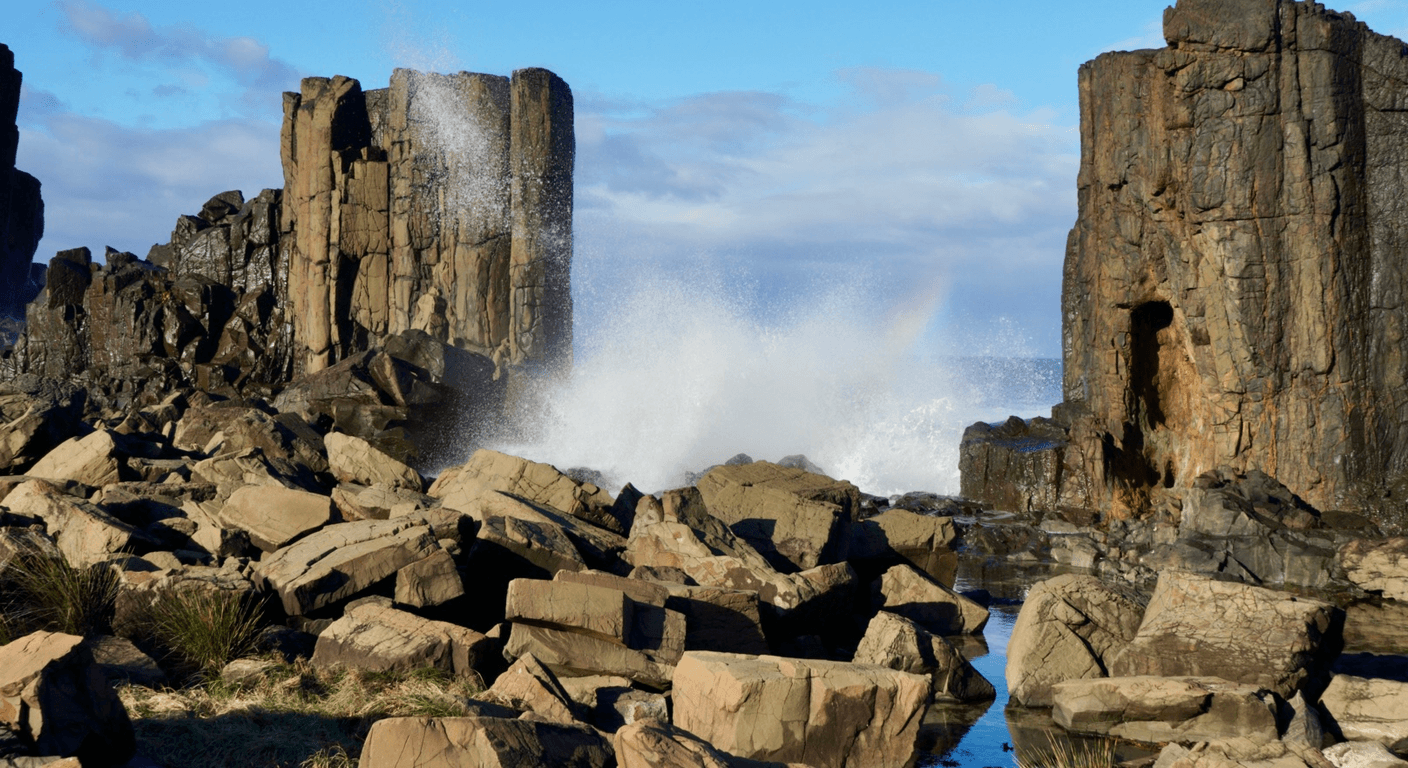
Most passengers on the Sydney–Kiama train look up briefly when the carriages curve past Bombo Beach, clock something dramatic in the cliff face, and go back to their phones. That cliff face is the former Bombo Quarry — a site where basalt was extracted from the late 1800s until the mid-twentieth century, leaving behind a natural amphitheatre of hexagonal columnar basalt so geometrically precise it looks engineered. It wasn't. The columns form as lava cools and contracts, and the quarrying simply exposed what was always there.
The site has a quiet cult following among photographers, location scouts and the occasional geologist. It's appeared in music videos and advertising shoots, which explains why the light at certain angles feels almost theatrical. None of that has translated into crowds. On a weekday morning, you may well have the quarry floor to yourself — a rare thing on the NSW coast within two hours of Sydney.
For a solo traveller with a good eye and a comfortable pair of shoes, this is exactly the kind of place that rewards a slow approach. There's nothing to buy, no entry fee, no guided tour. Just basalt, sea light and the sound of the Pacific doing what it always does.
Getting there: the train from Sydney is genuinely straightforward
From Sydney Central Station, NSW TrainLink intercity services to Kiama run regularly throughout the day, with the journey taking roughly two hours depending on the service. The train follows the Illawarra line south through Wollongong, hugging the coast for long stretches — a pleasant journey in its own right. Kiama Station is a short walk from the township centre, and the quarry is roughly 1.5 kilometres north along the foreshore.
NSW seniors holding a valid concession Opal card pay a reduced fare — indicatively around $4–$8 one-way, though fares change and you should confirm the current rate at transportnsw.info before travel. Victorian seniors travelling up for a South Coast trip will need to arrange an Opal card if they don't already have one; the Transport for NSW website has the details on seniors and pensioner eligibility.
For those self-driving — grey nomads working their way up from Victoria, say — Kiama is about three hours from Melbourne via the Hume and Illawarra highways, or a logical overnight stop on a longer coastal itinerary. There's free and paid parking at Blowhole Point and near Bombo Beach. The quarry itself has no dedicated car park; most people park on Bong Bong Street near the beach and walk in.
The walk itself: what to expect underfoot
The route from Bombo Beach to the Kiama Blowhole headland is roughly two kilometres one-way, and the elevation gain is minimal — this is not a cliff-top scramble. The path runs along the coastal reserve, mostly on a combination of gravel track and mown grass, with sections of sealed path closer to the blowhole end. Walkers coming from Kiama township can simply reverse the route.
The honest mobility note: the quarry floor itself involves uneven basalt rock and loose gravel. It's manageable for most people with reasonable balance and sturdy shoes, but anyone with significant knee concerns or who uses a walking aid should assess from the quarry edge rather than descending. The path down into the quarry is short but not paved. Trekking poles are useful here and add no drama to the exercise.
The blowhole end of the walk is flatter and better surfaced. The blowhole — a natural sea spout that can send water fifteen metres or more into the air on a good swell — is fenced and safe to approach. It can be underwhelming on a calm day and spectacular on a heavy south-easterly swell; there's no way to predict which you'll get. Either way, the headland views are worth the walk.
A practical note on facilities — or the lack of them
The quarry has no toilets, no café, no water tap and no shade structure. This is not a criticism — it's just the reality of an undeveloped coastal reserve. Plan accordingly. The sensible approach is to use the facilities in Kiama township before setting out, carry water and any snacks you want, and save the post-walk meal for when you return.
Kiama township has public toilets near the blowhole car park at Blowhole Point, which is convenient if you're walking from the blowhole end. There are also facilities in the main street precinct. The township is small, easy to navigate and not intimidating for a solo traveller arriving by train with a daypack.
Where to eat: the fish and chip option worth knowing about
Kiama has a handful of decent cafés, but for a coastal walk like this, the fish and chips from the Kiama waterfront area are the natural ending. Several takeaway options operate near the harbour and foreshore — Kiama's harbour is compact and easy to find from the township centre. Expect to pay around $15–$22 for a solid serving of fish and chips (indicative; confirm current pricing locally). Eating on the harbour wall on a clear day is one of those simple pleasures that doesn't require a write-up to justify.
If a sit-down meal is more appealing after the walk, the main street has cafés that cater to day-trippers without being overpriced tourist traps. The Kiama visitor website (kiama.com.au) lists current operators, which is more reliable than any guide that might have been written six months ago.
How this fits into a broader South Coast trip
The Bombo-to-blowhole walk works best as a component, not a centrepiece. A traveller coming from Melbourne or regional Victoria might spend a night in Wollongong, stop in Kiama for the morning walk, then continue south to Jervis Bay or Ulladulla — a very manageable South Coast progression over three or four days.
From Sydney, it makes a clean day trip: morning train down, the walk, lunch in Kiama, afternoon train back. That's a full but unhurried day for someone who prefers not to rush. The return train from Kiama to Sydney Central takes the same two hours, and the late afternoon light on the escarpment coming back through the Illawarra is worth staying awake for.
Kiama also has a small weekly farmers' market, a lighthouse, and a low-key main street that rewards a slow wander. None of it demands a lengthy stay, which is precisely the point — this is a place that gives back in proportion to the attention you pay it, rather than one that requires a full itinerary to justify the journey.
What to bring and how to prepare
Sturdy walking shoes are the non-negotiable. Sandals or thongs are a poor choice on the basalt sections. A hat and sunscreen matter from October through April — the coastal path offers limited shade. A light layer is worth carrying even in summer; sea breezes on the headland can be brisk when a southerly is running.
Bring water. The walk isn't long, but the combination of sun, sea air and uneven footing is more tiring than the distance suggests. A camera — phone or otherwise — is worth having; the quarry columns photograph well in morning light, and the blowhole on an active day is the kind of thing that looks better in person than in any description. Trekking poles, if you use them, will earn their weight on the quarry descent.
Quick planning guide
| Ideal pace | Slow and unhurried |
|---|---|
| Best months | October to April |
| Suggested stay | Half day (2–3 hours) |
| Mobility level | Moderate – uneven basalt and loose gravel at the quarry, flatter sealed path near the blowhole |
| Cost level | Free, with optional $15–$22 fish and chips |
| Comfort level | No shade, toilets or water at the quarry itself – prepare in Kiama township beforehand |
| Best for | Solo travellers, photographers, and those combining train or self-drive South Coast trips |
| Main planning consideration | No facilities at the quarry; sturdy shoes needed for the uneven basalt descent |
Key takeaways
- The Bombo Quarry to Kiama Blowhole walk is free, roughly two kilometres one-way, and takes a comfortable two to three hours at an unhurried pace.
- NSW TrainLink runs regular intercity services from Sydney Central to Kiama in around two hours; seniors concession Opal fares apply — confirm current rates at transportnsw.info.
- The quarry floor involves uneven basalt and loose gravel; walkers with balance or knee concerns should assess from the edge rather than descending.
- There are no facilities at the quarry itself — sort toilets and food in Kiama township before setting out.
- The walk is best done October to April; July–August southerly swells can make the blowhole headland wet and the basalt sections slippery.
- This works best as a half-day add-on within a South Coast itinerary, not a standalone destination requiring a special trip.
Recommended partners and links
Indicative prices only — always confirm with the operator before booking.
Frequently asked questions
How do I get to Bombo Quarry by public transport from Sydney?
Take an NSW TrainLink intercity service from Sydney Central Station to Kiama — the journey takes roughly two hours. From Kiama Station, the quarry is approximately 1.5 kilometres north along the foreshore. Seniors concession Opal card holders pay a reduced fare; confirm current fares and eligibility at transportnsw.info before travel.
Is the Bombo Quarry walk suitable for seniors with mobility concerns?
Most of the coastal path is flat and manageable, but the quarry floor involves uneven basalt rock and loose gravel. Anyone with significant knee problems or who relies on a walking aid should view the quarry from its edge rather than descending. Sturdy footwear and trekking poles are recommended. The blowhole headland end of the walk is well-surfaced and easier underfoot.
Is there an entry fee for Bombo Quarry?
No. The quarry and the coastal walking path are free to access. There are no entry gates, ticketing or booking requirements.
Are there toilets or cafés at Bombo Quarry?
No. The quarry site has no facilities of any kind. Public toilets are available at Blowhole Point near the Kiama Blowhole headland and in Kiama township. Use these before starting the walk and carry your own water and snacks.
When is the best time of year to do this walk?
October to April offers the most comfortable walking conditions — warm temperatures, longer daylight and generally calmer seas. July and August can bring heavy southerly swells that make the blowhole headland wet and the basalt sections slippery. The blowhole is most active during larger swell events but can be underwhelming on calm days regardless of season.