Bridestowe Lavender Estate near Nabowla turns a saturated purple for a short window, typically mid-December to late January, so checking the estate's bloom updates before booking is essential. Roughly 50 minutes' drive from Launceston, itself under an hour's flight from Melbourne, it's an easy half-day trip on flat, firm-gravel paths suited to relaxed walking. Allow three to four hours to walk the rows, browse the shop and enjoy the café's lavender ice cream.
What makes Bridestowe worth the trip from the mainland?
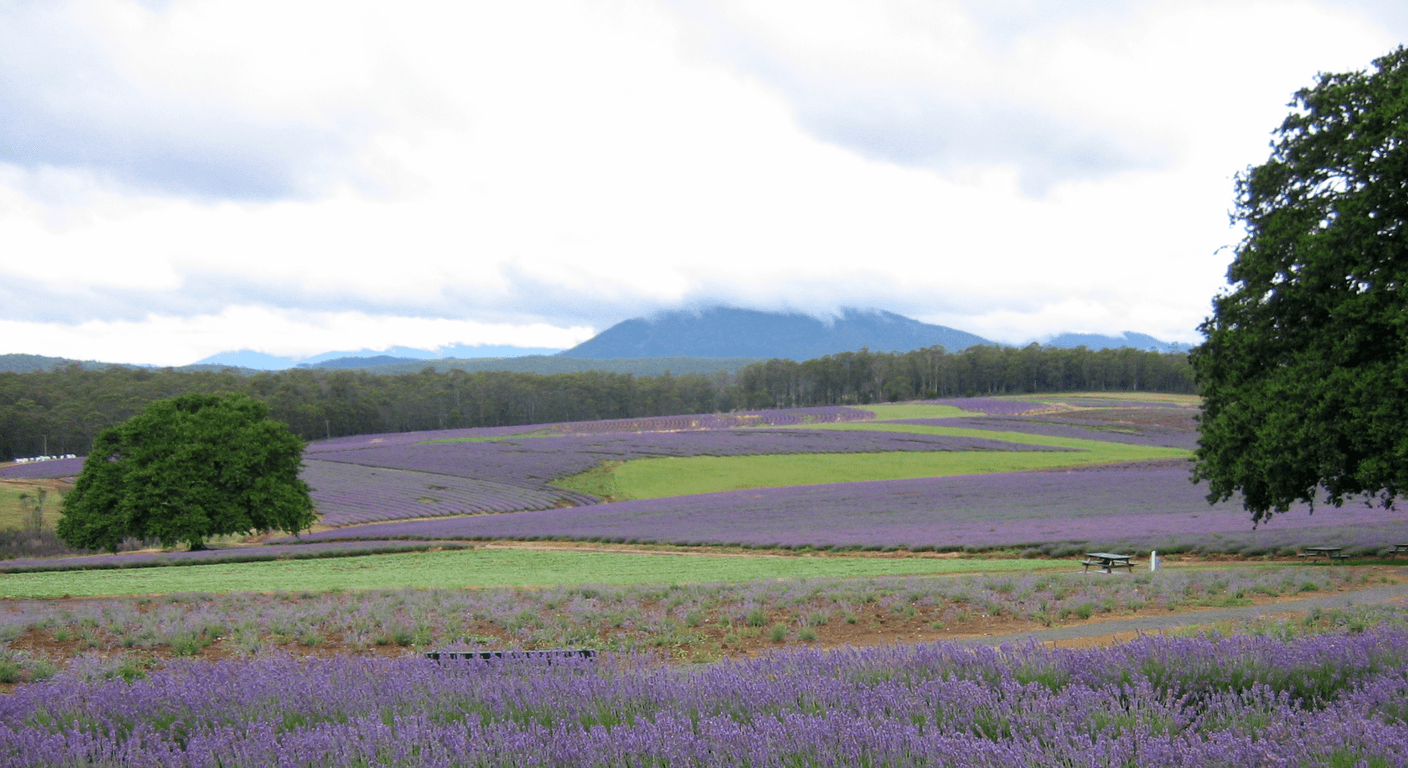
There are lavender farms dotted across Australia, and then there is Bridestowe. The scale is the thing. Standing at the edge of the fields during peak bloom, you're looking at row upon row of lavender extending across roughly 115 hectares of gently rolling Tasmanian farmland — a commercial operation that has been running since 1922. It's one of the largest privately owned lavender estates in the world, and the sheer repetition of those purple rows against a Tasmanian sky does something that smaller farms simply can't replicate.
For a group of friends making the trip from regional Victoria, the journey itself is part of the appeal. Fly into Launceston — flights from Melbourne run in under an hour with several carriers — and you're already in one of Australia's most agreeable regional cities. Hire a car for the day (or the week, frankly), head north through the Tamar Valley, and Nabowla is roughly 50 minutes away. The drive through farmland and light bush is pleasant rather than demanding, and the road into the estate is well signposted.
What makes Bridestowe particularly suited to travellers who prefer a relaxed pace is that the experience doesn't require stamina. The paths between the lavender rows are flat, firm gravel — sensible walking shoes are all you need. The café, the shop, and the main viewing areas are all close together. You can spend three hours here very comfortably without feeling rushed, or stretch it to four if you linger over lunch.
When exactly does Bridestowe bloom — and how short is the window?
This is the critical question, and it deserves a direct answer: the bloom typically peaks somewhere between mid-December and late January, but the exact window shifts from year to year depending on the growing season. Some years the rows are at their most vivid in the week before Christmas; other years the peak falls in early January. The estate publishes bloom updates on its website and social channels during the season, and checking those in the week before you travel is strongly recommended.
The flowers are cut promptly after harvest. That's not a quirk — it's a commercial reality. Bridestowe produces lavender oil and dried lavender products, and once the crop is ready, the cutting begins. Arrive a week after peak and you may find rows of grey-green stubble where the purple was. It's happened to plenty of well-intentioned visitors who booked flights based on a fixed calendar date rather than confirming with the estate first.
The sensible approach, particularly when coordinating a group trip, is to book flexible accommodation in Launceston rather than locking in non-refundable travel for a single date. Keep an eye on the estate's bloom reports from late November onward, and be ready to shift your timing by a few days if the season runs early or late. That slight flexibility is the difference between the trip you planned and the trip you'll talk about for years.
What's the experience actually like on the day?
Entry to the estate during bloom season is indicatively around $20–25 per person — confirm the current price on the Bridestowe website before you go, as pricing is reviewed each season. Once inside, the rhythm of the visit is unhurried. Most people walk the paths between the rows first, taking photographs and simply absorbing the scale of it. The scent is real and pervasive without being overwhelming — a quality that surprises some visitors who associate lavender primarily with small sachets.
The café is a genuine highlight rather than an afterthought. The lavender ice cream has been a fixture long enough to have its own reputation, and the broader menu draws on Tasmanian produce. On a warm December morning, a table outside with a coffee and something cold is a very reasonable way to spend 45 minutes. The shop carries the estate's oils, dried products and a range of lavender-infused goods — expect to browse longer than you intended.
Photography here doesn't require any particular skill to produce a satisfying result. The geometry of the rows, the colour contrast, the soft morning light — it's a naturally cooperative subject. That said, arriving earlier in the day gives you better light and fewer people in frame if that matters to your group. The estate can become quite busy on weekends during peak bloom, so a weekday visit, if your schedule allows, tends to be calmer.
Getting there from Launceston — what are the practical options?
For most visitors, a hire car is the straightforward choice. Launceston Airport has the major rental companies on site, and the drive to Nabowla is uncomplicated — the B71 north through Lilydale is the main route, and the estate is signposted. Allow around 50 minutes each way, and factor in that the roads through this part of northern Tasmania are rural and single-lane in places: pleasant, but not motorway driving.
Coach options to Nabowla are limited, and it's worth confirming with TassiLink or Redline Coaches whether any scheduled service reaches the area before relying on public transport for this particular trip. For a group of four or five friends, splitting the cost of a hire car almost certainly works out more practical and more flexible than trying to coordinate coach schedules around a farm visit.
If the group includes anyone who'd prefer not to drive, a private day-tour operator from Launceston is another option worth exploring — the Launceston Visitor Information Centre can advise on current operators. That approach adds cost but removes the navigation question entirely, and some operators combine Bridestowe with other northern Tasmanian stops, which can make for a well-rounded day.
What else can you combine with a Bridestowe visit?
The drive between Launceston and Nabowla passes through Lilydale, a small township with a pleasant falls walk nearby — Lilydale Falls Reserve has a short, easy loop through cool temperate rainforest that works well as a morning stop before the estate. The falls themselves are modest but the tree ferns make it worthwhile, and the walk is suitable for most fitness levels.
The Tamar Valley more broadly is excellent territory for a few days rather than a single day. The valley has a wine trail, with pinot noir and riesling among the varieties that do well in the cool climate. Harcourt Hill, Josef Chromy, and Goaty Hill are among the established producers with cellar doors open to visitors — check current opening hours before building them into your itinerary, as hours can vary by season.
Launceston itself deserves at least one full day. Cataract Gorge is a ten-minute walk from the city centre and genuinely dramatic — a river gorge with swimming, peacocks wandering the lawn, and a chairlift that's been running since 1972. The Launceston Tramway Museum, the Queen Victoria Museum and Art Gallery, and the Seaport precinct along the Tamar River all offer different registers of the city's character. It's a city that rewards slow walking.
Practical notes on accessibility, comfort and travel insurance
The main lavender field paths at Bridestowe are flat and firm gravel, which makes them accessible and comfortable for most mobility levels. The café and shop are in established buildings with standard access. If anyone in the group uses a mobility aid, it's worth contacting the estate directly before visiting to confirm current conditions — surfaces and temporary structures can change between seasons.
For travellers flying from mainland Australia, Tasmania's summer aligns with the Australian school holiday period, so Launceston accommodation books up earlier than you might expect. Confirming accommodation in November for a January visit is prudent rather than premature. Launceston has a good range of hotels and serviced apartments in the city centre, several of which are well suited to a group booking.
Travel insurance is worth noting even for a domestic trip of this nature. Standard policies vary in what they cover for pre-existing conditions and trip cancellation, so it's worth reading the product disclosure statement carefully and speaking with your insurer rather than assuming coverage. If the bloom timing means you need to shift dates at short notice, having flexible booking conditions and appropriate insurance makes that adjustment far less stressful.
What should you know before you go?
A few details that save frustration. The estate's opening hours and entry arrangements during bloom season are confirmed on its website — check the week before you travel, not just when you first start planning. The café can get busy around midday on weekends; arriving when the estate opens gives you the quietest experience and the best morning light for photographs.
Wear comfortable, closed-toe shoes. The gravel paths are firm but uneven in places, and sandals that work perfectly well on a city footpath are less comfortable after an hour of walking between rows. A hat and sunscreen are standard Tasmanian summer kit — the UV index can be deceptively high even when the temperature feels mild. And given that the drive from Launceston involves rural roads, filling the hire car with fuel before you leave the city is a sensible habit.
Finally, the lavender ice cream. It's not a novelty item — it's genuinely good, and it's become a fixture for a reason. If you're visiting with a group, someone will order it out of curiosity and everyone will end up wanting one. That's simply how it goes.
Quick planning guide
| Ideal pace | Relaxed and unhurried |
|---|---|
| Best months | Mid-December to late January, during peak bloom |
| Suggested stay | 3-4 hours at the estate; a full day if combined with the Tamar Valley |
| Mobility level | Easy — flat, firm gravel paths throughout |
| Cost level | Budget-friendly (entry indicatively $20-25 per person) |
| Comfort level | Comfortable, with café and shop close to the main viewing areas |
| Best for | Relaxed groups or couples wanting an easy, scenic day trip from Launceston |
| Main planning consideration | Timing the visit to the short, weather-dependent bloom window and confirming dates with the estate before locking in travel |
Key takeaways
- Bridestowe Lavender Estate near Nabowla is one of the world's largest privately owned lavender farms, with flat, firm-gravel paths that make it genuinely easy walking.
- The bloom window runs roughly mid-December to late January, but exact timing shifts year to year — confirm with the estate before booking non-refundable travel.
- Entry during bloom season is indicatively around $20–25 per person; check current pricing on the Bridestowe website before you visit.
- The estate is roughly 50 minutes' drive from Launceston, making it a comfortable half-day trip with time left to explore the Tamar Valley.
- Flexible accommodation and travel insurance with clear cancellation terms are practical safeguards when timing a visit around a short-season bloom.
- Combining Bridestowe with Lilydale Falls, Tamar Valley cellar doors, or a day in Launceston turns a single farm visit into a well-rounded northern Tasmania itinerary.
Recommended partners and links
Indicative prices only — always confirm with the operator before booking.
Frequently asked questions
When is the best time to visit Bridestowe Lavender Estate?
The lavender at Bridestowe typically blooms from mid-December to late January, with the peak varying by a week or two depending on the season. The estate publishes bloom updates on its website during the growing season — check those before finalising your travel dates, as the flowers are cut promptly after harvest.
How far is Bridestowe Lavender Estate from Launceston?
Bridestowe Lavender Estate near Nabowla is approximately 50 minutes' drive from Launceston via the B71 through Lilydale. A hire car is the most practical option, as coach connections to Nabowla are limited — confirm with regional transport providers before relying on public transport.
Is Bridestowe Lavender Estate accessible for people with limited mobility?
The paths between the lavender rows are flat and firm gravel, making the main field areas accessible for most mobility levels. The café and shop are in established buildings. Anyone using a mobility aid should contact the estate directly before visiting to confirm current conditions.
How much does it cost to enter Bridestowe during bloom season?
Entry during bloom season is indicatively around $20–25 per person, though pricing is reviewed each season. Confirm the current entry fee on the Bridestowe Lavender Estate website before you travel.
What else is worth visiting near Bridestowe on a day trip from Launceston?
Lilydale Falls Reserve is a short detour on the drive to Nabowla, with an easy loop walk through cool temperate rainforest. The Tamar Valley wine trail has several cellar doors open to visitors. Launceston itself — particularly Cataract Gorge and the Queen Victoria Museum and Art Gallery — is worth at least a full day.