Brisbane's TransLink network runs four suburban rail lines—Cleveland, Shorncliffe, Ipswich and Rosewood—linking the CBD to bayside and western day-trip destinations. A concession go card, available to Queensland Seniors Card, Commonwealth Seniors Health Card or Pensioner Concession Card holders, gives roughly half the adult fare, and a daily fare cap limits total spend per day. Confirm current fares and eligibility at translink.com.au before travelling.
Why the train makes sense for this kind of day out
Driving in an unfamiliar city has a way of turning a relaxed day trip into a logistics exercise. Brisbane's inner and suburban roads are manageable enough, but finding parking near the water at Cleveland or navigating the Ipswich Motorway at peak hour is genuinely stressful when you'd rather be watching pelicans. The train removes all of that.
For a group of friends visiting from regional Victoria, the appeal is practical as much as scenic. You board together, sit together, and nobody has to be the designated driver. The go card taps on and off automatically, the daily fare cap means you stop being charged after a certain spend regardless of how many trips you take, and the whole thing costs a fraction of a hire car plus fuel. It's a sensible way to travel — and in Brisbane's subtropical warmth, arriving at a bayside station already relaxed makes a real difference to how the day unfolds.
The network is run by TransLink, which coordinates trains, buses and ferries under a single ticketing system. A concession go card — available to holders of a Queensland Seniors Card, a Commonwealth Seniors Health Card, or a Pensioner Concession Card — gives roughly half the adult fare. Visitors from interstate should check TransLink's current eligibility rules, as concession recognition for non-Queensland cards has specific conditions. Confirm before you travel.
The Cleveland line: bayside at its most straightforward
The Cleveland line runs from Roma Street and Central stations out through Stones Corner, Coorparoo, Norman Park and Holland Park East, eventually reaching the Redlands Coast at Cleveland — a journey of around 45 minutes from the city centre. Cleveland itself sits at the edge of Moreton Bay, with a foreshore reserve, the historic Cleveland Point Lighthouse precinct, and a scatter of cafes within comfortable walking distance of the station. It's a genuinely pleasant place to spend a morning.
From Cleveland, the Stradbroke Flyer ferry connects to North Stradbroke Island — Minjerribah — which adds a layer of possibility for those with a full day and reasonable energy. That ferry crossing is separate ticketing outside the TransLink system, so factor in the additional cost and check current schedules with Stradbroke Flyer directly. The island's Main Beach and the Cylinder Beach area are accessible, though the walk from the ferry terminal at Dunwich involves some distance. A local bus runs between Dunwich and the beaches on a limited timetable.
The Cleveland line runs frequently on weekdays — roughly every 15 minutes during the day — but drops to around every 30 minutes on weekends. For a group catching a morning train, that's still very workable. The key is checking the specific return time you want before you leave, so nobody is standing on a platform longer than planned. Platform 1 at Cleveland is the departure point; it's covered and has seating.
The Shorncliffe line: a quieter bayside village feel
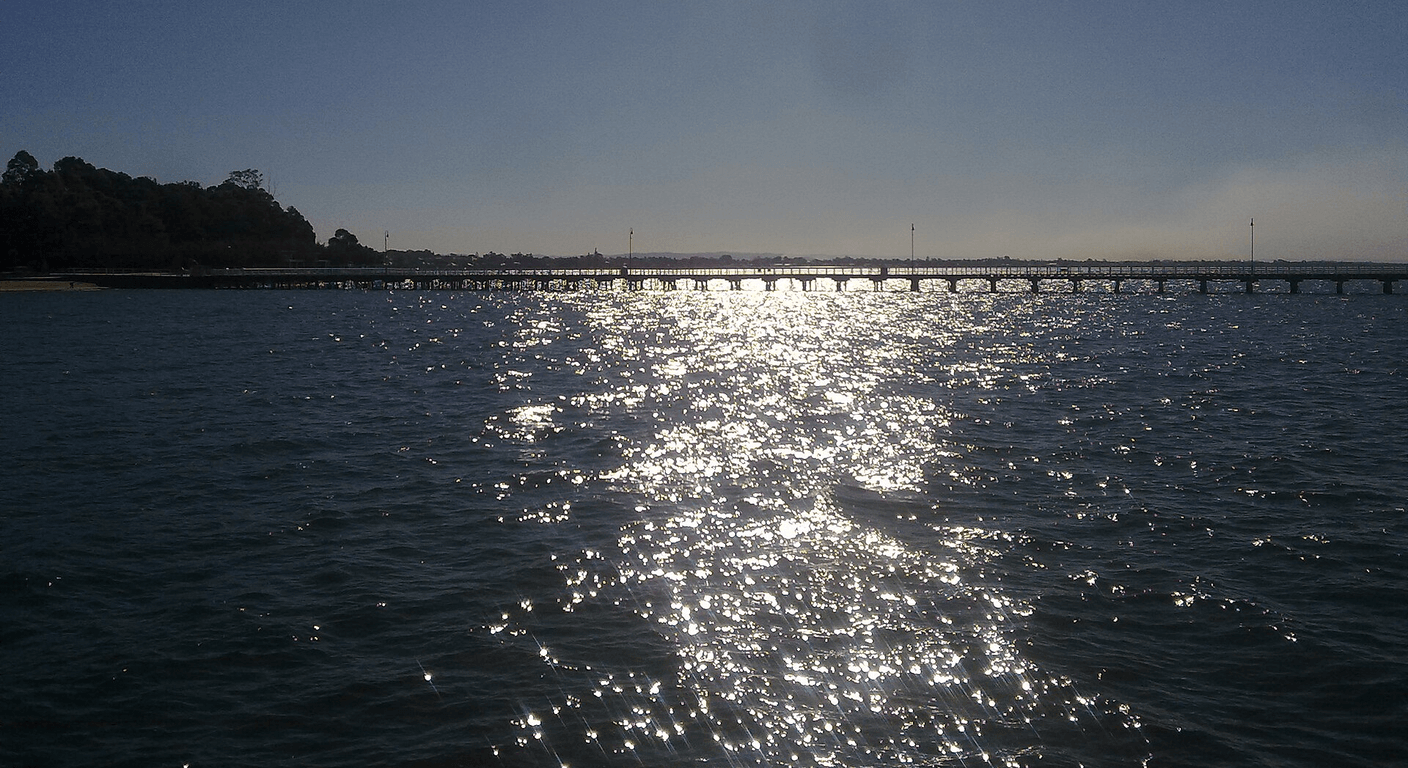
Less visited than Cleveland, the Shorncliffe line branches off the main northern network at Northgate and ends at Shorncliffe, a heritage-listed seaside suburb on the northern shore of Bramble Bay. The journey from Central takes around 40 minutes. The area around Shorncliffe Pier — a long timber jetty dating to the 1880s — is unhurried and genuinely pretty. There are a handful of cafes near the station, and the foreshore walk along Flinders Parade is flat and shaded in parts.
Shorncliffe runs on a less frequent service than Cleveland, particularly on weekends, where gaps between trains can stretch to an hour. This is not a problem if you've planned around it; it becomes one if you haven't. Download the TransLink app or use the journey planner on translink.com.au the evening before to lock in your preferred trains. The line is not always familiar to visitors, and some accommodation concierges may not think to suggest it.
For a group who enjoy a slower pace — a long lunch, a walk along the water, a sit on the pier watching the bay — Shorncliffe suits that rhythm well. It's not a destination that tries too hard. That's part of the point.
The Ipswich and Rosewood lines: heading west without a car
The Ipswich line runs from Roma Street through the inner suburbs and out past Oxley, Darra and Wacol to Ipswich, a journey of around an hour. Ipswich is a proper regional city — Queensland's oldest — with a well-regarded heritage precinct, the Workshops Rail Museum on North Street, and the Queens Park gardens and nature centre, which are free to enter and largely flat. The Workshops Rail Museum charges admission; confirm current prices at their site.
The Rosewood line extends further west from Ipswich, continuing through Yamanto, Leichhardt and Grandchester to Rosewood. Frequency on this extension is limited — sometimes only a few services a day — so this is a line that requires careful timetable planning rather than casual spontaneity. Rosewood itself is a small historic town; the old railway precinct and the Rosewood Cemetery, where early Queensland settlers are buried, draw visitors with an interest in colonial history. The station to town centre distance is short and mostly flat.
Bus connections from Ipswich station extend to some western attractions, but coverage is not comprehensive. For spots beyond easy walking distance — the Ipswich Art Gallery on D'Arcy Doyle Place, for instance, is a manageable stroll from the station — a taxi or rideshare fills the gap. Confirm current rideshare availability in Ipswich before relying on it; coverage can be variable compared with inner Brisbane.
How the go card concession fare and daily cap work
The go card is TransLink's reloadable smartcard. Tap on at the start of each journey and tap off at the end — the system calculates the fare automatically based on the zones you've crossed. A concession go card charges roughly half the adult fare, though the exact discount structure should be confirmed at translink.com.au as it is subject to change. Cards can be loaded at station machines, 7-Eleven stores, and online.
The daily fare cap is one of the most useful features for day-trippers. Once your go card charges have reached the daily cap — which covers all TransLink train, bus and ferry travel in a single day — you travel free for the rest of that day. For a group doing a return bayside trip plus a city ferry or bus, the cap often cuts in by mid-afternoon. The cap resets at midnight. Weekend and public holiday fares have their own cap, which is typically lower than the weekday cap; again, confirm current figures with TransLink directly.
Visitors from interstate should note that Queensland's Seniors Card alone may not automatically qualify for the concession go card — eligibility depends on the type of concession card held. A Commonwealth Seniors Health Card and a Pensioner Concession Card are generally recognised, but the rules are specific. The TMR (Transport and Main Roads) website has the current eligibility list. It's worth checking before arrival rather than discovering the gap at a ticket machine.
Practical matters: accessibility, timetables and what to bring
Most Brisbane suburban stations have been progressively upgraded with lifts or ramps, but not all platforms are step-free. The TransLink journey planner has an accessibility filter that shows step-free routes — use it if anyone in the group has mobility considerations. Some older station infrastructure on the Shorncliffe and Rosewood lines is less comprehensively upgraded than the inner-city stations; worth checking specifically for those lines.
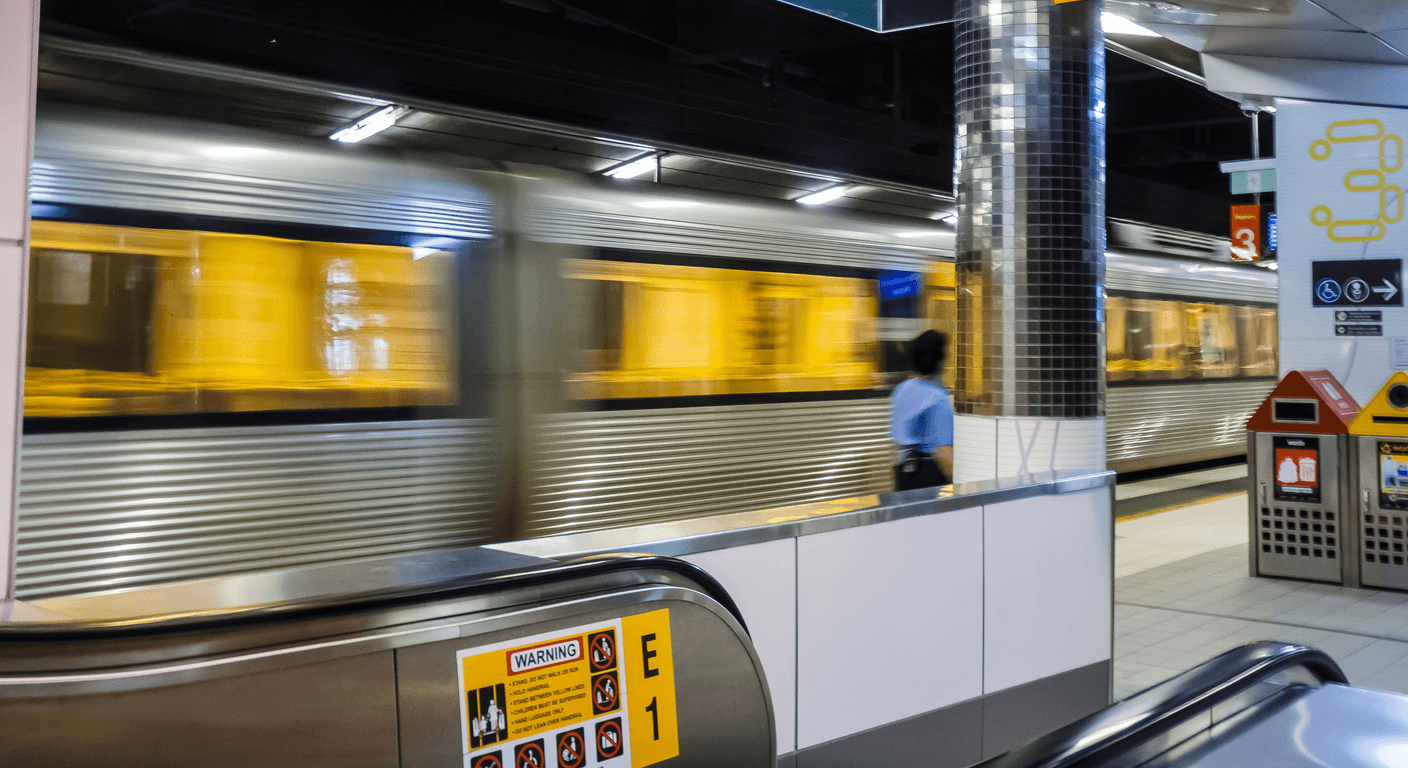
Newer Queensland Rail trains — the New Generation Rollingstock and the IMU fleet — have air conditioning, priority seating, and dedicated spaces for mobility aids. Older sets still appear on some services, particularly on less-frequent lines. The difference in comfort on a hot Queensland afternoon is noticeable. If comfort matters, a morning departure avoids both the heat and the afternoon peak.
Bring a hat, sunscreen and a refillable water bottle regardless of the season — Brisbane's UV index is high even in winter. A light cardigan is useful on air-conditioned trains. Most bayside stations have basic seating on platforms but limited shade; plan arrival times to avoid long waits in direct sun. And download the TransLink app before you leave your accommodation: live departure times and service alerts are far more reliable than printed timetables for detecting disruptions.
Putting it all together: a practical group itinerary
A sensible approach for a group of friends with three or four days in Brisbane is to assign one direction per day and keep the third day loose. Day one: the Cleveland line to the foreshore, morning coffee at one of the cafes near the point, a walk along the esplanade, and an early return to the city for dinner in South Bank. Day two: the Shorncliffe line for a slower morning, the pier, lunch, and back by mid-afternoon. Day three: Ipswich, with the Workshops Rail Museum as the centrepiece and Queens Park for an easy afternoon walk.
The Rosewood extension is best left for travellers who have a specific interest in heritage rail or colonial history and are comfortable with a very limited timetable. It rewards patience rather than spontaneity. Check the timetable, have a backup plan, and don't rely on being able to catch an earlier or later train if plans change.
For regional Victorian visitors used to V/Line's sometimes-sparse timetables, Brisbane's suburban network will feel relatively frequent — at least on weekdays. The city's subtropical warmth in autumn and winter, the relative ease of the go card system, and the genuine variety of the four lines make this a compelling way to see a different side of Queensland without once sitting in traffic.
Quick planning guide
| Who it's for | Senior and concession travellers, including interstate visitors with an eligible concession card, wanting to reach Brisbane's bayside and western towns without a hire car. |
|---|---|
| How to start | Load a concession go card and check the TransLink journey planner or app the evening before for weekday versus weekend service times. |
| Typical cost | Roughly half the adult TransLink fare with a concession go card, plus a daily fare cap after which further travel that day is free; exact amounts should be confirmed with TransLink. |
| Time required | About 45 minutes to Cleveland, 40 minutes to Shorncliffe, an hour to Ipswich, and longer with limited services to Rosewood; a group itinerary of three to four days can cover one line per day. |
| Where to get help | TransLink's journey planner and app at translink.com.au, and the TMR (Transport and Main Roads) website for concession eligibility details. |
| Key documents needed | A Queensland Seniors Card, Commonwealth Seniors Health Card, or Pensioner Concession Card to obtain the concession go card. |
| Main planning consideration | Weekend and public holiday services on all four lines run less frequently than weekdays, particularly on the Shorncliffe and Rosewood lines, so return times need checking in advance. |
| Renewal or review | Not applicable, though interstate visitors should reconfirm concession card eligibility with TransLink before each trip, as recognition rules for non-Queensland cards can change. |
Key takeaways
- A concession go card gives eligible seniors roughly half the adult TransLink fare on trains, buses and ferries across Brisbane's network.
- The daily fare cap means you stop being charged after a set spend — ideal for a full day of bayside travel — but confirm the current cap amount with TransLink before you go.
- The Cleveland line reaches the Redlands Coast foreshore in around 45 minutes from the CBD; the Shorncliffe line offers a quieter bayside alternative to the north.
- Weekend and public holiday services on all four lines run less frequently than weekdays — check the TransLink journey planner the evening before, not on the morning.
- The Ipswich and Rosewood lines open up western Queensland day trips without a hire car, though bus connections beyond the station can be limited.
- Interstate visitors should confirm their concession card type is recognised for the Queensland go card concession before arriving — eligibility rules are specific.
Recommended partners and links
Indicative prices only — always confirm with the operator before booking.
Frequently asked questions
Can I use my Victorian Seniors Card for a concession go card in Brisbane?
A Victorian Seniors Card alone is not automatically recognised for TransLink's concession go card. Eligibility generally applies to holders of a Commonwealth Seniors Health Card or a Pensioner Concession Card. Check the current list on the TMR Queensland website (tmr.qld.gov.au) before your trip, as rules can change.
How often do trains run on the Cleveland and Shorncliffe lines on weekends?
Weekend frequency drops compared with weekdays. The Cleveland line typically runs around every 30 minutes on weekends; the Shorncliffe line can have gaps of up to an hour. Always check the live TransLink journey planner at translink.com.au or on the TransLink app the evening before you travel.
Is there a daily fare cap on Brisbane's TransLink network?
Yes. Once your go card charges reach the daily cap for that day type — weekday, weekend or public holiday — all further TransLink travel is free until midnight. The cap amount differs between day types and is subject to change; confirm the current figure at translink.com.au.
How far is Ipswich station from the Workshops Rail Museum?
The Workshops Rail Museum on North Street in Ipswich is a short distance from Ipswich station, but the walk involves some street navigation. Confirm the current walking route using Google Maps or the museum's own visitor information before setting out, as road works in the area can alter pedestrian access.
Are Brisbane suburban train stations accessible for travellers with limited mobility?
Many stations have been upgraded with lifts or ramps, but coverage is not universal, particularly on the Shorncliffe and Rosewood lines. Use the accessibility filter in the TransLink journey planner to find step-free routes for your specific journey before you travel.