Sandgate and Shorncliffe, on Brisbane's bayside, suit weekday mornings from September to May and a full unhurried day of six to seven hours. The defining highlight is Shorncliffe Pier, Queensland's longest timber pier at around 357 metres, free to walk and calmest early in the week. Mobility demands are easy, with a flat, sealed, bench-lined foreshore path. Access is simple: a roughly 35-minute train from Brisbane city, with a senior go card concession fare of about 50 cents each way.
Why Sandgate and Shorncliffe work so well as a day trip
There's a particular pleasure in arriving somewhere by train and stepping straight into the place — no car park, no navigation, no one designating a driver. The Shorncliffe line drops you at Sandgate station and within three minutes you're on the foreshore, looking out at Moreton Bay. The whole suburb seems to have decided, collectively, not to rush.
For a group of women travelling together, this kind of day has a rhythm all its own. You can walk as far as you like, stop when you feel like it, find a table at a cafe and stay there longer than you planned. Sandgate and Shorncliffe reward exactly that approach. There's no single attraction demanding your time — just a foreshore, a pier, some very good fish and chips, and the kind of streets that make you wonder why you don't live here.
The practicality is equally appealing. The senior go card concession on South East Queensland's Translink network makes the return fare from Brisbane city around 50 cents each way — indicative only, so confirm with Translink before you travel. The train runs regularly, the carriages are air-conditioned, and you don't need to book anything.
Getting there: the Shorncliffe line from Brisbane
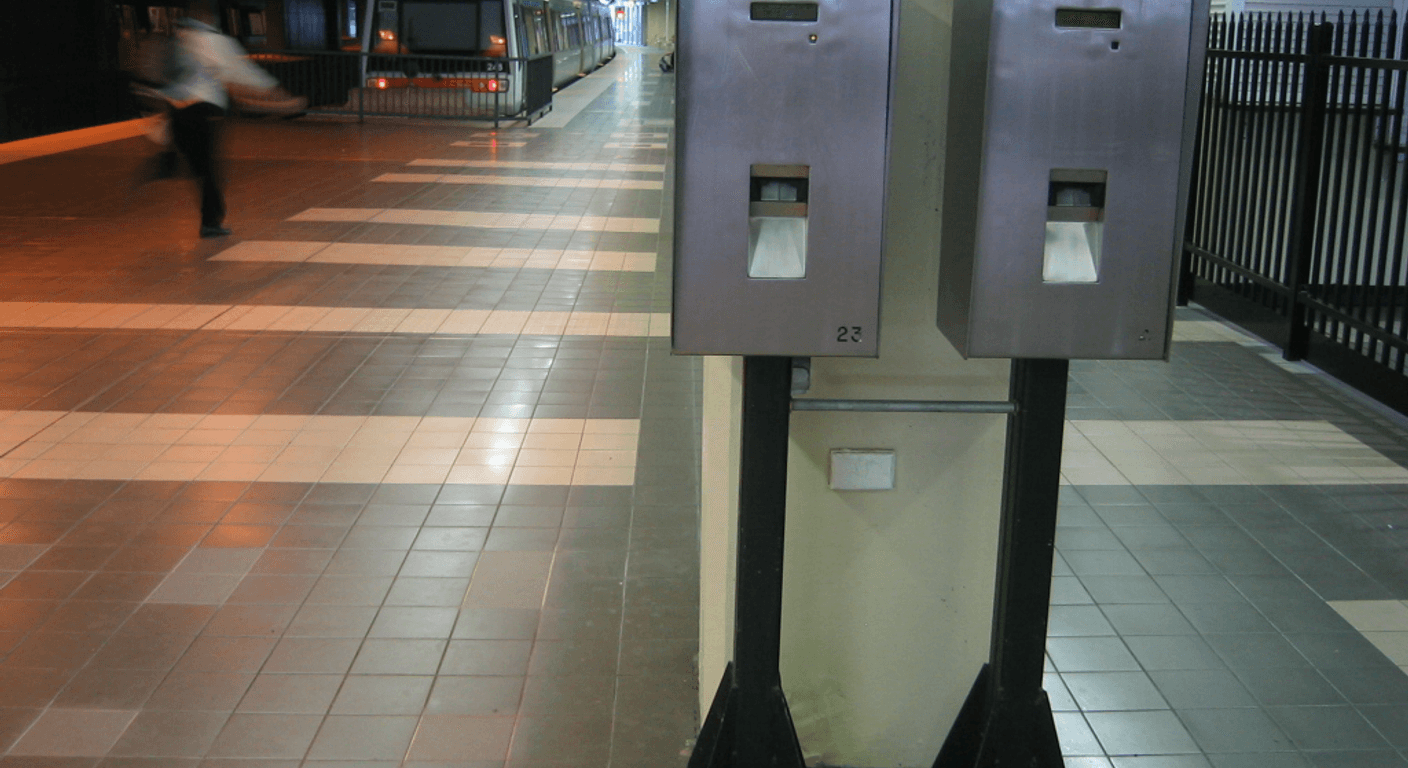
The Shorncliffe line departs from Brisbane Central, Roma Street and other inner-city stations. The journey to Sandgate takes roughly 35 minutes; Shorncliffe is the next and final stop, about two minutes further. Both stations are accessible, with lifts and level boarding at most platforms — confirm current accessibility details with Queensland Rail or Translink before your visit if this matters to your group.
Weekday mornings are the sweet spot. Services are frequent enough without the weekend crowds that sometimes fill the foreshore with families and cyclists. If you're travelling from regional Victoria — say, from Ballarat or Bendigo — the sensible move is to fly into Brisbane the day before, spend a night in the city, and take the train out the following morning feeling properly rested. Queensland's subtropical warmth hits differently after a Victorian winter, and it's worth giving yourself an hour to acclimatise before you start walking.
The return journey is equally simple. Most trains back to the city run every 15 to 30 minutes depending on the time of day, so there's no anxiety about catching a specific service. Check the Translink journey planner at translink.com.au for current timetables.
The foreshore path: walking between Sandgate and Shorncliffe
The sealed esplanade path that connects Sandgate and Shorncliffe is about two kilometres one way — a gentle, flat walk along the bay's edge that takes perhaps 30 to 40 minutes at an unhurried pace, or considerably longer if you stop at the lagoons, which you should. Bench seating appears at regular intervals, positioned to face the water rather than the path, which suggests whoever designed this foreshore understood something about how people actually want to spend their time.
The lagoons are where the pelicans congregate, often in groups of four or five, apparently unbothered by passing walkers. They're large birds up close — almost comically so — and they have a way of making the whole scene feel slightly timeless. The bay itself is calm here, protected by Moreton Island on the horizon, and at low tide the mudflats attract ibis and egrets working the shallows.
The path is pushchair-friendly and suits anyone with a walking stick or who simply prefers not to deal with uneven ground. There are public toilets at Sandgate foreshore and near the pier end — worth noting before you set out. The shade varies; a hat and sunscreen are non-negotiable in Queensland, even on mild days.
Shorncliffe Pier: what makes it worth the walk
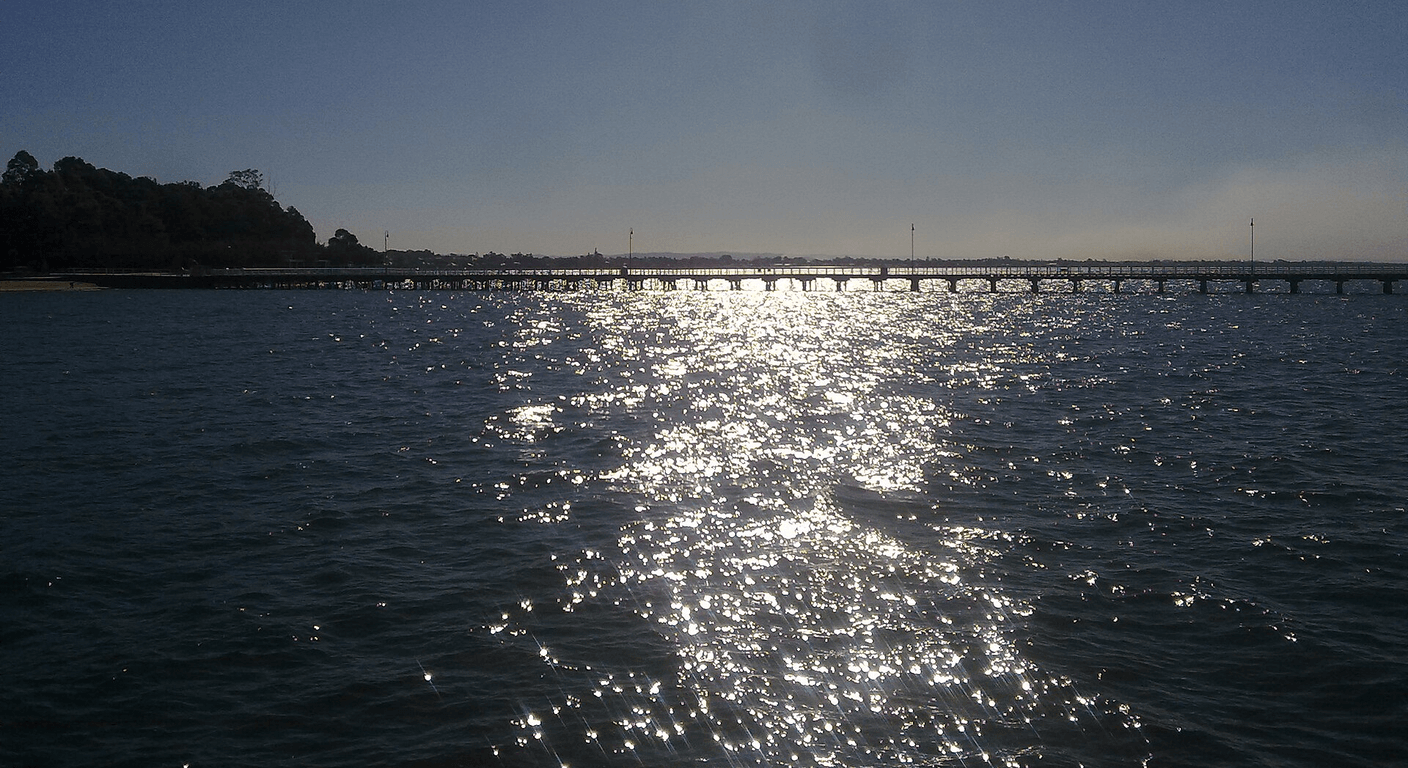
Shorncliffe Pier is the longest timber pier in Queensland — around 357 metres — and it stretches out into the bay with the kind of unhurried confidence that old infrastructure often has. It was built in the 1880s and has been restored carefully, retaining its original character without being turned into something precious. You walk on weathered timber boards. The bay moves beneath you. That's about it, and that's enough.
On a weekday morning, you might share the pier with a handful of people fishing, a couple walking slowly to the end, and the occasional pelican loitering near the railings. The views back to the Sandgate foreshore and across to Moreton Bay are wide and unobstructed. There are benches along the pier if you want to sit with the water on three sides — which, on a warm Queensland morning, is a very fine thing to do.
The pier is free to access and generally open during daylight hours, though Brisbane City Council occasionally closes sections for maintenance. Check brisbane.qld.gov.au for any current notices before you make it the centrepiece of your day.
Where to eat: Brighton Road cafes and the fish and chips question
Brighton Road, the main commercial strip running back from the Sandgate foreshore, has the feel of a suburban shopping strip that never quite got redeveloped — meaning it still has a hardware store, a bakery, and cafes that have been there long enough to know what they're doing. The coffee is good. The pace is slow. Nobody's going to rush you out the door.
Fish and chips on the foreshore is the obvious move and there's no reason to resist it. Several takeaway spots near the Sandgate end serve the standard Queensland version — battered and generous — and the foreshore has plenty of flat surfaces and seating where a group can spread out, manage the seagull situation with reasonable dignity, and watch the bay. Indicative cost is around $15 to $20 per person for a solid serve; confirm current pricing when you order.
For a longer lunch, a few of the cafes on Brighton Road offer proper sit-down meals with views or at least comfortable indoor seating — useful if the midday sun becomes persuasive. The strip rewards a slow wander before or after eating; the old Queenslander architecture above the shopfronts is worth looking up at.
The streets behind the foreshore: Queenslanders and quiet
One of the quieter pleasures of Sandgate and Shorncliffe is the residential streetscape behind the foreshore. The houses — many of them classic timber Queenslanders raised on stumps, with wide verandahs and corrugated iron roofs — have the faded elegance of places that were fashionable a century ago and then simply stayed. Not every house is heritage-listed; some are plainly in need of a paint. That's part of what makes the streets feel genuine rather than curated.
A gentle loop through a few of the streets behind Brighton Road adds perhaps 20 minutes to the day and gives a sense of the suburb as a place people actually live in, not just visit. Frangipani trees overhang footpaths. Cats observe from verandahs. The occasional magnificent old mango tree shades an entire front yard. For anyone with even a passing interest in Australian domestic architecture, this is quietly satisfying territory.
There's no formal heritage trail, though the local historical society has produced walking maps in the past — worth searching online or asking at the local library on Brighton Road if the group is keen. Mostly, though, the streets repay simple wandering.
Practical notes for the day
A full day in Sandgate and Shorncliffe works well with a loose structure: train from Brisbane mid-morning, walk the foreshore to the pier, sit on the pier for a while, walk back, lunch on Brighton Road, another slow wander, and a late-afternoon train home. That's probably six to seven hours without anyone feeling hurried. The train back to Brisbane gets you in before the early evening, which matters if your group has a flight or a long drive the following day.
Bring water — Queensland dehydrates people faster than they expect, especially those accustomed to southern Australian climates. A small daypack, comfortable walking shoes with decent support, and a hat cover everything you need. The suburb has an ATM near the main shops, but most cafes and takeaway spots accept card payments.
Travel insurance is worth mentioning even for a domestic day trip. If anyone in the group has a pre-existing condition, check that your policy covers any medical event, however unlikely. And if you're flying up from regional Victoria, factor in the cost of that flight and a night's accommodation in Brisbane — indicative return fares and hotel costs vary considerably by season, so compare options well in advance through your preferred travel agent or booking platform.
Quick planning guide
| Ideal pace | Slow and unhurried, with plenty of stopping points |
|---|---|
| Best months | September to May, weekday mornings for calm and warmth |
| Suggested stay | A full day, roughly six to seven hours |
| Mobility level | Easy - flat, sealed, bench-lined foreshore path, pushchair-friendly |
| Cost level | Budget-friendly - free pier access, around 50 cents train fare, $15-20 meals |
| Comfort level | Comfortable - regular benches, public toilets, air-conditioned trains |
| Best for | Groups of friends travelling by train without a car, including seniors |
| Main planning consideration | Confirm current Translink fares and timetables, and check for pier maintenance closures before travelling |
Key takeaways
- The Shorncliffe train line delivers you to Brisbane's bayside in 35 minutes for around 50 cents each way with a senior go card concession — confirm current fares with Translink.
- The sealed foreshore path between Sandgate and Shorncliffe is flat, bench-lined and accessible, making it genuinely suitable for Easy mobility.
- Shorncliffe Pier — Queensland's longest timber pier at around 357 metres — is free to access and at its most peaceful on weekday mornings.
- Weekday mornings from September to May offer the best combination of calm, warmth and low humidity for travellers from southern Australia.
- Brighton Road's old-school cafes and foreshore fish and chips options keep the day affordable, with meals indicatively around $15 to $30 per person.
- No car, no bookings, no complicated logistics — this is one of Brisbane's most straightforward and rewarding day trips for a group travelling by train.
Recommended partners and links
Indicative prices only — always confirm with the operator before booking.
Frequently asked questions
How much does it cost to travel to Sandgate by train from Brisbane city?
With a senior go card concession on the Translink network, the fare from Brisbane city to Sandgate is around 50 cents each way — indicative only. You'll need a go card loaded with credit; confirm current concession fares at translink.com.au before you travel, as fares are subject to change.
Is the Sandgate foreshore walk suitable for people with mobility concerns?
Yes. The esplanade path between Sandgate and Shorncliffe is sealed, flat and approximately two kilometres one way, with bench seating at regular intervals facing the water. There are no significant hills or uneven surfaces. Public toilets are available at the Sandgate foreshore and near the Shorncliffe Pier end.
Is Shorncliffe Pier free to visit?
Yes, Shorncliffe Pier is free to access and is generally open during daylight hours. Brisbane City Council occasionally closes sections for maintenance, so check brisbane.qld.gov.au for any current notices before your visit.
What is the best time of year to visit Sandgate and Shorncliffe from southern Australia?
September to May offers warm, generally pleasant conditions. Queensland's summer (December to February) can be hot and humid, particularly for travellers from cooler southern climates such as regional Victoria. Weekday mornings throughout the season are the calmest time to visit, with fewer crowds on the foreshore and pier.
Do I need to book anything in advance for this day trip?
No advance bookings are required. You'll need a Translink go card with the senior concession loaded — these can be obtained at stations and convenience stores across South East Queensland. Cafes and takeaway spots on Brighton Road operate on a walk-in basis. Check the Translink journey planner at translink.com.au for current train timetables before you travel.