The single supplement typically adds 75 to 100 per cent to a solo traveller's accommodation cost, but Victoria's Seniors Card — free to apply for, available to permanent residents aged 60 and over working no more than 35 hours a week — unlocks discounts at thousands of businesses, and V/Line concession fares run roughly 50 per cent below full adult fares. This guide is for solo travellers over 50; confirm current details at seniorsonline.vic.gov.au or vline.com.au.
Why Solo Travel Over 50 Costs More — and How to Close the Gap
The single supplement is the most visible financial penalty for travelling alone. Hotels and tour operators price rooms and cabins on the assumption two people share the cost, so a solo traveller often pays 75 to 100 per cent extra for the same space. On a two-week tour, that surcharge can add thousands of dollars before a single meal or excursion is counted. Recognising that this is a structural pricing habit — not an inevitability — is the first step to working around it.
The good news is that the landscape has shifted noticeably. A growing number of operators now offer no-supplement departures, purpose-built solo cabins on cruise ships, and house-share rooming options that pair solo travellers of similar ages. Combined with concession entitlements that many over-50 Victorians underuse, there is real money to be recovered — not by scrimping, but by travelling smarter.
The strategies in this guide are practical and honest. They do not require you to travel in discomfort or book months in advance under artificial pressure. They do require a little research up front, and a willingness to shift travel dates by a few days or rethink accommodation formats. For a traveller in his 70s who has spent decades watching the household budget carefully, these are familiar disciplines applied to a new context.
Midweek and Shoulder-Season Travel: Where the Real Savings Are
The simplest and most consistent way to reduce accommodation costs is to travel Tuesday through Thursday rather than Friday through Sunday. Hotels, motels, and serviced apartments in most Australian cities and regional centres drop their rates noticeably midweek, because the leisure market thins and they need to fill rooms. A room that costs around $180 on a Friday night in a coastal town can sit at $120 to $130 on a Tuesday — a saving of roughly 25 to 30 per cent, though you should always confirm current pricing directly with the property.
Shoulder season — the weeks either side of school holidays and peak summer — amplifies these savings further. In Victoria, late February through April and September through early November offer comfortable weather for most regions, fewer crowds, and lower prices across accommodation, tours, and transport. The Grampians in October, the Mornington Peninsula in March, or the high country in autumn are all genuinely pleasant without the summer premium.
For solo travellers, midweek shoulder-season timing also means quieter trails, shorter queues at galleries and museums, and staff who have more time for a conversation. These are not small things. Travelling at a considered pace, with room to linger, is one of the real privileges of being past the years when annual leave had to be rationed around school terms.
The Seniors Card and Concessions: Are You Getting What You Are Entitled To?
Victoria's Seniors Card is available to permanent Victorian residents aged 60 and over who work no more than 35 hours per week. It is free to apply for and provides discounts across thousands of participating businesses — accommodation providers, transport operators, attractions, restaurants, and retail. Many cardholders use it for a handful of familiar businesses and miss the broader network. The official portal at seniorsonline.vic.gov.au maintains a searchable directory of current participating businesses, and it is worth checking before any trip.
On public transport, the Myki Seniors Card gives eligible holders access to concession fares across metropolitan Melbourne's trains, trams, and buses. On V/Line regional services, a valid concession card typically reduces fares by around 50 per cent compared to the full adult fare — though V/Line's current fares and eligibility conditions should always be confirmed directly with them at vline.com.au. For a solo traveller doing several regional day trips or overnight stays by rail, these concessions accumulate into meaningful savings over a trip.
Beyond transport, many of Victoria's public galleries, museums, and cultural institutions offer reduced or free entry for concession cardholders. The National Gallery of Victoria's permanent collection is free to all visitors; Museums Victoria (including Melbourne Museum, Scienceworks, and the Immigration Museum) offers concession pricing on ticketed exhibitions. Always carry your Seniors Card and ask — the worst answer is no, and in practice it is rarely no.
Avoiding the Single Supplement: Practical Options That Actually Work
The most direct way to avoid the single supplement is to choose operators who do not charge one, or who offer rooming-share options. Several well-established small-group tour operators — including Intrepid Travel and Peregrine Adventures — periodically waive the supplement on specific departures or offer a traveller-match service where two solo guests of the same gender share a twin room. The catch is that availability for matched rooms is limited and fills early; checking the operator's website for their current solo travel policy is the right starting point.
A parallel option is the growing market in solo-traveller-specific tours, where the entire group is made up of people travelling alone. These are not niche products anymore. Several Australian and international operators have built dedicated solo programmes, and because the entire commercial model assumes single occupancy, there is no supplement to add. Searching for 'solo travel tours Australia over 50' will surface a number of legitimate operators; cross-check any unfamiliar company against the Australian Federation of Travel Agents (afta.com.au) or look for ATAS accreditation.
For cruising — which many older solo travellers enjoy for its combination of comfort and convenience — purpose-built solo cabins are now offered by several lines, including Norwegian Cruise Line's Studio cabins and select departures on other major lines. These cabins are smaller than standard, but they carry no supplement, and the Studio Lounge on some ships effectively gives solo travellers their own communal space. Cruise pricing changes frequently; the cruise line's official Australian site or an ATAS-accredited travel agent is the right place to confirm current solo cabin availability and pricing.
Rail, Coach, and Getting Around for Less
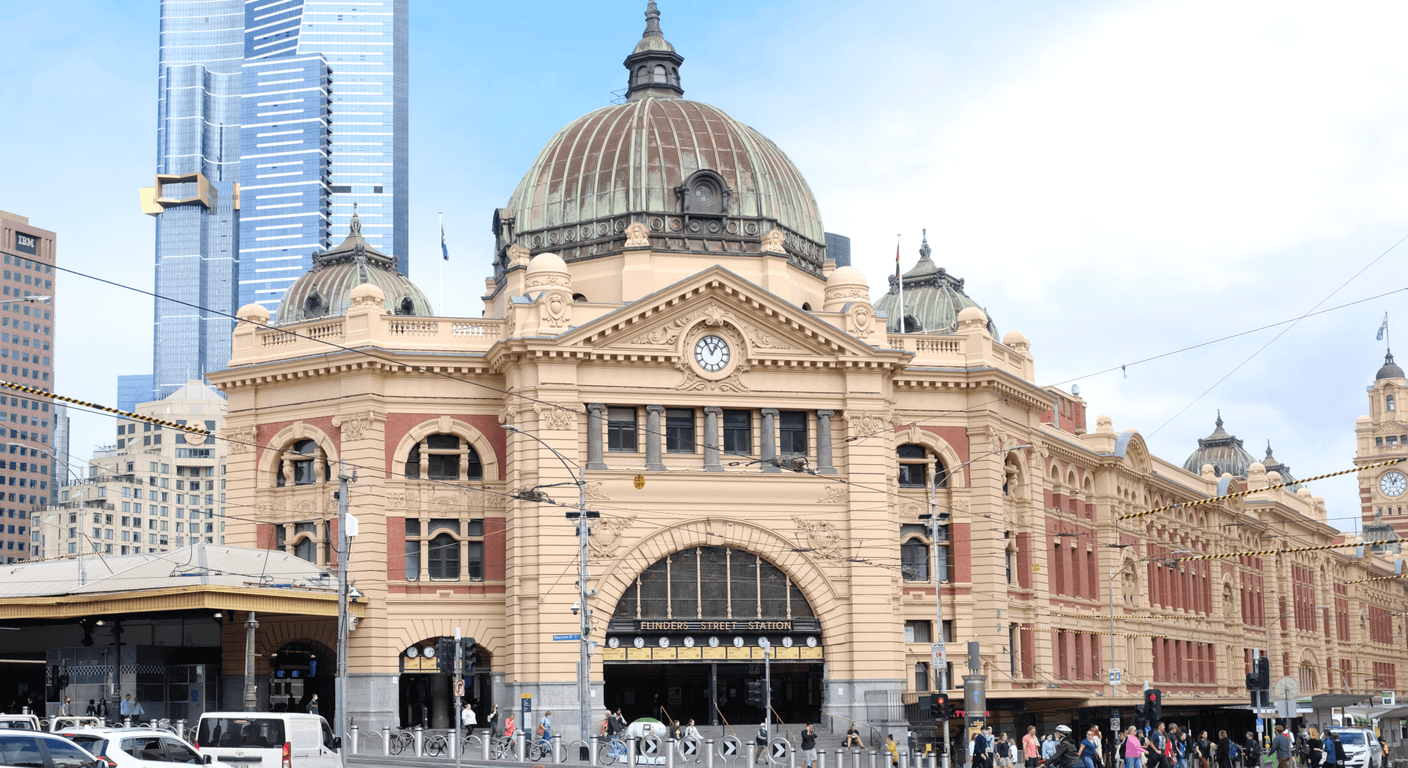
For travel within Victoria and across regional Australia, rail and coach remain among the most cost-effective options for solo travellers — and the most relaxed. V/Line connects Melbourne to Ballarat, Bendigo, Geelong, Warrnambool, Bairnsdale, and other regional centres, with concession fares available to eligible cardholders. A return trip from Melbourne to Ballarat, for instance, is a comfortable two-hour journey through the western plains, and at concession rates it is an honest bargain for a day out or an overnight stay.
For longer-distance travel, coaches operated by Greyhound Australia (greyhound.com.au) cover interstate routes and offer a Senior Explorers pass for travellers aged 60 and over — a set-price pass providing a defined number of kilometres or days of travel. This suits a traveller who wants to move through several destinations without committing to fixed dates too far ahead. Confirm current pass options and pricing directly with Greyhound, as products change seasonally.
Within Melbourne, the free City Circle tram (Route 35) loops around the central city and is useful for reaching the Arts Precinct, Docklands, and Fitzroy Gardens without touching your Myki balance. For day trips, the PTV Journey Planner at ptv.vic.gov.au is the reliable tool for mapping any trip using concession-eligible services. Download it before you leave home and you will not need to pay for a taxi because you missed a connection.
Serviced Apartments and Kitchenettes: The Accommodation Format That Changes the Maths
A serviced apartment with a kitchenette shifts the economics of solo travel in a way that a standard hotel room cannot. When you are not paying for two breakfasts, two restaurant dinners, or two café lunches, the daily food budget for a solo traveller is already lower — but without any way to prepare your own food, you are still at the mercy of restaurant pricing for every meal. A kitchenette changes that. A trip to the local supermarket for breakfast supplies, sandwich ingredients, and fruit for snacking can cost under $30 and cover two or three days of morning meals and packed lunches.
Serviced apartments also tend to offer better value per night when you stay for three nights or more, which suits a slower travel pace. Many have laundry facilities, which means packing lighter and avoiding luggage fees on flights. For a traveller who has spent years cooking at home and does not particularly want to eat alone in a restaurant every night, the apartment format is also simply more comfortable — familiar rhythms in an unfamiliar place.
Platforms like Stayz (stayz.com.au) and Airbnb list serviced apartments and self-contained units across Victoria and Australia. When comparing options, filter specifically for kitchenette or full kitchen, check that the property has lift access if stairs are a concern, and read recent reviews for comments on cleanliness and the accuracy of the listing. Booking direct with the property or through the official accommodation provider's own website sometimes offers a better rate than third-party platforms — always worth a quick comparison.
Free Experiences Worth More Than You Paid For Them
Some of the most satisfying parts of any trip cost nothing. parkrun (parkrun.com.au) is a free, weekly 5-kilometre timed walk or run held at hundreds of locations across Australia every Saturday morning at 8am. It is genuinely inclusive — walkers are welcome, there is no minimum pace, and it is a reliable way to spend an hour in a local park, see a neighbourhood at its quietest, and exchange a few words with people who live there. Register once at the national website and your barcode works at any event in the world.
Victoria's ocean pools — salt-water pools carved into coastal rock platforms and maintained by local councils — are free to use and scattered along the coast from Portsea to Lorne, Aireys Inlet, and beyond. They are calm, shallow, and safe for swimmers of all fitness levels. Checking the relevant local council website or the Swim Victoria directory before visiting will confirm which pools are open and whether any maintenance closures apply.
Forest bathing — the practice of spending unhurried time in a forested environment, with attention on the sensory experience rather than covering distance — is well supported in Victoria through Parks Victoria's trail network (parks.vic.gov.au). The Dandenong Ranges, Otway Ranges, and the forests around Marysville offer accessible, well-maintained paths through tall eucalypt country. Entry to national parks in Victoria requires a park pass for vehicle access, but walking in on foot is free. The NGV's permanent collection (ngv.vic.gov.au) and the State Library of Victoria (slv.vic.gov.au) are both free to enter and offer a full day of cultural engagement without spending a dollar.
Quick planning guide
| Who it's for | Solo travellers over 50, with a Victorian focus, including those eligible for the Seniors Card (permanent Victorian residents aged 60+ working no more than 35 hours a week). |
|---|---|
| How to start | Check Seniors Card eligibility and apply free at seniorsonline.vic.gov.au, then shift trip dates to Tuesday–Thursday and shoulder season, and check tour or cruise operators' current single-supplement policies before booking. |
| Typical cost | Weekend accommodation around $180 a night can drop to $120–$130 midweek (roughly 25–30% less); groceries for a kitchenette stay can cost under $30 for two to three days of breakfasts and lunches. Single supplements otherwise add 75–100% to solo accommodation costs. |
| Time required | A little upfront research into dates, operators, and concession entitlements rather than a fixed timeframe — no advance-booking pressure is required. |
| Where to get help | seniorsonline.vic.gov.au, vline.com.au, ptv.vic.gov.au, greyhound.com.au, afta.com.au (for ATAS accreditation checks), and individual tour or cruise operator websites. |
| Key documents needed | Victorian Seniors Card and Myki Seniors Card for concession fares; V/Line concession eligibility should be confirmed directly with V/Line. |
| Main planning consideration | Actively avoiding the single-supplement penalty — through no-supplement tour departures, solo-specific tours, purpose-built solo cruise cabins, or kitchenette-equipped serviced apartments — rather than accepting it as unavoidable. |
| Renewal or review | Not applicable — the article does not specify a renewal or review process for the Seniors Card or related concessions. |
Key takeaways
- Travelling Tuesday to Thursday in shoulder season can reduce accommodation costs by roughly 25 to 30 per cent compared to weekend peak-period rates.
- Victoria's Seniors Card is free to apply for and covers thousands of participating businesses — the full searchable directory is at seniorsonline.vic.gov.au.
- No-single-supplement tour departures and solo-specific travel programmes now offer a genuine alternative to paying a penalty for travelling alone.
- A serviced apartment with a kitchenette reduces daily food costs significantly and suits a slower, more independent travel pace.
- V/Line regional rail concession fares are typically around 50 per cent less than the full adult fare — confirm current eligibility and pricing at vline.com.au.
- parkrun, ocean pools, forest walking, the NGV permanent collection, and the State Library of Victoria are all free and genuinely worth your time.
Recommended partners and links
Indicative prices only — always confirm with the operator before booking.
Frequently asked questions
Who is eligible for the Victorian Seniors Card and how do you apply?
The Victorian Seniors Card is available to permanent Victorian residents aged 60 and over who work no more than 35 hours per week in paid employment. It is free to apply for. Applications can be made online at seniorsonline.vic.gov.au, where you can also search the current directory of participating businesses and discounts.
How do you avoid the single supplement when booking a tour or cruise?
The most reliable approaches are: choosing operators who offer no-supplement departures on specific dates, opting into a same-gender room-share programme where two solo travellers split a twin room, booking a solo-specific tour where the group is entirely made up of solo travellers, or selecting a cruise ship that offers purpose-built solo cabins at no supplement. Always check the operator's current solo travel policy directly on their website, as availability and conditions change by departure.
Is the Greyhound Senior Explorers pass worth it for interstate travel?
For a solo traveller aged 60 or over who plans to visit several destinations across multiple states without fixed dates, a coach pass can offer genuine flexibility and savings compared to booking individual tickets. The current pass options, pricing, and eligible routes should be confirmed directly at greyhound.com.au, as products are updated seasonally.
What is the cheapest way to get around regional Victoria as a solo traveller over 60?
V/Line regional rail and coach services, used with a valid concession card, are consistently among the most affordable options for regional travel in Victoria. Concession fares are typically around 50 per cent less than the full adult fare. The PTV Journey Planner at ptv.vic.gov.au maps connections and can be used to plan full regional itineraries using public transport.
Are there genuinely free things worth doing for solo travellers over 50 in Victoria?
Yes. The NGV permanent collection in Melbourne is free to all visitors. The State Library of Victoria has free entry. parkrun events across Victoria are free every Saturday morning for walkers and runners. Victoria's ocean pools along the coast are free to use. Walking trails in Parks Victoria's national parks are free to access on foot, with the Dandenong Ranges and Otway Ranges being particularly accessible for older walkers.
- Seniors Card Victoria — official concessions portal
- V/Line — Victorian regional rail and coach fares
- Public Transport Victoria — Journey Planner and concession information
- Parks Victoria — trails and national park access
- National Gallery of Victoria — free permanent collection
- Museums Victoria — concession ticketing
- State Library Victoria — free entry
- parkrun Australia — free weekly events
- Greyhound Australia — Senior Explorers pass
- Australian Federation of Travel Agents — ATAS accreditation search