This guide unpacks the emerging vocabulary of over-50 Australian travel in 2026 — including SKI (Spending the Kids' Inheritance), grey gap years, JOMO and small-group touring. It is written for Australians over 50, particularly solo travellers, planning significant domestic or international trips. One concrete benchmark: small-group tours capped at 12 to 16 people offer more flexibility and genuine connection than larger coach tours. Travellers should check current advisories at smartraveller.gov.au before booking international travel.
Why 2026 Is a Turning Point for Over-50 Travel
Something has shifted in the way Australians over 50 talk about travel — and more importantly, in the way they act on it. The post-pandemic years produced a quiet but durable rethink. Older travellers, many of whom had spent decades deferring bucket-list trips for family obligations or work, emerged from lockdowns with a sharper sense of what they actually wanted from time away. Not a cruise with 3,000 strangers. Not a whirlwind ten-countries-in-fourteen-days group tour. Something more deliberate, more personal, and more their own.
In 2026, the travel industry is catching up. Small-group tour operators are capping numbers, tour operators are publishing accessibility information more honestly, and international destinations that had been overlooked in favour of European hotspots are gaining real traction with Australian travellers in their 60s and 70s. The vocabulary around all of this has evolved too. Terms like SKI, grey gap year and JOMO have moved from think-pieces into practical planning conversations.
This guide works through each of the major concepts shaping how over-50 Australians — and particularly solo travellers — are approaching interstate and international travel right now. Each section defines the term plainly, explains why it resonates with this age group, and offers an honest practical note. Think of it as a reference guide you can return to when planning your next significant trip.
What Is the SKI Trend in Travel?
SKI stands for Spending the Kids' Inheritance, and while the name has a wry edge to it, the underlying idea is serious. It describes a generational shift in how retirees and near-retirees think about discretionary wealth. Rather than preserving capital for estate purposes as a primary goal, SKI travellers choose to spend intentionally on experiences — extended overseas trips, business-class flights, private guiding, luxury lodge stays — while they are fit enough to enjoy them fully.
For men in their late 60s travelling solo, the SKI mindset often crystallises around a specific realisation: that health, mobility and energy are finite, and that deferring a long-haul trip to Japan, Portugal or Peru by another five years carries genuine risk. This is not recklessness — it is prioritisation. Many SKI travellers are still financially prudent; they plan carefully, use travel insurance, and research value. What changes is the willingness to allocate serious budget to quality experiences rather than the cheapest available option.
The honest practical note here is that SKI travel works best when it is genuinely planned, not impulsive. A financial adviser familiar with retirement spending can help you understand what is sustainable. The point is not to spend carelessly — it is to spend with intention, on things that genuinely matter to you, while your body and circumstances allow it. For more on how to structure a big solo trip, see the Senior Travel Australia guide to planning your first solo international journey.
What Is a Grey Gap Year?
A grey gap year is an extended solo travel period — typically three months to a year — taken in retirement or semi-retirement, modelled loosely on the gap year that young people take before or after university. The difference is that older travellers bring with them decades of self-knowledge, a clearer sense of what they find meaningful, and usually far more financial stability. The grey gap year is less about finding yourself and more about returning to yourself — to interests, curiosities and rhythms that working life pushed aside.
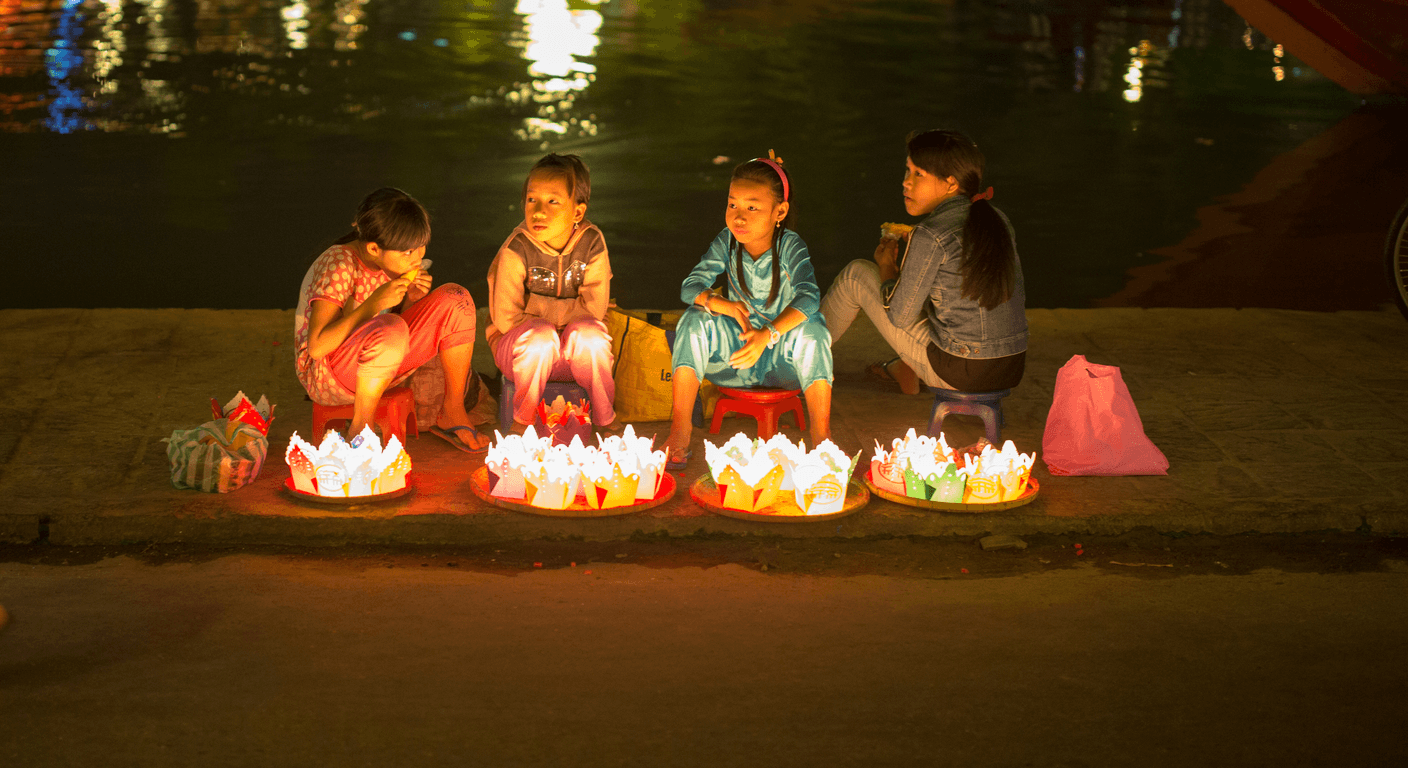
For a solo male traveller in his late 60s, a grey gap year might mean six months based in southern Europe, moving slowly between Spain, Portugal and Italy, using a combination of slow trains, short-term apartment rentals and the occasional guided excursion. It might mean three months in Southeast Asia, living simply in Chiang Mai or Hoi An, taking a language class, cooking with locals, and reading without a schedule. The common thread is unhurried immersion — the opposite of a highlights-reel holiday.
Practically, a grey gap year requires honest preparation: health insurance that covers extended stays, a clear understanding of visa conditions for long-stay visitors in each country, a home-management plan, and ideally some flexibility in itinerary so that a slow week in one place does not feel like failure. It is worth noting that many countries have specific long-stay visa categories that suit retired Australians — Portugal's D7 passive income visa and Thailand's retirement visa are two examples worth researching through official government channels before you commit to a destination.
Small-Group Multi-Generational Travel: What Does It Look Like in Practice?
Multi-generational travel — trips shared across three generations, typically grandparents, adult children and grandchildren — has grown steadily as a category, and small-group formats have become the practical vehicle for it. Rather than a large, unwieldy family group trying to please everyone on a single itinerary, the trend is toward curated, smaller journeys where each generation genuinely has a role and a reason to be there.
For a grandfather travelling with an adult child and two grandchildren, a well-designed multi-generational itinerary might include a wildlife experience in the Northern Territory, a slow river journey in the Mekong region, or a cultural tour through Japan's Kyoto and Nara prefectures. The key is that the itinerary is built around shared moments rather than compromised ones — experiences that genuinely work across age ranges, not a children's program bolted onto an adult tour.
The honest note is that multi-generational travel requires more lead time and negotiation than solo or couple travel. Aligning school holidays, work leave, different comfort levels with heat or walking distances, and varying budgets across generations takes real planning. Tour operators who specialise in this format — rather than those who merely accommodate it — are worth seeking out. Look for operators who ask detailed questions about the group's ages, mobility and interests before confirming an itinerary.
What Is JOMO Travel, and Why Are Over-50s Embracing It?
JOMO — the Joy of Missing Out — is the deliberate counterpoint to FOMO, the Fear of Missing Out. In a travel context, JOMO describes the conscious choice to do less, see less, and be somewhere more quietly. It might mean booking a remote lodge in the Kimberley for ten days and not moving on. It might mean choosing a small village in Tuscany over Florence, or a slow boat through Laos over a Bangkok party circuit. JOMO travel prioritises depth over breadth, stillness over stimulation.
For travellers over 50, and particularly for solo travellers who have spent decades in demanding professional or family roles, JOMO is not laziness — it is a deliberate recalibration. There is real value in spending four days in one place, learning its rhythms, eating at the same restaurant twice, and noticing details that a one-night visitor never would. Many older travellers report that their most memorable trips were not the ones with the longest itineraries, but the ones where they slowed down enough to actually be present.
The practical appeal of JOMO travel for over-50s is also physical. Long travel days, constant packing and unpacking, and the low-grade exhaustion of moving every two nights accumulate in ways that younger travellers manage more easily. A JOMO itinerary that builds in genuine rest time — not just a scheduled afternoon off, but real unhurried days — is not a lesser version of a trip. It is a more sustainable one. Victoria's own high country, the Otway Ranges and the Murray River corridor offer excellent domestic JOMO options for those not yet ready to plan internationally.
Off-Peak and Resilience Travel: Dodging Extremes Without Sacrificing Experience
Off-peak travel has always made financial sense, but in 2026 it carries an additional layer of practical logic: climate resilience. Extreme heat events, wildfire smoke, flooding and overtourism congestion have become real planning variables for Australian travellers heading to popular international destinations. Choosing to visit southern Europe in late September rather than July, or Japan in November rather than cherry-blossom season, is no longer just about cheaper flights — it is about a fundamentally better experience.
For over-50 travellers, the resilience argument is particularly compelling. Heat tolerance generally decreases with age, and a 42-degree day in Rome or Athens is not just uncomfortable — it can be genuinely hazardous for someone with a cardiac or respiratory condition. Travelling in shoulder seasons means cooler temperatures, smaller crowds at major sites, and often more genuine interaction with local life, which has thinned out now that the peak tourist wave has passed.
The honest note is that off-peak travel requires flexibility and advance research. Some attractions have reduced hours or are partially closed in low season. Some regional transport runs less frequently. A good travel agent who specialises in mature-age or independent travel can help you map the sweet spots — the weeks when a destination is past its tourist peak but before its off-season limitations kick in. Always check current travel advisories through the Australian Department of Foreign Affairs and Trade at smartraveller.gov.au before booking any international travel.
Small-Group Tours Capped at 12-16: Why the Number Matters
There is a meaningful difference between a group tour of 40 people and one of 12. The logistics alone change the experience: boarding a bus, waiting for stragglers, eating at a restaurant that had to reserve half its floor for your group, and moving at the pace of the slowest or most distracted participant. Smaller groups allow for more flexible routing, more genuine interaction between travellers, and a guide who can actually tailor commentary and pace to the people in front of them.
For solo travellers over 50, small-group tours in the 12-to-16 person range also serve a social function. They are large enough to provide variety in conversation and companionship, but small enough that genuine connections form over the course of a trip. Many solo travellers on small-group tours report that they return home with one or two real friendships formed — something that rarely happens on a coach tour of 45.
When evaluating small-group tour operators, look beyond the headcount. Ask whether the group size is a hard cap or a maximum that is often reached. Ask about the age range of typical participants — some operators skew much younger than their marketing suggests. Ask about the guide-to-traveller ratio on day excursions. And read recent reviews specifically from solo travellers in your age range, as their experience will be more relevant than that of couples or families. The Senior Travel Australia active-tourism guide covers specific small-group operators worth considering for Australian and international itineraries.
Deep Cultural Immersion: What It Means in Practice
Deep cultural immersion is a phrase that gets used loosely, but it has a practical meaning worth pinning down. It describes travel that prioritises genuine engagement with a place's people, history, food, language and daily life over the consumption of its headline attractions. A deeply immersive trip to Japan might include a home-cooking class with a local family, a morning at a neighbourhood market, a conversation with a temple priest, and a slow afternoon at a regional onsen town — alongside, not instead of, a visit to a celebrated shrine.
For over-50 travellers, deep immersion tends to come naturally with age and experience. There is less pressure to tick off every landmark, and more genuine curiosity about how people actually live. A 69-year-old solo traveller who has already done the highlights of a city on a previous trip often finds the second visit — the slower, less structured one — far more rewarding. This is the version of travel that produces the stories worth telling.
Practically, deep immersion requires some advance preparation. Learning a handful of phrases in the local language signals respect and opens doors. Reading a serious history of a country before you arrive changes what you see when you get there. Booking at least one experience through a local operator rather than an international aggregator puts money into the community and often produces a more authentic encounter. The distinction between a cultural experience designed for tourists and one that connects you to how people actually live is usually discernible — and worth the extra research.
Eco-Action Volunteering: Travel With a Tangible Contribution
Eco-action volunteering describes travel that combines a genuine destination experience with structured environmental or conservation work. For over-50 travellers, this might mean a week assisting with turtle monitoring on a Queensland beach, joining a habitat restoration project in New Zealand's South Island, or contributing to wildlife corridor work in southern Africa. The key distinction from ordinary volunteering tourism is that the work is substantive and the organisation running it is credible.
The appeal for older travellers is layered. There is the straightforward satisfaction of contributing something tangible. There is the social dimension — working alongside others, often across age ranges and nationalities, on a shared task. And there is the quality of immersion it provides: you see a place from the inside when you are working in it, not just passing through. For a solo traveller, a structured volunteering placement also removes some of the logistical uncertainty of independent travel — accommodation, meals and daily purpose are built in.
The honest caution is that not all volunteer travel programmes are equally rigorous or ethical. Some are structured primarily as tourist experiences with a light conservation veneer. Before booking, research the organisation's track record, ask how the volunteer contribution fits into the broader conservation programme, and check whether previous participants — particularly older or solo ones — have found the physical demands manageable. Organisations affiliated with established conservation bodies or universities tend to offer more substantive experiences. Parks Victoria at parks.vic.gov.au lists volunteer opportunities within Victoria for those wanting to start closer to home.
Commemorative Travel and Milestone Souvenirs: Marking What Matters
Commemorative travel — trips taken to mark a significant birthday, anniversary, retirement, or personal milestone — has always existed, but it is gaining a more deliberate character among over-50 travellers. Rather than a generic celebratory holiday, these trips are often built around a specific meaning: returning to a country a grandparent emigrated from, walking a route of personal or historical significance, or visiting a place that was promised to oneself decades ago.
The souvenir dimension of this trend is equally interesting. Over-50 travellers are less likely to want mass-produced trinkets and more likely to invest in a single, considered object that holds genuine meaning — a piece of handmade craft bought from the maker, a piece of local art, a custom-bound journal completed during the trip. These are souvenirs in the original sense: things that help you remember. They occupy space on a shelf or wall and carry a story, rather than accumulating in a drawer.
Planning a commemorative trip well means giving it the weight it deserves. It is worth writing down — before you go — what you hope the trip will mean, and what you hope to bring home from it, not just physically but emotionally. That clarity tends to produce better decisions along the way: where to spend more time, which experiences to prioritise, and when to set aside the itinerary and simply sit with the moment.
Slow Destination Living: Chiang Mai, Da Nang and the Long-Stay Model
Slow destination living describes an extended stay — typically four to twelve weeks — in a single city or region, living as a temporary resident rather than a tourist. The traveller rents an apartment, shops at local markets, establishes a neighbourhood routine, and uses the destination as a base for day trips and regional exploration rather than constantly moving on. Cities like Chiang Mai in northern Thailand, Da Nang and Hoi An in central Vietnam, Medellín in Colombia, and Lisbon in Portugal have become well-known hubs for this style of travel among older Australians.
The practical appeal is considerable. Apartment rental over four to eight weeks often costs less per night than a mid-range hotel, and comes with a kitchen, a washing machine and a living space that actually feels like somewhere to be rather than somewhere to sleep. The slower pace suits older travellers whose bodies benefit from a consistent routine — the same morning walk, the same coffee spot, the same gentle rhythm. And the social dimension is real: slow-stay travellers in established expat-friendly cities often find a community of like-minded long-stayers without actively seeking one.
The honest notes for slow destination living are practical ones. Visa conditions vary by country and nationality — Australian passport holders can stay in Thailand for up to 60 days on a tourist visa (confirm current conditions through the Thai Embassy or smartraveller.gov.au before travelling), while other destinations require advance planning for stays beyond 30 days. Healthcare access matters: research the quality and cost of private medical care in your chosen destination before committing to a long stay. And tell your Australian health insurer and bank before you go — some policies have conditions around extended overseas stays that are worth understanding in advance.
Quick planning guide
| Who it's for | Australians over 50, particularly solo travellers, planning significant domestic or international trips |
|---|---|
| How to start | Identify which travel style fits your goals — SKI spending, a grey gap year, JOMO-style slow travel, or a small-group tour — then research accordingly |
| Typical cost | Not specified as a figure; SKI travel involves higher discretionary spending on business-class flights, private guiding and luxury lodges, while off-peak and JOMO travel can reduce costs |
| Time required | Grey gap years typically run three months to a year; JOMO travel favours several days or more in one location rather than fast-paced itineraries |
| Where to get help | A financial adviser for SKI spending decisions, a travel agent specialising in mature-age travel for off-peak planning, and Smartraveller (smartraveller.gov.au) for travel advisories |
| Key documents needed | Long-stay visas for extended trips (examples given: Portugal's D7 passive income visa, Thailand's retirement visa) and travel insurance covering extended stays |
| Main planning consideration | Weighing finite health, mobility and energy against the risk of deferring major trips, while choosing off-peak timing to avoid heat extremes and overtourism |
| Renewal or review | See guide — no renewal cycle is specified; the article recommends checking visa conditions and current travel advisories before each trip |
Key takeaways
- SKI — Spending the Kids' Inheritance — is a deliberate choice to fund meaningful travel experiences in retirement rather than preserving capital as a primary goal.
- A grey gap year is an extended solo travel period taken in retirement, built around slow immersion and personal discovery rather than a highlights itinerary.
- JOMO travel — the Joy of Missing Out — means choosing depth over breadth: fewer destinations, more time in each, and genuine unhurried presence.
- Small-group tours capped at around 12-16 participants offer solo travellers over 50 a practical balance of companionship, flexibility and personalised pacing.
- Off-peak travel in 2026 is as much about avoiding extreme heat and overtourism as it is about cost — shoulder seasons now deliver a meaningfully better experience at many popular destinations.
- Slow destination living in cities like Chiang Mai or Lisbon — renting an apartment for four to eight weeks — often costs less than constant hotel stays and produces a far richer experience.
Recommended partners and links
Indicative prices only — always confirm with the operator before booking.
Frequently asked questions
What is the SKI trend in travel?
SKI stands for Spending the Kids' Inheritance. In a travel context, it describes retirees and near-retirees who choose to allocate their discretionary wealth to meaningful travel experiences — quality accommodation, long-haul flights, private guiding — rather than preserving it primarily for estate purposes. The SKI mindset is grounded in the recognition that health and mobility are finite, and that deferring significant travel carries real personal cost.
What is a grey gap year?
A grey gap year is an extended solo travel period — typically three months to a year — taken in retirement or semi-retirement. Unlike the young person's gap year, it is less about self-discovery and more about returning to interests and rhythms that working life pushed aside. It usually involves slow, immersive stays in one or a few destinations rather than rapid multi-country travel.
What does JOMO mean in travel?
JOMO stands for the Joy of Missing Out. In travel, it describes the deliberate choice to do less and experience a place more slowly and quietly — choosing a small village over a capital city, staying in one place for a week rather than moving daily, and prioritising depth of experience over the number of attractions visited. For over-50 travellers, JOMO travel is both personally satisfying and physically more sustainable than high-pace itineraries.
What is slow destination living, and which cities suit Australian over-50 travellers?
Slow destination living means renting an apartment in a single city for four to twelve weeks and living as a temporary resident — shopping locally, establishing a daily routine, and using the city as a base for regional exploration. Cities that suit Australian travellers over 50 include Chiang Mai in Thailand, Da Nang and Hoi An in Vietnam, Lisbon in Portugal, and Medellín in Colombia. Visa conditions, healthcare access and cost of living vary — research each destination carefully before committing to a long stay.
Why do over-50 travellers prefer small-group tours capped at around 12-16 people?
Smaller groups allow for more flexible routing, a pace that can genuinely be adjusted to the participants, and more meaningful interaction between travellers and their guide. For solo travellers, a group of 12 to 16 is large enough to offer social variety but small enough for real connections to form. It also means less time waiting, more access to smaller restaurants and venues, and a guide who can tailor the experience to the people actually on the tour.