Byron Bay and the Northern Rivers suit over-50 travellers best in shoulder seasons—late February to May or September to mid-November—when crowds ease. A stay of several days allows time for the clockwise Cape Byron lighthouse walk, the defining highlight, calmer swimming at Wategos Beach, and the hinterland villages of Bangalow and Newrybar. The walk needs moderate mobility, while Ballina Airport, 30 minutes away, offers an easier arrival than Gold Coast Airport.
Why Byron Bay Works Beautifully for Over-50 Travellers
Byron Bay has been many things to many people over the decades — a fishing town, a counterculture hub, a festival circuit staple. For travellers in their fifties, sixties and seventies, the town that exists beneath the social-media surface is genuinely appealing: a headland of real natural drama, a hinterland of beautiful villages, and a food and arts culture that has matured alongside its long-term residents.
The key is timing and knowing which parts of Byron to embrace. Schoolies week in late November and the peak summer school-holiday period from late December into January bring noise, crowds and inflated prices that suit nobody over forty, let alone seventy. Aim instead for the shoulder seasons: late February through May, or September through mid-November. The ocean is still warm, the light is extraordinary, and accommodation prices settle considerably.
For a Victorian traveller used to Melbourne's cooler temperament, the Northern Rivers pace can feel like a full exhale. The region rewards those who are comfortable going slowly — sitting on a veranda with a long coffee, taking a morning walk before the heat builds, spending an afternoon in a gallery without any agenda at all. That is the Byron worth travelling for.
Getting There: Why Ballina Airport Is Worth Considering Over the Gold Coast
Most travellers default to flying into Gold Coast Airport at Coolangatta, which is around 1.5 hours' drive from Byron Bay depending on traffic. It is a perfectly reasonable option, but Ballina Byron Gateway Airport sits only about 30 minutes south of Byron and is worth serious consideration, particularly for those who find long airport transfers tiring or who prefer a calmer arrival experience.
Ballina is a smaller, quieter airport and the drive into Byron is straightforward and scenic. Jetstar and Rex have operated routes from Melbourne (Tullamarine) to Ballina; confirm current schedules and fares directly with airlines, as services on this route can change seasonally. Indicative return fares from Melbourne to Ballina have ranged from roughly $300 to $600 depending on season and how far in advance you book, but prices vary widely — always check current fares before planning.
If you are hiring a car, which is strongly recommended for exploring the hinterland, collecting it at Ballina gives you immediate freedom. Car hire from Ballina airport is available through national operators; confirm availability and indicative costs when booking. For those who prefer not to drive, Byron Bay is serviced by Greyhound coaches from the Gold Coast and Brisbane, and local shuttle services operate between Ballina airport and Byron town. Check current timetables on the operator websites before travel.
The Cape Byron Lighthouse Walk: Doing It the Gentler Way
The Cape Byron Headland Walk is one of the most rewarding short walks on the east coast of Australia, and it is entirely manageable for most over-50 travellers if approached thoughtfully. The circuit is roughly 3.7 kilometres and includes some elevation. The key practical tip for older walkers is to do the loop clockwise — that is, starting from the main carpark and heading towards Wategos Beach first, then climbing to the lighthouse, rather than the reverse. The clockwise route distributes the climb more gradually and is generally considered the easier direction.
The path is sealed in parts and well-maintained, though there are some uneven sections near the headland. Sturdy walking shoes with good grip are essential. The walk is not suitable for wheelchairs or mobility aids along its full length, though the lighthouse precinct itself and some viewing areas near the carpark are more accessible — check the NSW National Parks website for current accessibility information before visiting.
Parking at the cape is managed and fees apply; confirm current rates on the NSW National Parks site. Arriving early — before 9am — is genuinely advisable, not just for parking but for the quality of the experience. Dolphins are often visible from the headland in the morning, and the light on the water before mid-morning is something that photographs cannot properly capture. Take water, a hat, and sunscreen, and allow at least two hours without rushing.
Calmer Swimming: Wategos and Clarkes Beach
Main Beach in Byron town is the social centre of the bay and is lovely, but it draws the largest crowds and can feel relentless in peak season. For over-50 travellers who want a genuine swim in calmer conditions, two beaches are worth knowing well.
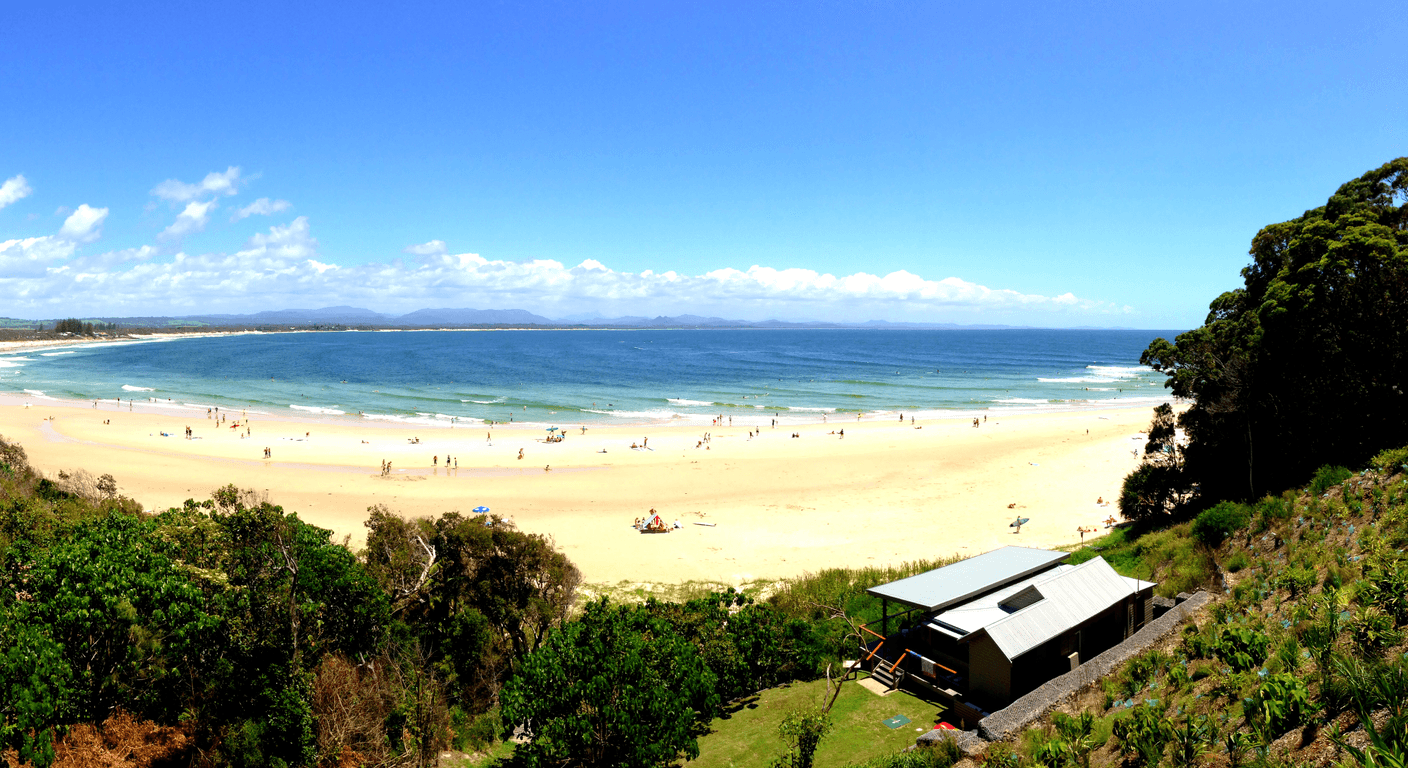
Wategos Beach sits at the northern foot of the cape, sheltered by the headland, and is consistently one of the calmest swimming spots in Byron Bay. It is a small, curved beach with a more settled atmosphere than the main strip, popular with local families and older residents who have been coming here for years. There is limited parking near Wategos, so walking down from the cape carpark or from Lighthouse Road is often the practical approach.
Clarkes Beach, east of the main beach and just below the lighthouse walk, is another good option — less exposed than Main Beach and often quieter in the mornings. Both beaches are patrolled during peak periods, but always swim between the flags and check current patrol times with Surf Life Saving Australia or the local surf club. Neither beach is fully accessible for those with significant mobility challenges, as the sand itself is the main surface.
Bangalow and Newrybar: The Hinterland Villages Worth the Drive
Bangalow is about 14 kilometres inland from Byron Bay on the Bruxner Highway, and it is the kind of village that older travellers tend to discover and then quietly tell their friends about. The main street is lined with well-preserved heritage buildings housing independent bookshops, homewares stores, good cafes and a weekend farmers' market that draws producers from across the Northern Rivers. It is walkable, unhurried, and has a genuine community character rather than a manufactured tourist one.
The Bangalow Hotel on the main street is a restored heritage pub with a reliable kitchen and a broad veranda — a good lunch stop. The Saturday Bangalow Farmers Market is held in the heritage park and is worth timing a visit around if your schedule allows; confirm current market dates and times before travelling as these can vary.
Newrybar is smaller and even quieter — a hamlet really, a few kilometres south of Bangalow. It is known primarily for Harvest, a long-established cafe and providore set in a former dairy building, which serves as a natural anchor for a slow morning. The surrounding countryside on the drive between these villages is genuinely beautiful, with rolling green hills and old Queenslander farmhouses. This is the Northern Rivers that has nothing to do with Byron's backpacker reputation, and it is all the better for it.
Tweed Regional Gallery and the Margaret Olley Art Centre
The Tweed Regional Gallery is located in Murwillumbah, roughly 40 minutes' drive north of Byron Bay near the Queensland border, and it is one of those regional cultural institutions that quietly punches well above its weight. The gallery is set on the banks of the Tweed River with views of Mount Warning, and the building itself is worth the visit.
The centrepiece is the Margaret Olley Art Centre, a permanent installation that reconstructs two rooms from the Sydney home of the celebrated Australian still-life painter Margaret Olley, filled with the objects, fabrics and arrangements that appeared in her canvases for decades. For anyone with an interest in Australian art, it is a genuinely moving and intimate experience — the kind of thing that a major city gallery cannot replicate. Entry to the gallery is generally free, though some special exhibitions may carry a charge; confirm current details on the gallery's website before visiting.
The gallery is accessible and well-designed for visitors who want to move through at their own pace. There is a pleasant cafe on site, and the riverside setting makes it worth arriving early and spending a proper half-day rather than rushing through. The drive from Byron Bay through the Tweed Valley is itself scenic and passes through farmland and small townships that reward a slow pace.
Practical Pacing, Accessibility and Staying Well in Byron
Byron Bay town centre is reasonably walkable from most accommodation near the beach, though the distances between key sites — the cape, Wategos, the town centre — mean a car or rideshare is useful for a comfortable visit. The main street has footpaths and is generally accessible, though some of the older accommodation and restaurant buildings have steps. If mobility is a consideration, look for accommodation that specifically notes level access and confirm details directly with the property before booking.
The heat in Byron Bay from December through February can be significant, and for travellers who find sustained heat difficult, the shoulder seasons are not just about avoiding crowds — they are genuinely more comfortable physically. March, April and September are particularly pleasant months. Carry water whenever walking, and plan heavier activity for the morning hours, leaving afternoons for galleries, cafes and shaded verandas.
For travellers managing health conditions or medications, the Byron Central Hospital is located on Ewingsdale Road, and there are medical centres in town. It is worth confirming your travel insurance covers interstate travel and any pre-existing conditions before departing Victoria. The NRMA and similar motoring organisations can assist with roadside support if you are driving a hire car. None of this is meant to discourage — it is simply the kind of practical groundwork that makes a trip genuinely relaxing rather than anxious.
Quick planning guide
| Ideal pace | Slow-paced and unhurried |
|---|---|
| Best months | Late February to May, or September to mid-November |
| Suggested stay | Several days to allow for the coast, beaches and hinterland villages |
| Mobility level | Moderate — town, beaches and gallery are easy, but the headland walk has elevation and uneven sections |
| Cost level | Mid-range, with fares and accommodation costing more in peak periods |
| Comfort level | Comfortable outside summer heat, with shaded, low-effort options for afternoons |
| Best for | Over-50 travellers wanting natural beauty, arts and heritage villages without crowds |
| Main planning consideration | Avoid schoolies and peak summer holidays; confirm current flight, market and accessibility details before travelling |
Key takeaways
- Flying into Ballina Byron Gateway Airport puts you 30 minutes from Byron Bay and avoids the Gold Coast traffic that can make arrivals exhausting.
- The Cape Byron lighthouse walk is more manageable for over-50s when done clockwise, which distributes the climb more gradually.
- Wategos Beach is consistently calmer and less crowded than Main Beach, making it the better swimming choice for older travellers.
- Bangalow and Newrybar offer heritage villages, independent shops and genuine local character that has nothing to do with Byron's backpacker reputation.
- The Margaret Olley Art Centre at Tweed Regional Gallery is one of regional Australia's most significant cultural experiences and entry is generally free.
- Travelling in March-May or September-November avoids schoolies, peak-summer crowds and the most intense heat, with accommodation prices typically lower.
Recommended partners and links
Indicative prices only — always confirm with the operator before booking.
Frequently asked questions
Is Byron Bay suitable for travellers over 60?
Yes, particularly in the shoulder seasons. The headland walk, hinterland villages and regional galleries offer a quieter, more considered experience than Byron's party reputation suggests. Timing your visit outside school holidays and peak summer makes a significant difference to both crowd levels and cost.
Is the Cape Byron lighthouse walk suitable for older or less fit walkers?
The 3.7-kilometre circuit is manageable for most reasonably active over-50 travellers if done at a relaxed pace. Walking it clockwise — towards Wategos first, then up to the lighthouse — is the gentler approach. The path is not suitable for wheelchairs along its full length. Wear sturdy shoes, carry water and allow at least two hours.
What is the best time of year for over-50s to visit Byron Bay?
Late February through May and September through mid-November are the recommended shoulder seasons. These months avoid schoolies week in late November, the peak summer school-holiday rush, and the most intense heat. The ocean is still warm enough for swimming and accommodation prices are generally more reasonable.
How far is Tweed Regional Gallery from Byron Bay, and is it worth the drive?
Tweed Regional Gallery is in Murwillumbah, roughly 40 minutes' drive north of Byron Bay. For travellers with any interest in Australian art, the Margaret Olley Art Centre alone makes the trip worthwhile. Entry to the gallery is generally free, the cafe is pleasant, and the riverside setting adds to the experience. Confirm current opening hours on the gallery's website before visiting.
Is it better to fly into Ballina or the Gold Coast for Byron Bay?
Ballina Byron Gateway Airport is around 30 minutes from Byron Bay and is a quieter, less stressful arrival than the Gold Coast, which is roughly 1.5 hours away depending on traffic. Ballina has fewer flight options, so check current routes from Melbourne with airlines directly. If driving, collecting a hire car at Ballina gives immediate access to the region without a long transfer.