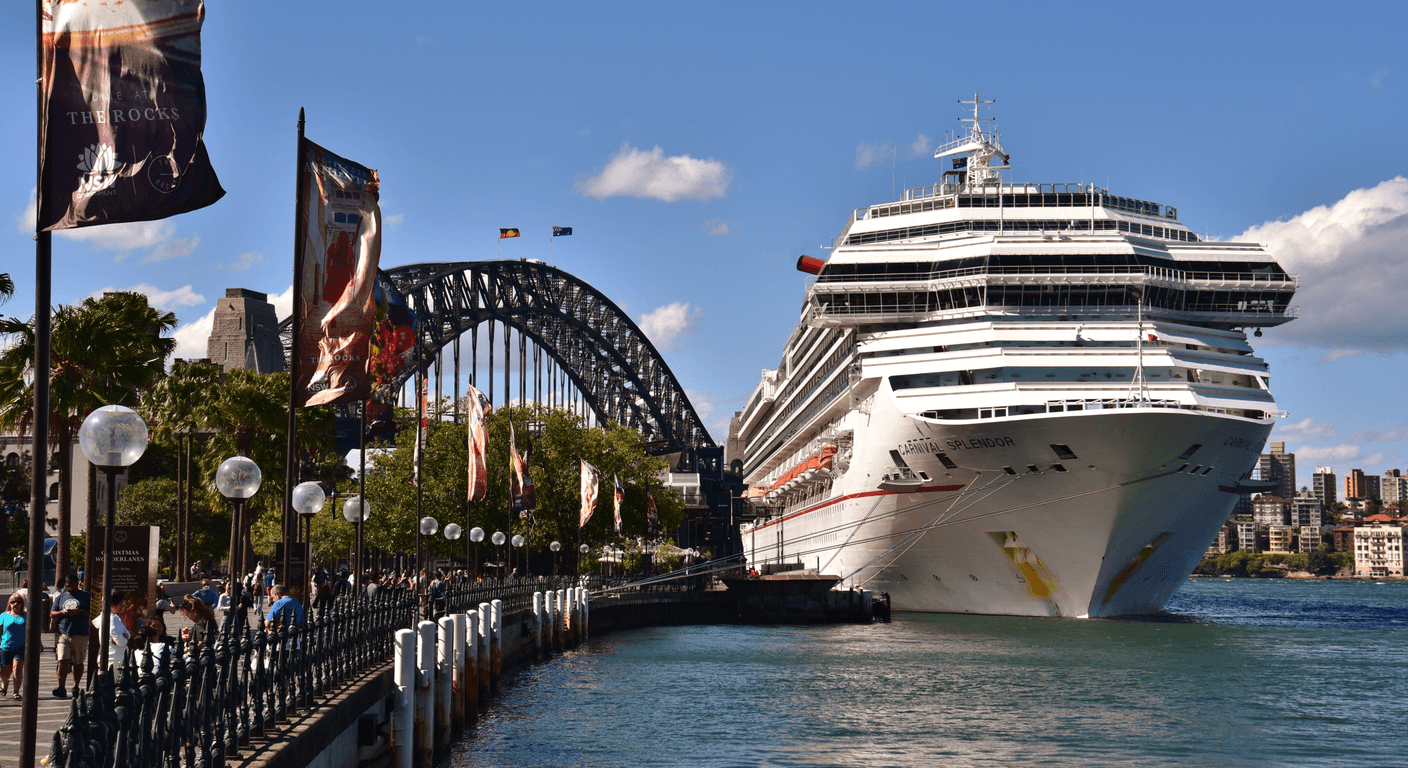
Carnival Cruise Line suits over-50 Australians who want affordable, port-focused cruising without fuss — particularly since absorbing P&O Australia in 2025. Ships sail from Sydney, Melbourne and Brisbane. The atmosphere is casual and family-heavy; sea-day entertainment skews loud. Mobility rating: Moderate. Best months vary by itinerary (South Pacific: October–April). Allow at least a night's recovery after any northern-hemisphere departure. Confirm current ships, sailings and fares at carnival.com.au.
The hard parts first: what to know before you board
Carnival's ships are large. Not 'big' — large. Walking from your cabin to the main dining room, then back to the theatre, then forward to the embarkation gangway can cover distances that would tire anyone with a hip replacement or a knee that complains on long days. There are lifts everywhere, but embarkation day — when thousands of passengers board in a compressed window — involves queuing on hard floors, sometimes in the sun, with luggage. Arrive in the afternoon if the line allows staggered embarkation; the morning rush is relentless and rarely worth it.
Tender ports are a reality on South Pacific itineraries. When the ship can't dock directly — and in island destinations this happens regularly — passengers are ferried ashore in small tender boats that require stepping down from a platform, sometimes onto a moving vessel. It's manageable for most travellers, but if you use a walking frame, have significant balance issues or are recovering from surgery, ask Carnival's accessibility team specifically about tender-port procedures before booking. They do have protocols; the question is whether those protocols match your needs on the day.
Embarkation queues at Sydney's Overseas Passenger Terminal and the Melbourne and Brisbane cruise terminals have improved, but school holiday periods remain chaotic. If your sailing departs in the January–February peak, factor an extra hour of patience into embarkation day. Port days, by contrast, are where Carnival earns its keep — getting you off the ship efficiently is generally well managed, and port calls tend to be long enough to be worthwhile.
What's fair about Carnival's reputation — and what's outdated
The 'party ship' label stuck because it was earned. Carnival built its business on affordable, high-energy cruising aimed at younger Americans who wanted a floating resort with a bar on every corner. That DNA hasn't been erased. Pool decks on sea days can be genuinely loud — amplified games shows, DJ sets, the works. If you're the kind of traveller who wants a quiet morning reading on a sun lounger without a decibel assault, a sea-heavy Carnival itinerary will test your patience.
What's changed, though, is that the line has matured alongside its customer base. Carnival ships now carry a real cross-section of ages — retirees, families, young couples — and the quieter parts of the ship (the adults-only Serenity deck area on many vessels, the library, the aft dining rooms in off-peak hours) are genuinely peaceful. The food quality has lifted measurably over the past decade. The main dining room, with its two traditional sittings or flexible 'Your Time' option, is a proper sit-down restaurant experience — not gourmet, but consistent, generous and staffed by people who remember your name by night two.
The Australian operation has historically skewed older than Carnival's US fleet, partly because P&O Australia attracted a loyal 55-plus cohort who valued departing from home ports. That demographic is now folding into Carnival's local fleet, which means the passenger mix on Australian-homeported sailings may be more familiar — and more comfortable — than the Carnival stereotype suggests. Still, confirm the specific ship and itinerary; a repositioning cruise that picks up in Miami is a very different social environment to a Sydney-based South Pacific run.
Which ships sail from Australian ports — and what's changed post-P&O
The 2025 merger between Carnival Corporation's brands saw P&O Australia's homeport operations absorbed into the Carnival Cruise Line identity. Former P&O Australia ships — some of which were already Carnival vessels in thin disguise — moved under the Carnival flag. The practical result for Australian passengers: sailings from Sydney, Melbourne and Brisbane continue, but the specific ships deployed to Australian homeports change with the season and Carnival's global fleet rotation. Do not assume the ship you sailed on as a P&O passenger is still operating the same itinerary under a Carnival name.
As of 2026, Carnival's Australian homeport schedule includes South Pacific itineraries — Vanuatu, New Caledonia, Fiji runs are the backbone — along with some New Zealand options and occasional longer Pacific voyages. The exact fleet deployment changes; carnival.com.au is the only reliable source for current ships, ports and sailing dates. Treat anything else, including this guide, as context rather than confirmation.
For northern-hemisphere itineraries — the Caribbean, the Mediterranean, Alaska — Australians are flying to a departure port. That means a long-haul flight (Los Angeles or Fort Lauderdale from Melbourne or Sydney is 14–17 hours before any connection), jet lag, and the logistical effort of getting yourself and your luggage to an unfamiliar terminal city. A recovery night at the departure port is not optional; it's the price of doing it properly. Factor that hotel night and the flights into your total cost before comparing Carnival's cruise fares to a local alternative.
Onboard atmosphere: what over-50s actually experience day to day
Sea days are the real test. On a port-heavy 10-night Pacific itinerary you might have two or three sea days — manageable. On a longer voyage, or a repositioning crossing, you could have five or six consecutive days at sea, and the ship's entertainment programming will be your world. Carnival's sea-day schedule is designed for stimulation: trivia, cooking demonstrations, casino tournaments, live music, comedy shows. It's not curated arts programming; it's high-volume crowd entertainment. Some people love it. Others find the relentlessness exhausting by day three.
The evening shows are a genuine strength — production values are high, and the comedy acts Carnival books are often sharp. The casino is large and stays open late, which suits some travellers and means cigarette smoke in adjacent areas, which does not suit others. Check whether the ship has a dedicated non-smoking zone in the casino or separate ventilation; it varies by vessel.
Dining flexibility is a real advantage for over-50s. The main dining room's 'Your Time' option means you're not locked into a 6pm or 8pm sitting — you eat when you're hungry, which suits people who've spent a long day ashore and want an early dinner without ceremony. The buffet (Carnival calls it the Lido) is sprawling and reliably stocked, if not always inspiring. Specialty restaurants — steakhouse, sushi, Italian-style — are available at an extra cost, typically around $25–$60 AUD per person; confirm current surcharges on board.
Who over 50 it genuinely suits — and who'd be better elsewhere
Carnival works well for over-50s who are sociable, flexible and value-conscious — people who want to see Pacific island ports without paying premium-line prices, who enjoy a drink at the bar with strangers, and who aren't bothered by a noisy pool deck they can simply walk away from. It also suits couples who've cruised before and know how to find the quiet corners of a large ship. If you sailed P&O Australia regularly and enjoyed it, a Carnival Australian-homeport sailing is likely to feel familiar enough.
It suits less well — and there's no diplomatic way to say this — travellers who prioritise silence, refinement and a curated guest experience. If your benchmark is Scenic, Silversea, Viking or even Princess, Carnival will disappoint in atmosphere and service personalisation, even if it holds its own on value. The line also isn't ideal for anyone with significant mobility limitations who hasn't specifically confirmed tender-port and embarkation accessibility with the cruise line's dedicated team. The ships are accessible in their design; the process of boarding and going ashore is where the friction appears.
For culturally curious travellers — say, someone who wants to engage seriously with Melanesian or Polynesian culture at each port — Carnival's port excursion programme is functional but not deep. The organised shore tours are competently run and priced around $80–$200 AUD per person for standard options (confirm current pricing on board or via carnival.com.au), but they tend toward the panoramic rather than the immersive. Independent exploration at port — hiring a local driver, walking a village market — is entirely possible and often more rewarding; Carnival doesn't discourage it.
The solo traveller's reality on Carnival
Solo cabins — purpose-built single-occupancy staterooms — are not a standard feature of Carnival's fleet. The line's pricing model is built around double occupancy, and solo travellers are typically charged a single supplement: effectively paying for both berths in a cabin. That supplement commonly runs to 100% of the per-person fare, meaning a solo traveller pays roughly twice what one half of a couple pays for the same cabin. Carnival does occasionally offer reduced or waived supplements on specific sailings, but this is promotional and unpredictable. Check carnival.com.au at the time of booking and ask the reservations team directly.
There is no formal share-match programme on Carnival comparable to what some expedition lines offer. Solo travellers who want to avoid the supplement need to either accept it, watch for promotional single-supplement deals, or look at lines that have made solo travel a genuine product priority — Viking, for instance, has purpose-built solo cabins on its ocean ships. That's not a criticism unique to Carnival; it reflects the industry's slow progress on solo pricing, but it's a cost that falls disproportionately on the solo mature traveller and deserves plain acknowledgement.
Socially, solo travellers often find Carnival's casual, table-sharing dining culture easier than more formal lines. The 'Your Time' dining option means you're regularly seated with other couples or solo travellers, and the bar culture is genuinely sociable without being predatory. Solo women travellers in the over-50 cohort generally report feeling comfortable on Carnival's Australian-homeported sailings — the passenger mix is broad and the atmosphere is relaxed.
Costs, surcharges and what Australians routinely miss
The headline fare is rarely the full story on Carnival. The base cruise price covers your cabin, main dining room meals, buffet, entertainment and most onboard activities — that's genuine value. What it doesn't cover: specialty dining surcharges, drinks packages (which can run to $80–$120 AUD per person per day; confirm current pricing), gratuities (added automatically per person per day unless you adjust at guest services), shore excursions, Wi-Fi packages, spa treatments and the casino. A couple who boards with a modest 'we'll just do the included stuff' plan can leave the ship with a surprisingly large bill if they haven't tracked their spend.
Card surcharges on cruise ships are real and often opaque. Carnival's onboard account system charges your registered card at the end of the voyage; foreign transaction fees from your Australian bank may apply on international sailings. Bring a travel card with no foreign transaction fees and confirm with your bank before you sail. It's the kind of thing nobody mentions until you're reading the statement.
Victorian Seniors Card holders and pension concession card holders won't find direct Carnival discounts via that route — the line doesn't participate in state concession schemes. However, booking through a licensed Australian travel agent who specialises in cruising can sometimes unlock pricing or inclusions not visible on the public website. Separately, check your travel insurance carefully: pre-existing medical conditions, including common ones for over-60s like hypertension, diabetes and cardiac history, must be declared and may attract higher premiums or exclusions. World Nomads, Cover-More and Allianz all have senior-specific options; compare before you purchase and never travel without cover that includes medical evacuation from a Pacific island.
Quick planning guide
| Ideal pace | Port-heavy itineraries (7–14 nights) with 1–2 sea days suit most over-50s; back-to-back sailings add value but increase fatigue |
|---|---|
| Best months | South Pacific departures: October to April; confirm seasonal schedules on carnival.com.au |
| Suggested stay | 10–14 nights for a meaningful South Pacific run; shorter 7-night options available from Australian ports |
| Mobility level | Moderate — large ships mean long internal walking distances; tender ports require a step-down into a small boat |
| Cost level | Budget to mid-range by cruise standards — indicative fares from around $150–$250 per person per night in an inside cabin, but confirm current pricing with Carnival directly |
| Comfort level | Comfortable rather than luxurious; cabins are functional, dining is plentiful, but the overall tone is casual |
| Best for | Value-conscious couples and solo travellers who enjoy a social atmosphere, flexible dining and accessible South Pacific ports |
| Main planning consideration | The 2025 P&O Australia integration has changed the fleet and itinerary mix significantly — verify which ships are currently homeporting in Australia before booking |
Key takeaways
- Carnival's 2025 absorption of P&O Australia reshuffled the local homeport cruise market — verify which ships now operate from Sydney, Melbourne and Brisbane before booking.
- Solo travellers on Carnival typically face a 100% single supplement with no formal share-match programme; watch for promotional deals but budget for the full supplement.
- Tender ports on South Pacific itineraries require stepping onto a small moving vessel — confirm accessibility with Carnival directly if mobility is a consideration.
- The onboard atmosphere is casual and can be loud on sea days; the adults-only deck areas and off-peak dining rooms are the practical solution for quieter moments.
- Total onboard costs regularly exceed the headline fare once drinks, gratuities, shore tours and specialty dining are included — track your spend from day one.
- Travel insurance must declare pre-existing conditions; do not board a Pacific sailing without cover that includes medical evacuation.
Recommended partners and links
Indicative prices only — always confirm with the operator before booking.
Frequently asked questions
Does Carnival Cruise Line sail from Australian ports in 2026?
Yes. Following the 2025 integration of P&O Australia, Carnival operates homeport sailings from Sydney, Melbourne and Brisbane, primarily on South Pacific itineraries. Specific ships and sailing dates change seasonally — confirm current schedules at carnival.com.au.
Is Carnival Cruise Line suitable for travellers over 50?
It suits value-conscious, sociable over-50s who want port-focused Pacific itineraries without premium-line prices. It's less suited to travellers who prioritise quiet, refinement or a curated cultural experience. The passenger mix on Australian-homeported sailings tends to be broader in age than Carnival's US reputation implies.
What is the single supplement on Carnival for solo travellers?
Carnival's standard pricing is based on double occupancy. Solo travellers typically pay a single supplement of around 100% of the per-person fare, effectively paying for both berths. There is no formal share-match programme. Promotional reduced-supplement sailings do appear periodically — check carnival.com.au or ask a cruise specialist.
How accessible are Carnival ships for passengers with mobility limitations?
Carnival ships are designed with lifts and accessible cabin options, but large ships mean long internal walking distances. Tender ports — where passengers transfer to a small boat to go ashore — present a genuine challenge for those with significant balance or mobility issues. Contact Carnival's accessibility team before booking to confirm procedures for your specific itinerary.
What should Australian over-50s budget for a Carnival cruise beyond the headline fare?
Beyond the base fare, budget separately for drinks packages (roughly $80–$120 AUD per person per day), automatic daily gratuities, shore excursions (around $80–$200 AUD per person for standard tours), specialty dining surcharges ($25–$60 AUD per person), Wi-Fi and travel insurance. Confirm all current surcharges with Carnival directly, as these figures are indicative only.