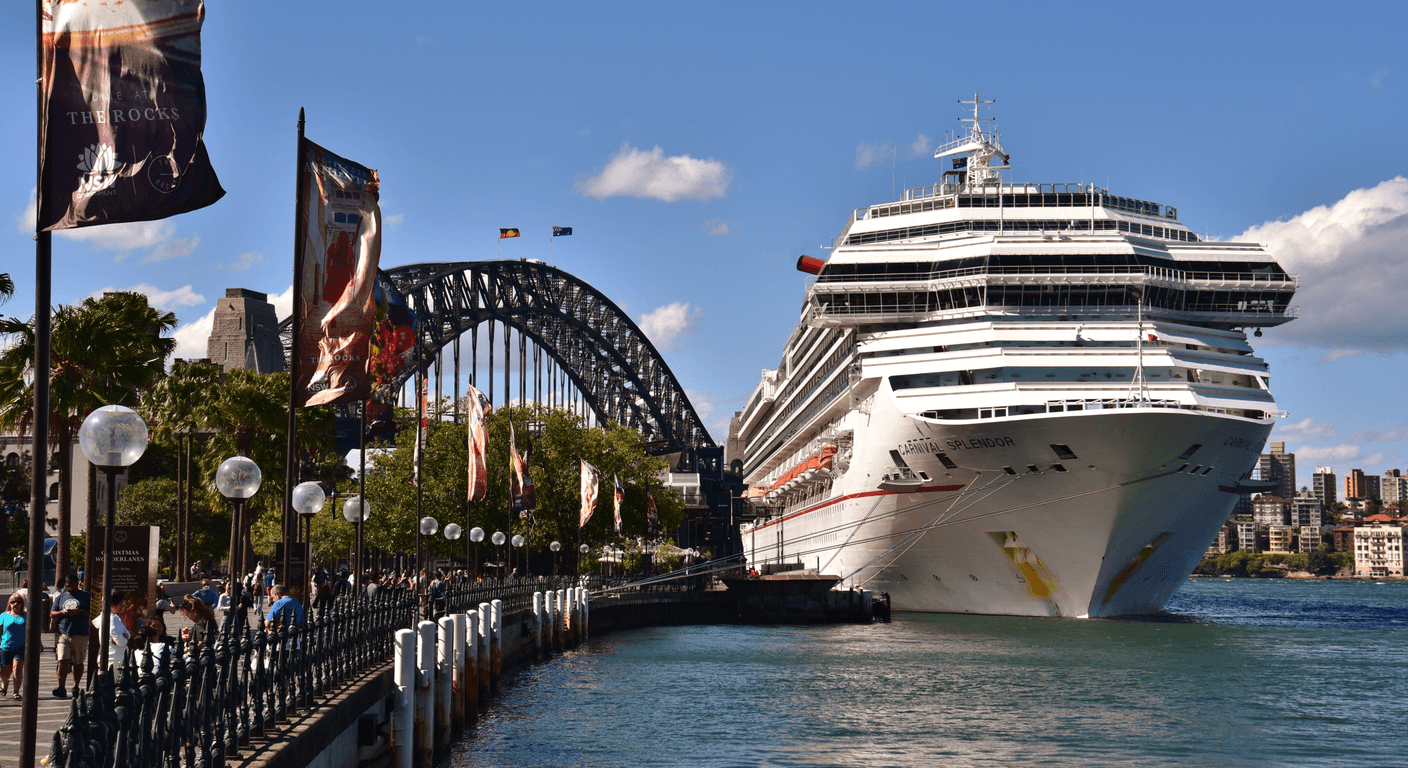
Since 2025, P&O Cruises Australia no longer exists as a bookable brand, its fleet absorbed into Carnival Cruise Line, while Princess Cruises continues sailing from Sydney and Melbourne as a mid-premium international option. Sailings run year-round with seasonal coastal routes rather than one best season, and trip length varies from short local cruises to multi-week international voyages. Mobility is generally easy onboard, though tender ports demand agility, and international itineraries may require flying to a home port.
The comparison that shaped a generation of Australian cruisers
For roughly two decades, P&O Cruises Australia and Princess Cruises occupied opposite ends of the same conversation. P&O was the approachable local — departing from Sydney, Brisbane and Melbourne, marketing itself to first-time cruisers and families, keeping the tone casual and the price point accessible. Princess was the more polished international option, with a fleet that sailed globally and a reputation built partly on its long association with the television series 'The Love Boat'. Both had loyal followings among Australian travellers in their 50s and 60s.
That framing is now only partly accurate. P&O Australia no longer exists as a bookable brand. Understanding what changed — and what it means for your planning — is the most useful thing this guide can do.
What happened to P&O Australia — and where did the ships go?
Carnival Corporation, which owned P&O Cruises Australia, announced the brand's closure and confirmed the transition of its Australian-based fleet to Carnival Cruise Line. The move was completed in 2025. Ships that Australian passengers knew under the P&O name — Pacific Explorer, Pacific Adventure and others — were rebranded or redeployed. The familiar white hull with the blue wave is gone from Australian ports as a P&O product.
This is not a small administrative change. P&O Australia had its own onboard culture: a distinctly Australian informality, a strong entertainment programme pitched at families and younger groups, and pricing that made cruising accessible to people who had never sailed before. Carnival Cruise Line, while part of the same corporate family, has its own brand identity — one developed primarily for North American travellers, though it is now actively building its Australian presence.
If you have an existing P&O booking or Future Cruise Credit from P&O Australia, the single most important step is to contact the operator directly and confirm in writing what applies to your situation. Do not assume the credit transfers automatically or on the same terms. Carnival's Australian customer service and the CLIA Australasia consumer resources (cruising.org.au) are your best starting points.
What Princess Cruises actually offers Australian passengers in 2026
Princess Cruises positions itself as a mid-premium international line. Its ships are large — many carry 3,000 to 4,000 passengers — and the onboard experience is designed to feel polished without tipping into the ultra-luxury category. Think proper sit-down dining rooms, a range of specialty restaurants, theatre-style entertainment, and a shore excursion programme that tends to be well-organised if not always adventurous.
For Australian departures, Princess typically offers South Pacific itineraries, New Zealand voyages and seasonal Australian coastal routes from Sydney and Melbourne. It also positions itself as a gateway to longer international sailings — Alaska, the Mediterranean, Japan — for Australians willing to fly to a home port. That international range is one of the clearest remaining points of difference now that P&O's local, short-hop style has exited the market.
The MedallionClass technology that Princess has rolled out across its fleet — a wearable device that handles cabin access, ordering and location-sharing — is worth knowing about. Some passengers find it genuinely useful; others find the app integration fiddly. If you're not particularly interested in technology-forward cruising, it's worth reading the Princess website's explanation before you book, so there are no surprises onboard.
Ship size, dining and onboard culture — what the difference actually felt like
P&O Australia's ships were mid-sized by global standards — typically carrying 1,800 to 2,400 passengers — and the vibe was deliberately unpretentious. Buffet dining was central, entertainment leaned toward variety shows and deck parties, and the dress code was relaxed to the point of being optional. It suited Australians who wanted a holiday that felt like an extension of their own backyard, not a formal occasion.
Princess ships are larger, and the atmosphere reflects that scale. There are more dining options — the main dining rooms operate on traditional set-seating or anytime dining arrangements, and specialty restaurants (Italian, steakhouse, seafood) carry a surcharge. The dress code has relaxed considerably in recent years but formal nights still exist on many itineraries, and the overall tone is more considered. For a traveller who enjoys dressing for dinner occasionally and prefers a quieter atmosphere in public spaces, Princess typically delivers that.
Neither culture is inherently better. The honest question is which one sounds more like the holiday you actually want. If you were drawn to P&O for its ease and affordability, Carnival Cruise Line — now sailing from Australian ports — is the closest current equivalent in terms of positioning, though you should visit carnival.com directly to assess whether the product suits you.
Accessibility and pacing for travellers over 50
Large cruise ships are, in many respects, genuinely well-suited to older travellers. Lifts connect all passenger decks, accessible cabin categories are available on both Princess and Carnival ships (book early — they fill quickly), and the option to stay onboard on port days means you set your own pace entirely. Sea days are underrated: time to read, to eat well, to join a class or simply sit on a promenade deck and watch the Pacific go past.
Tender ports — where the ship anchors offshore and passengers transfer to small boats — require some agility and are not suitable for passengers with significant mobility limitations. Both Princess and Carnival list tender port itineraries on their websites, and it's worth checking before you book if this is a concern. Gangway angles also vary with tide and port infrastructure; sensible footwear is not optional.
Travel insurance deserves a direct mention. Australian insurers vary enormously in how they treat pre-existing conditions for cruise travel. A medical evacuation at sea is expensive. The Smartraveller guidance (smartraveller.gov.au) recommends cruise-specific cover, and several Australian insurers offer policies designed for this. Compare carefully, declare everything, and read the Product Disclosure Statement before you buy.
Who each brand suits — an honest summary
Princess Cruises tends to suit travellers who want a structured, internationally flavoured experience with good dining options, a range of itinerary lengths, and a ship culture that rewards a little planning. It's a reasonable fit for couples who enjoy variety in where they eat, travellers interested in longer voyages to Japan or Alaska, and anyone who appreciates a slightly more formal atmosphere without wanting to go full luxury. Solo travellers should check Princess's solo cabin availability and single supplement policies, which vary by sailing.
The space P&O Australia occupied — casual, local, affordable, family-adjacent — is now being filled by Carnival Cruise Line in the Australian market. If that casual style was what drew you to P&O, Carnival is the logical next stop to investigate. It's a different brand with a different history, but the product overlap is real. Visit their Australian page and assess it on its own merits.
For travellers who find both options too large or too mainstream, it's worth knowing that other lines sail from Australian ports or are accessible via short-haul flights: Celebrity Cruises, Holland America, Silversea and Ponant all operate in the region at various price points and ship sizes. The CLIA Australasia website is a reasonable starting point for an overview of what's currently sailing.
Practical steps before you book anything
Confirm the current status of any P&O Future Cruise Credit or booking directly with Carnival Corporation's Australian customer service. Don't rely on third-party summaries, including this one, for the specifics of your individual booking.
For Princess, the official Australian site (princess.com/en-au) lists current itineraries, cabin categories, accessibility information and indicative pricing. Fares are quoted in AUD for Australian departures but confirm the currency and any port taxes before finalising. Deposit and cancellation terms vary by fare type — the refundable versus non-refundable distinction matters more than it once did.
If you're using a travel agent, look for someone with CLIA accreditation and specific cruise experience. A good cruise specialist can navigate cabin selection, dining preferences, shore excursion pre-booking and accessibility requests in ways that a general travel agent sometimes can't. This guide is independent and commission-free — the recommendation is simply to do your homework through official channels and speak to someone who knows the ships.
Quick planning guide
| Ideal pace | Slow-paced, with sea days built in for rest and flexibility |
|---|---|
| Best months | No single best season noted; year-round sailings with seasonal Australian coastal routes |
| Suggested stay | Varies — from short coastal cruises to multi-week international voyages |
| Mobility level | Moderate — easy on lifts and decks, but tender ports and gangways require agility |
| Cost level | Mid-premium (Princess) to more budget-accessible (Carnival, filling P&O's former niche) |
| Comfort level | Polished and structured on Princess; casual and relaxed on Carnival |
| Best for | Over-50 travellers choosing between structured international cruising and casual, affordable local sailings |
| Main planning consideration | Confirm any P&O Future Cruise Credit directly with Carnival in writing, and check tender-port and gangway access against your own mobility before booking |
Key takeaways
- P&O Cruises Australia ceased operating as a standalone brand in 2025 — it is no longer bookable for Australian departures.
- P&O's Australian fleet transferred to Carnival Cruise Line, which now operates from Australian ports and is the closest current equivalent in style and price positioning.
- Princess Cruises continues sailing from Australia and positions itself as a mid-premium international line with a more polished onboard culture than P&O offered.
- Large cruise ships suit many travellers over 50 well, but tender ports and gangway access require honest self-assessment of mobility before booking.
- Travel insurance with cruise-specific cover and full pre-existing condition disclosure is essential — medical evacuation at sea is a real and expensive risk.
- Any existing P&O Australia Future Cruise Credits should be confirmed directly with Carnival Corporation in writing before assuming they transfer.
Recommended partners and links
Indicative prices only — always confirm with the operator before booking.
Frequently asked questions
Is P&O Cruises Australia still operating in 2026?
No. P&O Cruises Australia ceased operating as a standalone brand in 2025. Carnival Corporation, its parent company, transferred the Australian fleet to Carnival Cruise Line. P&O is no longer bookable for Australian departures. If you had a booking or Future Cruise Credit with P&O Australia, contact Carnival Corporation's Australian customer service directly to confirm your options.
Does Princess Cruises still depart from Australian ports?
Yes. As of 2026, Princess Cruises continues to offer itineraries departing from Australian ports including Sydney and Melbourne, covering South Pacific, New Zealand and Australian coastal routes. Confirm current schedules and availability at princess.com/en-au, as seasonal sailings change.
Which cruise line is better for Australians over 50 — Carnival or Princess?
The honest answer depends on what you want. Carnival Cruise Line (which now operates the former P&O Australia ships) positions itself as casual and affordable, with a lively onboard atmosphere. Princess Cruises positions itself as more polished and internationally oriented, with more dining variety and a slightly more formal culture. Neither is objectively better — the right choice depends on your preferred pace, budget and onboard style.
Are cruise ships accessible for passengers with mobility limitations?
Large cruise ships generally offer good accessibility — lifts, flat promenade decks, and accessible cabin categories. However, tender ports (where passengers transfer to small boats offshore) are not suitable for passengers with significant mobility limitations, and gangway angles vary. Check the specific itinerary for tender ports and book an accessible cabin early, as they fill quickly. Contact the cruise line directly to discuss your specific needs before booking.
Do I need special travel insurance for a cruise?
Yes. Standard travel insurance policies may not cover medical evacuation at sea, which can be very expensive. Australian insurers offer cruise-specific policies, and it's essential to declare all pre-existing conditions fully. The Australian Government's Smartraveller website (smartraveller.gov.au) recommends cruise-specific cover. Read the Product Disclosure Statement carefully and compare policies before purchasing.