Central Tilba and Tilba Tilba are National Trust-classified villages beneath Gulaga on the NSW South Coast, best visited on a weekday morning, ideally in spring when Foxglove Spires garden is open. A half-day to full-day visit suits the villages, easily paired with Narooma's flat boardwalk. The defining highlight is the ABC Cheese Factory, operating since 1891. Bate Street's gentle slope and uneven footpaths make this a Moderate-mobility destination, and reaching it requires a private car, as no practical public transport connects Melbourne to the Tilbas.
Why Central Tilba and Tilba Tilba belong on your South Coast itinerary
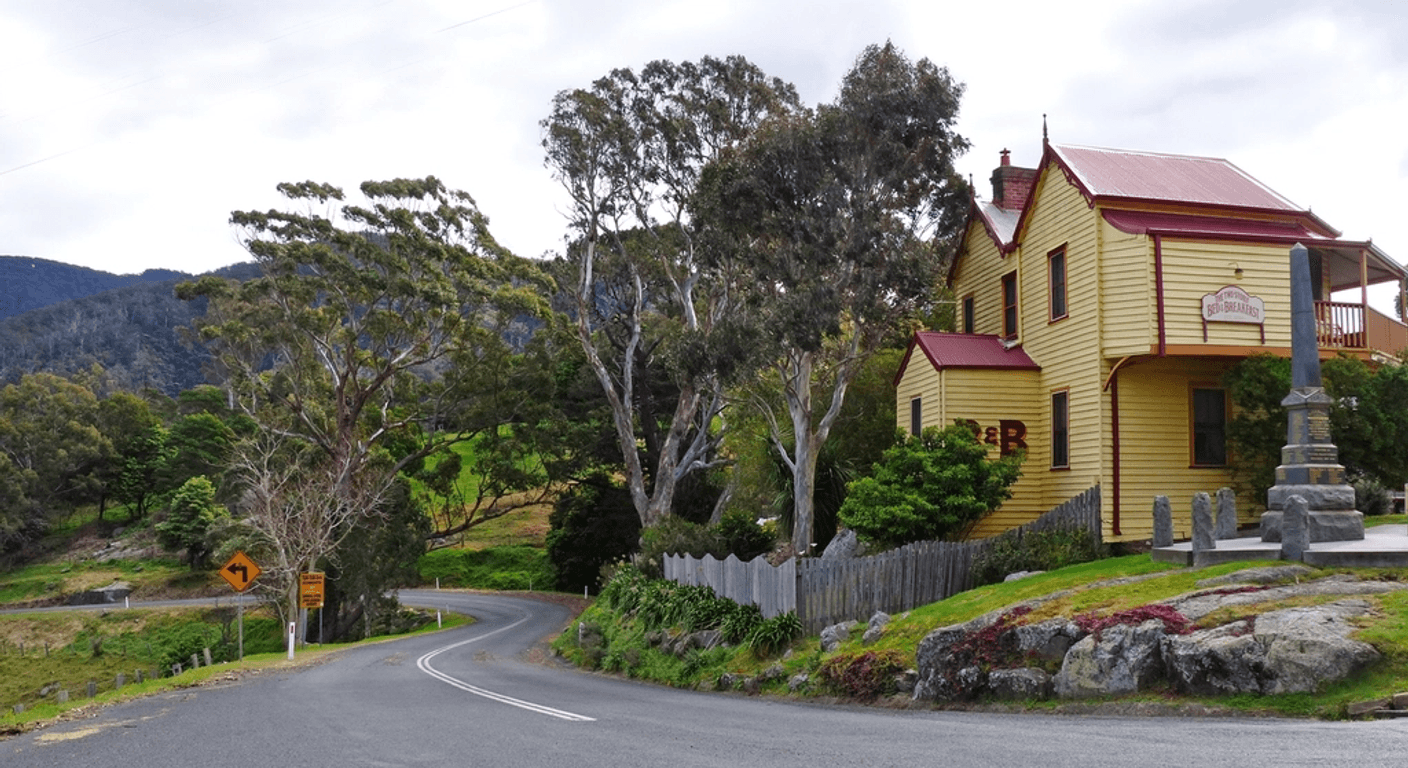
There are heritage villages, and then there are villages that feel genuinely unchanged. Central Tilba sits in the second category. The main street, Bate Street, is a single sloping row of weatherboard and corrugated-iron buildings dating largely from the 1890s, when the district thrived on dairying and timber. The National Trust of Australia has classified both Central Tilba and the smaller neighbouring settlement of Tilba Tilba, recognising the integrity of the built environment and the way the two villages sit in their landscape beneath the rounded bulk of Gulaga.
For a traveller who has spent time in the hill towns of Umbria or the Veneto, there is something quietly familiar about the scale of Central Tilba — a place where everything is within a short walk of everything else, and where the pace of the street is set by the buildings rather than by commerce. It is not a theme park version of the past. The pub still operates, the cheese factory still makes cheese, and the garden at Foxglove Spires still reflects the long obsession of the people who built it.
Victoria-based travellers can reach the Tilbas as part of a longer South Coast drive, or as a day trip from a base in Narooma, which is roughly 15 kilometres to the south along the Princes Highway. The two villages are only about two kilometres apart and are best visited together, allowing a morning in Central Tilba and a quieter look at Tilba Tilba before heading back toward the coast.
Getting there from Victoria: what to know before you leave
There is no practical public transport to Central Tilba. The nearest V/Line connection from Melbourne runs to Bairnsdale, and from there the onward journey to the NSW South Coast requires a car or a pre-booked coach with very limited service. For most travellers in this age group, a private vehicle is the realistic option. The drive from Melbourne to Narooma via the Princes Highway is roughly 430 kilometres and is manageable over two days, with a natural overnight stop in Bairnsdale, Orbost, or Eden depending on your pace.
If you prefer not to drive the full distance, some travellers fly into Merimbula or Canberra and hire a car for the coastal section. Merimbula is approximately 120 kilometres south of Narooma, while Canberra is roughly 280 kilometres inland. Either option gives you a vehicle on the ground, which is essential for reaching the Tilbas. Once you are in the area, the roads are sealed and the parking at Central Tilba, while limited, is manageable on weekday visits.
A word on weekend and public holiday timing: Central Tilba attracts significant day-trip traffic from Canberra and the broader South Coast on weekends and long weekends. The main street has very limited off-street parking, and the narrow approach roads can become congested. Arriving before 10am or visiting on a Tuesday, Wednesday, or Thursday gives you the village at its best — quieter, easier to park, and more likely to have the cheese factory and garden accessible without a crowd.
Walking the main street: what the slope means for you
Bate Street rises from the bottom of the village to the top over a distance of perhaps 200 metres, and the gradient is noticeable. It is not steep by mountain standards, but for anyone with knee concerns or who uses a walking stick, it is worth knowing about in advance. The surface is a mix of sealed road and uneven footpaths, with some sections of timber boardwalk. Footwear with a grip sole is sensible, particularly if visiting after rain.
The buildings along Bate Street house a small collection of shops — craft, antiques, homewares, a bakery, and the pub — as well as the cheese factory at the top end. Most shopfronts have a small step at the entry, and interior spaces can be narrow. The village is not comprehensively accessible for wheelchairs, but a traveller with moderate mobility who can manage a gentle slope and the occasional step will find it navigable and rewarding.
Tilba Tilba, the smaller settlement a couple of kilometres along the road, has a different character again. It is quieter, with a few heritage buildings and the lake visible beyond the paddocks. It rewards a slow drive and a short walk rather than an extended exploration, and the contrast with the relative bustle of Central Tilba on a weekend morning is striking.
The ABC Cheese Factory: tastings and what to expect
The ABC Cheese Factory has been operating in Central Tilba since 1891, making it one of the oldest continuously operating cheese factories in Australia. The current operation produces a range of cow's milk cheeses — cheddars, flavoured varieties, and seasonal offerings — and offers tastings at the counter inside the factory shop at the top of Bate Street. Tastings are generally complimentary and are conducted in a straightforward, no-pressure way; you try, you decide, and you buy what appeals.
The cheeses are made on-site, and on days when production is running you can sometimes see activity through the viewing window. The shop also stocks local jams, condiments, and smallgoods that make reasonable travelling companions if you have a cooler bag in the car. Prices for cheese are indicative in the $8 to $18 range per piece depending on the variety and size, but you should confirm current pricing directly with the factory, as these change. The website is abccheese.com.au.
For a traveller who appreciates good produce — and who has perhaps grown up in a household where cheese was taken seriously — the ABC Factory is genuinely satisfying rather than merely quaint. It is a working business, not a museum exhibit. Allow around 20 to 30 minutes at the shop, longer if you want to browse and ask questions of the staff, who are generally knowledgeable and unhurried.
Foxglove Spires garden: seasonal, distinctive, worth confirming
Foxglove Spires is a private garden on the hillside above Central Tilba, created over several decades and notable for its unusual plantings, its layered structure, and the way it frames views toward Gulaga and the coast. It is not a formal botanic garden and not a manicured showpiece — it is the kind of garden that reflects its makers' particular enthusiasms, and that quality gives it an authenticity that more polished gardens sometimes lack.
The garden opens seasonally, typically in spring and sometimes into early summer, and an entry fee applies. The indicative fee is in the range of $10 to $15 per adult, but this must be confirmed directly with the garden before you visit, as opening dates, times, and fees change from season to season. The website foxglovespires.com.au is the best source of current information. Do not assume the garden is open on the day you arrive — check before you leave your accommodation.
The terrain inside the garden involves slopes and uneven paths, similar in character to the village itself. It is not suitable for wheelchairs and requires reasonable mobility. That said, for a traveller who enjoys plants and who is comfortable on a garden path, it offers a perspective on Central Tilba — both literally, from the elevated sections, and culturally — that the main street alone does not provide. A visit in late September or October, when the foxgloves are likely to be at their fullest, gives the garden its name its clearest meaning.
Pairing the Tilbas with Narooma's flat boardwalk
Narooma, about 15 kilometres south of Central Tilba on the Princes Highway, makes an excellent base for a night or two and a natural pairing for the same day. The town sits on Wagonga Inlet and has a flat, well-maintained boardwalk along the inlet foreshore that is a genuine pleasure for anyone who wants level ground and good views without effort. The boardwalk connects the town centre to the bridge area and takes around 20 to 30 minutes at a comfortable pace.
Narooma also has a supermarket, a good selection of cafes, and reliable accommodation ranging from motel-style rooms to self-contained units. After a morning on the slopes of Central Tilba, the flat waterfront at Narooma is a natural place to have lunch and decompress. The inlet is calm, the birdlife is active, and the light on the water in the afternoon is the kind of thing that makes you glad you came.
The combination of the two works well as a day structure: drive to Central Tilba early, walk the main street, visit the cheese factory and the garden if it is open, have a light lunch in the village or en route, then spend the afternoon on the Narooma boardwalk. If you are based in Narooma, the whole loop takes less than a full day and leaves time for a quiet evening without feeling rushed.
Practical notes for a comfortable visit
Accommodation in Narooma ranges from around $120 to $200 per night for a motel room or self-contained unit, indicative only — confirm current rates with individual properties. There is limited accommodation in Central Tilba itself, including a heritage pub with rooms above the bar, which suits some travellers and not others depending on noise sensitivity and stair access. Booking several weeks ahead is advisable if you are visiting in spring or over a long weekend.
Mobile coverage in the Tilbas can be patchy depending on your carrier. Download offline maps before you leave, and do not rely on live navigation once you are in the village. The Princes Highway between Narooma and Central Tilba is straightforward, but the turn-off from the highway into the village is easy to miss if you are looking at a phone rather than the road. Signage is present but modest.
Eating in Central Tilba is limited to the bakery, a small cafe, and the pub. None of these are fine dining, but the bakery produces reliable pies and pastries, and the pub does straightforward counter meals. If you have dietary requirements beyond the standard, it is worth having snacks and drinks in the car. The cheese factory will, of course, contribute to any picnic you have in mind.
Quick planning guide
| Ideal pace | Slow and unhurried, not a rushed stop |
|---|---|
| Best months | Spring (September–October) for the garden; weekdays for lighter crowds |
| Suggested stay | Half a day to a full day, paired with Narooma |
| Mobility level | Moderate — gentle but noticeable slope, uneven footpaths and steps, not wheelchair accessible |
| Cost level | Budget-friendly (cheese tastings free, cheese $8–$18, garden entry around $10–$15) |
| Comfort level | Casual — limited eating options, patchy mobile coverage, modest signage |
| Best for | Heritage and garden lovers, slow travellers who enjoy walkable villages |
| Main planning consideration | Private car essential for access; visit on a weekday morning and confirm Foxglove Spires' opening dates before you leave |
Key takeaways
- Central Tilba and Tilba Tilba are National Trust-classified villages near Narooma on the NSW South Coast, best reached by private car — there is no practical public transport.
- The ABC Cheese Factory has operated since 1891 and offers complimentary tastings at its shop on Bate Street; confirm current pricing at abccheese.com.au.
- Foxglove Spires garden opens seasonally with an entry fee — always confirm dates and cost at foxglovespires.com.au before visiting, as these change each year.
- The main street of Central Tilba is a gentle but noticeable slope with some uneven footpaths; good grip footwear is recommended, and the village is not wheelchair-accessible throughout.
- Weekend and public holiday visits bring significant crowds and parking pressure; a weekday morning arrival is strongly recommended for a calmer experience.
- Narooma's flat inlet boardwalk pairs naturally with a Central Tilba morning, offering level walking, good birdlife, and a relaxed lunch setting just 15 kilometres away.
Recommended partners and links
Indicative prices only — always confirm with the operator before booking.
Frequently asked questions
Can you get to Central Tilba by public transport?
No. There is no reliable public transport service to Central Tilba or Tilba Tilba. The nearest practical connection is a V/Line train to Bairnsdale from Melbourne, but onward travel to the NSW South Coast requires a car or a pre-arranged private transfer. A private vehicle is the realistic option for almost all visitors.
Is the ABC Cheese Factory open every day and are tastings free?
The ABC Cheese Factory is generally open most days, but tastings and hours can vary. Tastings have typically been complimentary, with cheese sold by the piece from around $8 upward, but you should confirm current hours and any changes directly at abccheese.com.au before visiting.
When is Foxglove Spires garden open, and how much does it cost to enter?
Foxglove Spires is a seasonal garden that typically opens in spring and sometimes early summer. Entry is around $10 to $15 per adult, indicative only. Opening dates, times, and the entry fee change from year to year, so always check foxglovespires.com.au before you plan your visit — do not assume it will be open on arrival.
Is Central Tilba accessible for travellers with limited mobility?
Central Tilba is manageable for travellers with moderate mobility who can handle a gentle slope and occasional steps into shopfronts, but it is not comprehensively wheelchair-accessible. The main street rises over about 200 metres, footpaths are uneven in places, and most building entries have at least one step. Foxglove Spires garden also involves slopes and uneven paths. Good grip footwear is advisable.
What is the best time of year to visit the Tilbas?
Spring — roughly September to November — is widely considered the best season, when Foxglove Spires garden is likely to be open, the weather on the NSW South Coast is mild, and the landscape beneath Gulaga is green. Avoid long weekends and school holidays if you want easier parking and a quieter main street. Weekday mornings in spring offer the most relaxed experience.