Charters Towers, a flat and richly heritage-listed gold-boom town ninety minutes inland from Townsville via the Flinders Highway, is best visited in the dry season from May to September, with June and July offering the clearest, most comfortable conditions. A two-night stay allows time to explore the ornate Stock Exchange Arcade, walk the self-guided heritage trail, and tour the Venus Gold Battery. Mobility is easy across the flat town streets, though the battery site has some uneven ground, and a hire car is the most practical way to get there and around.
Why did they call it 'The World'?
In the 1880s and 1890s, Charters Towers was the second-largest city in Queensland and one of the most productive goldfields on the continent. Its residents had access to stock exchanges, theatres, a school of arts, grand hotels, and a level of civic sophistication that made the rest of Queensland feel like the provinces. The nickname 'The World' was not bravado — it was a statement of self-sufficiency. Everything you needed, you could find right here.
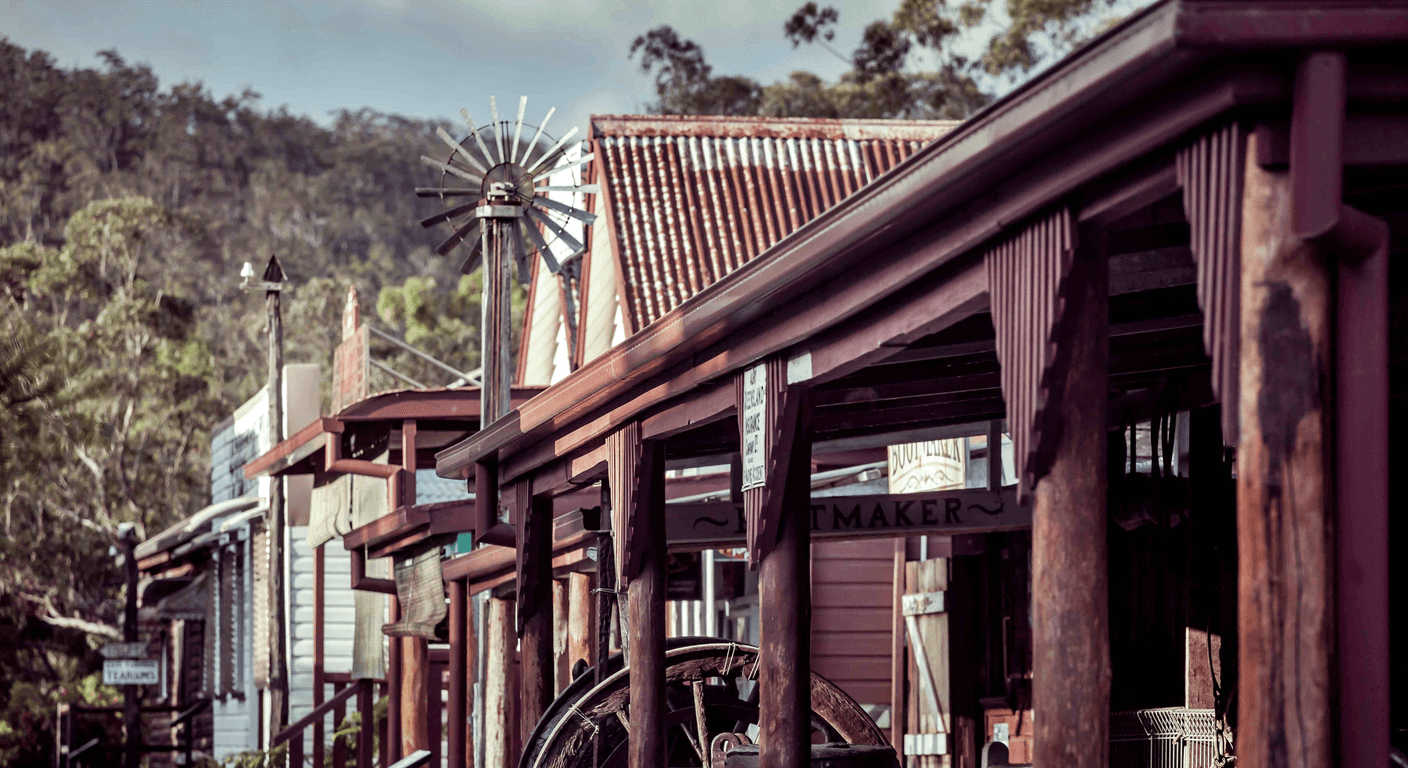
That era lasted roughly from the gold discovery of 1871 through to the early twentieth century, when the richest seams were exhausted and the population drifted away. What it left behind was a townscape so intact that walking Charters Towers today feels less like visiting a heritage precinct and more like stepping inside a photograph from another century. The buildings did not get demolished because there was no money to replace them, and now that turns out to be an extraordinary gift.
For a group of friends who love culture and history, that sense of layered time is the real drawcard. This is not a reconstructed attraction — it is the original thing, still standing, still in use, still carrying the quiet pride of a town that once thought of itself as the centre of the world.
What is the Stock Exchange Arcade and why does it matter?
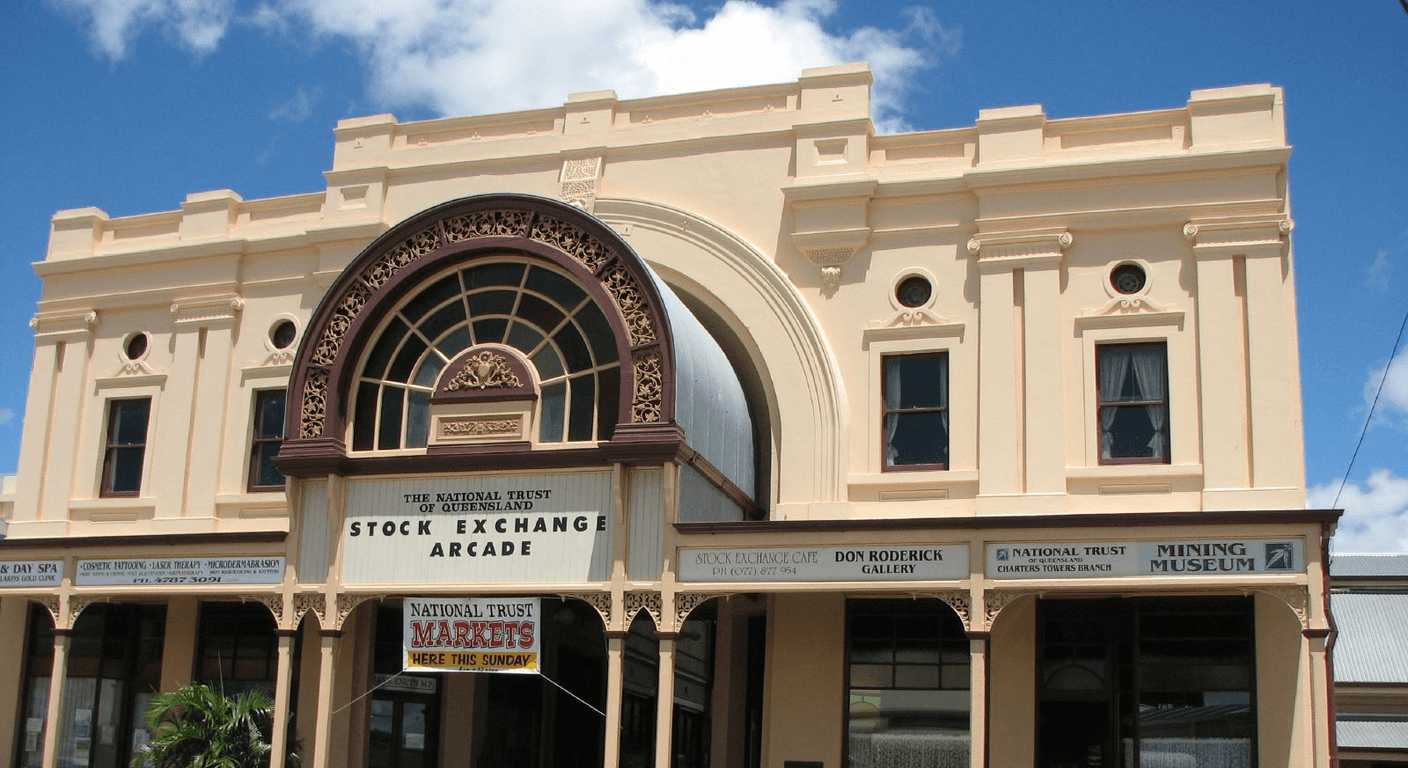
The Stock Exchange Arcade on Mosman Street is the centrepiece of any visit to Charters Towers. Built in 1888, it housed one of only two provincial stock exchanges in Australia — a remarkable fact for a town that size. The ornate two-storey facade and the covered arcade behind it have been carefully restored and now contain small shops, a visitor information centre, and exhibition spaces that tell the story of the gold boom in considered, unhurried detail.
The ground-floor arcade is accessible and flat, making it comfortable to move through at your own pace. The interpretive displays inside give context without overwhelming — you can spend twenty minutes or two hours depending on how deeply you want to go. The visitor information centre here is a genuinely useful first stop: staff can point you toward current guided tours, advise on which heritage sites are open on any given day, and provide the free self-guided heritage walk brochure.
Mosman Street itself extends the experience well beyond the arcade. The facades of former banks, hotels, and commercial buildings run along both sides of a wide, flat street that is easy to walk even in the warm morning hours. The heritage character is not curated or sanitised — some buildings are immaculately maintained, others show their age honestly, and that combination feels more truthful than a polished theme park version of the past ever could.
How does the self-guided heritage walk work for older travellers?
The self-guided heritage walk that loops through central Charters Towers is genuinely well suited to a group travelling at a relaxed pace. The town centre is flat — this is inland Queensland, not a hilly coastal town — and the main heritage sites are concentrated within a compact area that you can cover comfortably over a morning without needing to rush or worry about distances. Sensible footwear and a hat are the main requirements.
The free heritage walk brochure, available from the Stock Exchange Arcade visitor centre, maps out around twenty significant sites including the former City Hall (now the Civic Club), the old newspaper building, the Masonic Lodge, and several former bank buildings that speak to how seriously this town once took its financial standing. Each site has a numbered marker that corresponds to the brochure, and the writing in the brochure is clear and specific rather than vague.
For anyone in the group who finds sustained walking tiring, the walk divides naturally into shorter loops. You can do the Mosman Street precinct as a standalone, rest in one of the town's cafes, and then add Towers Hill as a separate outing by car or taxi. The pace of the town itself encourages this kind of unhurried approach — Charters Towers does not bustle, and that is part of its particular appeal for travellers who have moved past the stage of trying to tick everything off in a single day.
What happens at the Venus Gold Battery?
The Venus Gold Battery, located on the edge of town, is one of the best-preserved gold processing sites in Queensland and is managed through Queensland National Parks. A battery was where raw ore from the mines was crushed and processed to extract gold, and the Venus Battery did exactly that from the 1870s through to the 1970s — an extraordinary working life of nearly a century. Much of the original machinery remains in place, which gives the site a presence that a purely interpretive museum cannot replicate.
Guided tours run at set times and take you through the crushing machinery, the amalgamation plates, and the processing rooms with commentary that explains the industrial process in terms that make sense to a general visitor. The guides at sites like this tend to be local and knowledgeable, and the questions a curious group asks often draw out the best stories. Check current tour times and entry fees directly with Queensland National Parks before you visit, as schedules and pricing are subject to change — indicative adult entry has been roughly in the range of $15 to $20, but confirm this before planning your day.
Accessibility at the battery involves some uneven ground and older industrial surfaces, so it is worth asking the site staff in advance about which sections are manageable for anyone with mobility considerations. The tour is not physically demanding overall, but it is worth knowing the layout before you go. The site sits within a broader reserve area and the surrounds have a quiet, semi-rural character that adds to the feeling of being somewhere that still holds its history lightly rather than performing it.
What is the Towers Hill experience and the history film?
Towers Hill, the rocky outcrop that rises above the town, offers a panoramic view over Charters Towers and the surrounding dry country that puts the scale of the place into perspective. The road to the summit is manageable by car, and at the top there is a viewing platform and seating area that makes it a comfortable stop rather than an athletic endeavour. Early morning or late afternoon light suits the view best, and the dry-season air in this part of Queensland tends to be clear.
The hill is also the location of an open-air cinema-style screening of a heritage film about the town's gold-rush history. This has been a feature of Towers Hill for some years, though the operational status and screening schedule of the outdoor theatre should be confirmed locally before you build your evening around it — visitor information at the Stock Exchange Arcade is the right place to ask. When it is running, watching a history film about the town you have spent the day walking through, under an open sky in the warm dry-season evening, is the kind of unhurried cultural experience that stays with you.
The hill itself has significance beyond the viewing platform. It was the site of the original gold discovery by Jupiter, a young Aboriginal man working with prospector Hugh Mosman in 1871 — a story that is part of the town's founding narrative and worth understanding before you visit. The interpretive material at the visitor centre addresses this history, and approaching the hill with that context makes the view from the top feel weightier and more layered than a simple scenic lookout.
When is the best time to visit and how do you get there?
The dry season — broadly May through to September — is the right time to visit Charters Towers. North Queensland in the wet season brings humidity, heavy rain, and the kind of heat that makes outdoor walking uncomfortable and occasionally impractical. In the dry season, days are warm and clear, mornings are genuinely pleasant for walking, and the light has the particular quality that makes heritage streetscapes look their best. A group travelling in June or July will find the climate close to ideal.
From Townsville, Charters Towers is roughly ninety minutes inland along the Flinders Highway — a straightforward drive through dry eucalypt country that itself has a particular character worth paying attention to. Hiring a car in Townsville and self-driving as a group is the most flexible option, and the road is well-maintained and flat. Coach services between Townsville and Charters Towers do exist — Greyhound Australia covers this corridor — but for a group wanting to move at their own pace and carry luggage comfortably, a hire car makes the most sense. Confirm current coach timetables directly with operators.
Accommodation in Charters Towers ranges from motel-style rooms to a small number of character guesthouses. The town is not large, so booking ahead in the dry season — particularly for a group — is sensible. A two-night stay gives you enough time to cover the main heritage sites without rushing, and the town's country pace rewards an extra morning spent simply sitting with a coffee and watching Mosman Street go about its business.
What is the atmosphere like for a friends group travelling together?
Charters Towers has the particular social ease of a regional Queensland town that is used to visitors but not overwhelmed by them. The locals are straightforwardly friendly in the way that smaller country towns often are — helpful when you ask, not intrusive when you do not. For a group of friends who want to talk and explore at their own pace without being shepherded through a tourist circuit, that atmosphere suits very well.
The town's cafes and the pub dining rooms provide comfortable places to debrief over a meal and share what each person found most interesting during the day. Regional Queensland pub food is reliable and portions are generous, and the cost of eating and drinking in Charters Towers is noticeably lower than in coastal tourist centres. An evening meal and a glass of wine while comparing notes about the gold battery or the Stock Exchange is a perfectly good way to end a day of cultural exploration.
For Latin Australian travellers who have spent time in places where history is worn publicly and with some passion, Charters Towers has a similar quality — the history here is not hidden away in a single museum but present in the fabric of the streets. The difference is the quietness of it. This town does not shout about what it was. It simply remains, and lets you draw your own conclusions, which is its own kind of confidence.
Quick planning guide
| Ideal pace | Slow-paced and unhurried |
|---|---|
| Best months | May to September (dry season), especially June and July |
| Suggested stay | Two nights |
| Mobility level | Easy — flat, compact town centre; some uneven ground at the Venus Gold Battery |
| Cost level | Budget-friendly, noticeably lower than coastal tourist centres |
| Comfort level | Comfortable — warm, clear dry-season days and pleasant mornings for walking |
| Best for | Friends groups who enjoy culture, history and a relaxed country pace |
| Main planning consideration | Self-drive from Townsville is most flexible; confirm Venus Gold Battery tour times/fees with Queensland National Parks and check the Towers Hill film schedule locally |
Key takeaways
- Charters Towers was once Queensland's second-largest city and its residents called it 'The World' — a nickname earned by genuine prosperity, not pride.
- The Stock Exchange Arcade on Mosman Street is Australia's best-preserved provincial stock exchange building and a practical first stop for any visit.
- The self-guided heritage walk covers a flat, compact town centre and suits travellers who want cultural depth without physical strain.
- The Venus Gold Battery is one of Queensland's most intact gold-processing sites, with guided tours that bring nearly a century of industrial history to life.
- The dry season from May to September offers the most comfortable conditions for walking Charters Towers' heritage streetscape.
- A two-night stay and a hire car from Townsville gives a friends group the pace and flexibility to do this destination justice.
Recommended partners and links
Indicative prices only — always confirm with the operator before booking.
Frequently asked questions
Is Charters Towers accessible for travellers with limited mobility?
The central heritage streetscape along Mosman Street is flat and paved, making it manageable for most travellers. The Venus Gold Battery involves some uneven industrial surfaces, so it is worth contacting the site in advance to ask which sections suit your group. Towers Hill is accessible by car to the viewing platform. Overall, Charters Towers is one of the more accessible inland Queensland heritage towns for older travellers.
How much does the Venus Gold Battery tour cost?
Entry fees are indicative only and have been roughly in the range of $15 to $20 per adult in recent years, but fees and tour schedules are subject to change. Confirm current pricing and tour times directly with Queensland National Parks at parks.qld.gov.au before visiting.
Does the Towers Hill open-air history film still operate?
The open-air screening of a heritage history film at Towers Hill has operated as a feature of the site, but schedules and operational status can change seasonally. Check with the Charters Towers visitor information centre at the Stock Exchange Arcade or via charterstovers.com.au for current information before planning an evening around it.
What is the best way to travel from Townsville to Charters Towers?
The most flexible option for a group is to hire a car in Townsville and drive the Flinders Highway, which takes around ninety minutes on a well-maintained road. Coach services such as Greyhound Australia also cover this route — confirm current timetables directly with the operator at greyhound.com.au. Public transport options are limited, so a hire car is strongly recommended for groups wanting to explore at their own pace.
How long should you spend in Charters Towers to see the main sites?
Two nights and two full days gives a comfortable amount of time to walk the heritage streetscape, visit the Stock Exchange Arcade, take the Venus Gold Battery tour, and get up to Towers Hill without rushing. A single overnight stay is possible but leaves little room for the unhurried pace that suits the town best.