Coonabarabran, in the Namoi Valley about five hours north-west of Sydney (or a short flight to Dubbo plus a 90-minute drive), is best visited in winter (June–August) for the clearest, darkest skies over Warrumbungle National Park, Australia's only Dark Sky Park. A stay of two to three nights allows time for the easy, paved Whitegum Lookout walk, a daytime visit to Siding Spring Observatory, and an evening guided star tour. Mobility is moderate — walking is largely easy, but a hire car is essential to reach sites 25–35 kilometres from town.
Why Coonabarabran Earns Its Astronomy Capital Title
The title isn't just civic pride. Coonabarabran sits at around 565 metres elevation, well inland from coastal humidity, under skies that regularly register among the darkest in eastern Australia. The International Dark-Sky Association formally recognised Warrumbungle National Park as Australia's first Dark Sky Park in 2016, a designation that requires strict lighting controls across the surrounding region. The result, on a clear winter night, is a Milky Way that stretches so wide and low it feels structural — like something the landscape was built around.
Siding Spring Mountain, about 27 kilometres from town, hosts one of the Southern Hemisphere's most significant optical astronomy research facilities. The Australian Astronomical Observatory operates there alongside telescopes from multiple international institutions. Visitors don't access the research domes themselves, but the on-site visitor centre offers well-interpreted displays explaining the science and history of the site, with views across the volcanic terrain of the Warrumbungles below. It's the kind of place that rewards curiosity — an hour can easily stretch to two.
The town of Coonabarabran itself is a straightforward, welcoming regional centre. There's nothing pretentious about it, which is part of the appeal. Good coffee has arrived in recent years, the locals are accustomed to astronomers and national park visitors, and the pace suits travellers who'd rather linger than rush.
Getting There: Drive or Fly to Dubbo
From Melbourne, the most practical approach is to fly to Dubbo — Rex Airlines operates regular services — then hire a car for the roughly 150-kilometre drive north to Coonabarabran. That drive takes around 90 minutes on open highway through wheat and canola country, and it's an easy, scenic introduction to the flat inland turning gradually more dramatic. From Sydney, it's a five-hour drive via the Great Western Highway and Newell Highway — manageable spread over a day if you stop at Dubbo or Orange for lunch.
Travelling by car is essentially essential once you're there. The national park entrance is about 35 kilometres from town, Siding Spring is 27 kilometres, and private observatories are scattered across rural properties. A hire car gives you the flexibility to arrive at the park at dawn for the light, and to return to town before the cold really sets in after sunset. Some star tour operators do offer pick-up from Coonabarabran accommodation — worth asking when you book.
For travellers who prefer not to drive long distances, the overnight Countrylink coach from Sydney to Coonabarabran is an option worth investigating, though it limits your mobility once there. Confirm current services with Transport for NSW before planning around it. The town itself is walkable for motel-to-café distances, but the key sites require wheels.
Warrumbungle National Park: The Honest Walk and the Spectacular View
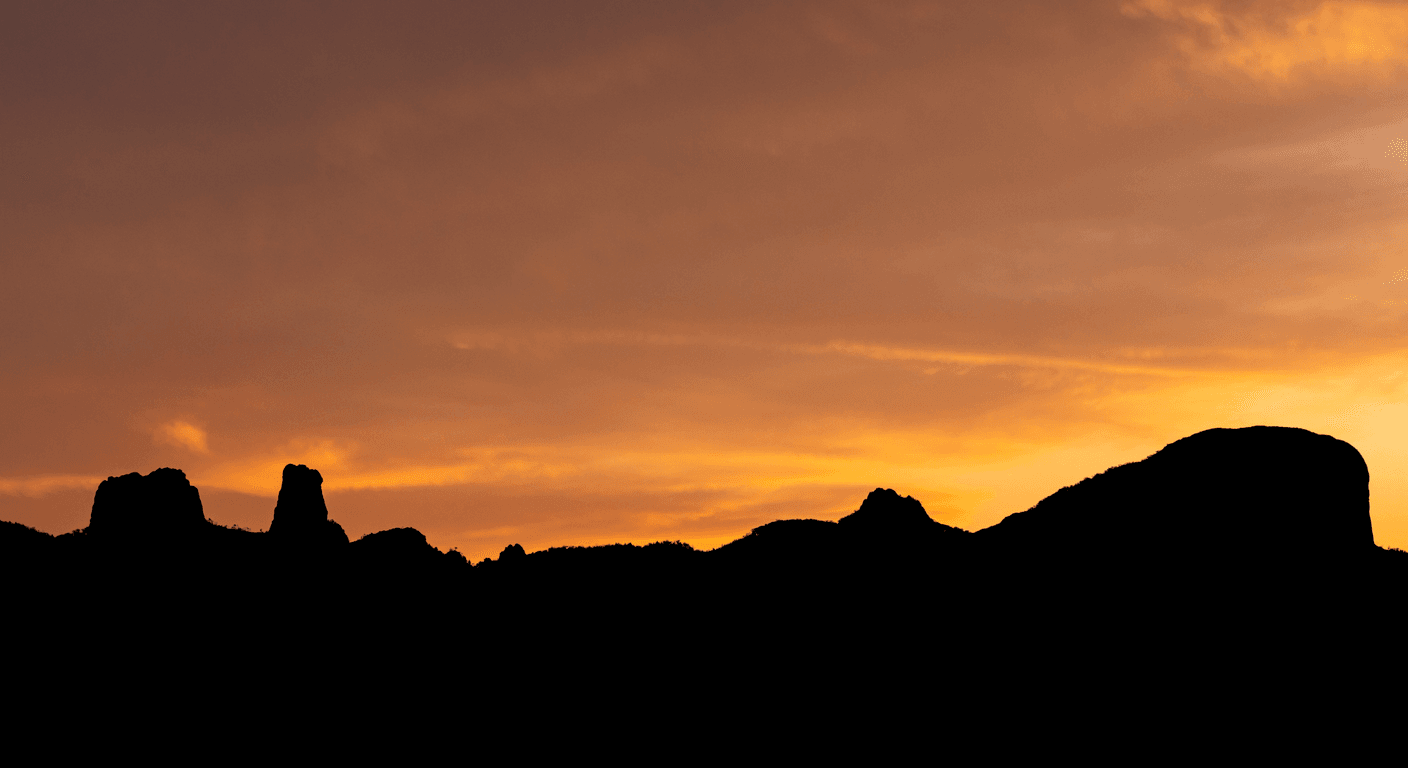
The Warrumbungle Range is volcanic in origin — these are the eroded remnants of a shield volcano that was active around 13 to 17 million years ago. What remains are syenite dykes and lava plugs rising steeply from the surrounding plains, the most famous being the Breadknife: a razor-thin wall of rock about 90 metres high and barely a few metres wide in places. It's genuinely extraordinary to look at. The circuit that gets you close to it involves around 14 kilometres of walking with significant elevation gain, and it's categorised as hard. For most travellers over 50, that's a walk to admire from a distance rather than attempt casually.
The honest and genuinely rewarding choice is the Whitegum Lookout walk from the Pincham car park. It's a short, paved path — around 800 metres return — that delivers an elevated view across the volcanic landscape without demanding anything strenuous. The Breadknife and the Belougery Spire are visible from the lookout on a clear day, framed by grey-green eucalypt canopy. Early morning light on the spires has a particular quality — amber and sharp — that makes the drive from town before 8am worth every kilometre.
The park's Canyon walking track is another moderate option — around 5 kilometres with some uneven terrain but manageable for most active walkers. Wildflowers in late winter and spring add a layer to the landscape that pure geology doesn't provide. The Visitor Centre at Woolshed Creek is a sensible first stop: the rangers are knowledgeable, the maps are clear, and they'll give you an honest read on current track conditions. A day-use vehicle fee applies — confirm the current rate with NSW National Parks before you go.
Siding Spring Observatory: What the Visitor Centre Actually Offers
The visitor centre at Siding Spring is a daytime experience — the research telescopes operate at night and are not open to the general public after dark. That said, the centre is well worth the 27-kilometre drive up the mountain. The displays explain how optical and radio astronomy work, the role Australia plays in global sky surveys, and the specific research conducted at the site. The views from the mountain — across the Warrumbungles and far into the plains beyond — are as compelling as anything inside the building.
Entry fees apply and have changed in recent years, so confirm current pricing directly with the Siding Spring Observatory visitor centre website before you go. The drive up is sealed and manageable in a standard hire car, though the road is winding — allow more time than the distance suggests. There's a small café on site, which makes a sensible lunch stop before heading back down for an afternoon rest before the evening's stargazing.
The combination of a daytime visit to Siding Spring and an evening star tour creates a genuinely satisfying day — astronomy by explanation, then astronomy by direct experience. It's the kind of itinerary that makes a destination feel coherent rather than cobbled together.
Private Star Tours: What to Expect After Dark
Several private operators in the Coonabarabran region run guided night sky sessions using research-grade telescopes. Milroy Observatory is among the best-known, offering guided tours that walk guests through the southern sky's constellations, deep sky objects, and planets in season. A good guide makes an enormous difference — the difference between looking at a smudge of light and understanding you're seeing a galaxy 2.5 million light-years away. These sessions typically run for two to two-and-a-half hours.
Winter tours — June through August — offer the best conditions: low humidity, long nights, and the Milky Way positioned dramatically across the sky. The trade-off is temperature. Nights in the Warrumbungles region can drop to near zero or below in July and August. Dress in more layers than you think you need. Thermals, a down vest, a warm hat, and gloves are not excessive — they're practical. Most operators will tell you this when you book, but it's worth taking seriously. Standing still in the dark for two hours is colder than any daytime activity.
Book your star tour as early as possible for winter travel — these sessions fill up weeks ahead during peak months. Most operators have minimum numbers and weather cancellation policies; understand both before you confirm. Indicative pricing runs around $60 to $90 per person, but confirm directly, as this varies by operator and session type.
Where to Stay and Eat in Coonabarabran
Coonabarabran's accommodation options are honest and practical rather than boutique. Several comfortable motels along the John Street strip offer solid rooms, on-site parking, and the kind of no-fuss service that suits travellers who plan to spend their evenings under the stars rather than in the hotel. The Imperial Hotel Motel and similar mid-range properties provide reliable bases — confirm current availability and pricing directly. There's no luxury resort here, and that's not really the point.
For travellers who prefer self-contained accommodation, there are cabins available within Warrumbungle National Park itself at the Woolshed Creek campground area — a genuinely atmospheric option, though you'll want to check current booking availability through NSW National Parks well ahead. Staying inside the park puts you closer to the dark sky core, which has obvious appeal for serious stargazers.
Dining in town is straightforward: pub meals, a handful of cafés, and the kind of generous regional cooking that suits a cold evening after a star tour. The Royal Café and similar local options provide warm, reliable meals. Don't expect a wine list that challenges Sydney's best — but a good counter meal and a glass of something red after a night under the Milky Way has its own satisfaction.
Practical Matters: Season, Health and Packing
Winter — June through August — is the prime season for clear, dark skies, but it demands preparation for cold. Daytime temperatures in July hover around 12 to 15 degrees Celsius; nights can fall to zero or below. Layering is the strategy: a warm mid-layer, a windproof outer, and proper thermal base layers for evening sessions. If you have joint sensitivity to cold, pack accordingly and consider a hot water bottle for the car on the drive home from a star tour.
Travel insurance is straightforward for domestic travel but worth reviewing if you have pre-existing conditions, particularly for any medical evacuation considerations given the region's distance from major hospitals. The nearest significant medical facility is Dubbo Base Hospital, around 150 kilometres south. This isn't a reason not to go — it's simply useful context for packing any regular medications and ensuring your insurance is current.
The drive from Dubbo to Coonabarabran on the Newell Highway is through open country with limited fuel stops. Fill the tank in Dubbo or Gilgandra. Phone reception is reasonable in town but patchy in parts of the national park — download offline maps before you leave. And if you wear glasses, ask your star tour guide about the best approach to viewing through an eyepiece — most are experienced with this and happy to help.
Quick planning guide
| Ideal pace | Slow-paced, allow time to linger |
|---|---|
| Best months | June to August (winter, for the clearest and darkest skies) |
| Suggested stay | 2–3 nights |
| Mobility level | Moderate — the recommended Whitegum Lookout walk is short and paved, but the Breadknife circuit is hard and best admired from a distance |
| Cost level | Budget-friendly to mid-range (practical motels, star tours around $60–90 per person) |
| Comfort level | Comfortable and no-fuss rather than luxury |
| Best for | Stargazers and curious travellers wanting intellectual depth without demanding physical effort |
| Main planning consideration | A hire car is effectively essential, and winter star tours should be booked well ahead |
Key takeaways
- Warrumbungle National Park is Australia's only International Dark-Sky Park, making its night skies among the darkest accessible to visitors in eastern Australia.
- The Whitegum Lookout walk is a short, paved path offering genuine volcanic landscape views — the honest alternative to the strenuous Breadknife circuit.
- Siding Spring Observatory's visitor centre is a daytime-only experience; pair it with a separate private star tour for a complete astronomy day.
- Winter (June–August) delivers the clearest, darkest skies but temperatures near zero after sunset — thermal layers and gloves are essential, not optional.
- A hire car is effectively necessary: the national park, Siding Spring, and star tour sites are all 25 to 35 kilometres from the Coonabarabran town centre.
- Private guided star tours book out weeks ahead in winter peak season — confirm and reserve early, and understand the operator's weather cancellation policy.
Recommended partners and links
Indicative prices only — always confirm with the operator before booking.
Frequently asked questions
Is Coonabarabran suitable for travellers over 50 with limited mobility?
Yes, with the right walk choices. The Whitegum Lookout walk in Warrumbungle National Park is a short, paved path suitable for most mobility levels and delivers genuine views of the volcanic landscape. The Siding Spring visitor centre is accessible. Private star tours are conducted standing at a telescope site on relatively flat ground — ask operators about specific terrain when booking.
When is the best time to visit Coonabarabran for stargazing?
May through August offers the clearest, driest nights and the best conditions for dark sky viewing. July and August are the coldest months, with night temperatures potentially near zero, so warm clothing is essential. New moon periods within those months provide the darkest skies — check a lunar calendar when planning your specific nights.
How do you get from Melbourne to Coonabarabran?
The most practical route from Melbourne is to fly to Dubbo — Rex Airlines operates regular services — then hire a car for the 150-kilometre, roughly 90-minute drive north to Coonabarabran. A direct drive from Melbourne is possible but long; most travellers find the fly-drive combination more comfortable. Confirm current flight schedules and hire car availability before booking.
Do you need to book Warrumbungle National Park entry in advance?
No advance booking is required for day use of Warrumbungle National Park, but a day-use vehicle entry fee applies. Confirm the current fee with NSW National Parks before visiting, as fees change. If you plan to stay in park cabins or campgrounds, advance booking through NSW National Parks is strongly recommended, especially in winter and school holiday periods.
Can you see the Milky Way at Siding Spring Observatory?
The Siding Spring Observatory visitor centre is a daytime experience only — the research telescopes are not open to the public at night. To see the Milky Way, book a separate private star tour with one of the operators in the Coonabarabran region, such as Milroy Observatory. These evening sessions use dedicated visitor telescopes and are guided by astronomers or trained hosts.
- Warrumbungle National Park – NSW National Parks and Wildlife Service
- Siding Spring Observatory – Visitor Information
- Milroy Observatory – Private Star Tours
- International Dark-Sky Association – Warrumbungle Dark Sky Park
- Transport for NSW – Regional Coach Services
- Visit NSW – Coonabarabran and the Warrumbungles